The Man from Australia: Norstrilia by Cordwainer Smith
 |
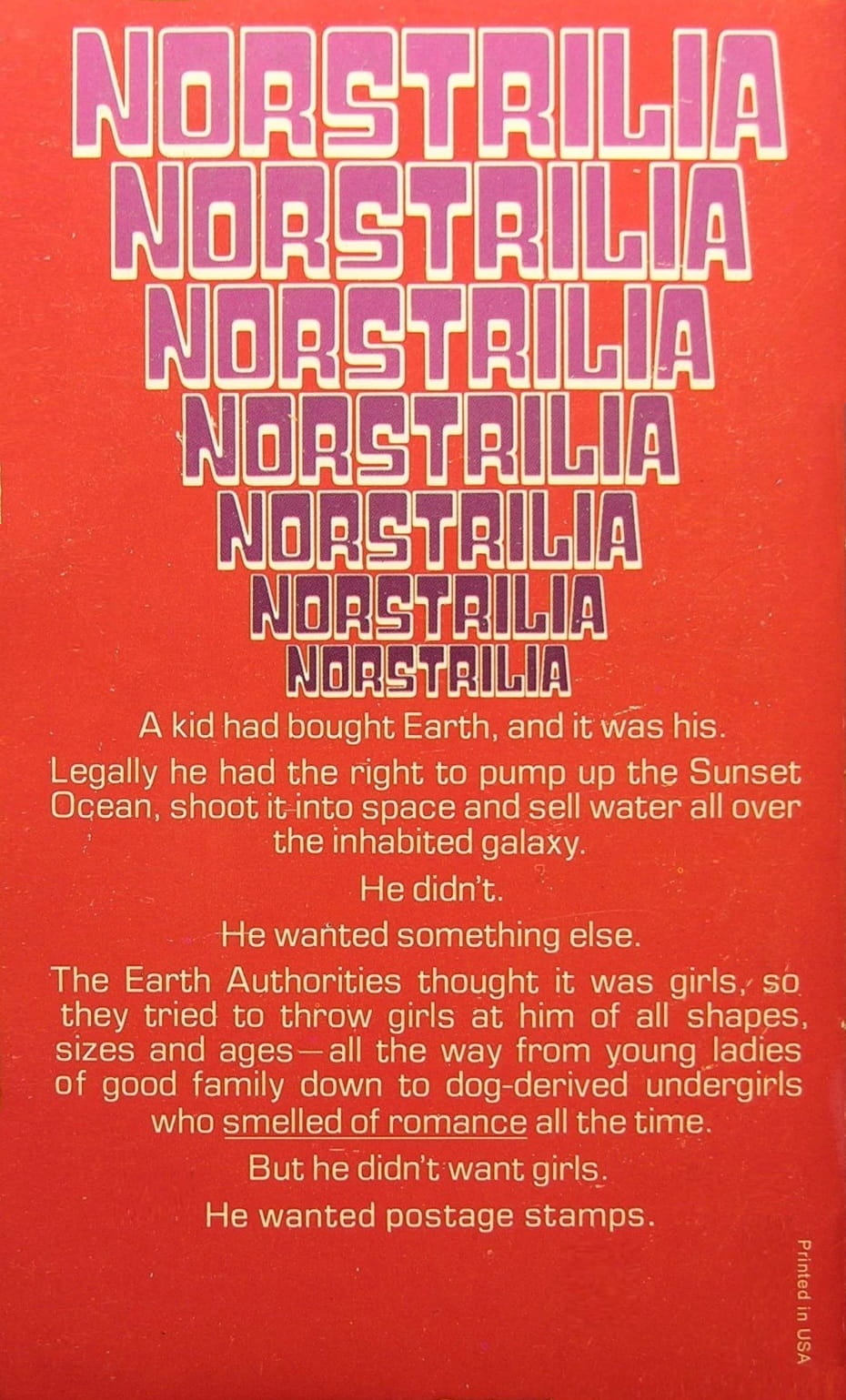 |
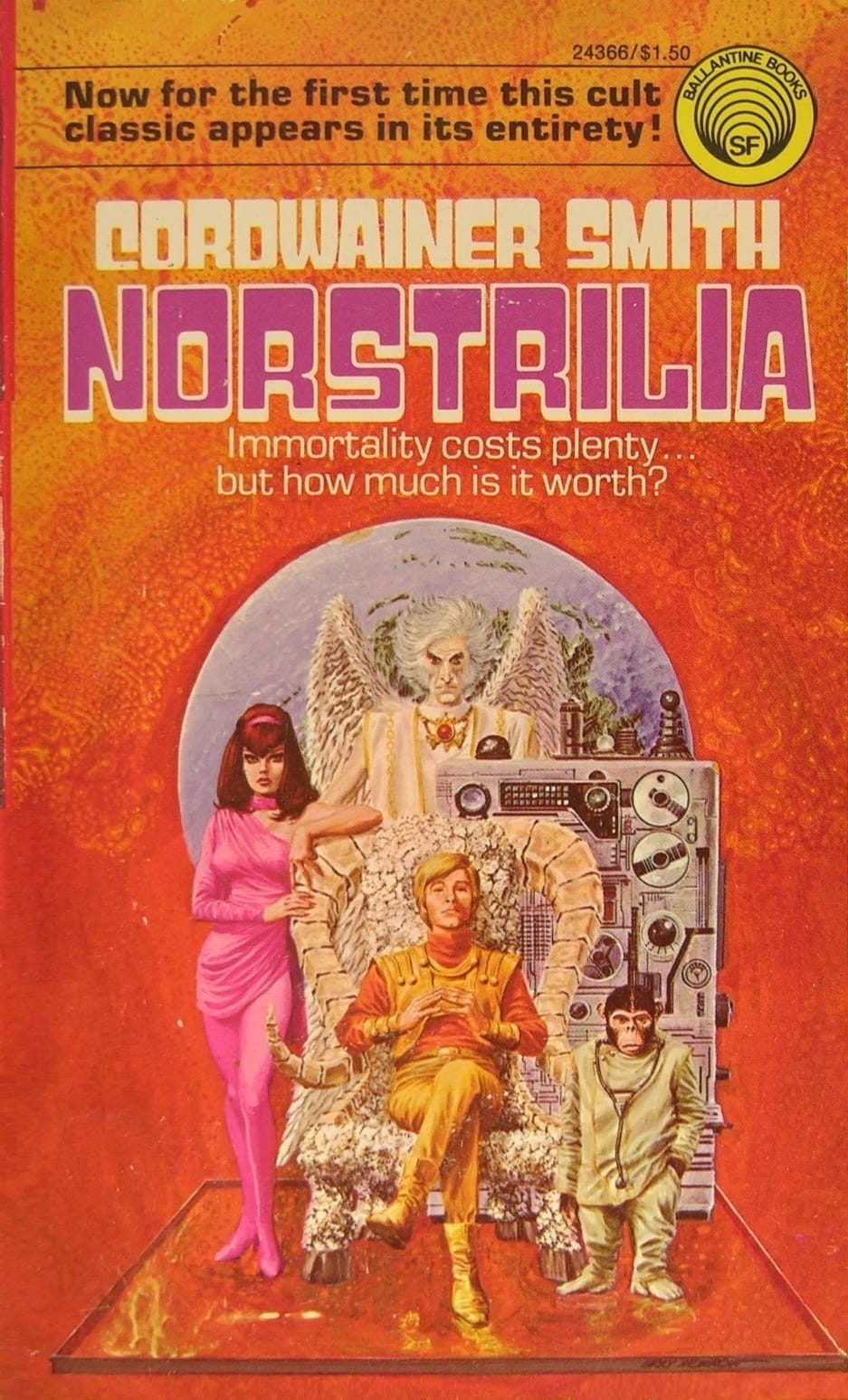
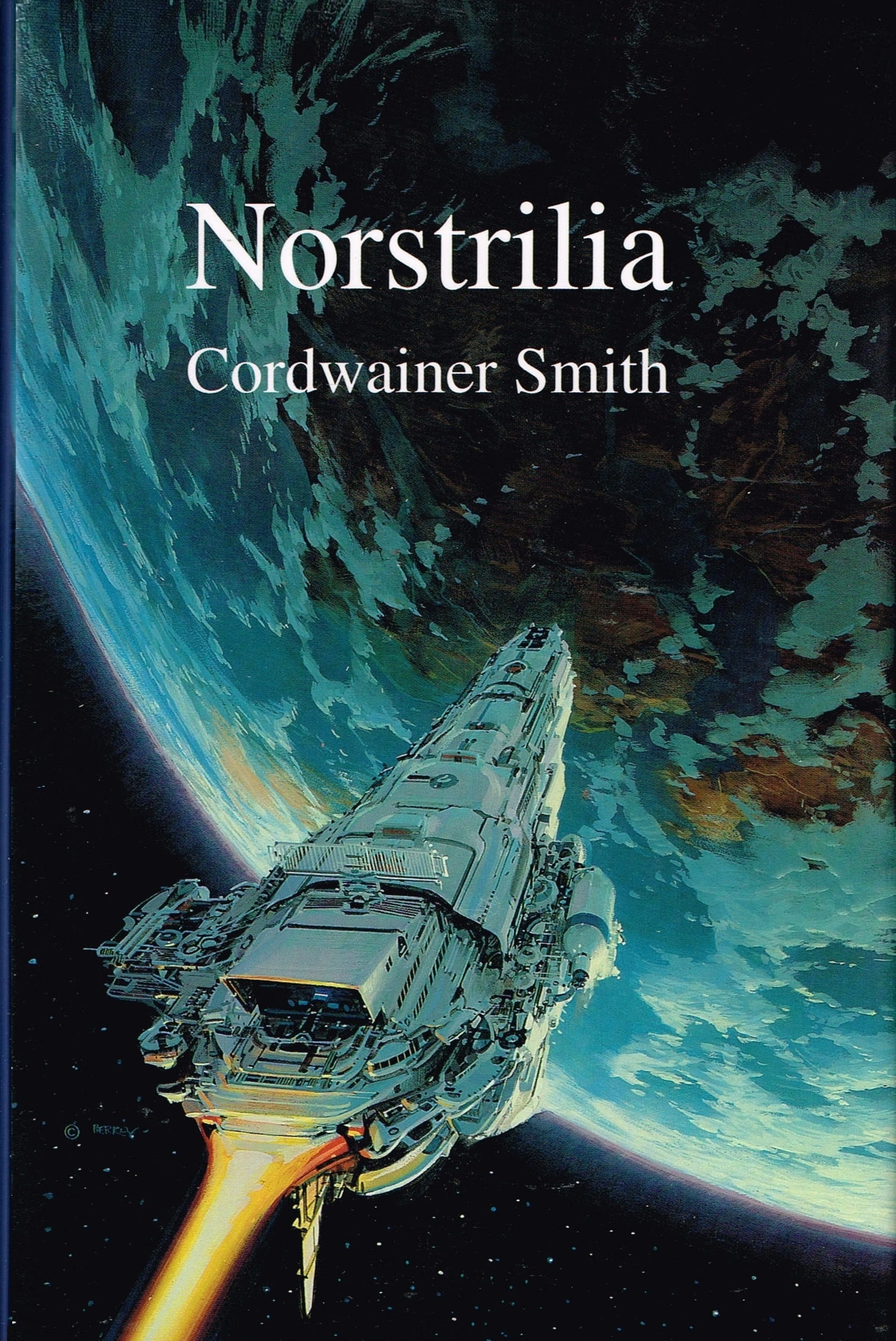
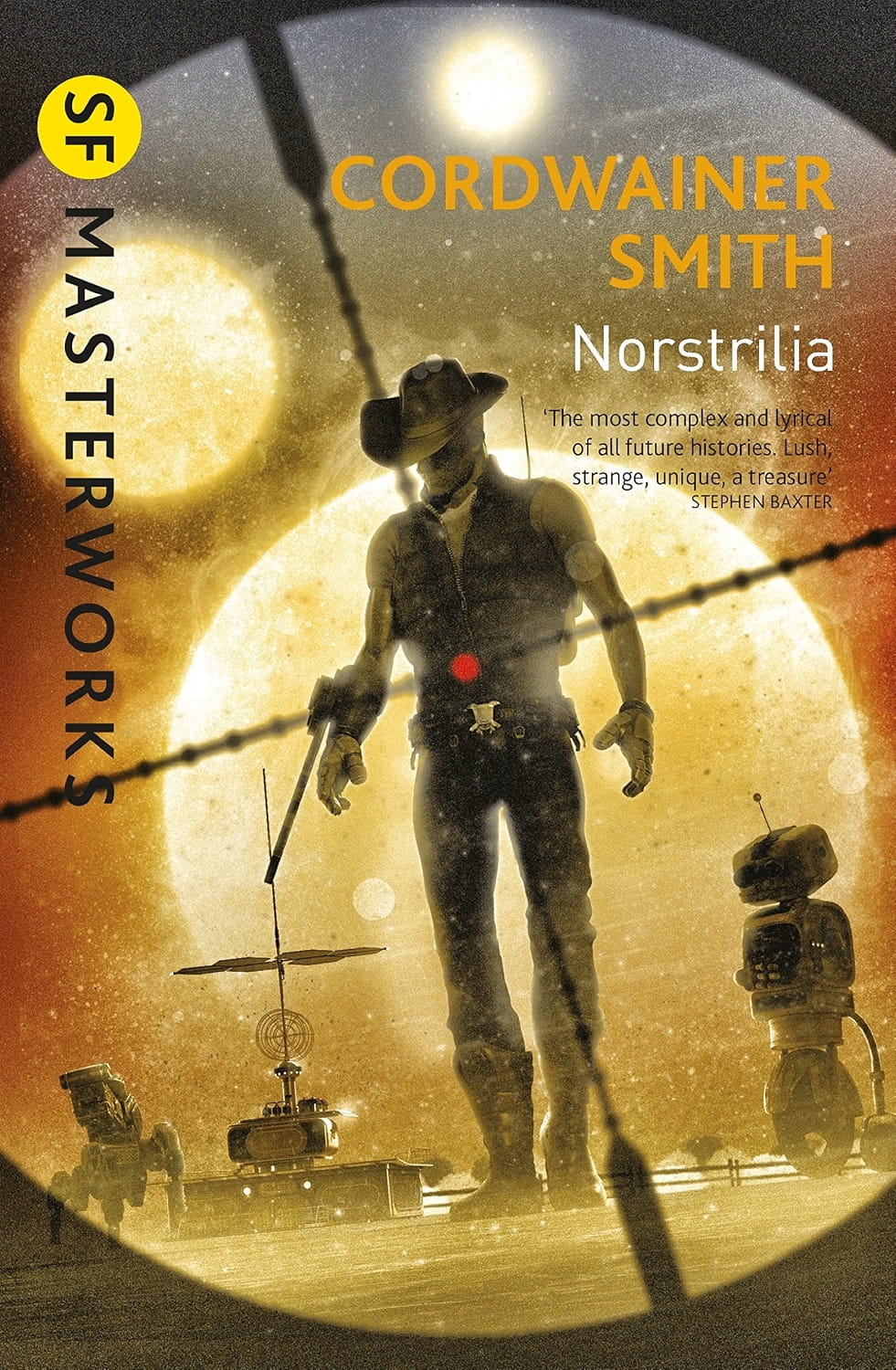
Norstrilia by Cordwainer Smith (Del Rey, February 1975). Cover by Gray Morrow
Luck is hot and people funny.
Everybody’s fond of money.
Lose a chance and sell your mother.
Win the pot and buy another.
Other people fall and crash;
You may get the ton of cash!
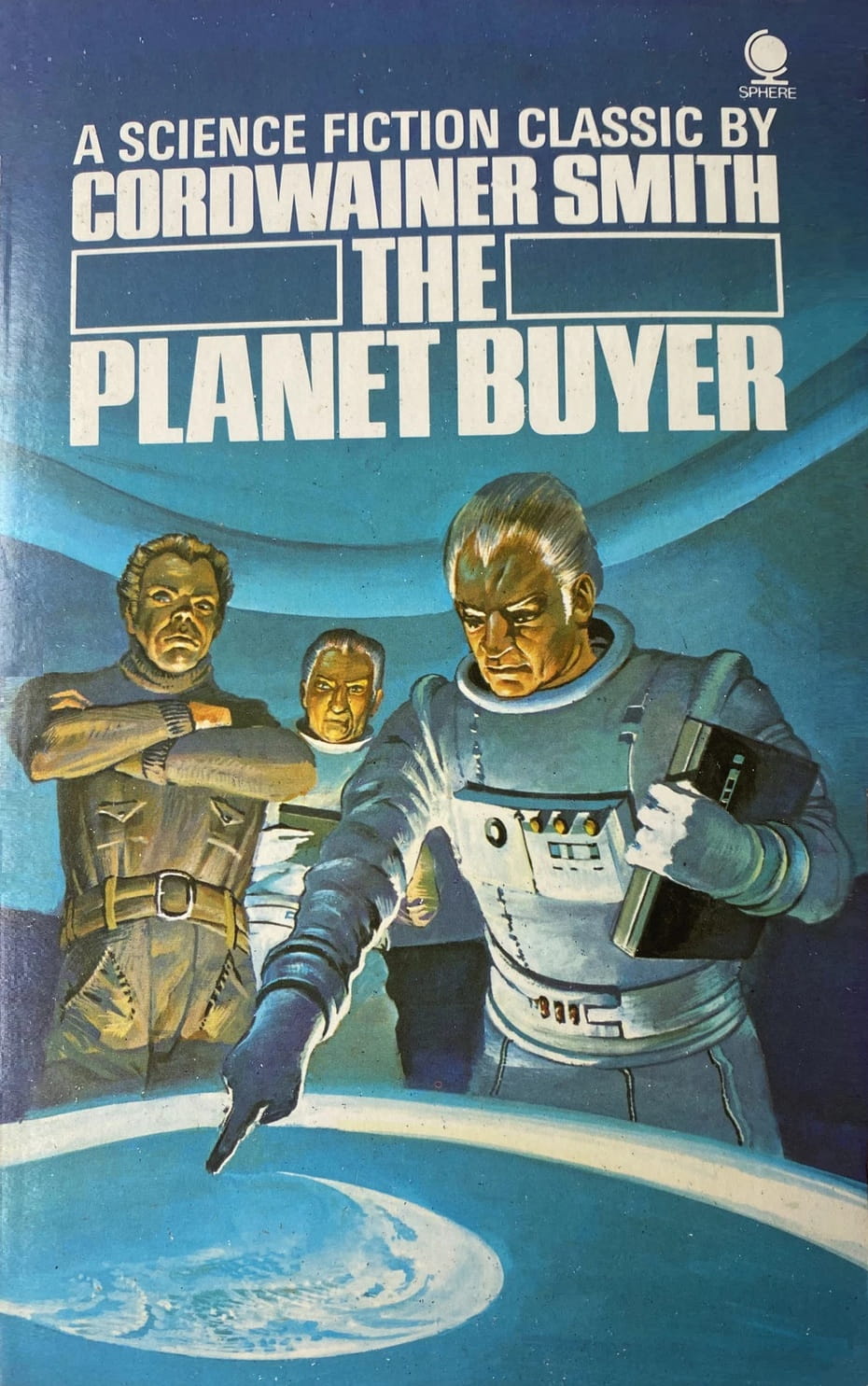
Norstrilia has a peculiar history as a publication. At roughly 75,000 words, it was longer than publishers were accepting for genre fiction in the early 1960s; it was split into two parts, with added material at the end of the first and the start of the second to make the break less abrupt.
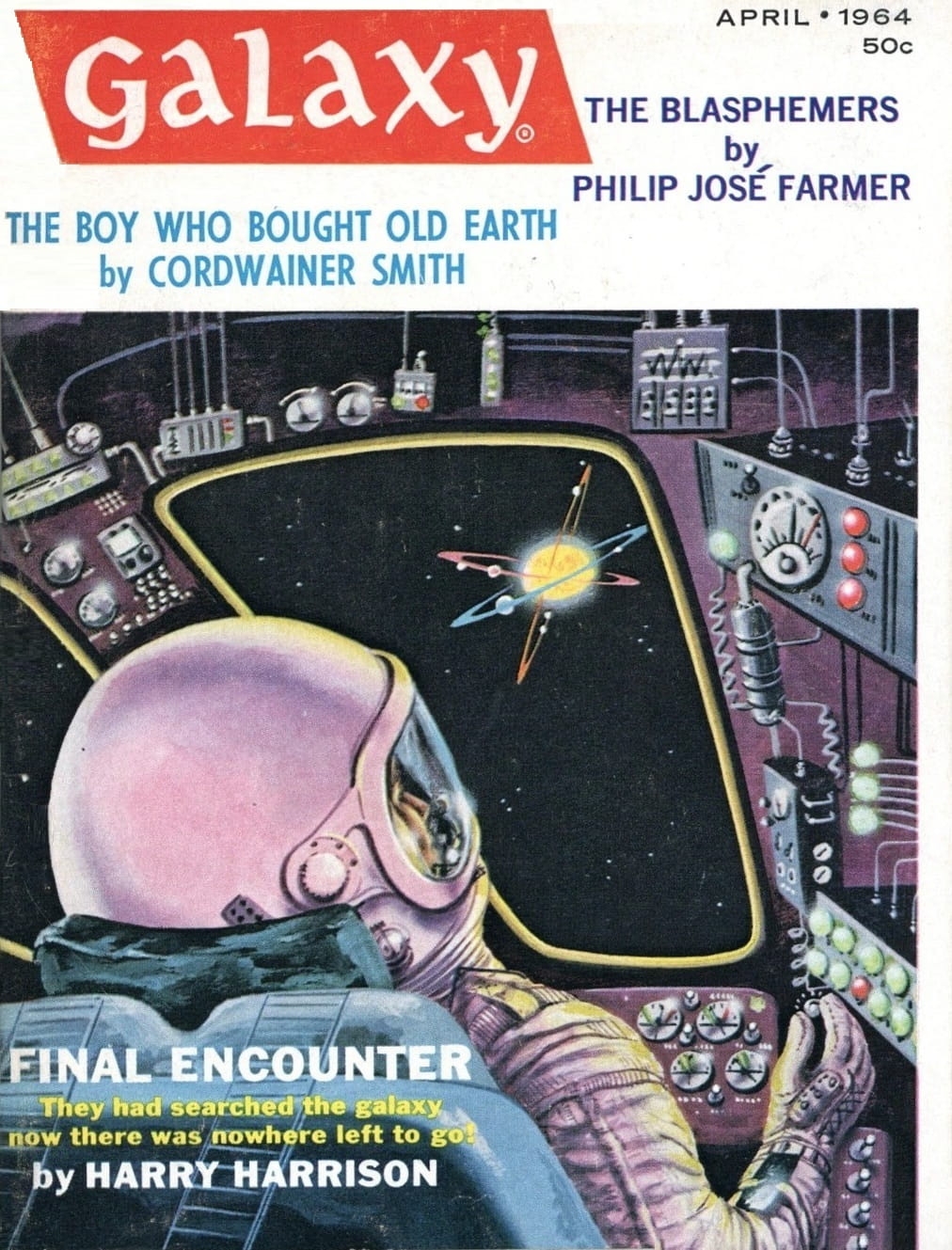
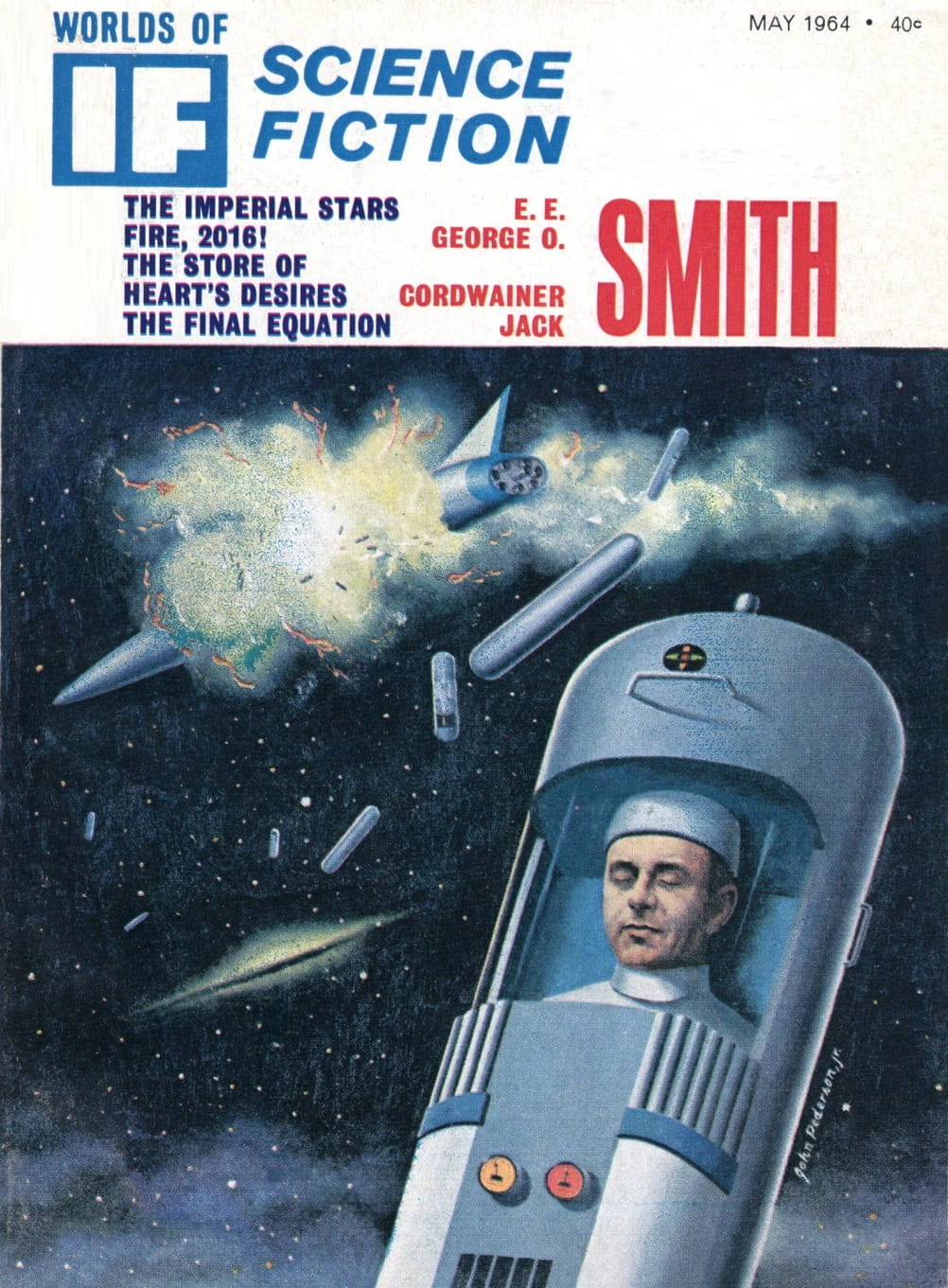
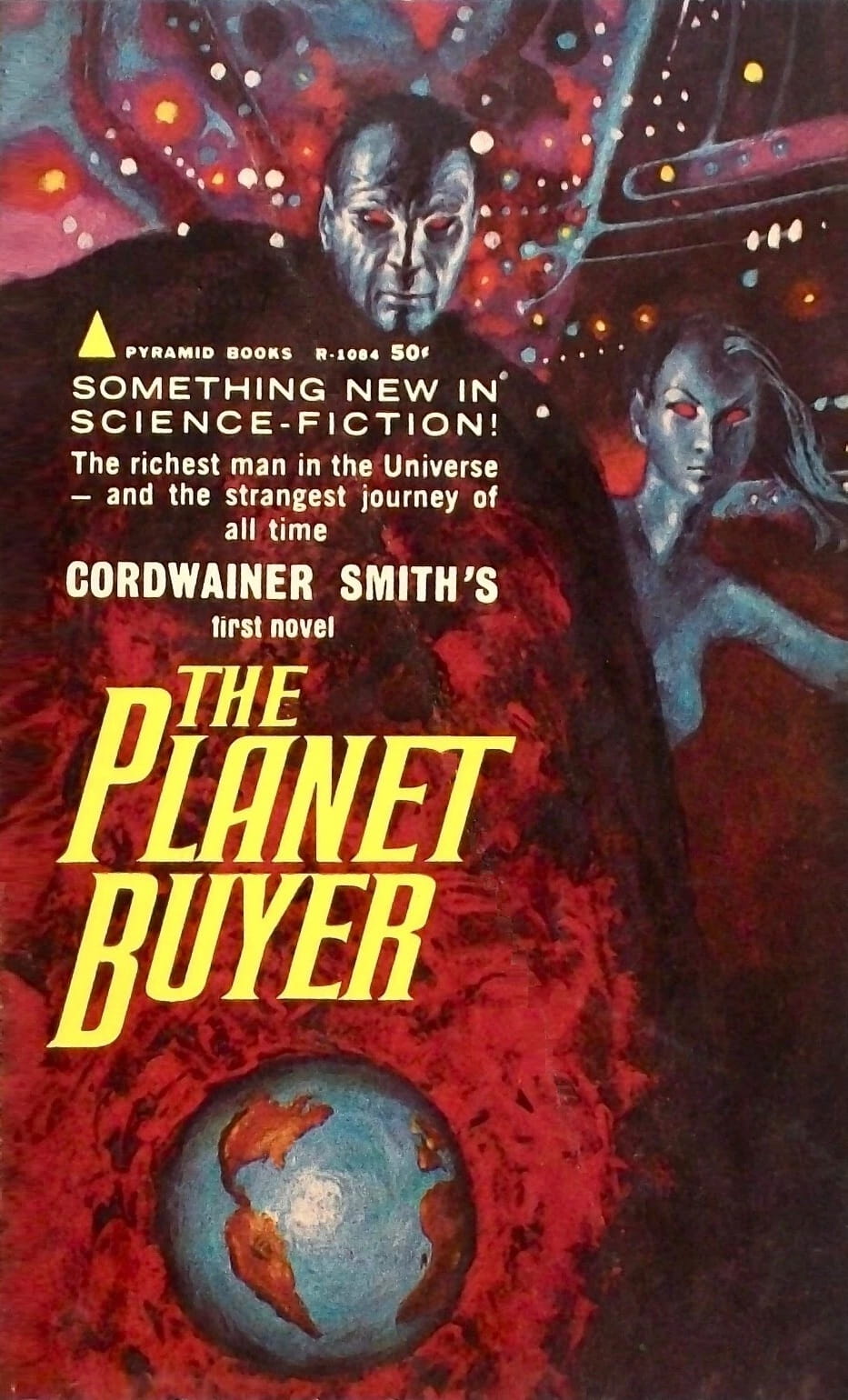
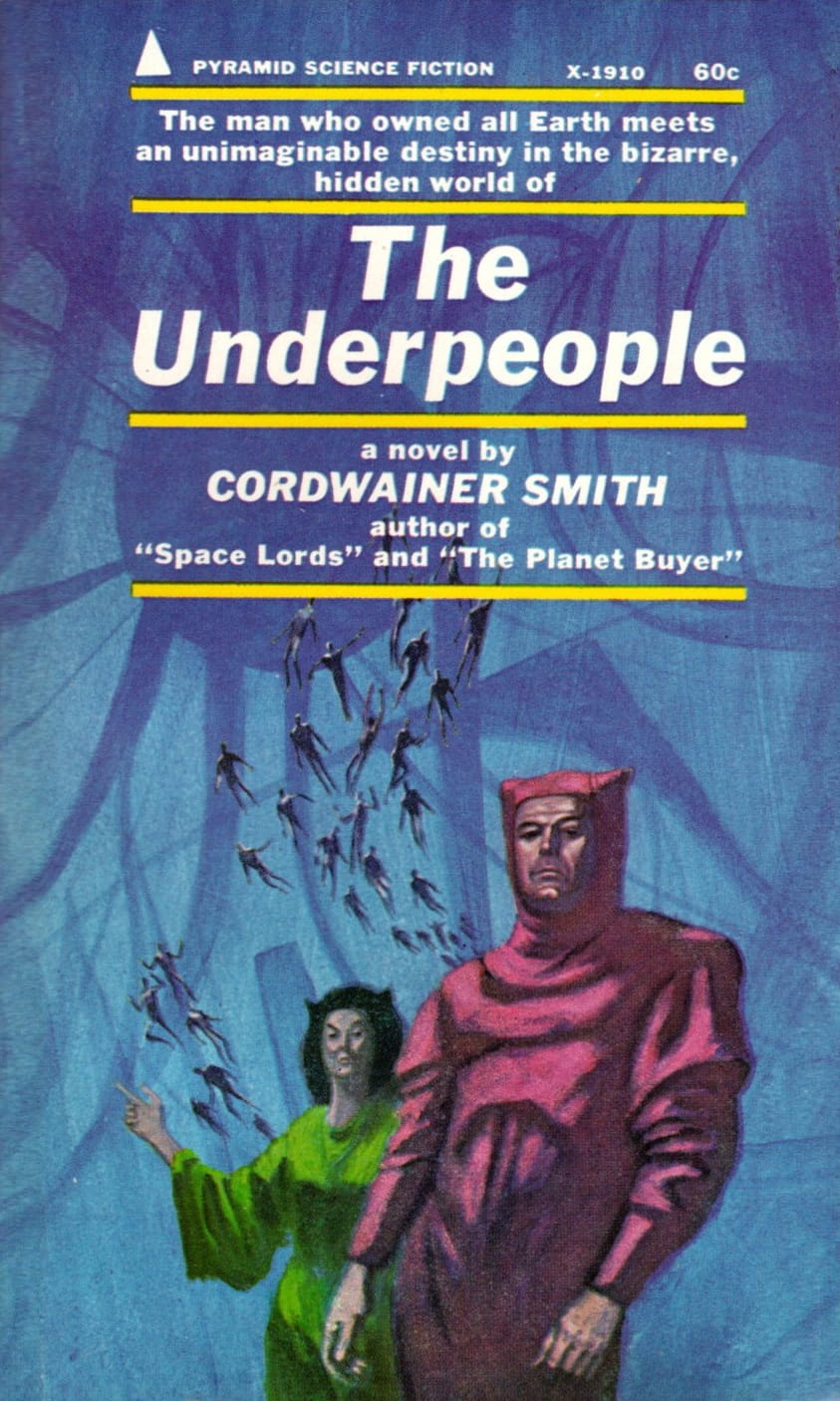
Both parts were serialized in 1964 — the first as “The Boy Who Bought Old Earth,” in Galaxy, and the second as “The Store of Heart’s Desire,” in Worlds of If — and the first part was published in book form that year as The Planet Buyer. The second part came out in book form in 1968, two years after the author’s death, as The Underpeople.
[Click the images for Old Earth versions.]
A combined version came out in 1975, and much later, in 1994, NESFA Press press released a hardback edition that had been critically edited to resolve textual problems with earlier versions.
Like nearly all of Smith’s fiction, Norstrilia is set in his enormously complicated future history, which spans millenia after his own time. Rather as Kipling brought a character, Lispeth, from one of his first short stories into his greatest novel, Kim, Smith brings various elements from his past short fiction into Norstrilia. Norstrilia itself comes from “Mother Hitton’s Little Kittens”; the beautiful cat-girl C’mell from “The Ballad of Lost C’mell” (a story of conspiracy) and “Alpha Ralpha Boulevard” (a story about the Rediscovery of Man); Lord Jestocost and the E’telekeli, two of the movers of the story, from “The Ballad of Lost C’mell.”
Smith enjoys playing with language in his place names: Norstrilia is a shortened form of “Old North Australia,” and the site of Earthport, Meeya Meefla, is a literal pronunciation of “Miami, Fla.” (as it used to be abbreviated).
Fitting his choice of title, the theme of Norstrilia seems to be the distinctive quality of Australian culture, in humorous exaggeration. Norstrilians live on farms where they raise gigantic sheep; and the infectious organisms that make the sheep grow so large also secrete stroon, a drug that can prolong human life indefinitely and that sells for inconceivable prices.
But to avoid having their way of life changed by their vast wealth, the Norstrilians impose import duties of 20,000,000% on all foreign goods, and lead simple rural lives like their more or less legendary Australian ancestors. As the source of an almost inconceivably valuable product, Norstrilia is threatened with everything from theft to invasion, and its people are brought up to be ruthless in defending themselves.
Smith’s protagonist, Roderick Frederick Ronald Arnold William MacArthur McBan, shortened to “Rod McBan,” is the heir to a Norstrilian farm, the Station of Doom — but he has a curious disability: Where other Norstrilians are telepathic, able to “spiek” and “hier,” Rod is telepathically deaf (most of the time) and mute except for sending bursts of mental noise that cause intense pain to everyone nearby.
 |
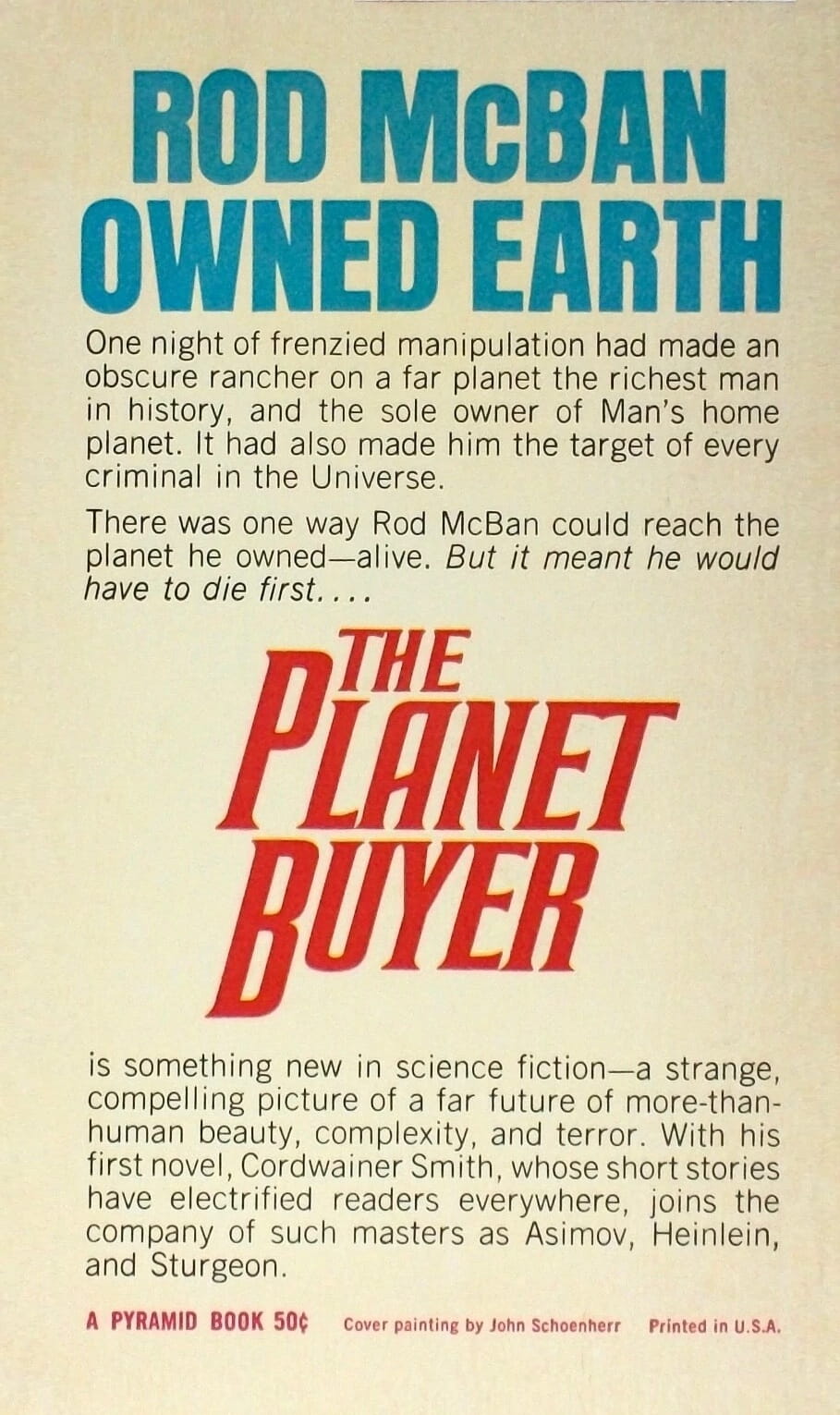 |
The Planet Buyer (Pyramid Books, October 1964). Cover by John Schoenherr
He also faces the enemy of a Norstrilian official, Houghton Syme, the Onnsec (from “Honorable Secretary”). To get him out of danger, a computer he inherited from his maternal grandfather coaches him in financial manipulations that make him incredibly wealthy — enough so that he can buy Earth, or at least large parts of it, and then travel there and have adventures.
Those adventures lead to encounters with most of the major imaginative constructs of Smith’s future. Rod encounters the Lords of the Instrumentality, a self-selected group of men and women who govern Earth (and at least some other planets), acting as magistrates — seemingly modeled on Chinese administrators.
 |
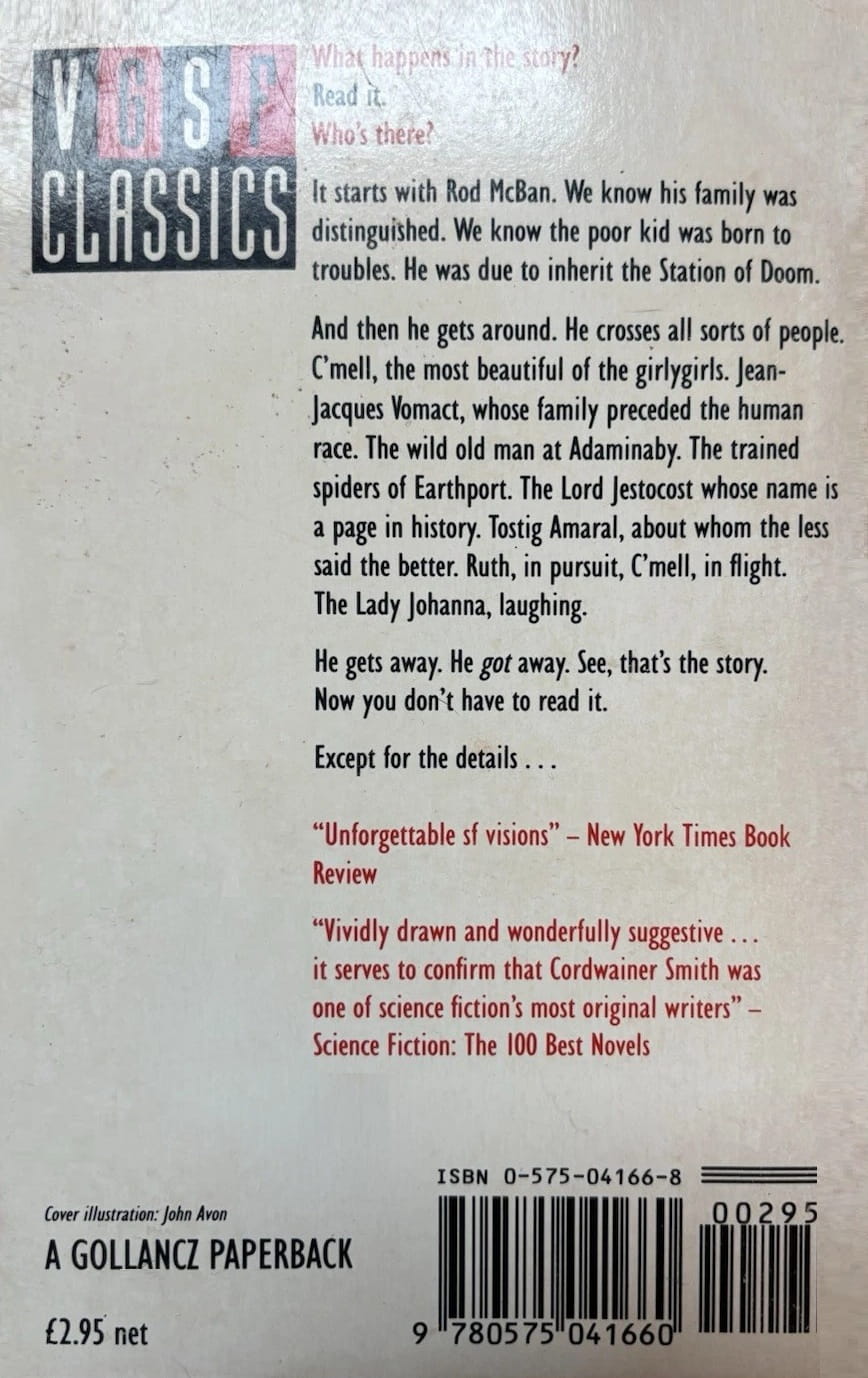 |
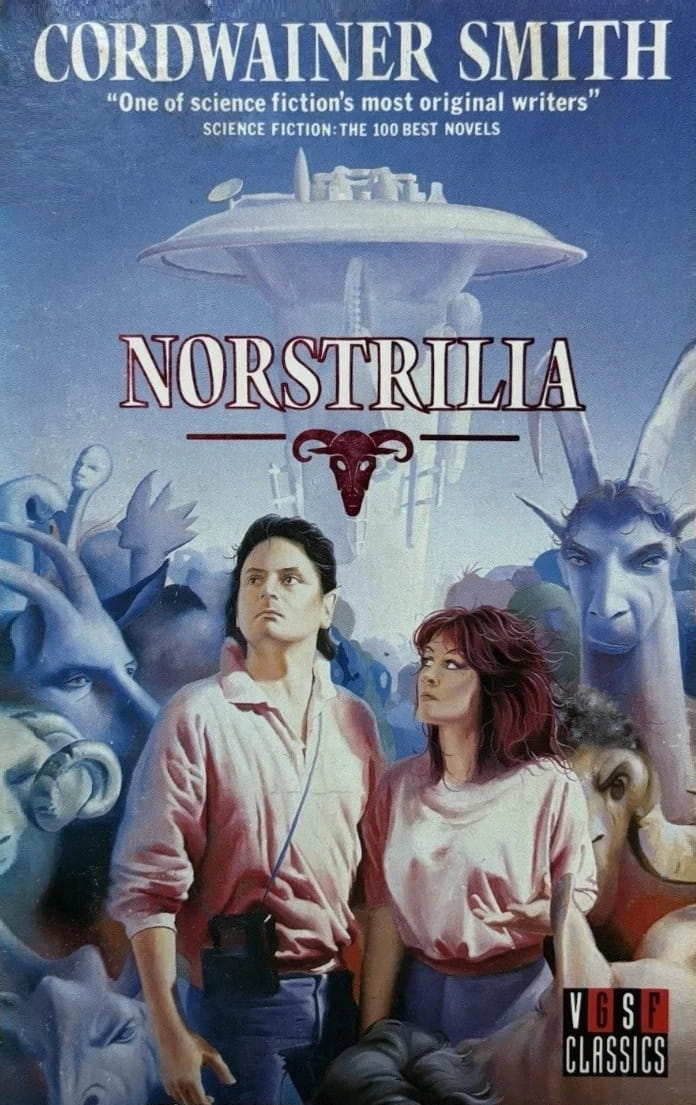
Norstrilia (Gollancz/VGSF Classics #24, May 1988). Cover by John Avon
He is exposed to the Rediscovery of Mankind, in which ancient languages and cultures from before the nuclear wars that destroyed Twentieth Century civilization are revived, in the hope of bringing meaning back into life — though they are revived mostly in simulated forms that amount to play-acting at being French or Japanese; for example, people go into stores or restaurants and “buy” things, but the money is simply handed out for free, rather than being earned in any way (a curious bit of self-satire).
And he encounters the Underpeople, Earth animals rebuilt into humanoid form, but compelled to work and denied any sort of rights, who have formed their own underground liberation movement; in fact, he is himself disguised as one of them, the cat C’rod, and given a real cat, C’mell, as his guide and pretend wife, with whom he actually falls in love.
Less overtly, Rod encounters Christianity, still surviving in this remote future, but only cryptically alluded to. What Smith is showing here is the encounters of a kind of Twentieth-Century person with his own strange future.
The striking thing about this whole story is that Rod actually has very little agency in any of it. Back on Norstrilia, his fate is decided by his family and a group of local authorities (including a former Lord of the Instrumentality). On Earth, he’s led around by C’mell, but what happens to him is largely guided by such characters as Lord Jestocost and other Lords of the Instrumentality, the Catmaster (a kind of cat psychotherapist), and the E’telekeli, a leader of the Underpeople and a religious teacher.
He’s offered choices, but they mostly amount to accepting structures that other people have come up with for him. There are scenes where he engages in physical action, but they’re not the focus of the story. In a sense, Rod is a kind of catalyst, an entity that causes changes and reactions in the system around it, but is itself unchanged.
On one hand, Norstrilia is a novel of apprenticeship, a Bildungroman, whose central character departs from his life as a boy and returns to it as a man. He has all sorts of liminal experiences, on the way to that return, but he doesn’t become part of their world; he becomes more fully himself, another link in the chain of familial descent.
But on the other hand, that world is real, and Rod’s journey provides Smith with a way of showing it off and even of changing it. The two stories are an interesting but odd combination.
Where the classic formula is to have a “man from Mars” discovery our familiar world and find it strange, Smith has a man from Australia encounter a world that really is strange, and by doing so gives us a tour of his own imagination; and in the end that’s what we take away from this novel.
William H. Stoddard is a professional copy editor specializing in scholarly and scientific publications. As a secondary career, he has written more than two dozen books for Steve Jackson Games, starting in 2000 with GURPS Steampunk. He lives in Lawrence, Kansas with his wife; their two black cats; and a hundred shelf feet of books, including large amounts of science fiction, fantasy, and graphic novels.