From Robert E. Howard to Ray Bradbury: The Literary Influence of The Bible and The Odyssey
College lit classes introduced me to two works that had a profound influence on my own development as a writer.
The first was the King James version of The Bible. My family was Catholic and I’d read the Catholic Bible in my teen years. We didn’t read the whole Bible for my college class but read samples from King James, which is considered — by Catholics — to be a Protestant Bible. (It doesn’t include books that are part of the Catholic Bible, such as Tobit, Judith, Wisdom, Sirach, Baruch, 1 & 2 Maccabees, and portions of Esther and Daniel.)
My college class did not read The Bible for religious reasons. We read it as literature, and the King James version is magnificent literature. I wasn’t even religious anymore myself but I loved the language.
Rev, chap 6, verses 7-8:
And when he had opened the fourth seal, I heard the voice of the fourth beast say, Come and see. And I looked, and behold a pale horse: and his name that sat on him was Death, and Hell followed with him.
I got goosebumps. The drama and power of such words engaged my emotions and imagination, and I realized such language had been an influence on some of my favorite writers, like Robert E. Howard, Edgar Rice Burroughs, and Ray Bradbury.
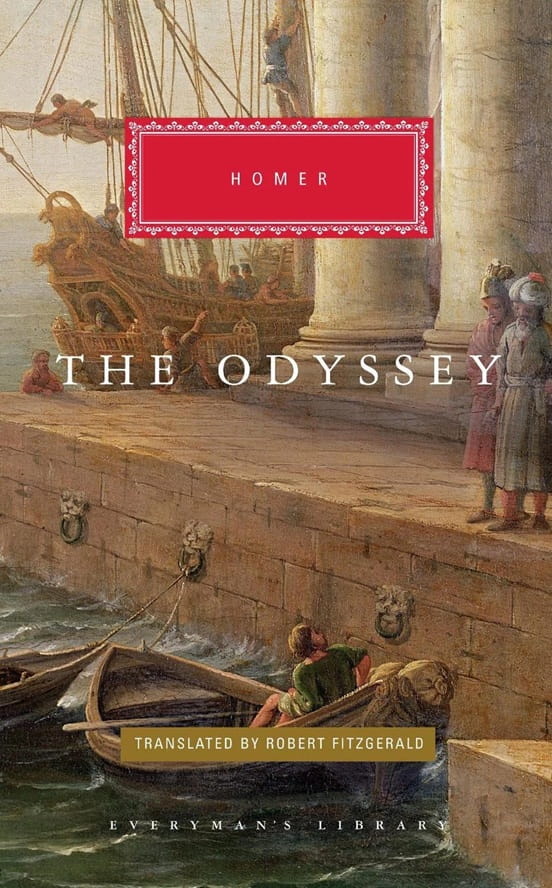
The second book I read in literature class that influenced my writing — and my thinking about literature — was The Odyssey by Homer. The translation we read was by Robert Fitzgerald and I’m so grateful for that. It, too, was a magnificent effort. I even memorized sections:
The sun rose on the flawless brimming sea, into a sky all brazen — all one brightening, for gods immortal and for mortal men, on plowlands kind with grain.
Homer was an 8th century Greek poet, and his words in The Odyssey and The Iliad set the stage for the kind of heroic literature we celebrate on this page — tales of heroes and monsters, tales of exotic lands, of wild beasts and adventures, tales to be shouted with ale-soaked breaths, to be told around fires that burn against the forever darkness.
Charles Gramlich administers The Swords & Planet League group on Facebook, where this post first appeared. His last article for us was Becoming a Reader. See all of his recent posts for Black Gate here.
I teach “History of Religion” at my college, and I always have students who think the KJ Bible was written back in Jesus’s time, and that King James was some Hebrew king in the First Century.
It astonishes them to learn it’s newer than Shakespeare, and that King James ordered that lofty prose to be used on purpose to make it sound the way it sounds.