Murder — What Is It Good For? Truman Capote’s In Cold Blood
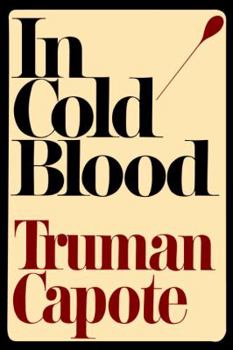
There’s nothing I love more than a good murder… but, before you summon the authorities, let me qualify that a bit. I love a fake murder, a fictional murder. I’ll follow Perry Mason, Lieutenant Columbo, and Jessica Fletcher anywhere.
The real thing, though? I have deeply conflicted feelings about books, movies, and especially television shows that deal with actual homicides, which puts me at odds with virtually the entire Entertainment Industrial Complex, with Prime and Netflix and all of the other streamers, because it seems like real murder is their bloody bread and butter; do any of them make anything other than true crime shows?
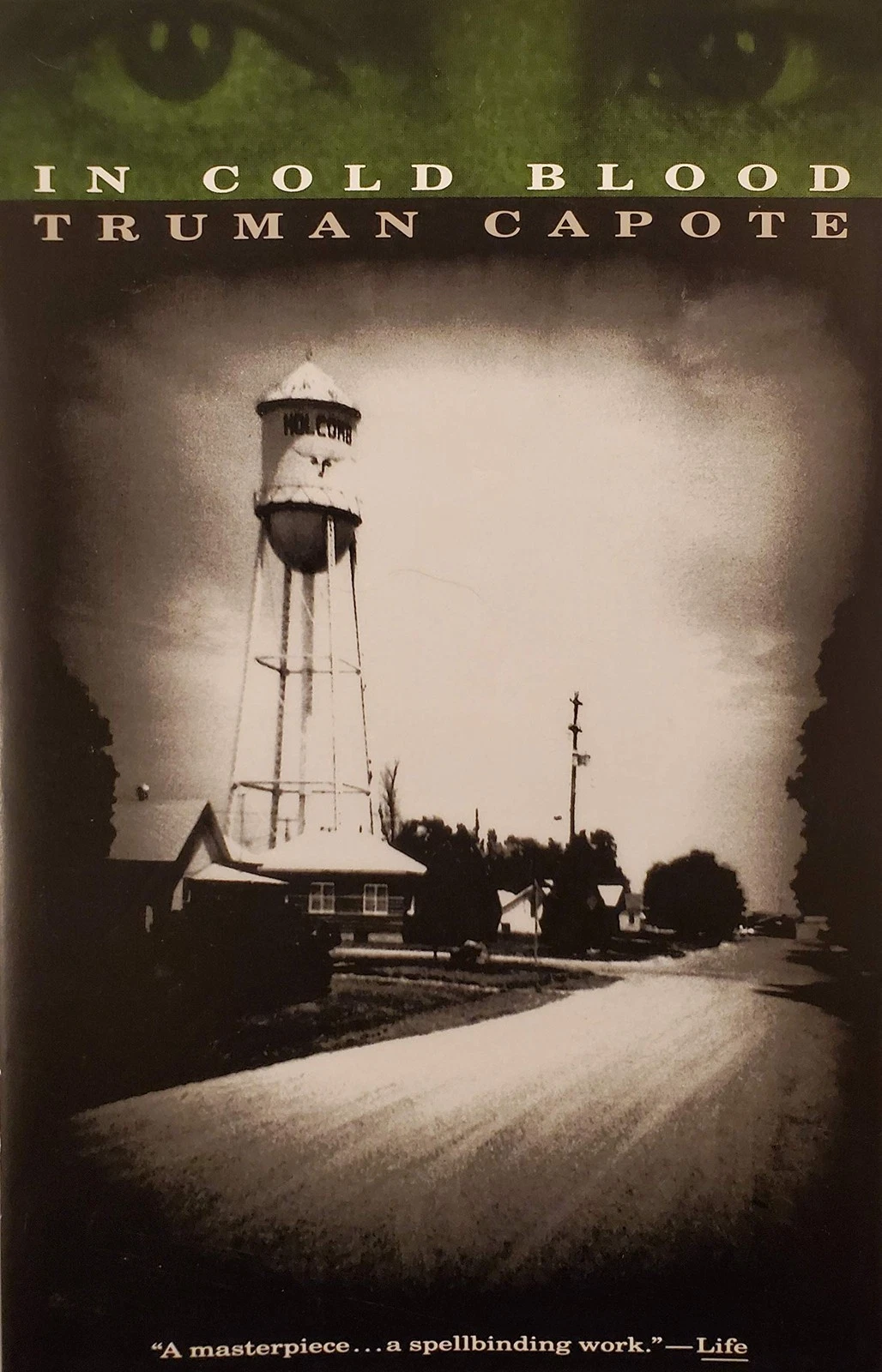
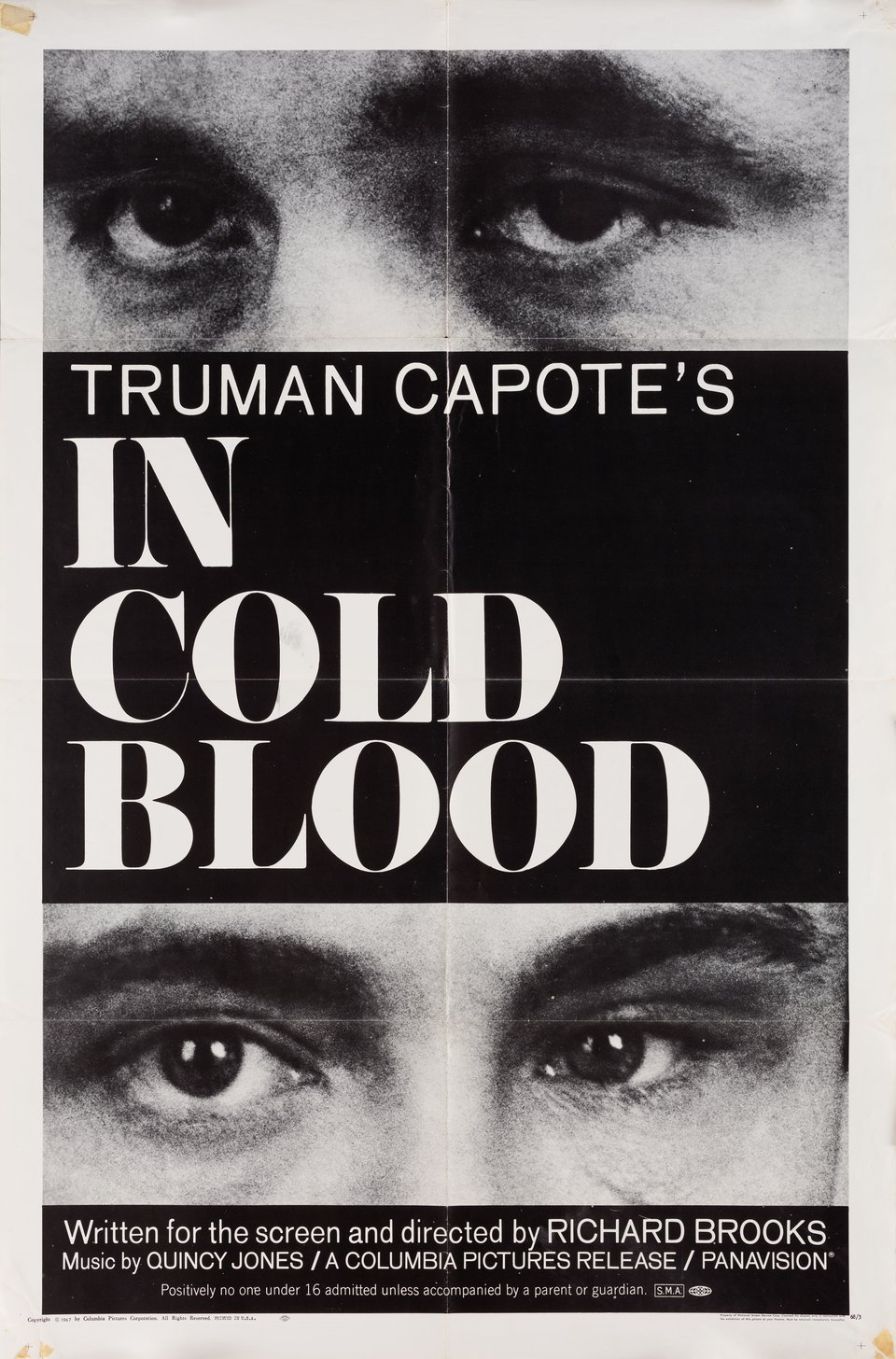
Immersing yourself in a fictional killing is one thing; I know that when the cameras stopped rolling, the victim got up from the floor, brushed himself off, and shared a smoke and a joke with Raymond Burr or Peter Falk. But an actual murder, where a real human being suffered and died? I don’t know — that just doesn’t seem like entertainment to me, but I’m clearly in the minority (even in my own house). I blame it all on Truman Capote and his 1966 smash bestseller (and the smash film version which followed a year later), In Cold Blood. Capote’s “nonfiction novel” has to be reckoned one of the most influential books of the twentieth century, as it virtually created the true crime genre that now dominates the media landscape to the tune of several billion dollars a year.
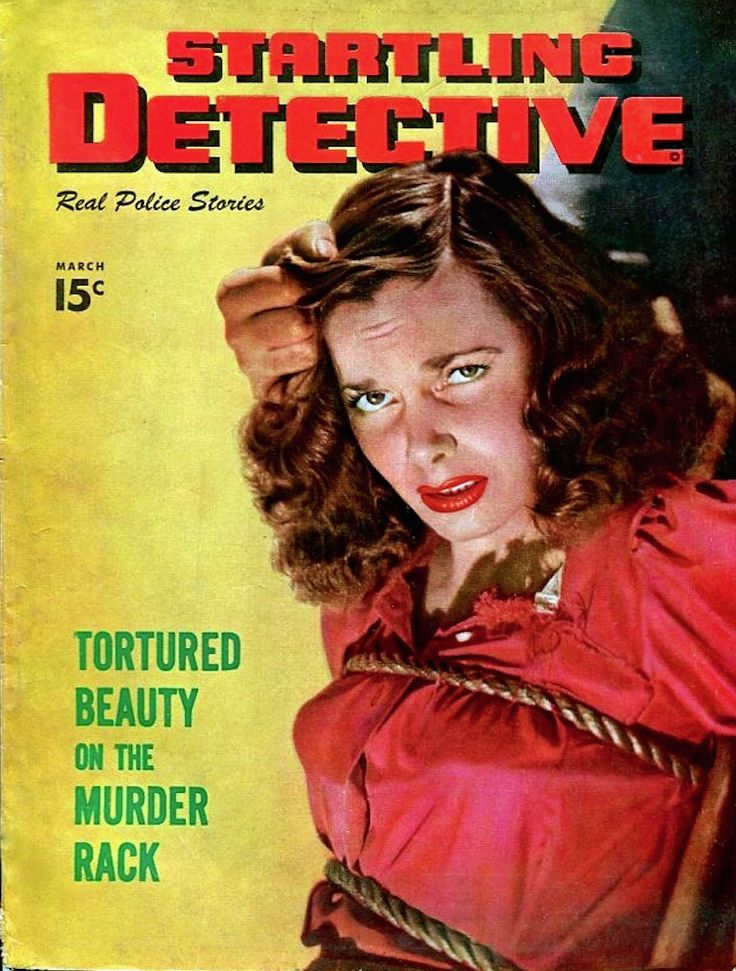
Before Capote, accounts of real-life murders were mostly confined to sleazy magazines boasting bondage/cheesecake covers and luridly titled, hack-written stories like “The Riddle of Oregon’s Dismembered Brunette!” and “Tortured Beauty on the Murder Rack!”
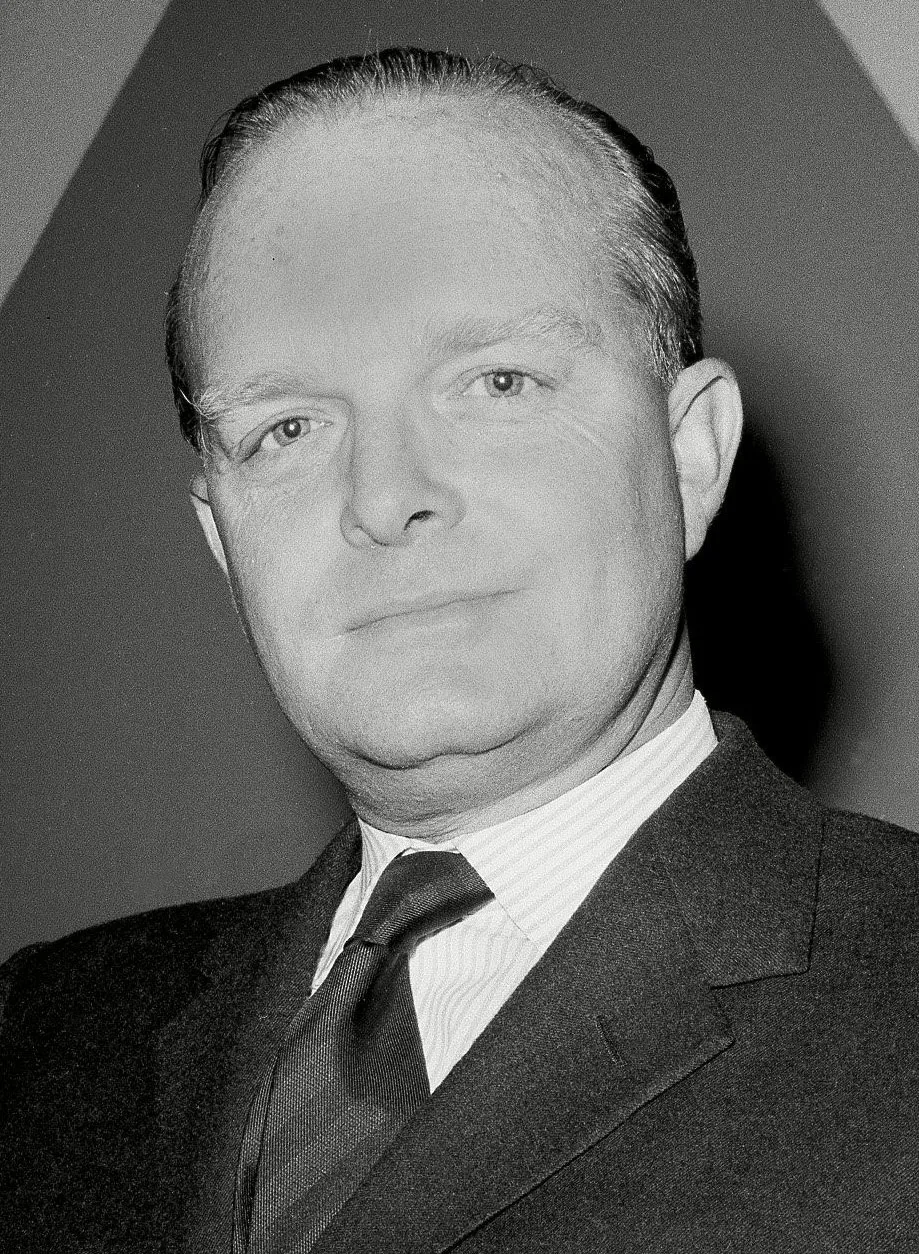
Truman Capote, on the other hand, was no anonymous drudge but one of his era’s literary lions, and the pieces that became In Cold Blood appeared, not between the “Quick — hide it! Mom’s coming!” covers of True Detective or Police Files but in the tony pages of The New Yorker.
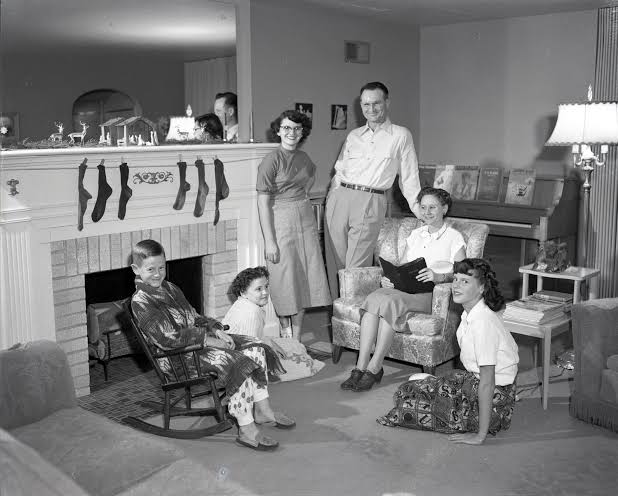
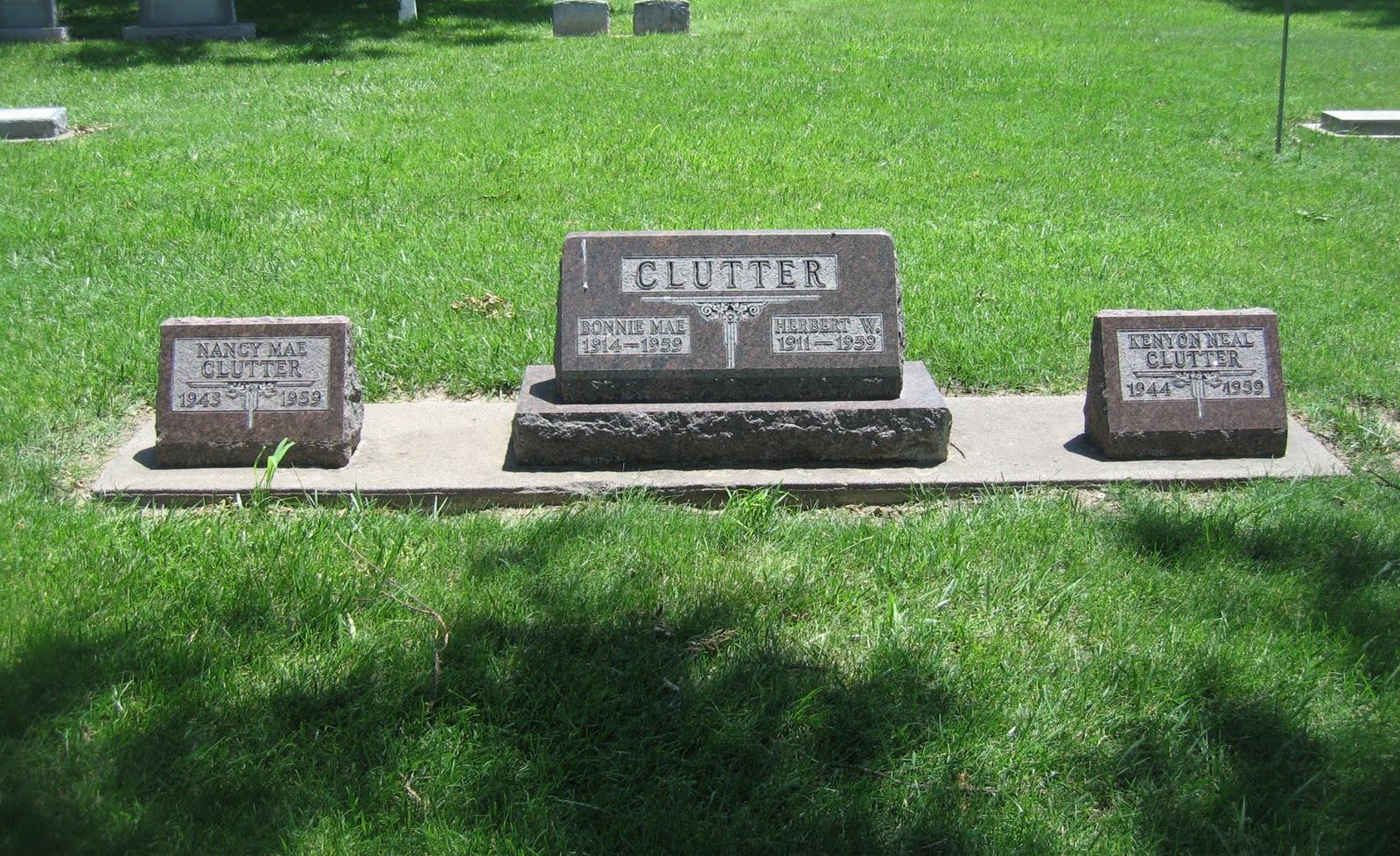
Subtitled “A True Account of a Multiple Murder and Its Consequences,” the book describes a shocking crime which occurred in the rural town of Holcomb, Kansas on the night of November 15th, 1959, when well-to-do farmer Herbert Clutter, his wife Bonnie, and their teenage children Kenyon and Nancy, were all bound, gagged, and murdered in their home with a shotgun blast to the head (Herbert’s throat had also been cut) by, as Capote titled one of his book’s four sections, “persons unknown.”
It’s no surprise that the murders had a seismic effect on the community, and several things contributed to this. The Clutters were well-liked, known for their kindness and generosity; the crime seemed motiveless (police were inclined to rule out robbery, as nothing significant appeared to have been taken); the perpetrators had worked carefully and efficiently, leaving virtually no clues behind; and the killings were extraordinarily cruel and savage. It’s no wonder the murders put the normally sedate town (where it was literally true that no one locked their doors at night — the Clutters hadn’t) — and the whole surrounding multi-state area — into a near-panic.
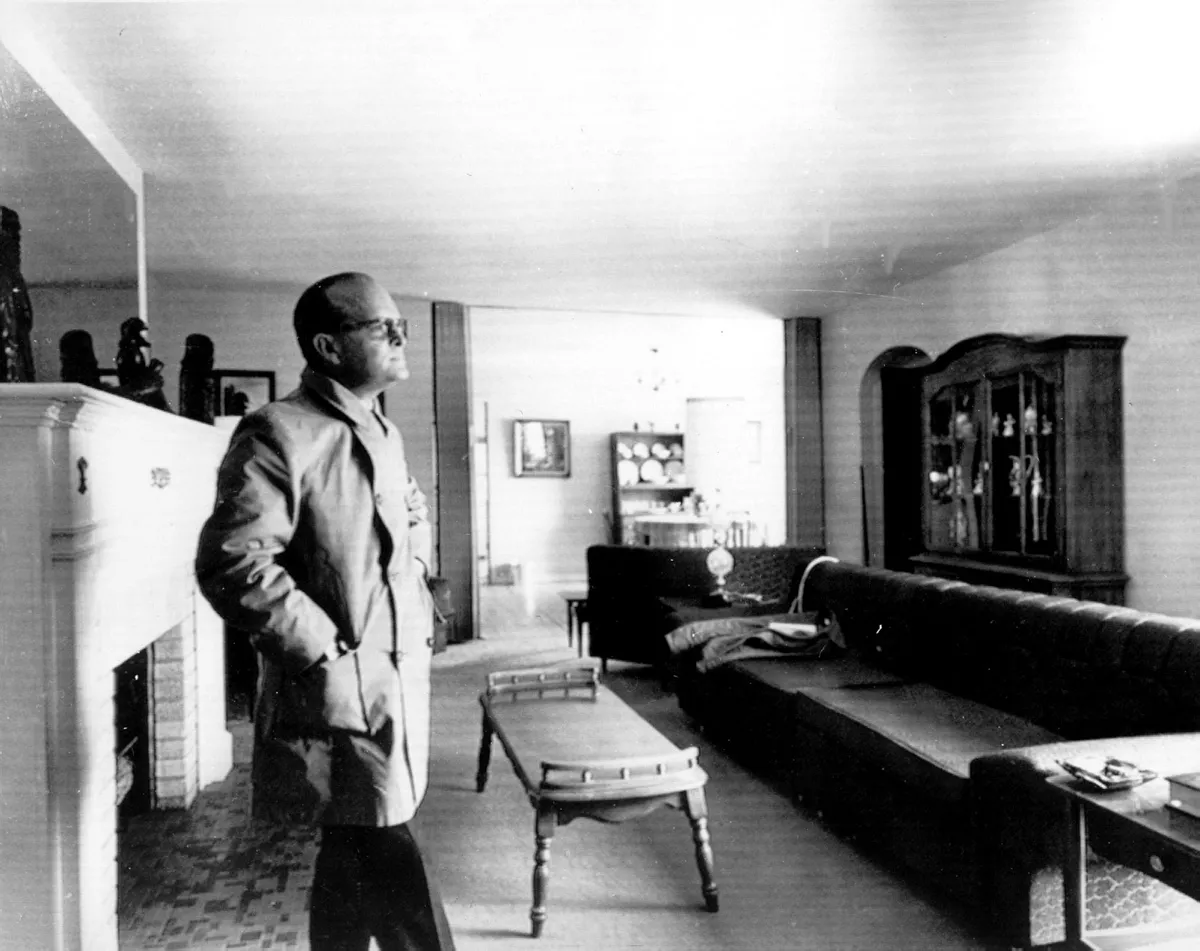
In New York, Capote heard about the crime and decided that it would make an interesting article. He travelled to Kansas with his childhood friend Harper Lee (of To Kill a Mockingbird fame) to get the lay of the land (flat), conduct some interviews, and generally snoop around. He quickly saw that there was more here than a simple article; the case would consume him for the next six years.
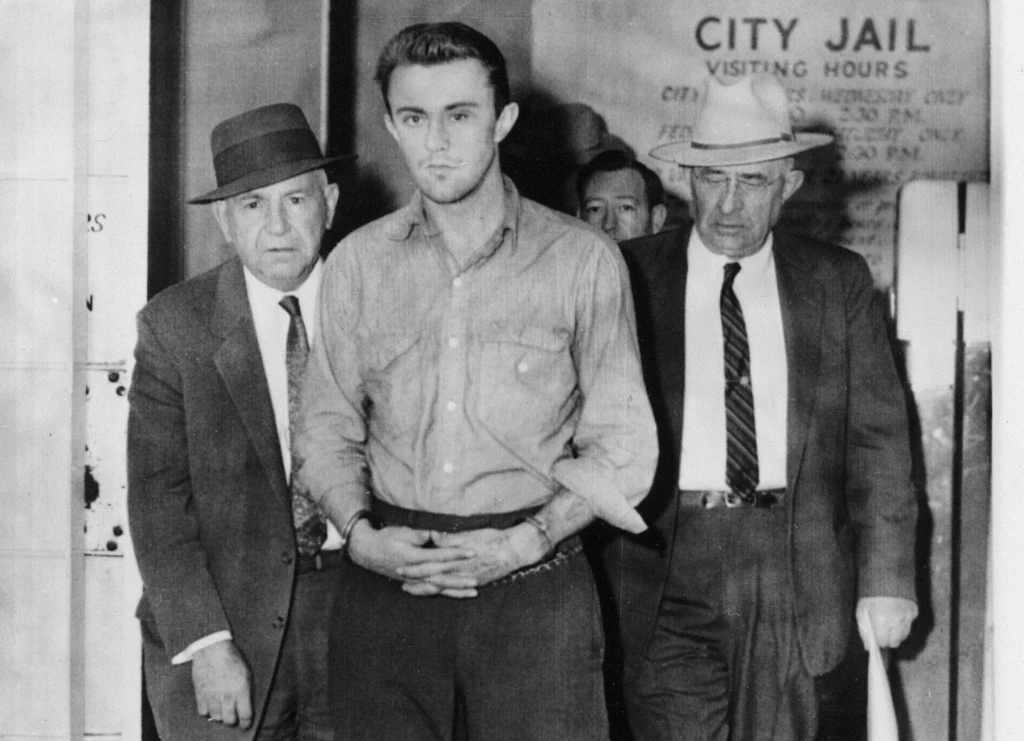
After a slow beginning by a team of agents from the Kansas Bureau of Investigation (KBI) headed by a tenacious ex-sheriff named Alvin Dewey, within six weeks the murderers were in custody. Despite a widespread feeling among Holcomb residents that the killer must have been someone local, someone who had known the Clutters and nursed a grudge against them (a feeling that led to suspicions and permanently damaged relationships among many previously friendly neighbors), the family had been wiped out by two small-time criminals who travelled four hundred miles to commit their crime, Dick Hickock and Perry Smith, a pair of young men so unmoored from ordinary society as to be virtually from another planet. The first time they ever laid eyes on the Clutters was on the night they killed them. (One small mercy — two older daughters had moved out of the house and away from Holcomb altogether.)
Why? Why did they kill the family, and kill them with such viciousness that people thought that it had to be personal?
It turned out that robbery was the motive (for the home invasion, anyway; the murders were a deeper, darker matter). Why, then, had almost nothing been taken? Because what Hickock and Smith had come to steal simply wasn’t there; it never had been.
The two men had met while doing stretches at the Kansas State Penitentiary, Hickock for passing bad checks (at which he was truly gifted) and Smith for breaking and entering. Shortly before his release Hickock shared a cell with a man named Floyd Wells, who ten years before had spent a season working as a farmhand for Herbert Clutter. Hickock continually pumped Wells for information about this rich farmer who lived half a mile away from his nearest neighbor.
Wells told Hickock that Clutter kept ten thousand dollars cash in a safe in his home office. Wells later couldn’t remember how he came by this idea, but it wasn’t true; Herbert Clutter never carried or kept large amounts of cash and did all of his business by check, a fact that everyone in Holcomb was well aware of. Not only were there no thousands of dollars in cash, there wasn’t even a safe.
Before his parole, Hickock told Wells that he was going to rob the Clutters, and that he would leave “no witnesses.” Wells didn’t take him seriously, considering it just typical prison bullshit coming from someone who was a notorious exaggerator and braggart. Dick Hickock was deadly serious, however, and he had just the partner in mind for the job, his friend Perry Smith. Once Hickock was out of prison he got in touch with Smith, who had been paroled the month before, and they put together a plan.
After entering the house and using a knife and twelve-gauge shotgun to take control of the sleep-fuddled Clutters, the invaders searched the house, upstairs and down… and found no safe and nothing more than pocket money. Hickock and Smith became increasingly frustrated and agitated until, deciding that nothing more was to be gained, they murdered the helpless family, and after carefully retrieving every spent shotgun shell, they fled, leaving nothing but some boot prints behind. Their final haul? A pair of Herbert Clutter’s binoculars, Kenyon’s portable radio, and about fifty dollars in cash, taken from the victims’ wallets and purses.
The KBI investigated hundreds of fruitless leads, but despite their tireless work the crime would likely never have been solved if the agents hadn’t gotten a massive break. Two days after the murders, Floyd Wells (still residing in the penitentiary) heard a radio report about the killings and the ongoing investigation. He instantly knew who had murdered the Clutters, and after weeks of hesitation, he told his story to the authorities.
It still took the police a while to bag Hickock and Smith; they located them in Kansas and were ready to arrest them, but the pair slipped through their fingers and went to Florida and then to Las Vegas, where they were finally apprehended.
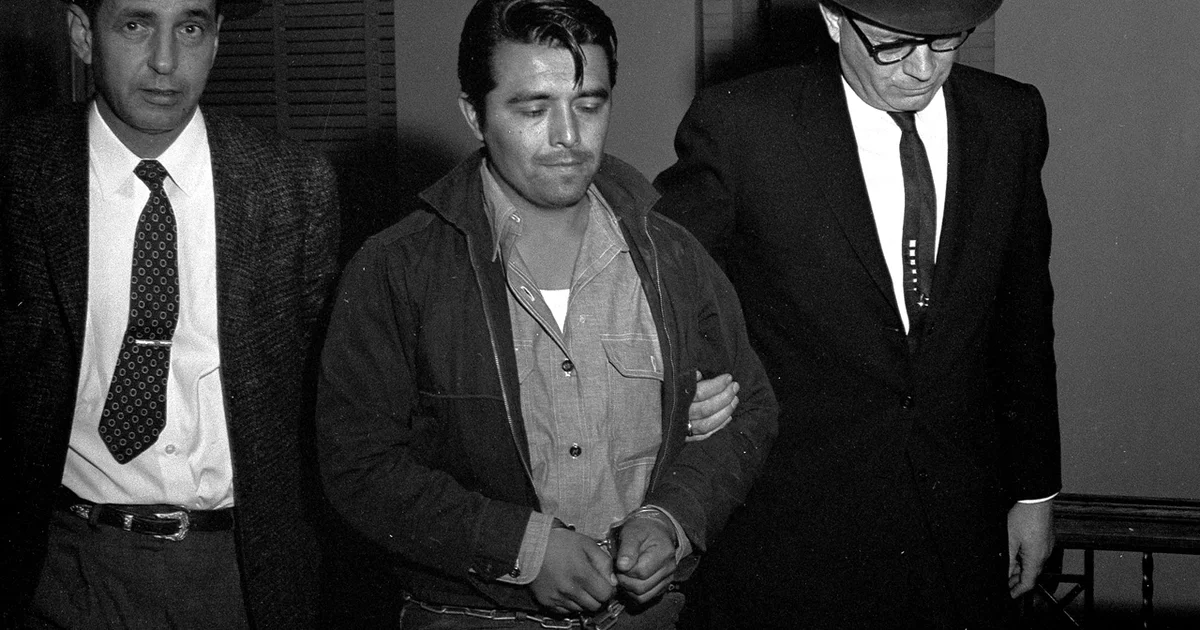
They quickly confessed (Dick, who considered Perry soft, cracked first), were tried, found guilty, and sentenced to death by hanging, a sentence which was finally carried out five years later.
Six lives ended for almost literally nothing. A sad, sordid story, the kind that those who are actually involved in spend the rest of their lives trying to forget. Why then does the account of such an appalling human catastrophe become a runaway hit, on paper and on film, something that people line up to read and watch?
It’s a question I asked myself as I read In Cold Blood, and read it I did, and quickly. God help me, it’s a real page turner.
Capote structures the book masterfully, in four sections. In “The Last to See Them Alive,” he incisively sets the scene and introduces the characters; we get to know the Clutters as they go about their business on what they do not suspect will be the final day of their lives, as we also get to know Dick and Perry, as they too go about their business, gathering their “materials” and driving across the state to the place where they will perform the task that they have set for themselves. The effect is akin to watching the iceberg and the Titanic gradually draw closer to each other, knowing that you are powerless to intervene.
Capote agonizingly breaks the narrative near the end of this section; at midnight, Dick and Perry drive slowly up to the silent house, with the lights of their car turned off… and then Capote jumps to the next morning, when the Clutters are found by one of Nancy’s high school friends. You do not yet know exactly what horrors transpired in the house, but here’s the thing — you have to know. I cannot imagine any reader, no matter how squeamish, having reached this point — fifty pages in — and stopping. Dick and Perry decided that there was no turning back, and so it is for the helpless reader of In Cold Blood.
The next section, “Persons Unknown,” follows the diverging paths of Alvin Dewey and the KBI investigators as they chase down dead-end leads and the two killers as they aimlessly drift around the country (and at one point, down to Mexico), committing petty thefts and passing bad checks all the way. (Dick had a friendly, personable manner that made people eager to let him swindle them.)
“Answer” begins with Floyd Wells in his cell listening to his radio and ends with Dick and Perry handcuffed and on their way back to Kansas, and it is here, two hundred and fifty pages in, on an interstate highway with Alvin Dewey driving and Perry sitting beside him, that we finally learn what happened, minute-by-minute, in the house of Herbert Clutter in the early hours of November 15th, 1959. Perry Smith tells Dewey — and us — everything. Was I satisfied to finally know? I have to admit that I was. Was I glad to know, or even feel that I had a right to know? That’s a different question.

The last section of the book, “The Corner,” covers Dick and Perry’s trial, their years on death row, and their executions in the early hours of April 14th, 1965. (The corner was what the inmates of the Kansas State Penitentiary called the storage warehouse were the gallows were erected and prisoners were executed; it’s a corner you definitely did not want to find yourself in.)
In Cold Blood is a gripping book (after all these years, it’s still the second-best-selling true crime book of all time, behind only Vincent Bugliosi’s account of the Manson Family murders, Helter Skelter.) Capote’s style and structure cunningly attach you to both the victims and to their killers, draws you into their minds and immerses you in the details of their lives to the point where you feel you know them. This is especially important with Dick and Perry, both because their minds and actions are so alien to most of us and also because the Clutters exit the stage relatively early and we spend most of the book in the decidedly unpleasant company of the men who murdered them.
It can’t be said, though, that Capote never allows his sympathy for Perry (which grew as he found out more about the killer’s life, though Dick was another matter) to unbalance his book. The ultra-straight, churchgoing Clutters were about as far from his own temperament and lifestyle as it is possible to get, and though I think Capote honestly tried to do right by the doomed family, the gap between the party-going writer and the wheat-farming Methodists was too great, and he wasn’t completely successful.
Also, the sympathies of many writers (some greater than Truman Capote) lie more with the transgressive than the conventional. (Dostoevsky had little use for Lizavéta; emotionally, he clearly identified with Raskolnikov, but at least no real blood was shed when the nihilistic student split the pawnbroker’s head with an axe, because neither of them really existed outside the pages of Crime and Punishment.)
Nevertheless, Capote’s portrait of the Clutters is still solid enough and his description of what they went through during that night of terror so unsparing that their agony never leaves your mind. Even the slightest lean towards qualification or mitigation earns a silent “Yes, but…” from the reader, as I suspect Capote knew it would.
Capote touches on many aspects of the case along the way, from interrogation procedure to the ins and outs of the M’Naghten rule (which excluded an insanity defense, as Dick and Perry knew right from wrong at the time of the crime) to the ethics of capital punishment and the intricacies of the appeals process. He delves deeply into the killers’ lives (he came to know both men well during their years on death row and conducted extensive interviews with them, and Perry came to consider the writer to be a friend) — Dick’s childhood was hard, but not extraordinarily so and certainly no harder than millions of others during those lean depression years. He had a decent enough family life and though the Hickocks were poor, they managed to make ends meet; Dick always had a roof over his head and never went hungry. His cynical, manipulative tough-guy veneer seems to have been entirely self-generated.
As I implied earlier, Perry was different, and he clearly touched something in Capote — and in others (even including Alvin Dewey, who still thought he deserved to hang). Sentimental and overly sensitive, Perry had a truly wretched, humiliating childhood. Constantly swinging between love and hate for his abusive, alcoholic parents (his mother strangled on her own vomit when he was thirteen) he spent many brutalizing years in orphanages and other heavy-handed, hard-hearted institutions, years which left the shy, fussy, artistically inclined boy with a rage that could seemingly surge up out of nowhere and take control of him. (Though it was Dick’s boast that they would leave no witnesses, he always denied having killed anyone, and Perry gave two versions of the murders. In the first, Dick killed the women after Perry had killed the men; in the second version, Perry killed everyone. You finish the book with a strong feeling that the quiet, less overtly aggressive Perry was much the more dangerous of the two, and in all likelihood the real and only killer.)
While Dick Hickock was, in Dewey’s estimation, “a small-time chiseler who got out of his depth, empty and worthless,” Perry Smith was an unstable, irreconcilable blend of gentleness and brutality, empathy and impulsive savagery; he put a pillow under Kenyon’s head as the boy lay bound on the couch so that he would be more comfortable and prevented Hickock from raping Nancy (their dispute was so heated, they forgot to gag the girl). Then only a few minutes later he slaughtered the defenseless family, gentle, inoffensive people whom he had nothing against. “I didn’t want to harm the man. I thought he was a very nice gentleman. Soft spoken. I thought so right up to the moment I cut his throat.”
Capote has an unerring eye for telling detail, of the sort that you can never forget, like the large, glass-eyed teddy bear that sat on Nancy’s bed and mutely witnessed her murder, or the grotesque fact that at the funeral home, when visitors stepped up to the Clutters’ caskets, they found that “the head of each was completely encased in cotton, a swollen cocoon twice the size of an ordinary blown-up balloon, and the cotton, because it had been sprayed with a glossy substance, twinkled like Christmas-tree snow.” As in all such realistic accounts (when they’re done right) the seemingly small details inexorably accumulate page by page until by the end, their collective weight and momentum is immense and unstoppable, ultimately making these stories land with a shattering impact.
However, despite the years of meticulous research and his claim that “every word is true,” Capote was as much a novelist as he was a journalist, and though the book is almost wholly factual, there is that almost. He did invent some things, most notably a scene where, after returning to jail after receiving the death sentence, Perry weeps and is consoled by the jailer’s wife, who holds his hand through the bars, a humanizing moment the woman later said never happened.
Then there is the very last scene in the book, the kind of flawless coda that real life rarely grants.
A year before the executions, while visiting the Clutters’ grave, Alvin Dewey encounters Nancy Clutter’s best friend, Susan Kidwell, who discovered the bodies the morning after the murders. They have a pleasant talk, Susan catching Dewey up on how various Holcomb residents, including Nancy’s boyfriend Bobby Rupp, are doing, and talking about her studies at college (where she and Nancy had planned to room together). And then the lovely, life-affirming conclusion:
Dewey looked at the gray stone inscribed with four names, and the date of their death: November 15, 1959. “Do you come here often?”
“Once in a while. Gosh, the sun’s strong.” She covered her eyes with tinted glasses. “Remember Bobby Rupp? He married a beautiful girl.”
“So I heard.”
“Colleen Whitehearst. She’s really beautiful. And very nice, too.”
“Good for Bobby.” And to tease her, Dewey added, “But how about you? You must have a lot of beaus.”
“Well. Nothing serious. But that reminds me. Do you have the time? Oh,” she cried, when he told her it was past four, “I’ve got to run! But it was nice to have seen you, Mr. Dewey.”
“And nice to have seen you, Sue. Good luck,” he called after her as she disappeared down the path, a pretty girl in a hurry, her smooth hair swinging, shining — just such a young woman as Nancy might have been. Then, starting home, he walked toward the trees, and under them, leaving behind him the big sky, the whisper of wind voices in the wind-bent wheat.
This “casual encounter” which “had somehow for him more or less ended the Clutter case” was, according to Alvin Dewey, a complete fabrication. He never met Susan Kidwell at the Clutters’ grave in Valley View Cemetery.
Capote was no fool — why did he do this? Did he know that it would be indecent to close the book with Dick Hickock and Perry Smith (even with their executions) instead of with the family they destroyed, the Clutters, even — or especially — in their graves? Or was it because he needed something more than the bleak, depressing facts of this sordid story if he were to justify his book, to elevate it, to make it something more than just the kind of reflexive, shamefaced voyeurism that prompts people to slow down and gawk as they pass a bloody freeway smashup?
In Cold Blood is a sometimes brilliantly, even, occasionally, beautifully written book (quite an accomplishment, considering its subject) and is absolutely riveting throughout. (It would be hard to write a book on this subject that wasn’t compelling, provided you found the right structure, which Capote certainly did.) But does it justify itself? Does it rise above mere voyeurism? What would it have to do to do that?
It would need to satisfy something more than a mere desire for diversion to excuse eavesdropping on sixteen-year-old Nancy Clutter’s last words as the terrified girl saw her murderer lift the shotgun and point it at her head (at the last moment, she turned her face to the wall) — “Oh, no! Oh, please. No! No! No! No! Oh, please don’t! Please!”, or to explain being present at the end of Perry Smith’s short, sad life and listening to his pathetic final statement, just before he mounted the thirteen steps to the gallows — “I think it’s a helluva thing to take a life in this manner. I don’t believe in capital punishment, morally or legally. Maybe I had something to contribute, something — It would be meaningless to apologize for what I did. Even inappropriate. But I do. I apologize.”
(It is impossible to read Perry’s last words without immediately thinking of Nancy’s and weighing them against each other. Yes, but…)
To justify walking uninvited into these places of pain and terror and despair and anguish (uninvited by the only people who would really have the right to issue the invitation, I mean — the dead), I think a book or show or movie about the real murders of real people has to offer more than just the creeps, has to summon more than a transient thrill or a momentary shudder.
Another way of putting it is to ask, does In Cold Blood provide some insight into what the Apostle Paul called “the mystery of iniquity?” Which is to say, does it force us to grapple with one of the most important and difficult of all questions: do circumstances determine who we are, or do they reveal who we are?
If Richard Hickock and Perry Smith and the Clutters could speak to us now, they could give us the answer to that question, but they can’t. They’re dead, and we do not yet know what they know, so we have to fumble half-blind for the answer ourselves.
Does In Cold Blood shed even a little light as we grope in the darkness? I think it does; when you read the book, you are compelled to think, with all the seriousness of which you are capable, about fate and free will, about forgiveness and justice and revenge and mercy, about life and death, and about the webs of circumstance that all human beings inevitably find themselves caught in.
Though he aimed to write a bestseller, Truman Capote knew that more than that was required of him; he understood that real death should be more than something to pass the time with. You shouldn’t easily be able to forget or shrug off such an encounter; it should stay with you. It should change you. That was the case with him, to a degree that he didn’t anticipate; In Cold Blood was his greatest success, the pinnacle of his career… and it permanently marked him as a man and finished him as a writer. He was never the same after looking into that abyss.
It is to Truman Capote’s credit that you can feel that weight — that irremediable sorrow — on every page of In Cold Blood, but there’s still a part of me that’s uneasy with the book, and I’m not entirely sure that it should exist at all. I keep imagining bleeding to death in a crushed automobile and feeling the cold, curious, unhelpful gazes of people driving past me on their way home from work…
Thomas Parker is a native Southern Californian and a lifelong science fiction, fantasy, and mystery fan. When not corrupting the next generation as a fourth grade teacher, he collects Roger Corman movies, Silver Age comic books, Ace doubles, and despairing looks from his wife. His last article for us was The Necessity of Memory: Fahrenheit 451
Thanks, Thomas, for an interesting, thought-provoking digression on an unusual aspect of a subject that’s integral to virtually all the types of fiction we enjoy at Black Gate.
Thanks for this commentary. It sounds like this is the rare sort of book that, if you’re going to read it at all, you must reflect on, probably in writing even if intended only for yourself.
Got very swept up in the stark lyricality of this article and the persuasively dynamic tension of the argument for and against the value of the seminal true crime novel. I’ve never read “In Cold Blood,” but you’ve made me reconsider a large portion of my shelves taken up by true crime.
Speaking to the book’s value relative to Paul’s mysteries of iniquity, or even to the more often argued debate between sensationalizing evil vs. Leaving the public uninformed, is beyond me. But several things beyond the genesis of a genre can also be traced to Capote’s work, things which are very good.
–Legitimized the novelization treatment of anything. “In Cold Blood” stoked a hunger in the reading public for true tales given narrative, where supposedly before it that was denigrated as for the lightweight, under-educated, baseball-on-the-radio people with no motivation to improve themselves. If Capote hadn’t paved that particular road, we wouldn’t have Dawn Raffel’s “The Strange Case of Dr. Couney,” Mark Kurlansky’s “Salt,” or Earl Swift’s “Across the Airless Wilds” in anything like their current, accessible, infinitely readable forms, today.
–Sparked a passion for deviant psychology studies. Before “In Cold Blood,” the field was mostly made up of people who were traumatized in events precipitated by mentalities like Perry’s, and those who developed something of a prurient interest after having operated in the psychology field for a while. After Capote published, an influx of the reading public with a thirst to know “why” bolstered the field, leading to massive advances in the identification, prevention, treatment, and understanding of how people’s minds lead them into creating true crime situations.
–Inspired many people to go into law enforcement and first responder fields. Granted, this is my own observation, so probably suffers from my innate biases, but when I ask people what got them into their various fields, and they happen to work in anything to do with the law or seeing the results of crime, it’s even odds whether they’ll respond with a personal experience or something they read. If it’s something they read, it’s often a true crime book, and I’ve heard Capote referenced more than once.
–Led to history delving. Since there’s only so many compelling murders to go around at a given time, many authors who write true crime have made a meal of diving into newspaper archives and uncovering the heinous acts of the past. Is this a good thing? Many argue it is not. But it does have two undeniably positive knock-on effects: 1. It shows us that we’ve always been this way, and that today is neither better nor worse than the days that have gone before. We have nothing to either be prideful about or to shudder from in terrific dread. 2. Many of the events that we have forgotten have come to light and been organized for our consumption from end to end. Those of us who now remember this history are no longer doomed to repeat it or suffer it to be repeated.
…As for your parting shot, about being crushed and bleeding to death in a car as the steely-eyed masses flow by… I hope that you’ve never been in that situation and will never be in that situation. But as someone who has and survived against all odds, I can tell you that it’s not during the event that the “In Cold Blood” effect comes into play. People are surprisingly warm, helpful, and empassioned during the event. It’s after the event, when everything has resolved to a level where people are reasonably certain that further tragedy is not in the offing, that the casual cruelty of curiosity emerges. When people relax and stop guarding themselves to gentleness, that’s when the cold and unhelpful thoughts come to the fore and get expressed in word and action.
I should have mentioned another book, a sort of “descendent” of Capote’s, Norman Mailer’s own “nonfiction novel” about the once-famous Gary Gilmore, 1979’s The Executioner’s Song. (The piece was already too long as it is!) Gilmore also got the death penalty for his murder, but insisted on its being carried out, and actively blocked every effort by lawyers, activists, and even his own mother, to delay or commute the sentence. He was a far more intelligent and complex character than either Dick or Perry, and Mailer’s book (which is almost three times as long as In Cold Blood) is more ambitious than Capote’s; he used Gilmore’s crime and the circus surrounding his execution to comment on all of American society. It’s a truly extraordinary book.
Alright, that sounds fascinating. It’s going onto my TBR-physical list, right after the Westlake novels. Thank you for the recommendation! I don’t have anything spectacular to trade back to you in true crime, unfortunately, because the one I read most recently was Harold Schechter’s “Maniac: The Bath School Disaster and the Birth of the Modern Mass Killer,” which was good and used all of the available sources, but definitely overdramatized.
Silly me, I’d thought I’d escaped the BGPP Effect, this time. X) When Black Gate publishes an article by Byrne, Gramlich, Parker, or Plexico, probability exceeds 0.7 that the TBR list will grow by 1-3 books.
My mom had a bookclub copy of this on top of the upright piano she used as a bookshelf in our living room, next to her copies of “Rosemary’s Baby” and “Everything You Always Wanted To Know About Sex *But Were Afraid To Ask.” I remember it being one of those books that seemed to loom over the whole of the sixties until it was displaced by “Helter Skelter” in the seventies, a book seemingly devoured by every high school girl in America at the time.
I personally find the whole true crime industrial complex, particularly podcasts, deeply distasteful. I know that most of the largely female audience for it consumes it as a peculiar mix of cheap thrill and vague catharsis of their fear of men but I will never see it as anything more than ghoulish.
As for Capote, I won’t presume to speculate on his motives for writing the book but I don’t see how it could possibly have done anyone any good. Even Capote, who won fame and fortune as a result, ended up being cursed by its success, spending the rest of his life struggling with writer’s block and becoming nothing more than a creepy little talk show caricature.
That said, this was an insightful, extremely well-written article.
Those three books are a perfect 60’s trifecta! You could virtually recreate the decade from their pages alone.
In Cold Blood issued in a new type of novel- True Crime ! Which was so ahead of the times . Today almost every podcast is true crime/ court room drama.