The Epic Science Fiction & Fantasy of Poul Anderson, Part Three: The Broken Sword, Hrolf Kraki’s Saga, and Conan
 |
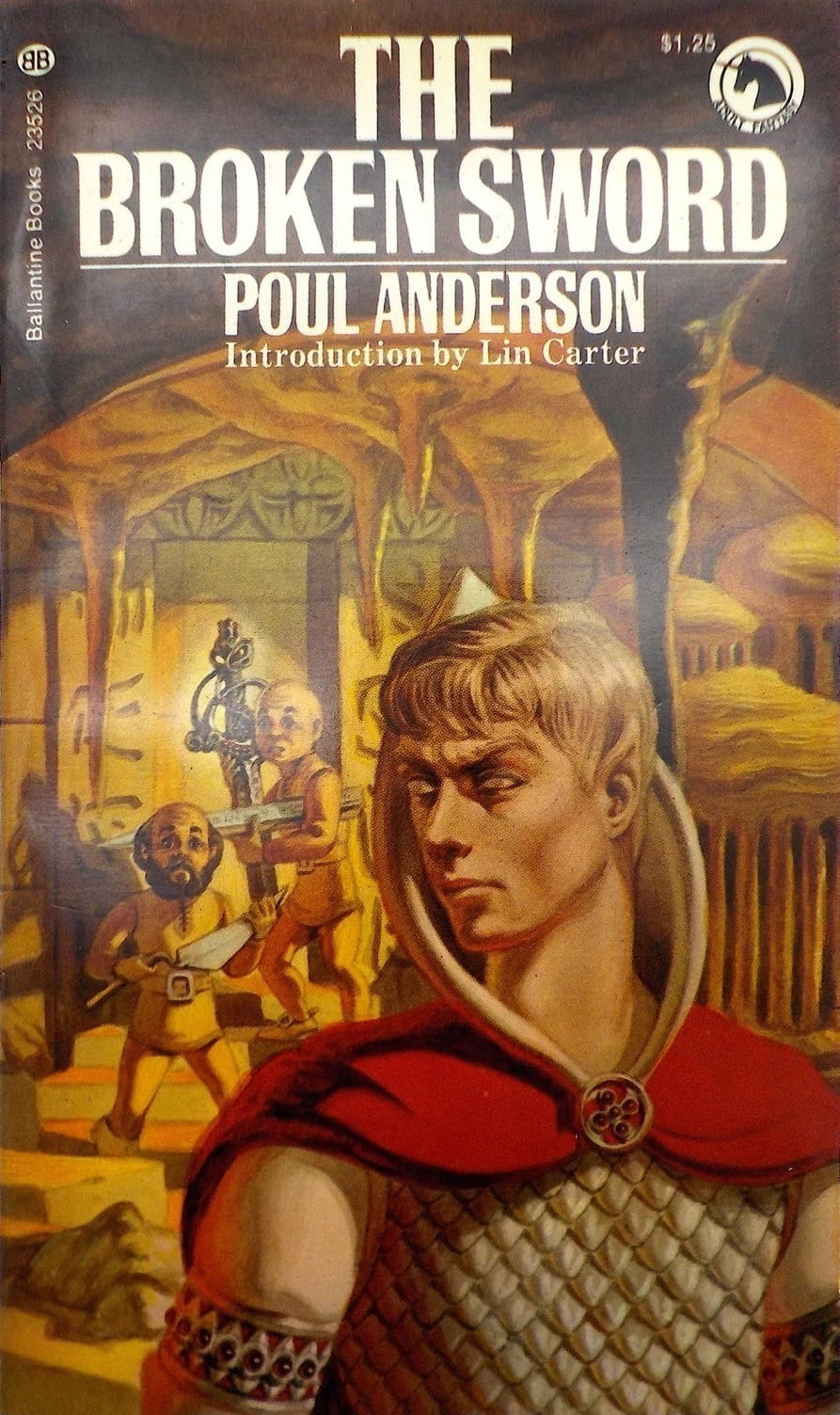 |
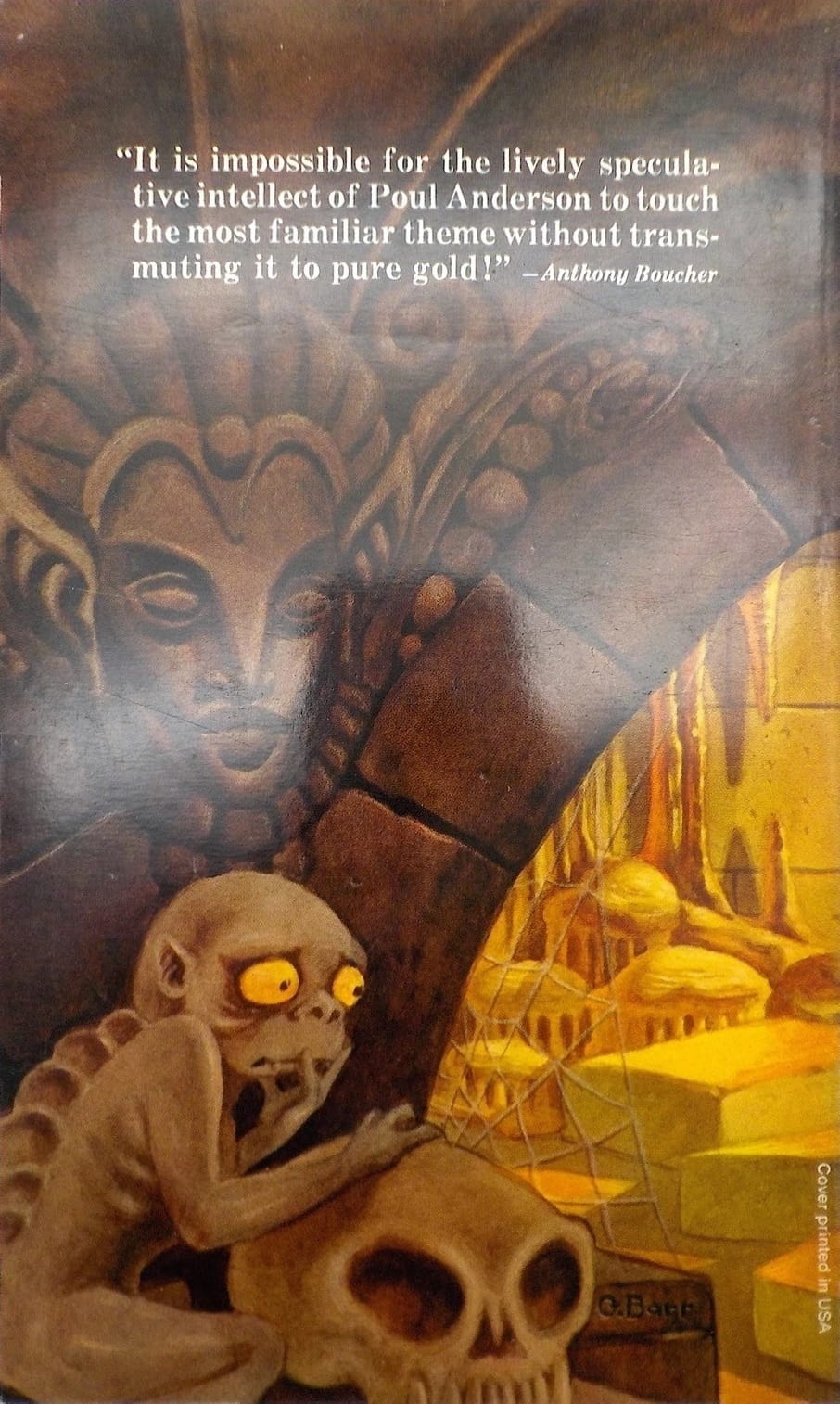
The Broken Sword (Ballantine Adult Fantasy #24, January 1971). Cover by George Barr
Read Part One and Part Two of this article here at Black Gate.
The Broken Sword is arguably the best book Anderson ever wrote, and it was the “first” novel length fantasy he published. It mixes High Fantasy and Sword & Sorcery. The High Fantasy comes because of its setting in the land of Faerie, which is part of our world but invisible to most humans, and the fact that most major characters are elves and trolls. However, there is also a lot of the good bloody action that characterizes S&S.
The Broken Sword is set in the Ninth century A.D., in Alfred the Great’s time (849-899). It was published in 1954 and revised in 1971. The story is of Skafloc, a human child stolen and raised by elves, and of Valgard, the half-elf/half-troll who replaces Skafloc as a changeling. It also involves Skafloc’s sister, who unknowingly falls in love with Skafloc, which, of course, ends in tragedy.
[Click the images for epic versions.]
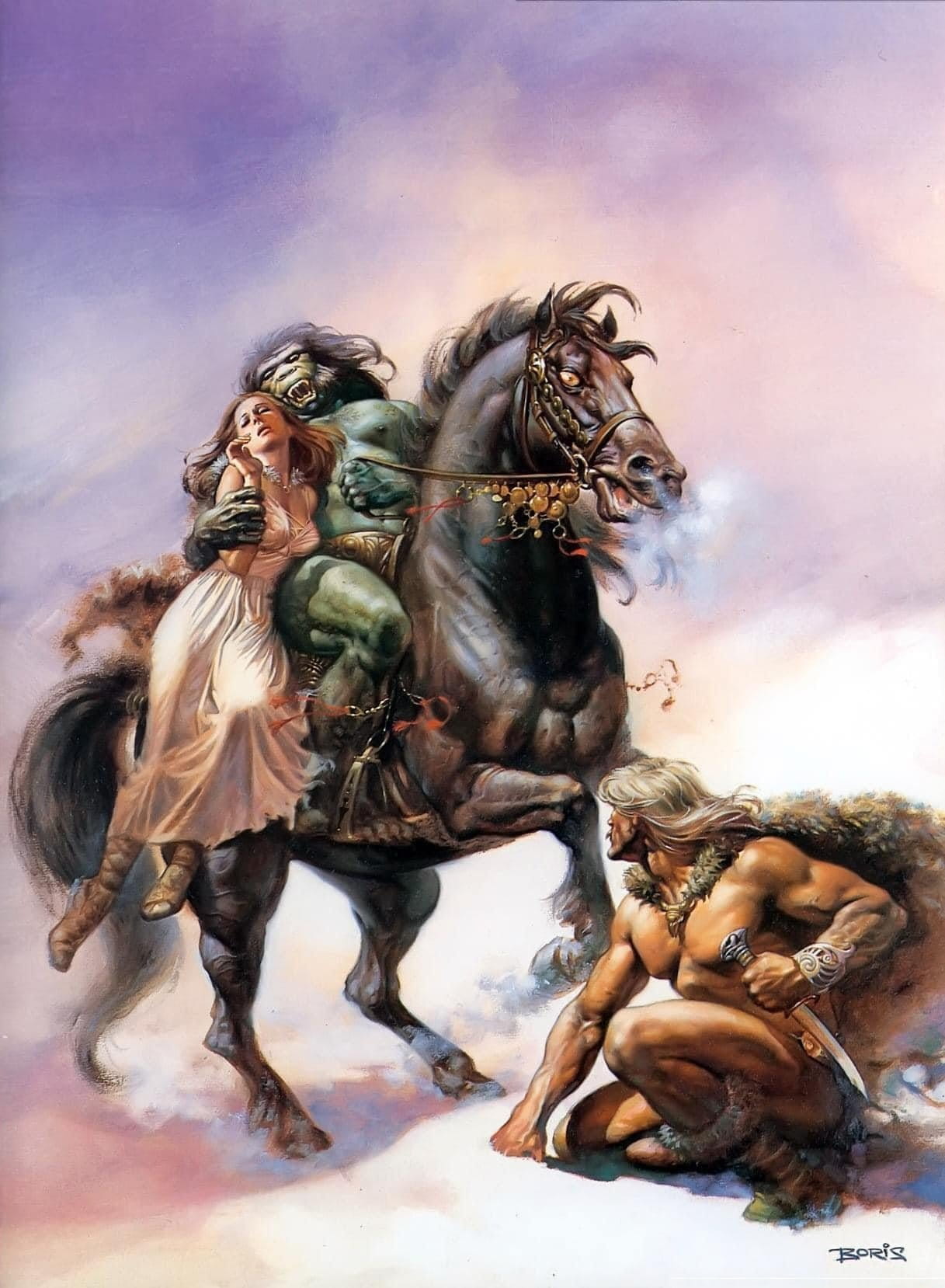
The work evokes the “otherworldliness” of Fairie very well, and there are some strong battle scenes. The prose is just beautiful. It shows similarities to the work of both Robert E. Howard and Michael Moorcock, but I suspect most of these occur because all three writers drew on similar source material from Norse and British myths.
I’ve got two copies of The Broken Sword, the blue cover by Vallejo, and the golden one showing an elf, which is by George Barr. Above is a pic of the original Boris painting. The George Barr cover was actually torn off a copy of the book and glued on this copy I have, which was hardbound by some library. I bought it a library book sale.
The Broken Sword was published in the same year as the first two volumes of Tolkien’s Lord of the Rings trilogy but had much less impact than Tolkien’s work on the development of fantasy’s main subgenres — high fantasy and heroic fantasy. It was nearly forgotten until the Tolkien boom of the 1960s led to its reissue.
 |
 |
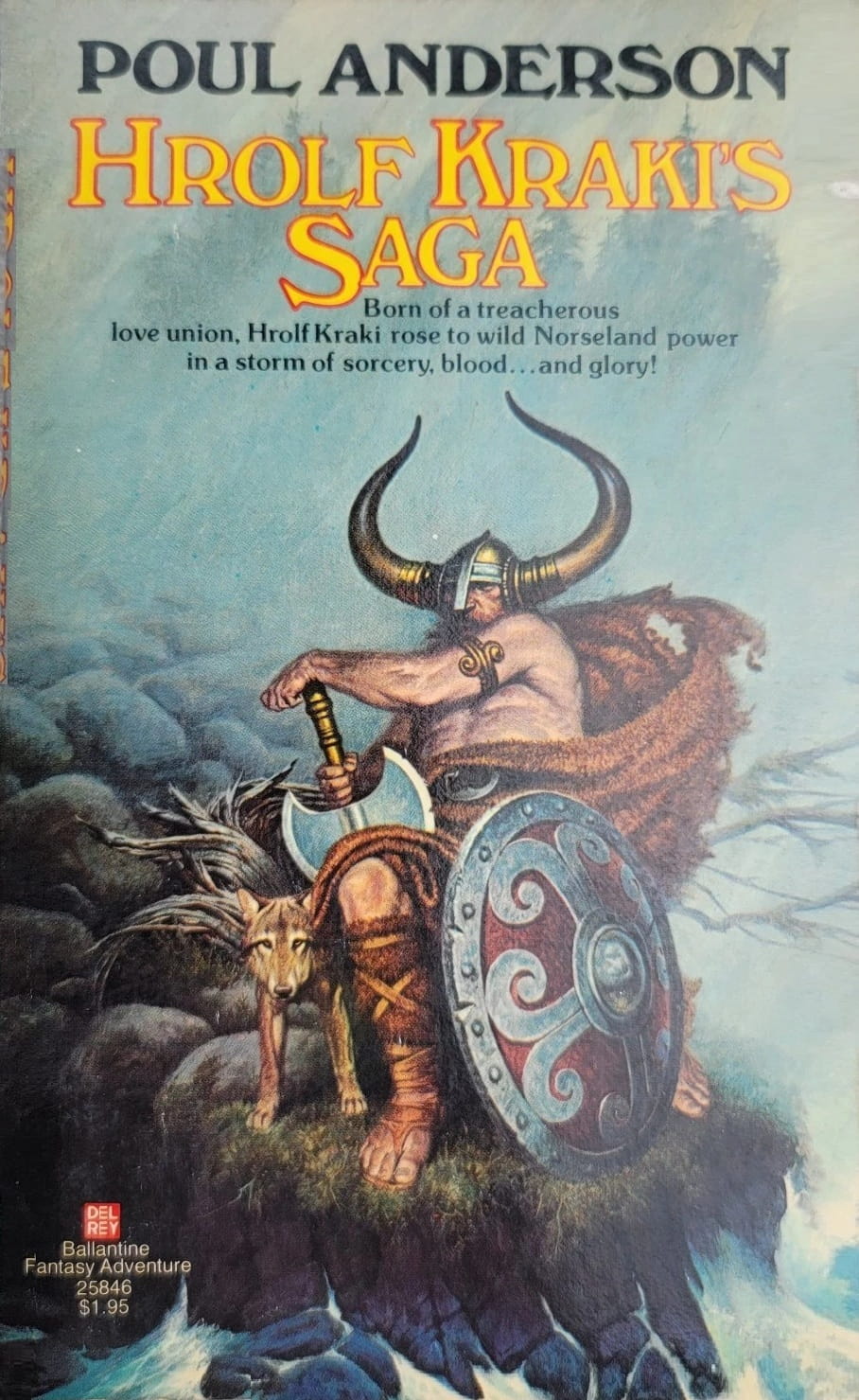
Hrolf Kraki’s Saga (Del Rey/Ballantine, July 1977). Cover by Darrell Sweet
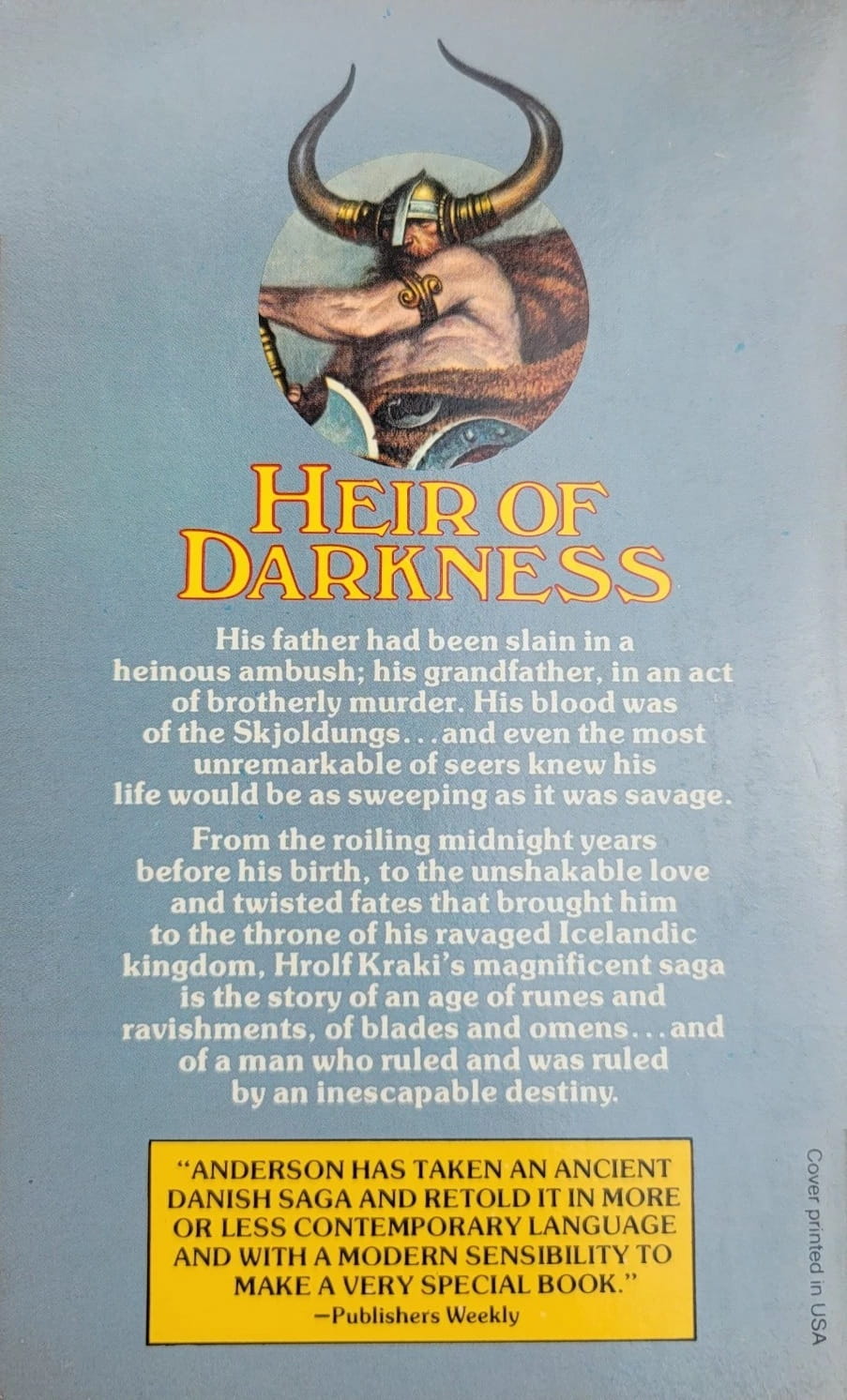
Hrolf Kraki’s Saga (cover by Darrell Sweet) introduces us to another Conanesque character. However, despite the title, only a small part of this book is about Hrolf Kraki, and he only gets the name Kraki toward the end. This is a good book, though, quite similar stylistically to The Broken Sword. It even includes another incest twist. Kraki’s Saga is much more ambitious, however, which is good in some ways and not in others.
I would classify it as S&S because it focuses primarily on human heroes, though there are various half-breeds and other supernatural entities to be found. The Broken Sword is simpler and more emotionally touching. But when Anderson describes the northern world he is fantastic. There is also a powerful and well-done climactic battle here, a trademark of Anderson’s work.
An observation I’ve made about the Northern Thing books I’ve mentioned so far from Anderson is that they move from focusing more on the alien (Faerie) to more on the human. The Broken Sword is a heavy mix of human and Faerie while Hrolf Kraki’s Saga decreases the Faerie aspect to delve more into human actions and motivations. The Last Viking series (covered in Part One) moves almost entirely away from any magical world to focus on the human. All five books make wonderful use of Northern European mythology and history.
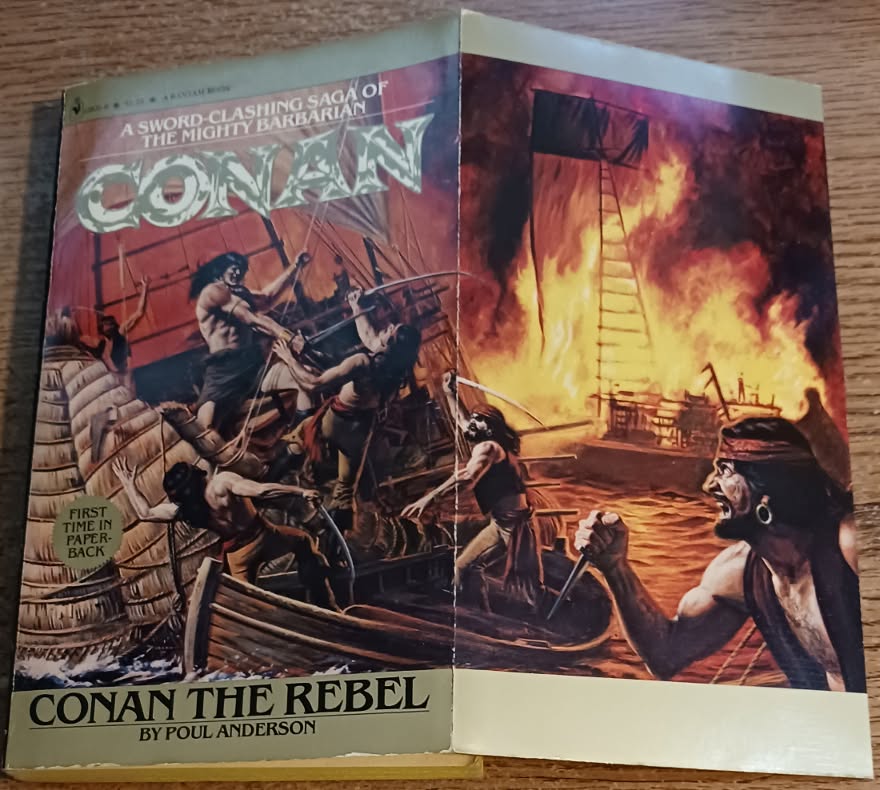
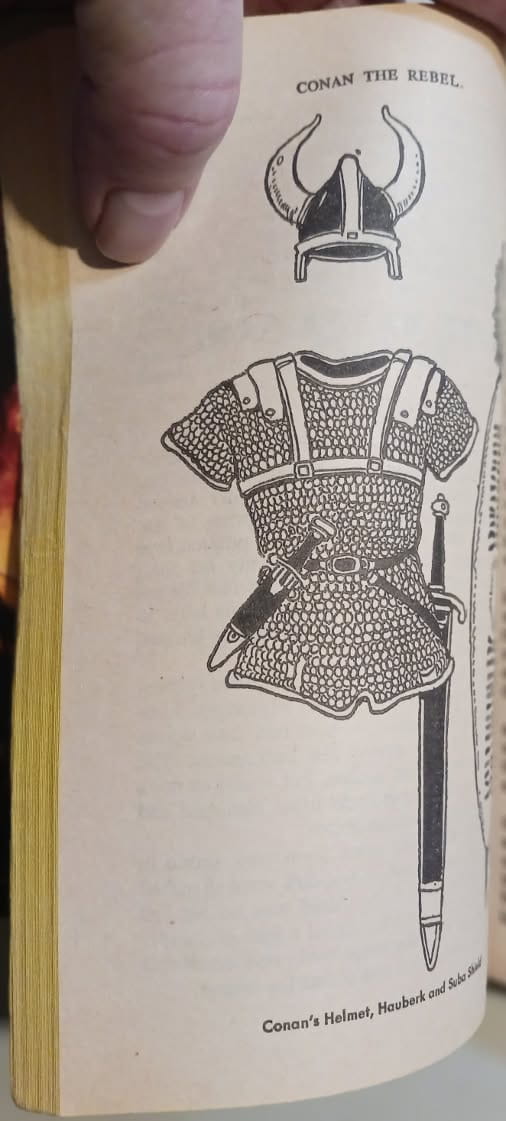
Anderson also wrote, as everyone here probably knows, a Conan pastiche, Conan the Rebel, from Bantam, 1980. There’s a fold out cover by Bob Larkin (above), with interior illustrations by Tim Kirk. I’ve included a couple of those illustrations below.
 |
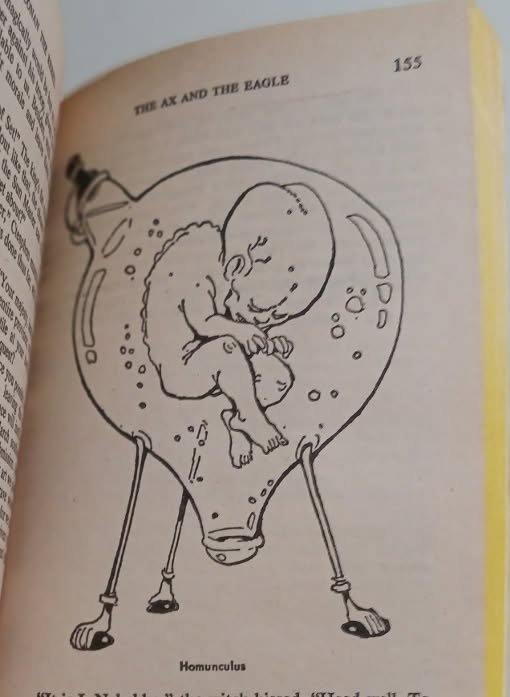 |
Tim Kirk’s illustrations for Conan the Rebel
This was one of the early Conan pastiches and one of the better ones, although given Anderson’s talent I would have preferred an original S&S character from him. Anderson was a member of “Swordsmen and Sorcerer’s Guild” with L. Sprague De Camp and Lin Carter, though, and was probably persuaded to do the book by them.
With the possible exception of Karl Edward Wagner, there is little doubt Anderson was the most talented writer to attempt a Conan pastiche, but Conan here is definitely not quite the Conan of Robert E. Howard.
 |
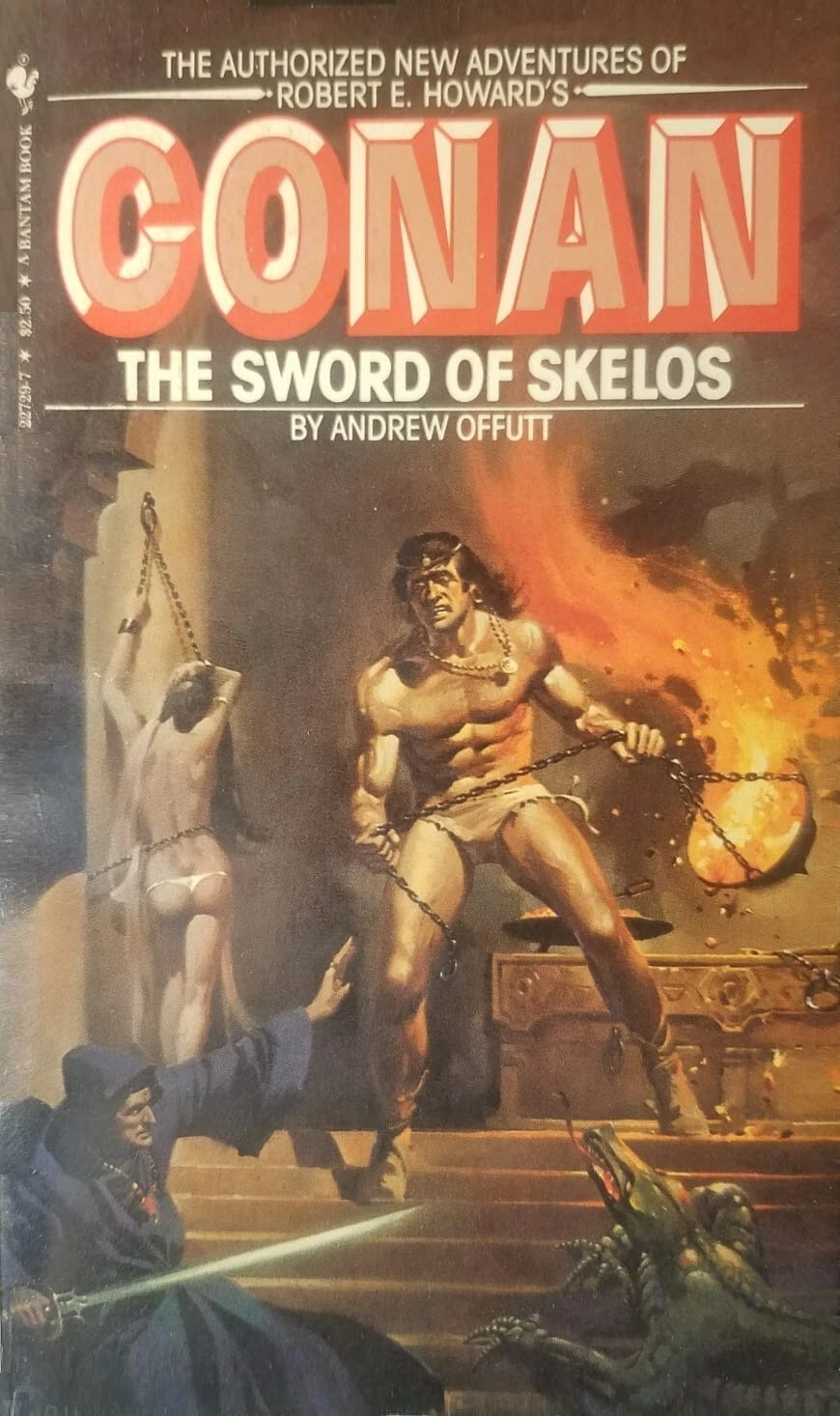 |
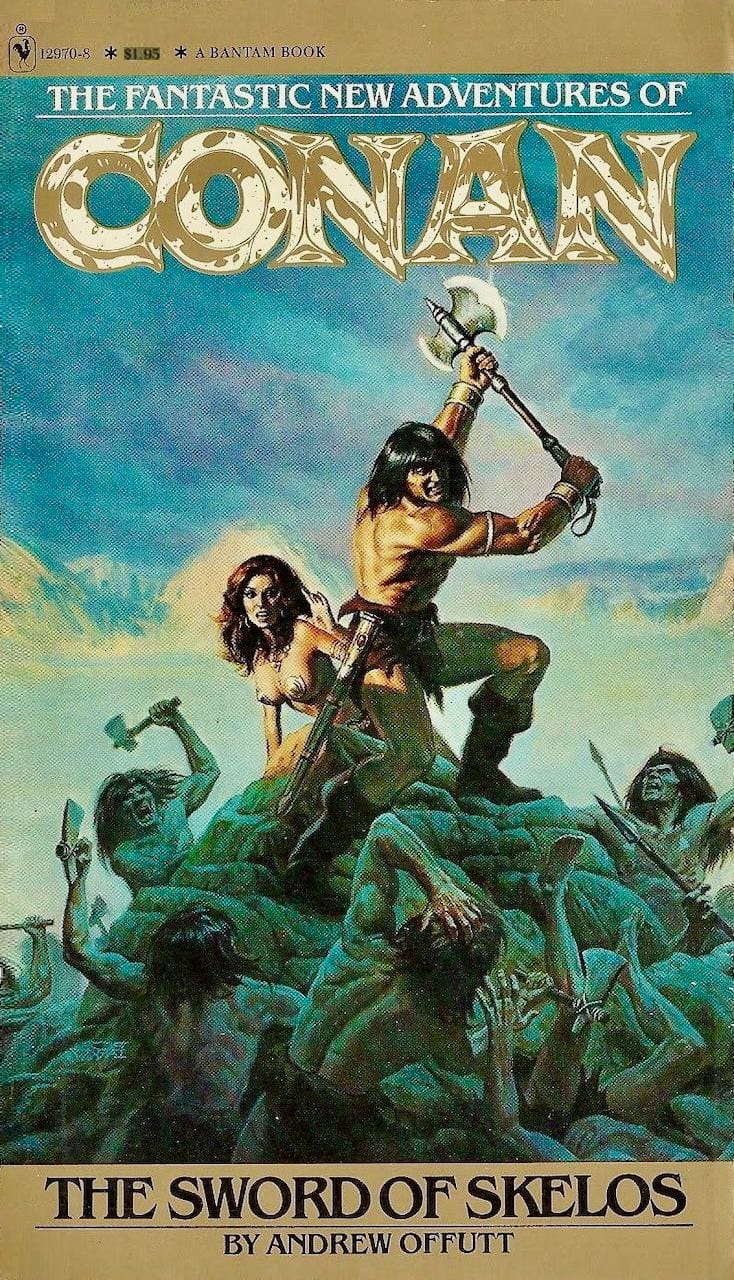
The Sword of Skelos by Andrew Offutt (Bantam Books Conan #3,
May 1979 and August 1981). Covers by Bob Larkin and Lou Feck
As I’ve mentioned before, though, my favorite Conan pastiches were actually written by Andy Offutt, although I don’t believe Offutt was as talented a writer as either Anderson or Wagner. Above and below are pictures of his three pastiches. My first was The Sword of Skelos (Bantam, 1979) with the Bob Larkin cover (left). Lou Feck did the cover to the second Skelos copy (right). Both books have an interior map drawn by Tim Kirk.
Offutt did two more Conan books, Conan the Mercenary and Conan the Sorcerer (Ace 1980 & 1978), both with excellent covers by Sanjulian and some wonderful interior illustrations by Esteban Maroto. These three books actually make a trilogy with Sorcerer first, then Mercenary, then Skelos.
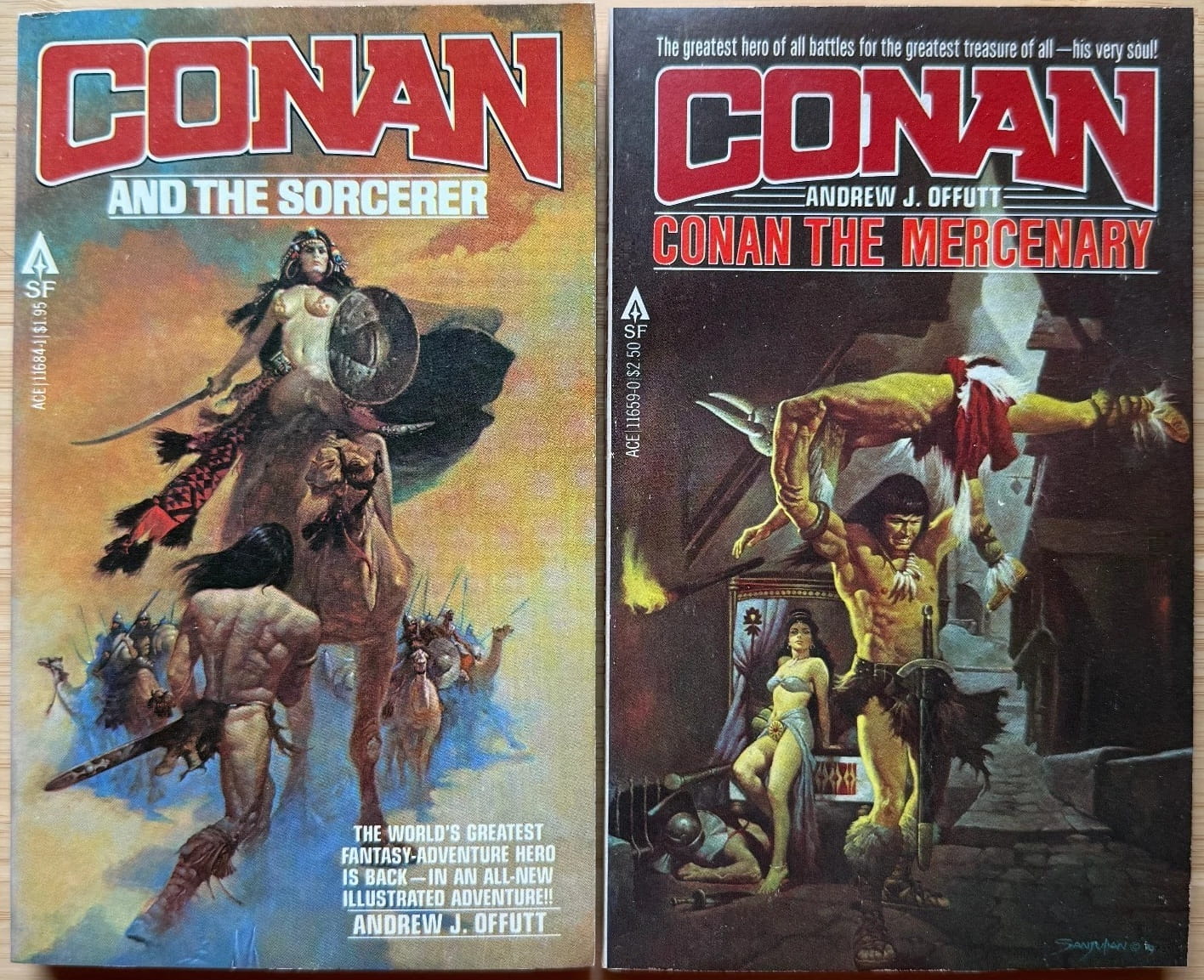
I don’t think that makes any difference reading them. They were published out of order anyway.
The Epic Science Fiction & Fantasy of Poul Anderson continues in:
Part One: The Last Viking trilogy
Part Two: Flandry of Terra and 7 Conquests
Part Three: The Broken Sword, Hrolf Kraki’s Saga, and Conan
Part Four: The High Crusade, Three Hearts and Three Lions, and The Queen of Air and Darkness
Charles Gramlich administers The Swords & Planet League group on Facebook, where this post first appeared. His last article for us was Part Two of The Epic Science Fiction & Fantasy of Poul Anderson. See all of his recent posts for Black Gate here.
The very chilly cover art for Hrolf Kraki that Bob Pepper did for the Ballantine Fantasy original release is one of my favorite pieces of art for the series.
It’s a very interesting cover. A lot of stuff packed into that one. I don’t own that version
I buy Ballantine Adult Fantasy editions for the covers. With Hrolf Kraki’s Saga, you also get the good content. Win, win!
I tend to group all of Mr. Anderson’s Norse fantasies together, so Three Hearts and Three Lions and The Merman’s Children are next to The Broken Sword and Hrolf Kraki’s Saga on my shelf, mainly due to his handling of Danish folklore and history, though stylistically they are different.
Did not know that Mr. Anderson did Conan pastiches. Mildly surprised but not overly so for a founding member of SAGA (Swords and (S)orcerer’s Guild of America). Will keep the eyes open to see if they show up in the used book streams.
‘The Broken Sword’ is the only work by Paul Anderson I’ve ever read. It was pretty good, too. I’d no idea he’d also written a Conan novel, and must check it out, and maybe Offut’s books as well? You say Anderson’s effort isn’t entirely true to Howard’s conception of the character, but I don’t think any author has ever really come close to mastering the man’s way with words. More importantly the stories were a product of a particular time and a particular sensibility.
I agree with your comment about how other writers have written Conan. I think it’s pretty hard for a writer to put themselves into the mindset of any other writer for sure
I read The Broken Sword earlier this year. Orbit 1992 edition with Steve Weston cover. Part of my gradual work to cover Appendix N / the many recommendations here at Black Gate.
Loved it! My main gripe is I didn’t encounter it way back when I first got into fantasy. Been so long since I read Conan the Rebel, had to think a bit on the story. Set in Stygia I seem to recall.