Eddie and the Cruisers: The Novel You’ve Missed Out on All These Years
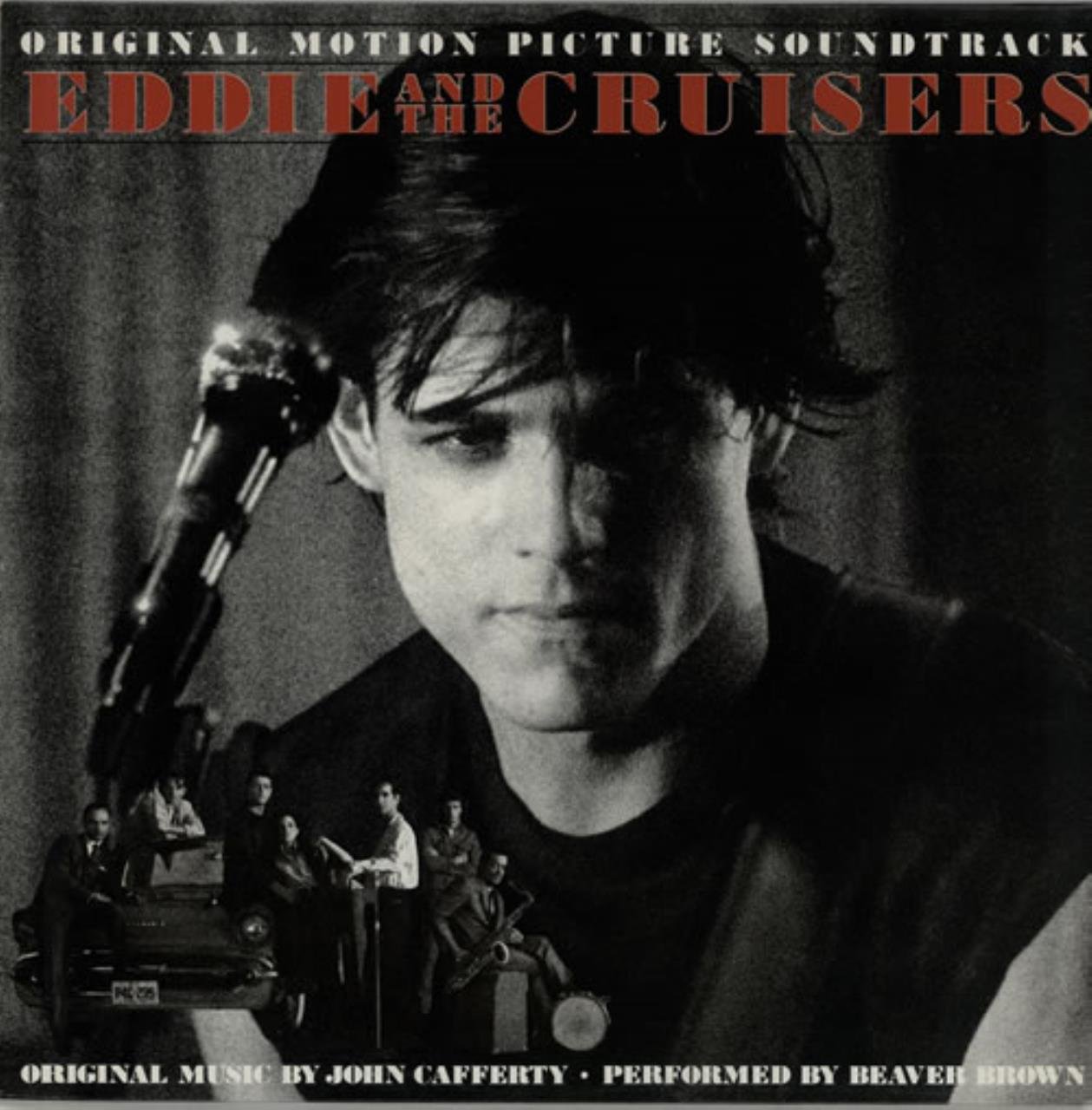
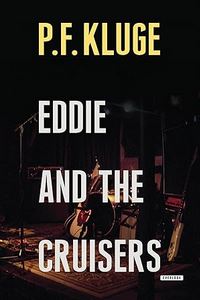 I LOVE the movie, Eddie and the Cruisers. I’ve seen the flick, about a short-lived Jersey bar band, at least a dozen times. And it’s got a terrific soundtrack by John Cafferty and the Beaver Brown band. I like Cafferty more than I do the much more famous Bruce Springsteen, who he kinda sounds like. To each their own.
Eddie and the Cruisers was the #110 box office film of 1983. With a budget of $5 million, its domestic gross was $4.7. It was Embassy Pictures’ first ever try at distribution, and they pulled it from theaters after only three weeks. Needless to say (though I’m saying it anyways…) there was no international release. Pretty damn poor choice by producer Martin Davidson, who admitted he selected them – knowing they had zero experience – because they offered the most money.
Then it ran on HBO in 1984 and became a cult classic. I was part of that happening. On the Dark Side had charted at #64 when the movie came out. The HBO success prompted a re-release and it hit #7 on the Billboard 100 – and #1 on the mainstream charts. For a movie that nobody saw in the theaters, for the next three+ decades, EVERYBODY knew Eddie and the Cruisers. It was only in the past ten-ish years that I have started running across folks who have never heard of it. Truly a cult classic.
It’s adapted from P.F. Kluge’s novel of the same name. Kluge also wrote Dog Day Afternoon, which became a smash hit movie in 1975 (it made about 25 times its budget at the box office). A few weeks ago, I finally decided to read the book. I finished it in two days – and I worked on both days.
This was my first Kluge. There’s a lot more to this book than there is in the movie. Keep in mind I love that flick, so I’m not disparaging it. But they massively changed the tone of the novel. There’s a very different vibe. And I get why: it wouldn’t become a hit movie, ‘as written.’ Unless I specify otherwise, I’m talking about the novel from here on in.
The book is told from Frank ‘Wordman’ Ridgeway’s point of view: Tom Berenger’s character in the movie. He and the other characters are far more developed, which is essential to the story.
First off: this is much darker than the film. There’s murder. There’s a world-weary cynicism to Frank which reminds me a little of Raymond Chandler’s Philip Marlowe. As in the movie, time shifts between the present and the past. And that’s thematically at the center of Frank’s narration. That summer on the Jersey shore, was a moment. There was a road of fame and accomplishment and…a life, ahead, for each of them. But a flaming car crash (no bridge involved in the book) detoured all of the Cruisers to back roads and other paths. Not shiny (a little Firefly for you, as I’m immersed in that ongoing story), Hallmark ones, either.
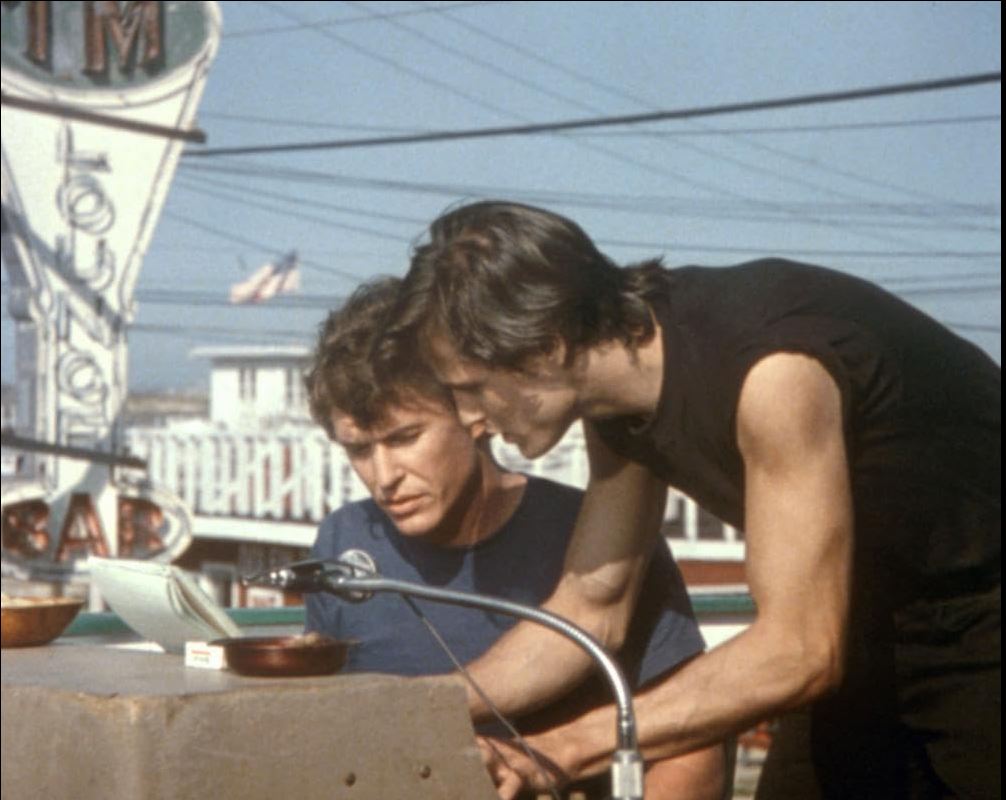 Frank walked away from music and became a high school literature teacher. Words and music. Eddie was the music, and to borrow from Don McLean, Eddie’s car wreck was the day the music died. Frank had only his words, now. Silent, bereft of their place. You can guess how receptive high schoolers were to his words, day after day. Year after year.
But as you move through the book, chapter-by-chapter, Kluge – somewhat subtly – shows that they are living lives with an echo of what could have been. Not of quiet desperation (well, Sal maybe). Beyond the ‘words and music’ scene which is repeated in the movie (and it’s brief, on screen and on the page), the book leads us in Frank’s wake as he moves through the shadows that part of his life, which he had left completely behind, are casting on him now. The echoes become louder, rising to a violent crescendo.
The differences from the movie are big enough that I don’t want to drop a bunch of spoilers. I already mentioned there’s a murder. And instead of Seasons in Hell and the lost master tape, it’s a search for secret recording sessions that only Wendell was at with Eddie. There’s an actual funeral for Eddie; his body doesn’t go missing after the accident.
As Frank digs deeper into the mystery of what happened at the mysterious Lakehurst sessions, he traces the paths which each Cruiser (it’s ‘Eddie and the Farway Cruisers in the book) went down after the band broke up after the funeral. All of their lives changed completely. Wendell didn’t take a fatal overdose while the band is still together. I think his fate is actually harder in the book. As Eddie (unrelatedly) says in the sequel movie, he got away by dying.
And it’s Frank reflecting on his own life, while he reconnects with the band members, which gives this book its depth, its weight. It’s gravitas. It’s not a wistful ‘what might have been.’ It’s more about the lesser lives that resulted for each of them, because Eddie was the heart of the body that was Eddie and the Cruisers. And when he died, that life as Cruisers died.
A little of it comes through in the movie. Fragments of the scene with Sal after his oldies band show, when he talks about how mad he gets at Eddie. There’s another layer to that. And Sal wanted to continue the band, with a look-alike. He’s done with all of them when they say ‘No’ and he’s forced to go down the ‘Holiday Inn Lounge’ oldies approach instead. That makes Frank visiting him again a dubious move, and as I keep saying, there’s more to it.
Or the walk with Kenny where he talks about Wendell’s drug overdose. Kenny is a womanizing party goer in the book. He becomes a married minister. When Frank visits him, and is told “It wasn’t all good stuff,” that’s just a few seconds on screen. But it furthers the mystery in the book. And again, there’s a lot involved with that.
These are just tidbits in the movie, but they’re part of the theme that weaves throughout the novel and holds it together. Kluge really was a good writer.
If you’re looking for happy stories, you’re in the wrong book. Frank doesn’t ‘find’ himself. Eddie doesn’t live happily ever after. People die (though not Wendell). The vibe is more like Hemingway than it is the movie.
Martin Davidson optioned the book, wrote, and directed the original movie. He wanted nothing to do with the proposed sequel. The second movie has zilch to do with Kluge and the original novel, other than Eddie Wilson was a Jersey rocker. Eddie and the Cruisers is a gourmet meal. The sequel is greasy fast food. Even the soundtrack is just okay, and I’m a big John Cafferty fan. I only watched Eddie and the Cruisers II: Eddie Lives, once. Even writing this essay, I have no inclination to revisit it.
You know I’m a Pulp guy. I bristle when I see critics of the time dismiss it as garbage: not ‘literature,’ said with nose stuck up in the air. You’ve run across that dismissive attitude for some genre things you like. Fantasy fans had to put up with it before it became mainstream. I see it today with pretentious twits who like to say “Andor is Star Wars for intelligent people,” like being slow-paced and dull makes it better than the action-packed Mandalorian. I’d rather re-read Splinter of the Mind’s Eye, than watch an episode of Andor. That’s fine if you like it – but I have no use for people who think it’s on some higher plane than the rest of Star Wars. They’re the same type who looked down on Hammett, Louis L’Amour, and comic books.
So, acknowledging that I dislike those distinctions which use ‘a classification to look down on another one,’ the novel is more literature, than ‘just’ fiction. The fact that it brings to mind The Great Gatsby (which is mentioned more than once) and Hemingway, is indicative of that. It doesn’t make it superior to the movie. But it absolutely adds depth that got dropped in the film. It’s a fuller experience of the characters.
If you remember the “I like the caesura” scene, it shouldn’t be a huge surprise that things are a bit high-browed, at least thematically. Frank is the book. Sal is the movie.
This is really a mystery novel, as the Lakehurst sessions become the central plot point. Many elements were transferred to the movie, but the tone is different. Be warned: it turns pretty dark at the end. And the movie tacked on the happy ending, which I like. But reading Eddie and the Cruisers is a different experience from watching it.
The fact that I tore through this read in two days tells you that I liked it. A lot. I prefer the movie because I’ve been a fan for decades, and it’s not as depressing. And I listen to the soundtrack on its own.
But Kluge is a good writer. The book moves along, and I was pulled into the story the longer it went on. Knowing what happens in the movie, I was curious where the Lakehurst sessions element was going. We definitely find out.
The premise that maybe Eddie’s not really dead comes along fairly late in the book. As I read this, I saw the actors from the film. But many of the scenes were different. So I saw them, but I wasn’t just replaying parts of the movie in my mind as I went on. The film changes what you’re reading a fair amount. And Ellen Barkin is actually an obnoxious young guy Rolling Stone reporter in the book. Kruge drops in a lot of the Garden State; not just where they lived and played. I imagine that Jersey-ites familiar with places from the sixties and seventies saw a lot they recognized. Lifestyle, and locations.
For me, Eddie’s “Monument to nothing” speech at the junkyard castle is one of the great scenes of the movie, and it presages what is coming. It’s based on a real place called the Palace of Depression, which was bulldozed in 1983. Those lines embody Eddie’s emotions and musical aspirations, and they fit the movie perfectly.
His speech is different in the book. His working title for his secret project is Palace of Depression – like the guy who fused a bunch of stuff together to try and make something useful. Even though it all came to nothing. But Eddie changes the title to Leaves of Grass. Walt Whitman’s poetry. And that has a strand throughout the novel.
It wouldn’t have fit the movie at all. But because Kluge is a good writer, it helps tie together the novel. So, two different meanings from the same thing, but both work. And for me, typifies that I love the movie and also really like the book, on their own merits.
Maybe I’ll do a movie-centric post and dig into it from that side. Go watch it. Read the book. Absolutely listen to the music. Follow-up with Eddie and the Cruisers II, if you’re so inclined. Though I believe you’re okay leaving out the sequel and just doing an Eddie Wilson trilogy (book, movie I, soundtrack).
As for the possibility of a third film, Pare is 67. Make of that what you will. He said a few years ago, the rights are in a very murky state, apparently owned by someone in France. Sounds like somebody would have to do some work to sort them out, then acquire them. After II, I hope they don’t even try a III.
But you know what?
Eddie lives!
 Bob Byrne’s ‘A (Black) Gat in the Hand’ made its Black Gate debut in 2018 and has returned every summer since.
His ‘The Public Life of Sherlock Holmes’ column ran every Monday morning at Black Gate from March, 2014 through March, 2017. And he irregularly posts on Rex Stout’s gargantuan detective in ‘Nero Wolfe’s Brownstone.’ He is a member of the Praed Street Irregulars, and founded www.SolarPons.com (the only website dedicated to the ‘Sherlock Holmes of Praed Street’).
He organized Black Gate’s award-nominated ‘Discovering Robert E. Howard’ series, as well as the award-winning ‘Hither Came Conan’ series. Which is now part of THE Definitive guide to Conan. He also organized 2023’s ‘Talking Tolkien.’
He has contributed stories to The MX Book of New Sherlock Holmes Stories — Parts III, IV, V, VI, XXI, and XXXIII.
He has written introductions for Steeger Books, and appeared in several magazines, including Black Mask, Sherlock Holmes Mystery Magazine, The Strand Magazine, and Sherlock Magazine.
You can definitely ‘experience the Bobness’ at Jason Waltz’s ’24? in 42′ podcast.
Thank you for this. I love the movie. In fact, I just watched it twice this past weekend. I have been on the hunt for the book but cannot find it for a reasonable price. If I do, I’ll read it because I have always known the book had to develop the characters better.