Forgotten Authors: Nictzin Dyalhis
Some science fiction authors like to cloak their histories in mystery, not content to keep the fiction in their writing. Lester Del Rey claimed he was born Ramon Felipe Alvarez-del Rey and that his family was killed in a car crash, although his sister confirms his birth name was Leonard Knapp and the accident only killed his first wife. Nothing F. Gwynplaine MacIntyre said about himself should be trusted. Nictzin Dyalhis is another author who appeared to create his own history.
According to his draft registration card, he was born on June 4, 1873 in Massachusetts, although he also claimed to have been born in 1880 and 1879 and variously in England in Pima, Arizona. His draft registration is also the first time the name Nictzin Dyalhis appears. It also notes that he lost an eye in his childhood.
In 1912, he married Harriet Lord, who was committed to the Warren State Hospital in the late 1920s and died there in 1959. Her death certificate shows two interesting things. First, it claims her husband’s name was Fred, which could be Dyalhis’ birth name. Second, it lists her as a widow, indicating she was never divorced. Despite this, Dyalhis remarried by 1930, to Mary Sheddy, although in the 1930 census her name is given as Netulyani Dyalhis (and later claims that her birth name was Netulyani Del Torres). Nictzin and Mary had a daughter, Mary, in 1932.
Just as there is a question about Dyalhis’ first name, there is also speculation that Dyalhis is a playful spelling of the name Dallas, although in Literary Swordsmen and Sorcerers, L. Sprague de Camp explains that his father was a Welshman whose last name was Dyahlis, who had a fascination with the Aztec, from whom the name Nictzin was taken.
It appears that Dyalhis tried his hand at various jobs, which isn’t surprising given that his literary output is limited to a baker’s dozen stories. When he visited Arizona in 1913 with Harriet, he appears to have been involved in mining or panning for gold. In 1920, he listed himself as working as a chemist. While living in Waynesboro, Pennsylvania in 1930, he listed his occupation as a machinist at a tool manufacturing plant. He also claims to have spent time in Asia, where he was introduced to the occult, which is often seen in his writing.
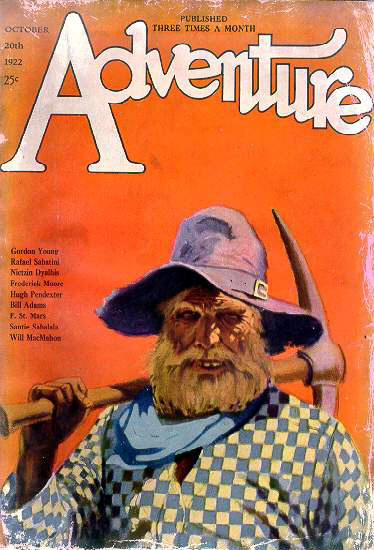
His first published story was “Who Keep the Desert Law,” published in the October 20, 1922 issue of Adventure. In April of 1925, his story “When the Green Star Waned” was published in Weird Tales, where the majority of his stories would appear. “When the Green Star Waned” has the distinction of being the first known reference to a ray gun as a “blastor.” His stories fit in well with the Weird Tales vibe and have the feel of authors like Clark Ashton Smith and August Derleth, offering heroes dealing with supernatural and occult forces which seem to be manifestations of the natural order of things.
Dyalhis died in Salisbury, Maryland on May 8, 1942. His first wife died in 1959 and his second wife in 1977.
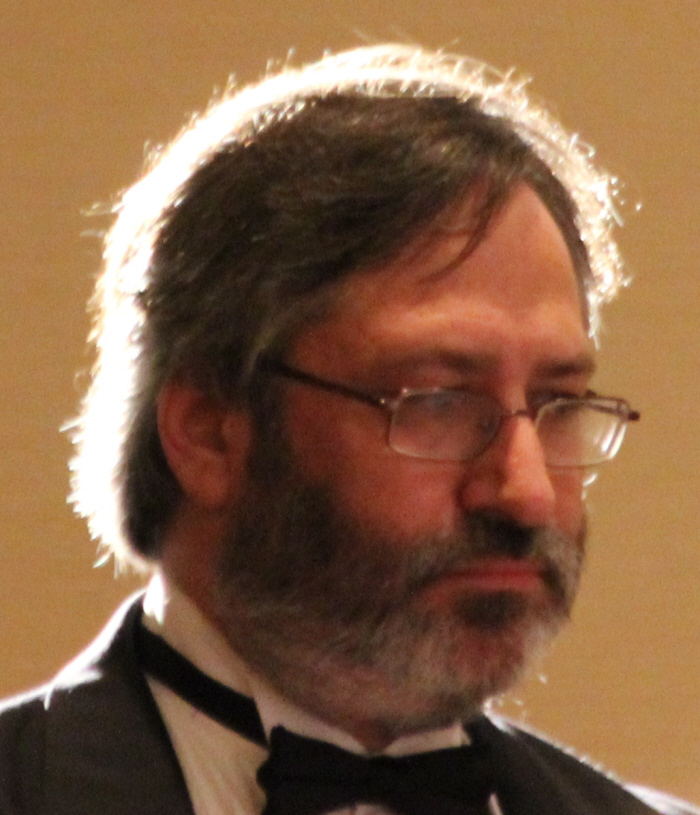 Steven H Silver is a twenty-one-time Hugo Award nominee and was the publisher of the Hugo-nominated fanzine Argentus as well as the editor and publisher of ISFiC Press for eight years. He has also edited books for DAW, NESFA Press, and ZNB. His most recent anthology is Alternate Peace and his novel After Hastings was published in 2020. Steven has chaired the first Midwest Construction, Windycon three times, and the SFWA Nebula Conference numerous times. He was programming chair for Chicon 2000 and Vice Chair of Chicon 7.
A fascinating character, to be sure, though nothing he self-reported can be trusted without verification. He and his second wife both misrepresented themselves in their Social Security applications, for instance, he with a fraudulent birthdate, and she with a fraudulent name. There is no evidence not traceable to Dyalhis’s own claims that he was ever in the orient. He actually seems to have spent almost all his life in Pennsylvania and Maryland, other than a brief period in the 1910s when he and his first wife lived in southern California and Arizona. They also collaborated together on at least one play, produced locally during their residence in Pennsylvania, which is not now extant.
In delving into the lives and works of forgotten authors I have often found the “lives” part more interesting than the “works” part!