Kingdom of Heaven: A Perfect Film About an Imperfect Knight
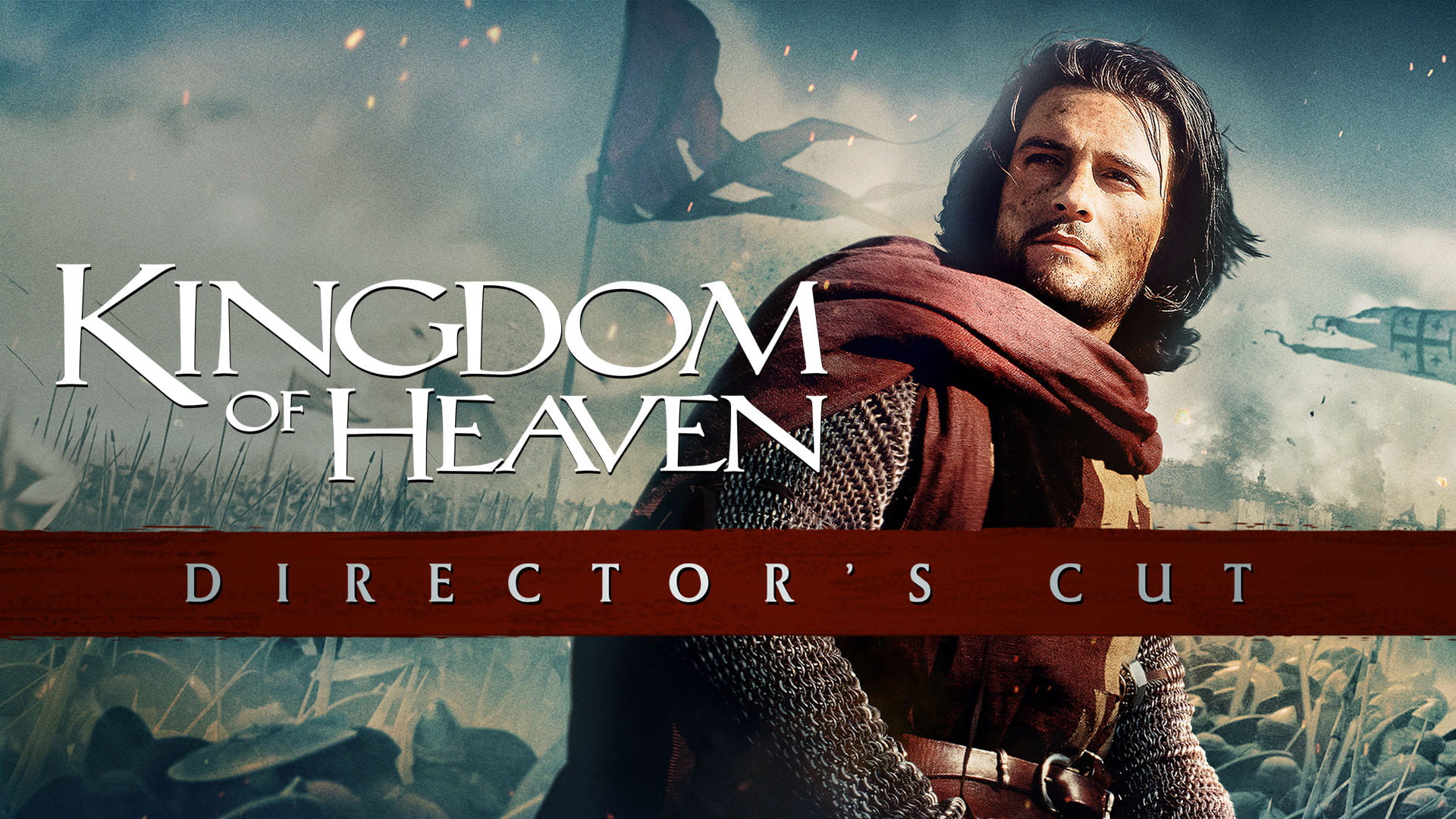
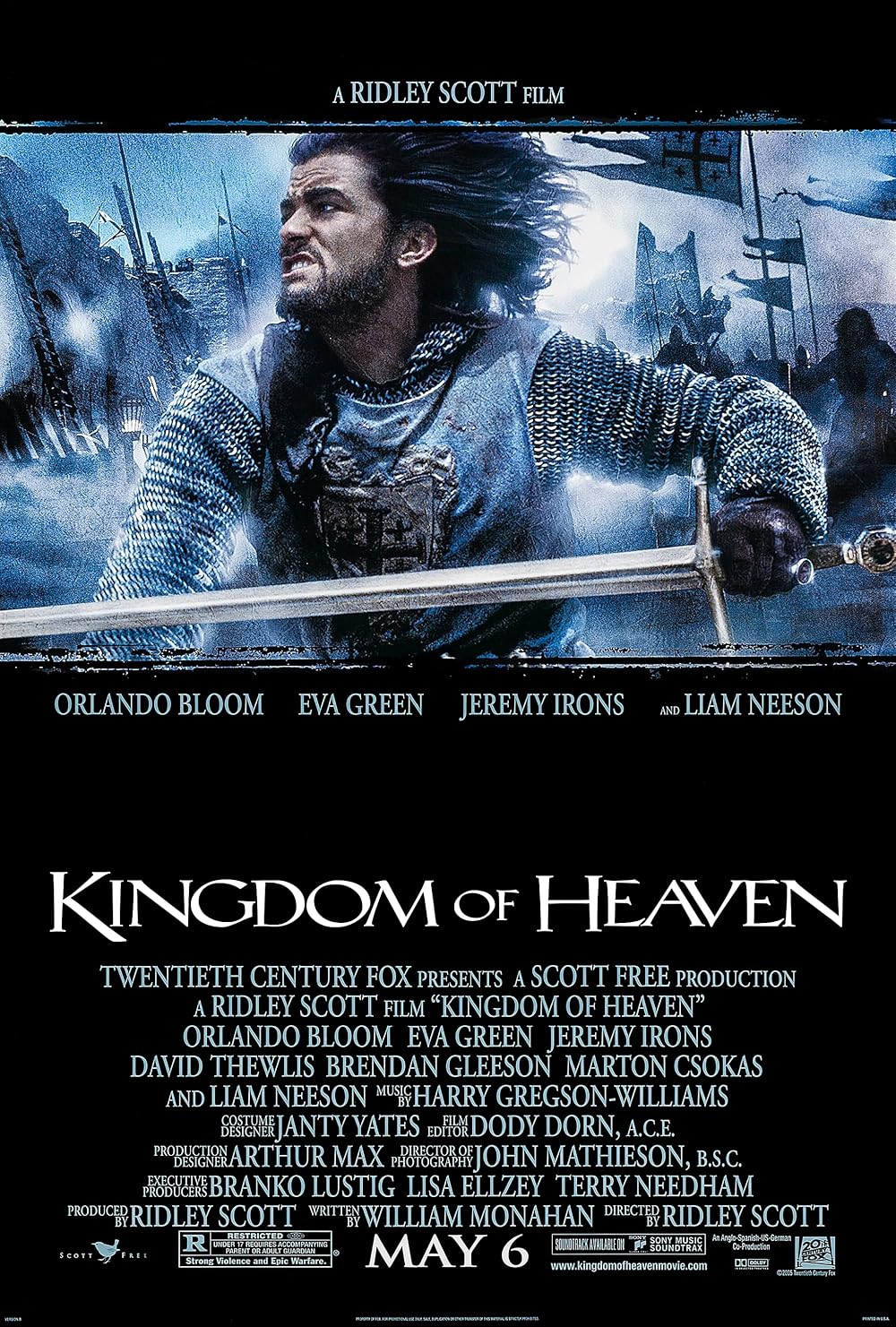
Kingdom of Heaven (Director’s Cut) (194 minutes; 2005)
Written by William Monahan. Directed by Ridley Scott.
(There is a shorter theatrical cut, which should be avoided at all costs, like the plague it is.)
What is it?
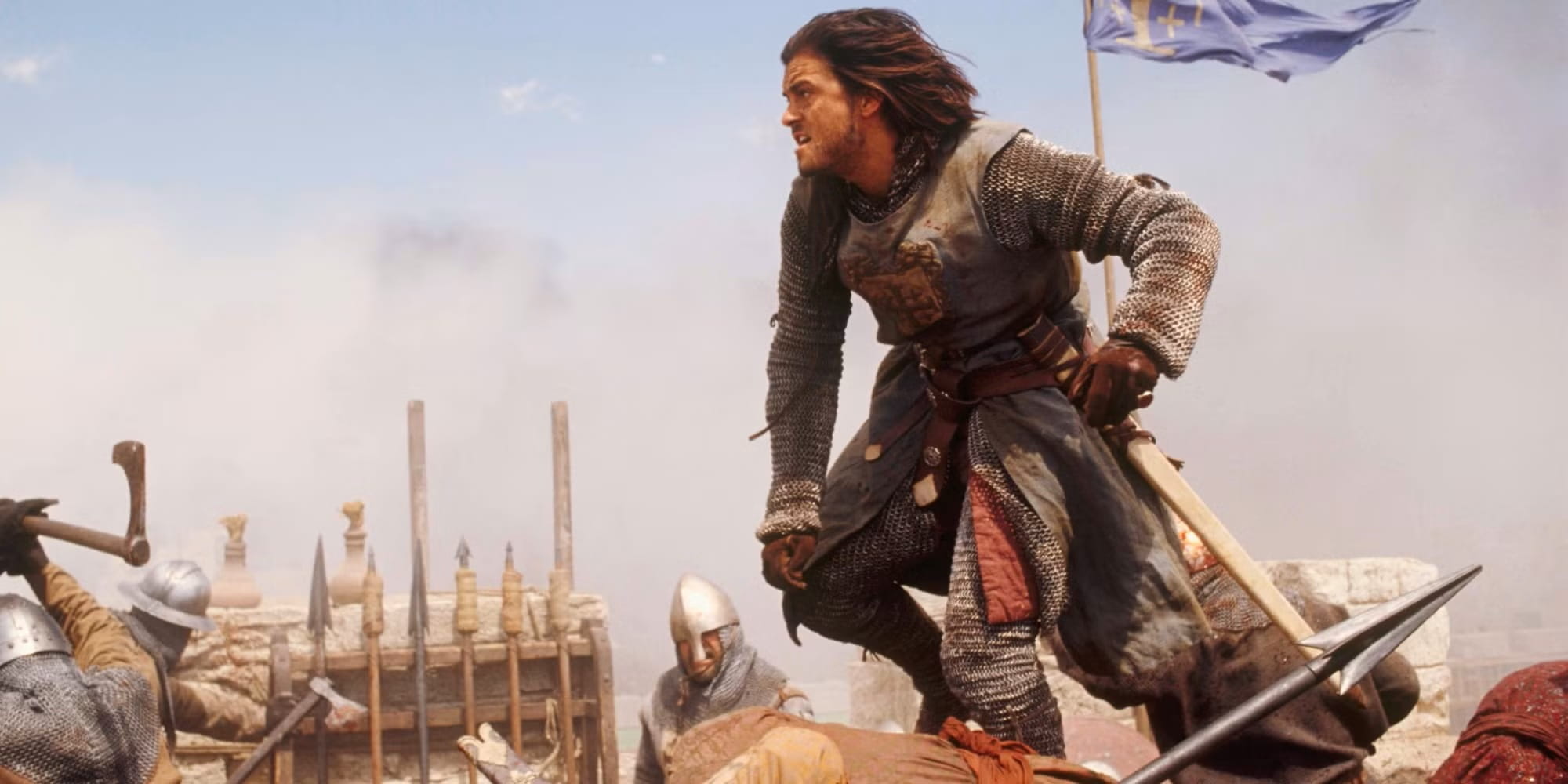
Ridley Scott’s epic saga of the Crusades, as seen through the eyes of a simple French blacksmith who travels to Jerusalem in an attempt to save the soul of his late wife, and ends up as the defender of the city against the massive army of Saladin.
Noteworthy
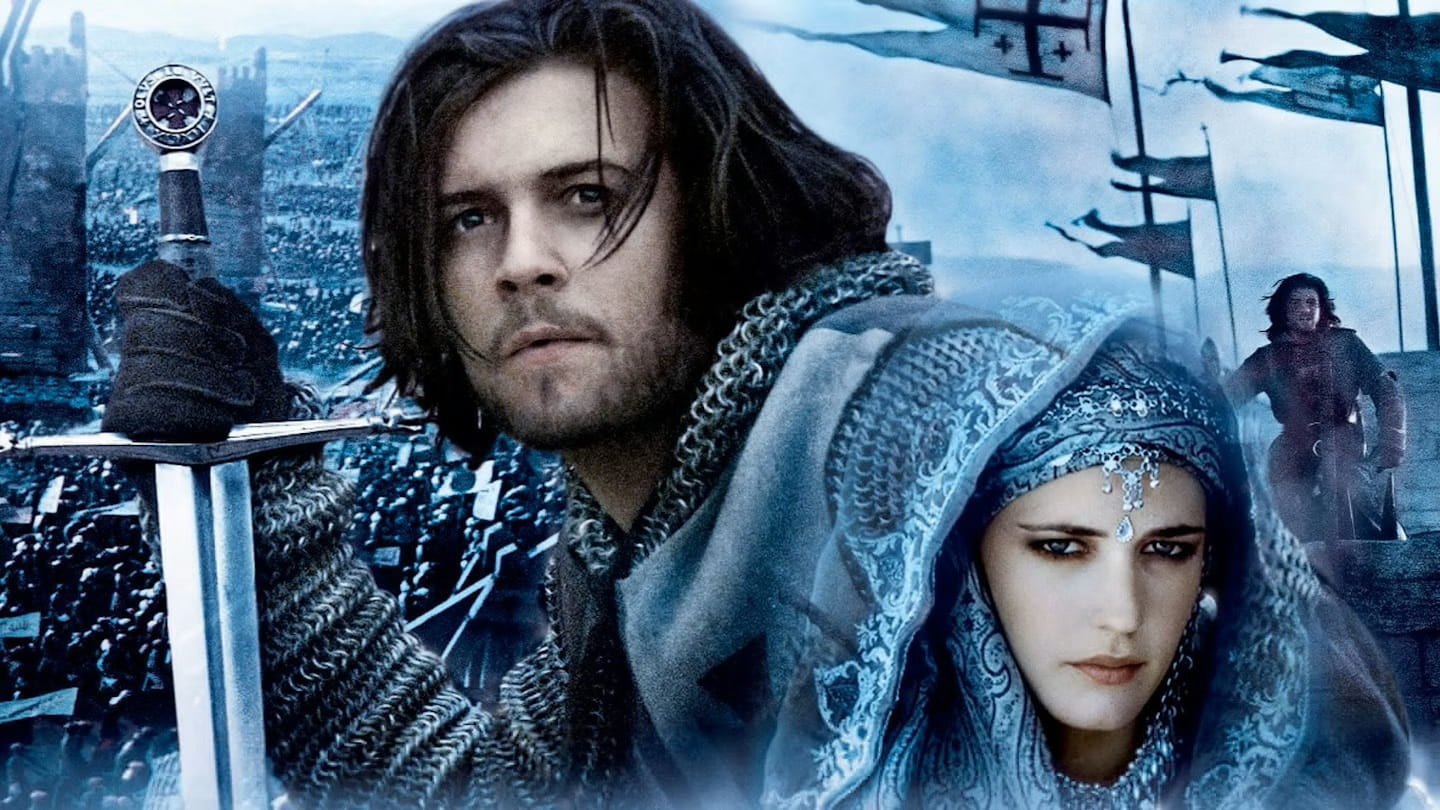
After massive edits mandated by the studio in order to shorten it, the theatrical cut of this film was a bomb. The restored Director’s Cut is, to put it simply, a masterpiece. It is a completely different film from the one the editors hacked to pieces and sent out to theaters, with 45 minutes (!!) of restored footage that completely changes the story and the characters.
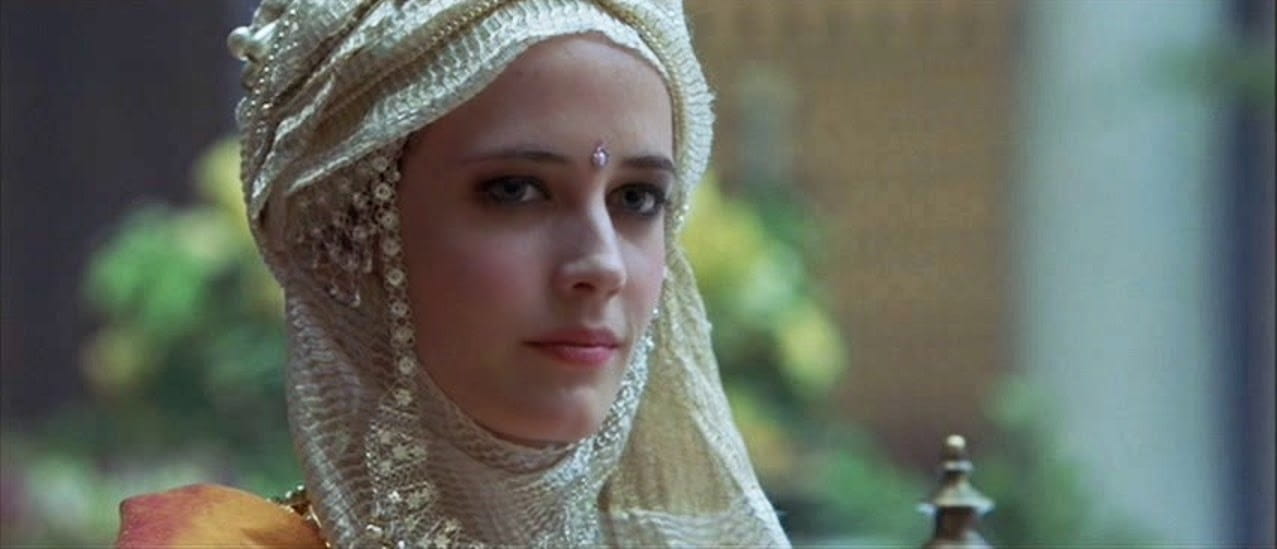
For one example of many: in the theatrical cut, Eva Green’s character, the Queen of Jerusalem, comes across as acting irrationally, because we don’t know her motivations. In the Director’s Cut, we gain entirely new and powerful subplots involving her brother, her husband and her son, all of which render her actions quite clear and understandable. The queen becomes half of the beating heart of the story.
How anyone could have thought the movie was improved by omitting even a portion of that material is beyond comprehension.
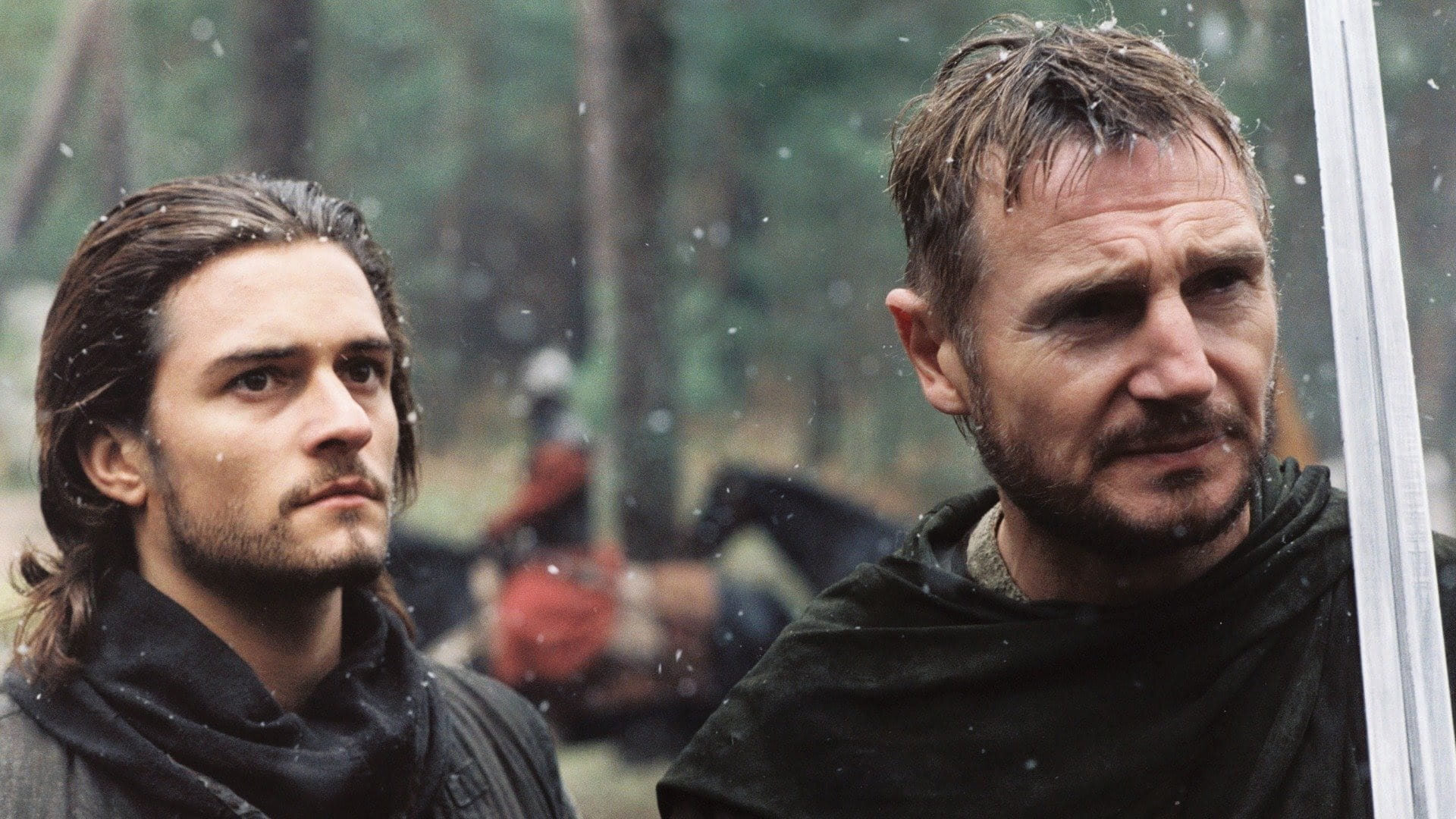
The cast is filled with famous actors. Orlando Bloom stars as the reluctant warrior, Balian. Eva Green is the queen of Jerusalem (with Edward Norton uncredited as her brother, the leper king). Liam Neeson is the Baron of Ibelin and father of Balian. Jeremy Irons is, effectively, the police chief of Jerusalem.
The rest of the stellar cast includes Michael Sheen, David Thewlis, Kevin McKidd, Nikolaj Coster-Waldau, Marton Csokas, Alexander Siddig, Ghassan Massoud, Brendan Gleeson and Iain Glen, among many others. Good heavens.
With the increasing availability of the Director’s Cut, public acclaim for the film has drastically improved. In just the past year alone, the IMDb rating has risen from 5.6 to 7.3, presumably on the strength of viewers’ votes after seeing the Director’s Cut. At this rate, it should deservedly reach a perfect 10 within a couple more years!
(Also of note: Scott’s underrated 2010 Robin Hood movie, starring Russell Crowe, is arguably a direct sequel. Kingdom of Heaven ends with King Richard the Lionheart stopping by Balian’s village on his way to the Crusades, while Robin Hood begins with the king’s journey back home.)
Quick and Dirty Summary
During the Crusades, Balian the blacksmith (Bloom) travels from France to Jerusalem to seek forgiveness from God for himself and for his late wife, who committed suicide after the death of their infant child.
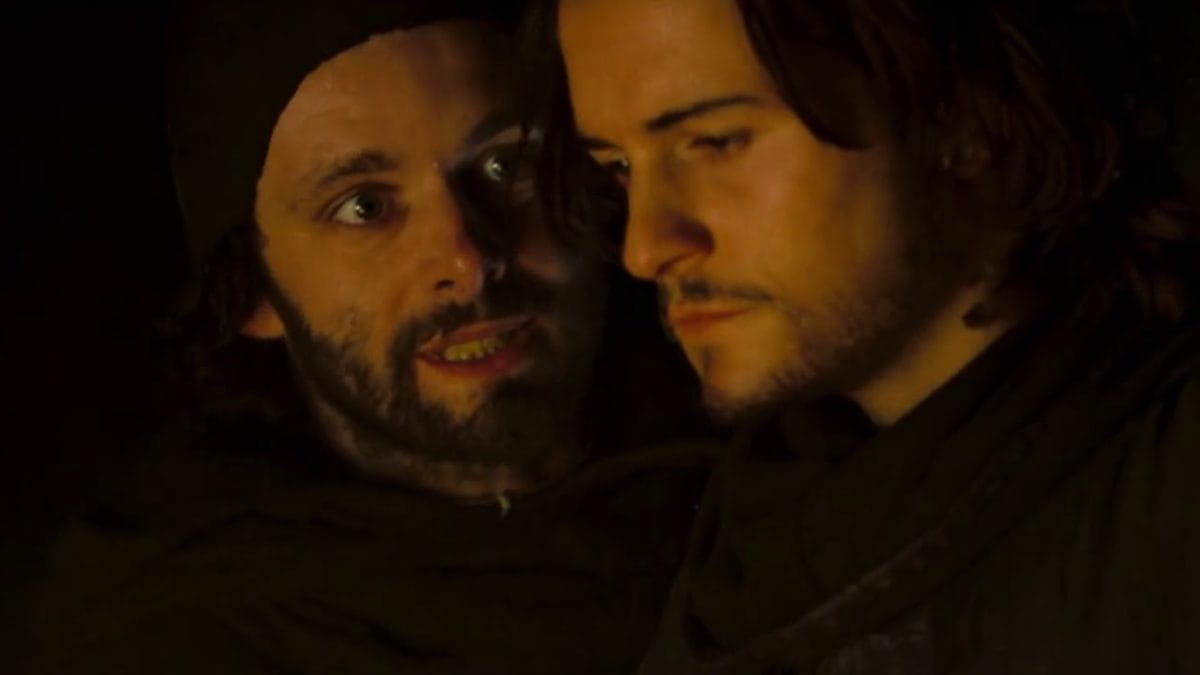
Along the way, he kills his half-brother (Sheen) — who needed killing, honestly. He discovers his true father (Neeson), falls in love with a queen (Green), battles corrupt knights (Csokas and Gleeson), and befriends a king (Norton).
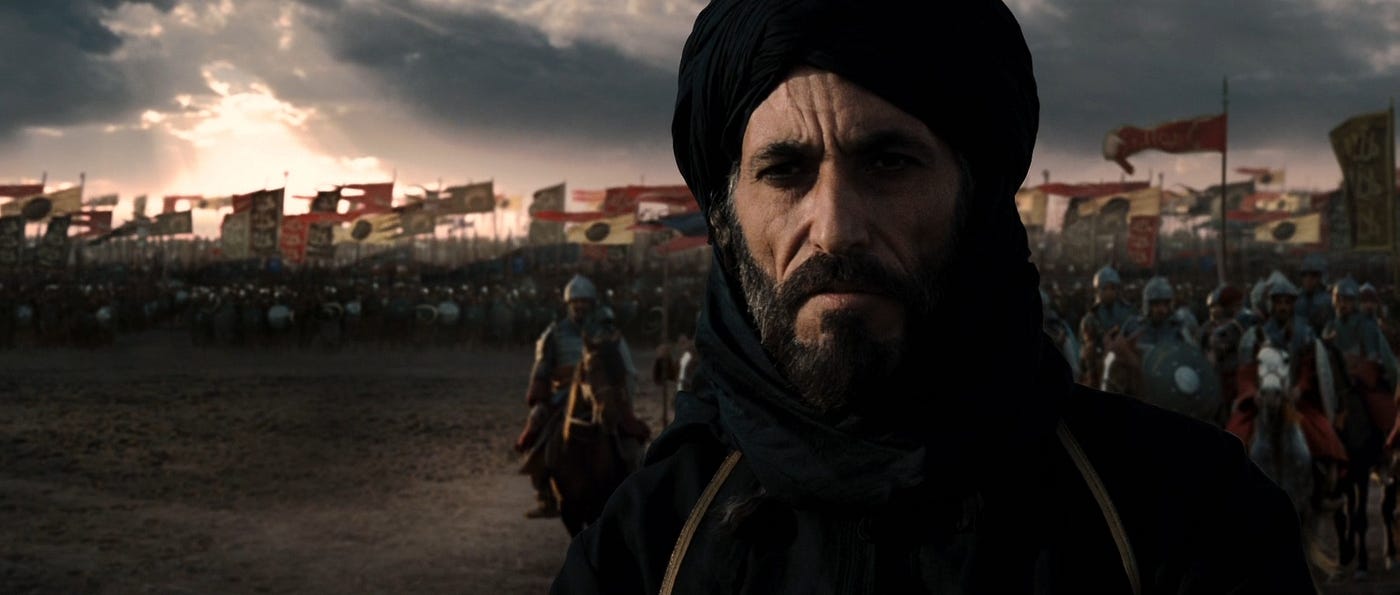
He also wrestles with moral questions, impresses a top aide (Siddig) to the great warlord Saladin (Massoud), and absorbs wise counsel from knights such as Hospitaler (Thewlis) and Tiberias (Irons), helping him grow as a man, a knight and a leader. And just in time – because the next thing he knows, this former blacksmith is suddenly in charge of defending Jerusalem from attack by Saladin’s massive army!
Fantasy/SF/Sword & Sorcery Elements
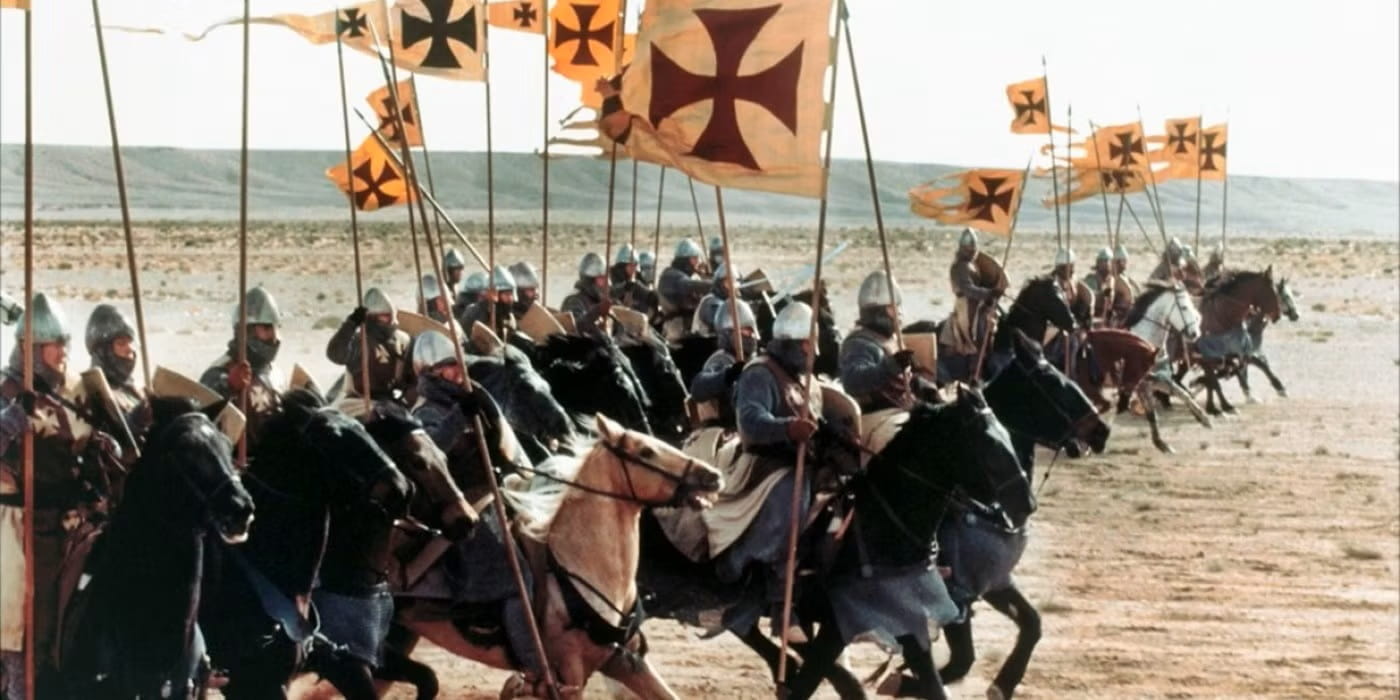
There’s plenty of sword, as in a number of battles involving massive armies, as well as several individual duels (one sword, two swords, a half-molten sword – a lot of swords!). The sorcery elements are more of a religious nature, but unquestionably and increasingly supernatural as the story unfolds.
The Hospitaller Knight – no other name is given for him – is the focus of the most fantastical aspects of the story. At three particular moments he exhibits abilities that elevate him from mere human to divine and perhaps angelic being.
First, during an early battle scene, Hospitaler evades arrows by disappearing from his horse as it runs through the Crusader camp. Ridley Scott doesn’t play fair with us here, however, as we quickly see that the knight has simply shifted to the far side of the horse, hanging on for dear life while making his horse appear riderless. But it serves a tease for what is to come.
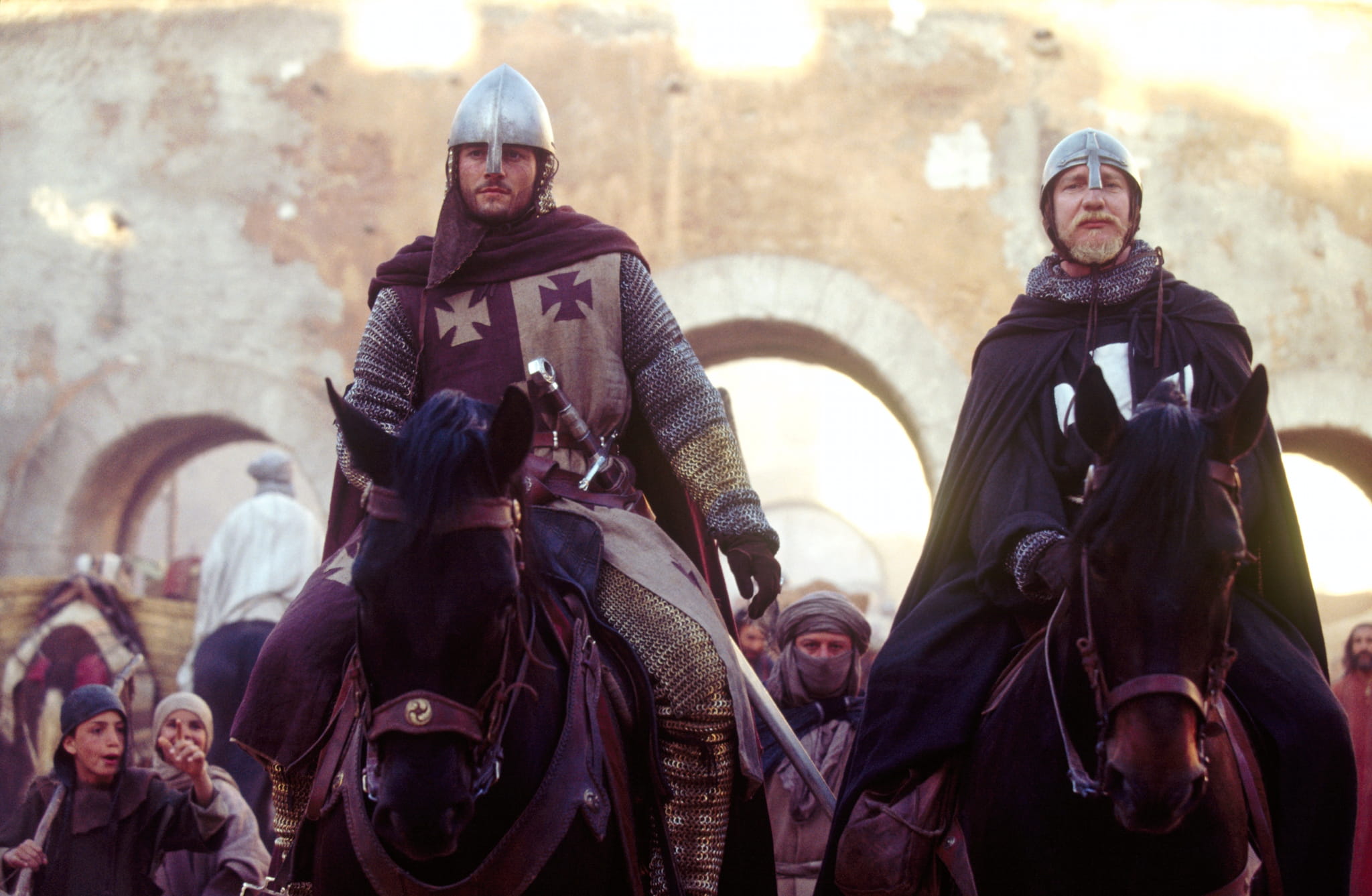
The second scene cranks up the weirdness quite a bit. As Balian sits alone in the desert, brooding over his situation, Hospitaller walks up and addresses him, handing out more deep moral philosophy. Once the knight is done, a literal “burning bush” distracts Balian. When he looks back a moment later, Hospitaler is nowhere to be seen. In true Batman fashion, he has vanished from a vast, wide-open desert. Balian’s horse cries out and rears, as if a ghost – or an angel – had just moved past it, invisible.
Finally, when Balian lies near death following a fight with two of Guy’s Templar knights, Hospitaller appears from out of nowhere. He touches Balian on the forehead, restoring him to life – just in time to try to stop the army of Jerusalem from marching out to its destruction.
Clearly, there’s something going on with that character beyond the realms of mortal man. Some have argued Hospitaler is God himself, or at least an angel, sent to guide Balian. But we are left to puzzle out those specifics for ourselves.
High Point
For all the action and romance and adventure, what still rings true above all else with this film is its powerful message that what king one serves or what religion one adheres to does not ultimately make one a good or bad person. What matters is what we choose to do, and choose not to do – as both the leper king and the priest-knight Hospitaler repeatedly point out to Balian.
One scene crystallizes this entire message. When Balian confides in the Hospitaller Knight that he fears he has lost his religion, the knight responds in a way that shocks the young man – and perhaps the audience, as it comes from a holy man. But it lays out the great message of the film:
I put no stock in religion. By the word religion I have seen the lunacy of fanatics of every denomination be called the will of God. I’ve seen too much religion in the eyes of too many murderers. Holiness is in right action, and courage on behalf of those who cannot defend themselves. And goodness — what God desires — is here (points to head) and here (points to heart). And by what you decide to do every day, you will be a good man. Or not.
Low Point
Balian repeatedly states that his only goal is to be “a good knight.” From this, multiple people respond in shock, with reactions along the lines of, “A perfect knight? Good heavens!” As in, who does he think he is??
But he never says “perfect.” Never once. Just “good.”
It makes me want to pull my hair out.
Standout Performance
Marton Csokas, who played Celeborn in The Lord of the Rings and who auditioned for the part of Balian in this film, makes for a truly memorable and despicable villain as Guy de Lusignan, head of the Templar Knights. When he’s not sneering on a scale perhaps not seen since Basil Rathbone in the 1938 Robin Hood or scheming against our hero, he’s throwing hissy fits or issuing catastrophically bad orders to his army. In a movie with so many good-guy supporting characters, Csokas shines in his own darkness.
Overall Evaluation as a Movie and as Fantasy/SF/Sword & Sorcery
While not as much a Fantasy film as some others, Kingdom of Heaven contains enough Medieval battles, one-on-one sword fights, supernatural forces and general derring-do to place it alongside the best of that genre. Throw in the entire moral and ethical layer, and the film achieves masterpiece status.
Just treat that theatrical cut like the leper it is!
Van Allen Plexico is a member of the Science Fiction and Fantasy Writers of America (SFWA), a Grand Master of Pulp Literature (2025 class) and a multiple-award-winning author of more than two dozen novels and anthologies, ranging from space opera to Kaiju to crime fiction to superheroes to military SF. He notably edited, co-created and co-wrote the Sword and Sorcery anthology GIDEON CAIN: DEMON HUNTER. Find all of his works on Amazon and at Plexico.net.
A great film! And the soundtrack is also first rate. Even though Orlando Bloom does seem entirely too pretty to have been a blacksmith.
Agreed. On all points. 😆
Sometimes, it seems like all literature and most movies are part of a massive debate about whether we are or are not our actions. “Does doing good/bad things mean I am good/bad?” “Is it possible to be good/bad and still do bad/good things?” Most tend to come down on the hopeful side that “bad actions do not make you a bad person, but good actions do make you a good person.” I respect Ridley Scott for arguing a different thesis in this movie, rather than immediately reinforcing the people-pleasing hopes.
I wish Scott had been brave enough to argue the complete division of action quality from character quality, though. It’s soooo close, but veers back into hubris at the last second, every time. Still, I suppose that’s part of what makes all of the people in the movie so utterly human, which is part of what makes it relatable and good.
While I consider Ridley Scott one of the great filmmakers, he does not have a perfect record. But one of his greatest skills is in portraying memorable characters, whether that’s heroes or villains. Your rundown of the Hospitaller Knight and the leader of the Templar exemplifies this. I recall vividly Gleeson’s character in this too. I admit I do enjoy him in villainous, or at least “gruff” roles – like in Troy.
Every once in a while, though, I think Scott gives the actor *too much* leeway. Gleeson clearly was psyching himself up to be “Reynauld de Chatillon” by loudly repeating “I AM REYNAULD DE CHATILLON” over and over–and Scott left that in the movie! It’s a weird thing.
Similarly, pretty much every scene with Joaquin Phoenix as Napoleon.
Yeah maybe so – while I only vaguely remember that scene (I need to re-watch) I can understand Scott’s thinking though, he felt like he was capturing a moment of gold.
But I tend to give him the benefit of the doubt, I’ve pretty well sought out all of his films and even the supposed stinkers are reliably interesting to watch, and the great ones to me are truly great.
I wish I owned the director’s cut of this – checked, and my 20 year old DVD is the original theatrical release. Appears not to be streaming anywhere either?
I have it on Blu-ray and the 4K Road Show Edition, and I own it on Apple Video. I don’t remember ever seeing this version streaming anywhere.
They put out a super-deluxe 20th anniversary edition a few months ago, to coincide with the first-ever theatrical release of the Director’s Cut. Seeing this version in the theater was pretty awesome.
Ah, thanks. I see the 20th anniversary version on Amazon for $50, that’s a bit much so I may opt for the $4 rental (which Amazon appears to have) for this go around.
It’s crazy to think that with all the clout Ridley Scott had after Gladiator, even he had to relent to the gutting of this film for the theatrical release.
Except when he tries to portray Napoleon, where he failed…epically.
But he was still memorable. 🙂
Seriously, no track record is perfect.
I’ve lobbied for the Director’s Cut for years which makes a terrible move very good. Honestly, my only complaint is that our Balian of Ibelin is just not Balian of Ibelin…a brilliant figure worthy of his own story.
And, of course, history is ugly…Isabella died at the Siege of Acre in 1190 and Balian would go on to fight with Richard throughout the Third Crusade (not meet him in France) and be instrumental in negotiating the truce that ended the Crusade. He’s just a decidedly more interesting figure than the rather generic movie epic character they wedged in, but then, the role was originally written for Russell Crowe and when he declined and they went younger, a lot of things were reinvented.
https://www.wikiwand.com/en/Balian_of_Ibelin
I will never argue that this film is historically accurate! For me, it’s more of a morality fable, and a pretty complex one.
People have argued with me over the years that it makes one side look good and the other look bad, but I point out that both sides have good and bad people in the movie, which is the entire point. It’s about how each individual chooses to be– they can’t hide behind their religious or political ideology as justification for bad stuff.
At some point I’d also love to hear your thoughts on The Last Duel.
Not a French Peasant. Balian of Ibelin was a very real person and this movie is based on a true story. Here is the real historical background…
https://en.wikipedia.org/wiki/Balian_of_Ibelin
One of my favorite movies of the Crusades. Also Balian has living descendants even now who are still nobility in Europe (not France though).
I’m not sure what you’re referencing here. I refer to him multiple times as “the blacksmith,” which he was, in the film. He didn’t know about his father and his connections to Ibelin until the events of the movie. There’s no question he’s very different from the historical figure, as are most all the characters in this film.