The Many Faces of Epic Fantasy

Good afterevenmorn, Readers!
I have been (over)thinking about the panels I participated in during this year’s Can*Con. What I can remember of them, anyway. I get so nervous before any kind of public speaking that the events often just get blanked out in my memory. But I am remembering some stuff that has me thinking more on the topics discussed. Since few folks were able to attend, I thought maybe I’d bring some of our discussions to you here.
One of the panels I was on was The Continuity of Epic Fantasy, and I was fortunate enough to be sat between Suyi Davies Okungbowa and Anuja Varghese, two incredibly brilliant folks with wonderful minds. Moderated by Y.M. Pang, this was a fascinating discussion about what epic fantasy was for us, and why we love it or hate it, and why it has been so enduring in genre.
The question of what epic fantasy is has been the one the stuck with me, because my fellow panellists brought up some things that have really stuck with me.
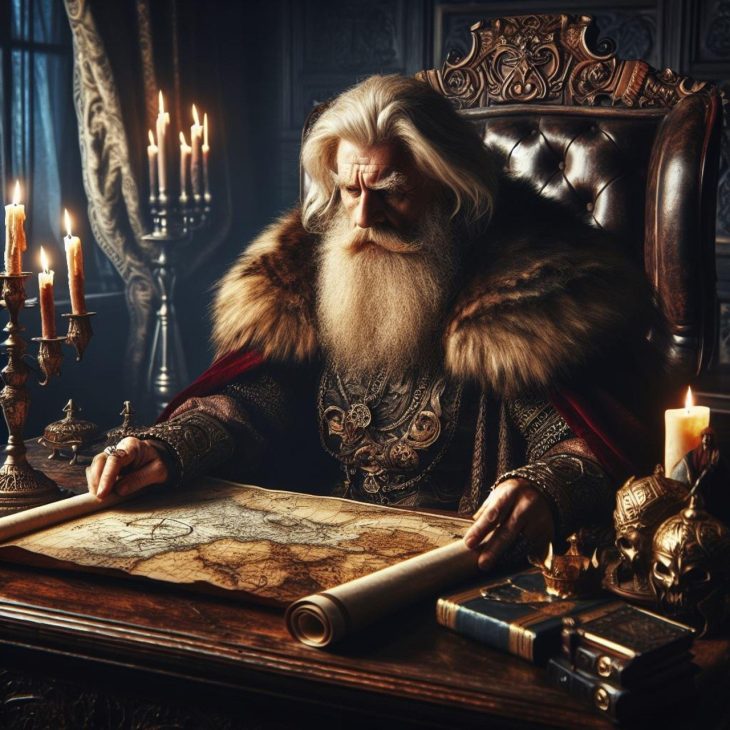
The phrase ‘epic fantasy’ tends to conjure up images of stories so vast that it fills volumes of tomes that run the entire length of a bookshelf. Or perhaps it brings to mind detailed, obscure prose filled with obscure, archaic, made up and difficult to pronounce words; perhaps some names split in the middle by an apostrophe. No doubt, there will be elves and dwarves, and those two folk will despise each other, and everything will be vaguely drawn as if it is in a facsimile of a vaguely medieval Europe.
But that’s not entirely true. Epic fantasy certainly can be these things, but I don’t think that’s what defines it as a genre. For me, epic fantasy must satisfy three things in order for it to be epic fantasy.
- The narrative must exist within a world that is grand in scale
- The stakes and chance of failure must be very high
- The event(s) must be myth-making within the world of the narrative
That’s it. Those are the three main factors that mark epic fantasy to me.
What makes an epic is, of course, the epic scale. The world must be wide and well-built. It must possess a history that has an influence on everything that happens after; including the events being described in the immediate narrative. The Lord of the Rings does this very well, obviously. I mean, there’s a reason why Tolkien is considered the grandfather of the genre. But that narrative, told in three volumes, is filled with ancient histories that explain why things are the way they are now. The Rangers are the descendants of a once mighty people; homeless defenders whose lineage leads back to mighty kings and a grand civilisation, for example. Once glorious and numerous, they are now ragged and few in number. This is just one example of countless in which Tolkien creates a world that feels ancient, and wide, and so very lived in.
The Malazan Book of the Fallen does this, too, though not in the same extreme detail. But new gods are making plays against older gods. The majority of an ancient people conducted a ritual, making them undead warriors that can crumble to dust and ride the wind in the present of this world. Prehistoric wars have resulted in the fading of an entire people, though a few can still be found in the remote places of the world. Ancient things move through the world, dormant in the past, but awakened by the events of the narrative. The Malazan Book of the Fallen also goes further than The Lord of the Rings in the wideness of the world. It takes place over more than one continent.
The narratives themselves of both these examples are quite personal. You follow a few people throughout the narrative as they move through their respective worlds. Frodo and Sam, Pippin and Merry, Aragorn, Legolas and Gimli in The Lord of the Rings, and a much wider cast in The Malazan Book of the Fallen with Tool, the Bridgeburners and Anomander Rake being a few of the standouts that still sit with me even all these years after finishing the series ages ago. It’s not a necessity of epic fantasy to follow the same cast of characters so intimately (though it is that intensely personal story in the vastness of the world is what keeps someone like me reading). However small and personal the narrative is, in epic fantasy, it takes place in a vast world. The actions of the characters we follow in epic fantasy are affected by and also have an effect themselves on events in the world. In both The Lord of the Rings and The Malazan Book of the Fallen that background is a world at war, ancient threats returning and promising annihilation.
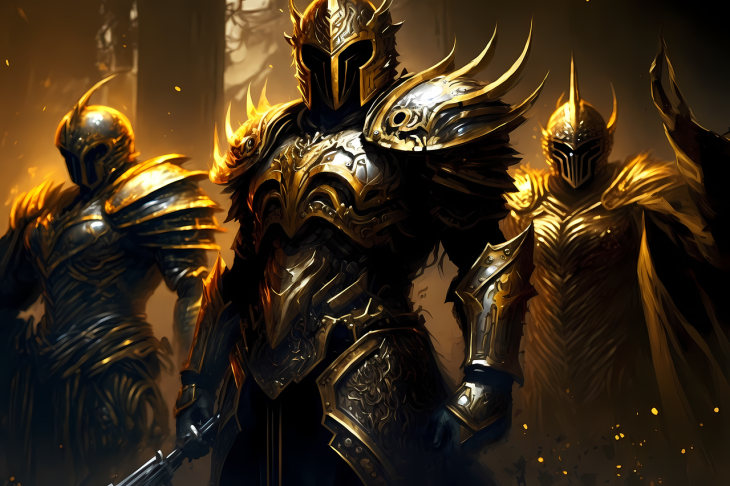
Of course, it isn’t epic fantasy unless the stakes are very high. Like, world-ending kinds of high stakes. I mean, not always world ending. Civilisation-ending or dynasty-ending also qualifies. Even if the author is playing with ideas of good and evil in a way we might not expect – especially those who’ve read mostly old school epic fantasy where good and evil are absolute and the heroes and protagonists are one and the same – the stakes are massive. Should the quest or mission or plan fail, the results would be absolutely catastrophic.
And chances of failure must be extremely high. I mean, I think that’s just good writing, rather than a marker of what makes epic fantasy epic fantasy. How dull is a story in which success is as much effort as a stroll along a river path? The odds of success must be low. The opposition should be overwhelming. In the vernacular, the struggle is real, fam. Did I do it right? Am I hip now?

I think one of the most important aspects of epic fantasy is that it must be myth-making. Not to us here in the real world (though hoy boy has some epic fantasy absolutely been myth-making in real life), but in the world in which it is set. I’m going to use the same two examples just because they’ve left the most lasting impact on me. But the events of The Lord of the Rings become part of the grand story of Middle Earth. Gondor’s throne was restored by a lost bloodline. That is a foundational event that, some thousand years later, would be a story folks may or may not believe about the Kingdom of Gondor. The ending of the kingdoms of the elves on Middle Earth is a foundational event for the Middle Earth that would be. The founding of new kingdoms will have their origin story in the events of The Lord of the Rings.
The Malazan Book of the Fallen is much the same in the myth-making. It’s much more explicit in this narrative, with the Bridgburners and Whiskeyjack becoming legendary in the world within the time span of the series. The same is true of Coltaine, so much so that an entire people alter their cultural dress to honour him. Oh lawdy, the Chain of Dogs still makes me cry if I think too much on it.
This kind of in-world myth-making is what helps sell the scale of the world and the struggle, as well as the heroism of the deed. It’s the in-world myth-making that makes it epic.
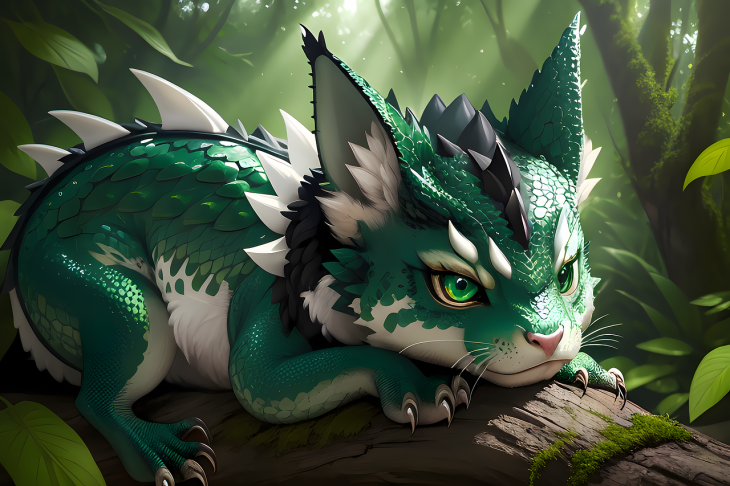
You’ll probably note that I did not mention the presence of particular “races,” or even magic. I don’t think that these things are necessary to the genre. It’s a fantasy even if magic doesn’t exist in this world if, for example, there are creatures that exist that we don’t have in the real world. Perhaps a world in which dragons live, but dragons are not magical. They evolved just as animals in our world evolved. But their inclusion at all makes it a fantasy. We don’t have dragons. And if the other criteria are met, then it’s an epic fantasy.
There was also no mention of length. An epic fantasy doesn’t have to be several volumes. Hell, it doesn’t have to be even one. A clever writer can achieve each of the listed criteria in a short story. Just because it’s short doesn’t mean it can’t be epic.
Language use was also not mentioned. Obscure words and archaic turns of phrase are not really required in epic fantasy. It is prevalent, to be sure. It does lend a gravitas to a story, and is a useful tool in giving the impression of myth-making. But it’s not really a requirement. The excruciating detail of Tolkien or the often near-poetic prose of Erikson might be the norm, but it isn’t a necessity, really. The language could be plain or more accessible, and the story would still qualify.
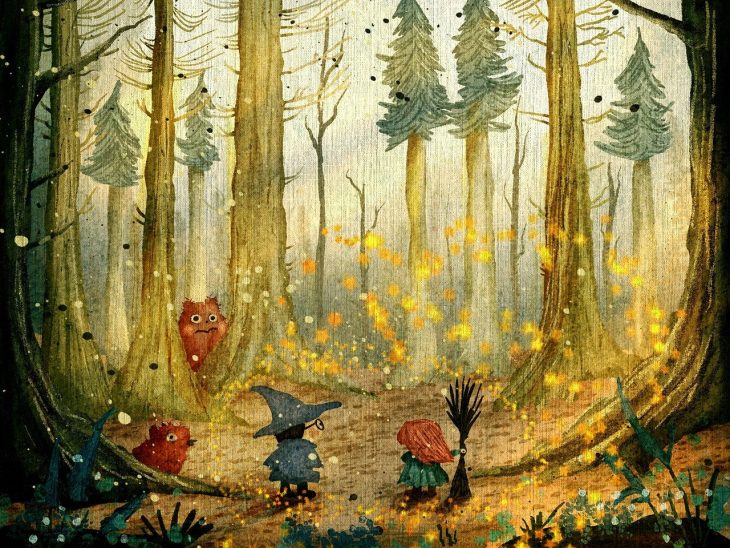
This does mean that a surprising number of books that people might not believe is epic fantasy would actually qualify. I was quite surprised when I read A Wizard’s Guide to Defensive Baking by T. Kingfisher, which was marketed as a cosy fantasy. And sure, freshly baked bread is cozy. A bakery? SUUUUPER cosy. But this story isn’t about a girl defending her bakery. The stakes aren’t that low. No. She uses her unusual magic to defend the entire city. That is some in-world myth-making. That is very high stakes. The only way I can think of that would disqualify this novel from being epic fantasy is that the world-building was on the lighter side.
Now, I didn’t love this story the same way I love The Lord of the Rings and The Malazan Book of the Fallen, so there are few things that stuck with me in the same way that aspects of these other books did (no hate, it was a fine story, but it didn’t grab me in the same way). But what did strike me was how this supposedly “cosy” fantasy was closer to an epic fantasy. Sure, it was full of humour and heart, and the writing was simpler than I typically associated with an epic fantasy, but the stakes were high, and things got quite dark… it wasn’t cosy at all. Except for the baking. That was pretty cosy… until it exploded.
There are other book that are marketed as something else that are actually epic fantasy, in my opinion. Quite a few that have been classified as Romantasy would certainly qualify. I’ve waffled on quite a bit here, though, so I’ll leave it alone. I’m much more interested in your opinions on the subject. Am I well off the mark? Does the length of the tale matter in your definition of epic fantasy? Language? Must epic fantasy have elves and dwarves in order to qualify? Or are you of a similar mind to me, and if so, which books would you consider epic fantasy that were marketed as something else?
Enquiring minds much know!
When S.M. Carrière isn’t brutally killing your favorite characters, she spends her time teaching martial arts, live streaming video games, and sometimes painting. In other words, she spends her time teaching others to kill, streaming her digital kills, and sometimes relaxing. Her most recent titles include Daughters of Britain, Skylark and Human. Her next novel The Lioness of Shara Mountain releases early 2026.
Hmmm … Based on the criteria, I think a case could be made that Tom Clancy’s Red Storm Rising (his only(?) non-Jack Ryan book, about World War III except, implausibly, both sides restrict themselves to conventional arms) qualifies as epic fantasy.
The narrative must exist within a world that is grand in scale — it’s a full-scale war between the US and USSR and we see battles in Germany, Iceland and the North Atlantic, amongst other places
The stakes and chance of failure must be very high — at multiple points, the Soviets manage to knock NATO forces onto their back foot until they regain their balance
The event(s) must be myth-making within the world of the narrative — presumably, once the dust settles it’ll be myth-making in the same way that WWI and WWII were
Also, I just finished rereading Stephen R. Donaldson’s Mordant’s Need duology and, say what you will about them, they’re a version of epic fantasy that manages to avoid most of the cliches — no elves/dwarves/what have you, and even the villains are human — no Sauron/Lord Foul analogues.
I mean… you’re not wrong. Perhaps I should have added that there must be an element of the fantastic (not necessarily magical, but…. hm… how would I adjust it, actually? That’s something to ponder!).
Similarly, I can think of a number of big, fat historical novels (Gary Jennings’ Aztec and The Journeyer; Nicholas Guild’s The Assyrian & The Blood Star; Ken Follett’s Pillars of the Earth _et al._; Michael Ennis’ Byzantium; etc.) that scratch many of the same itches as epic fantasy, albeit yes, without any overtly fantastical elements.
As for length, I think you _can_ have shorter works that are still epic in scale — the one that leaps to mind is Alter Reiss’ The Sunset Mantle, which is only novella-sized.
I hear what you’re saying here, but genres are primarily for marketing, right? I mean it’s a way of selling books to the people looking for that kind of book. So by adding books into the Epic genre that is not what the most readers of Epic fantasy consider Epic to be, kind of defeats that purpose, doesn’t it?
Take me for example, I will read an Epic fantasy book/series -sword & sorcery is really my jam, but I follow a couple epics. I’m not ever going to knock the favorite genres of other readers. As passionate as I am about what I read, I would never take a shot of what someone else enjoys. That said, I’m going to be POed, to pay good money for a book I think is one kind of story, only to discover in reading that it’s really romance or some other genre I don’t like.
I only bring this up because it can be difficult to tell what kind of book you’re getting now-a-days. It not like you can tell by the covers anymore.
Oh, I get that. I had an experience with T. Kingfisher’s A Wizard’s Guide to Defensive Baking, because I was expecting a cozy fantasy. While it certainly did have cozy fantasy elements, it was also quite epic. I’m not complaining. I love epic fantasy. But it did jolt me enough that I’m still thinking about it.
Okay, I guess I missed the point of what you were saying.
You basically had the opposite happen, to you what happened to me. You thought you were getting Cozy Fantasy but what you really got was epic. Where as I thought I was getting Epic Fantasy, but I got a Romantasy.
Duh- which is pretty much what you said.
I don’t know why but I also get so involved in discussions about genre definitions. It’s like one of my favorite topics about reading. 🙂
That’s because it’s such an awesome subject with lots of really interesting perspectives to be had!
I’m not all that familiar with romantasy, but I imagine that it could be epic… though for that to be true to romance would still have to be a sub-plot, even if pronounced more that usual. I don’t know. I haven’t really read the genre (or books marketed as that genre for whatever reason rightly or wrongly).
Since epic fantasy is named after the actual epics, I’d offer that the story needs at least one example of the heroic journey that concludes successfully. It can be the messianic hero, it can be the tragic hero, it can be one of the other variants, but at least one hero must accomplish the entire arc. If that doesn’t happen, it’s not an epic, it’s an incomplete misfire full of heroes that never allow for a denouement (a whole epoch of “Waiting for Godot”).
Oooh. I get that perspective. That makes sense. I think maybe The Malazan Book of the Fallen would push that a little, it’s still a great rubric to go by.
You may be right about Malazan. You know it well. I wouldn’t know at all; you’ll remember I had to DNF the one from the readalong, last year. My impressions of Malazan tend to be of an exquisitely-written extended tragedy of antediluvian proportions, more than anything else. *Rueful.*
I have so wanted to like Malazan. I even read the first three. Bought the Gardens of the Moon when it first came out, before the buzz about the series. But between the lack descriptive writing and the complex world building, I just get lost.
Ah. Good on you, getting through the first three. For myself, I didn’t end up lost, so much, as in territory far too familiar. The worst parts of the world I see in my job were showing up as subplots and narratives.
I’m sorry that you couldn’t enjoy Malazan, even though you wanted to, Greg. But with your taste for descriptive writing, have you ever read the Silver Brumby series by Elyne Mitchell? They’re often (I think mis-)categorized as children’s novels, but they are intensely textured because they’re a sort of naturalistic epic fantasy narrated by Australian wild horses. It’s a bit like reading Herman Melville’s attempt to write “Black Beauty” in Brian Jacques’ voice.
Totally fair. I came to the series partway through. My first book was Memories of Ice… and though I was completely lost the first hundred or so pages, by the end I was so in love with Tool and the cast that I went back and read from the start.
Oh, yes. I do remember. And that’s totally fair. An exquisitely-written extended tragedy is precisely the correct description… and is right up my alley. Totally not for everyone, though.
As I think about it, that’s another thing that might disqualify Red Storm Rising — the main characters (Submarine Guy, Destroyer Guy and Iceland Guy) aren’t any sorts of movers & shakers — they’re mid-ranking military guys who do their jobs very competently, but aren’t really directing the flow of events.
Really? If I’m remembering Submarine Guy correctly, he might be a shaker. Doesn’t he have a large portion of the fleet on tenterhooks for a good part of the story? Wasn’t there a point where he had to decide between show-myself-and-die-but-take-a-shot-at-the-leader and stay-hidden-and-collect-intelligence-but-let-the-leader-get-away?
I’d have to revisit the book; it’s possible I’m not giving them enough credit.
It’s always possible I’m remembering the wrong Submarine Guy. I’ll have to revisit the book, too.
Can I just say I had a lovely time reading all the comments and participating in the discussion here? Thanks everyone for your thoughts and perspectives. I can’t keep monitoring the comments, so I likely won’t be able to reply after today, but I just wanted to let you all know how much I appreciated the discussion.