Neverwhens: S.E. Lindberg’s Grave’s Daughters — an Imbalance of Familial Humors may Destroy a World
There is many kinds of world-building. Some create worlds so adjacent to our own, they simply are shadows — a slight change of name, a slight change of history. Others use an Earthly template — Bronze Age, Classical, Medieval, Early Modern, Victorian — and then layer their own elements of magic and science atop; while others yet create wholly distinct, carefully articulated “other worlds” that are the characters of the story themselves.
This is not what S.E. Lindberg writes about.
 |
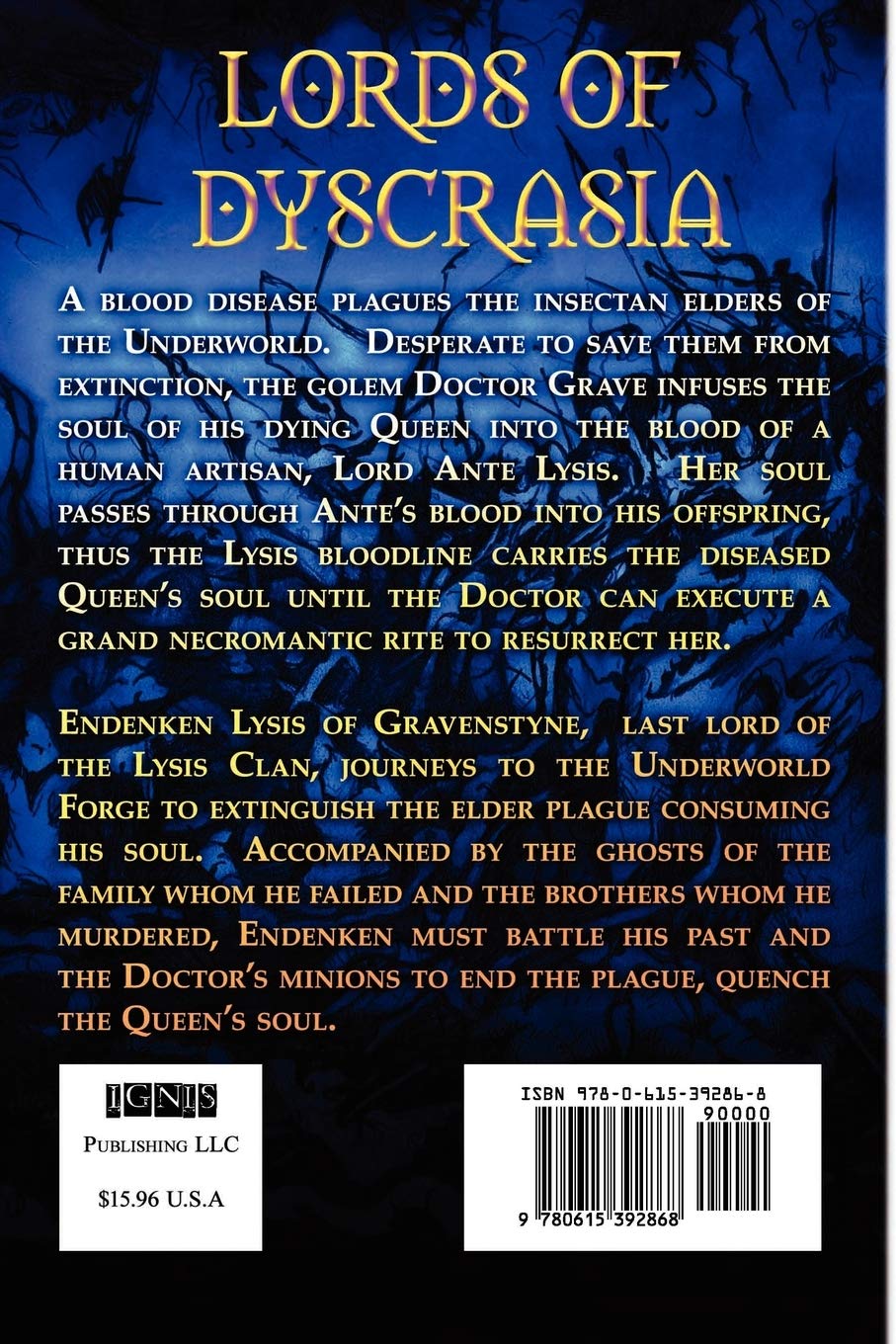 |
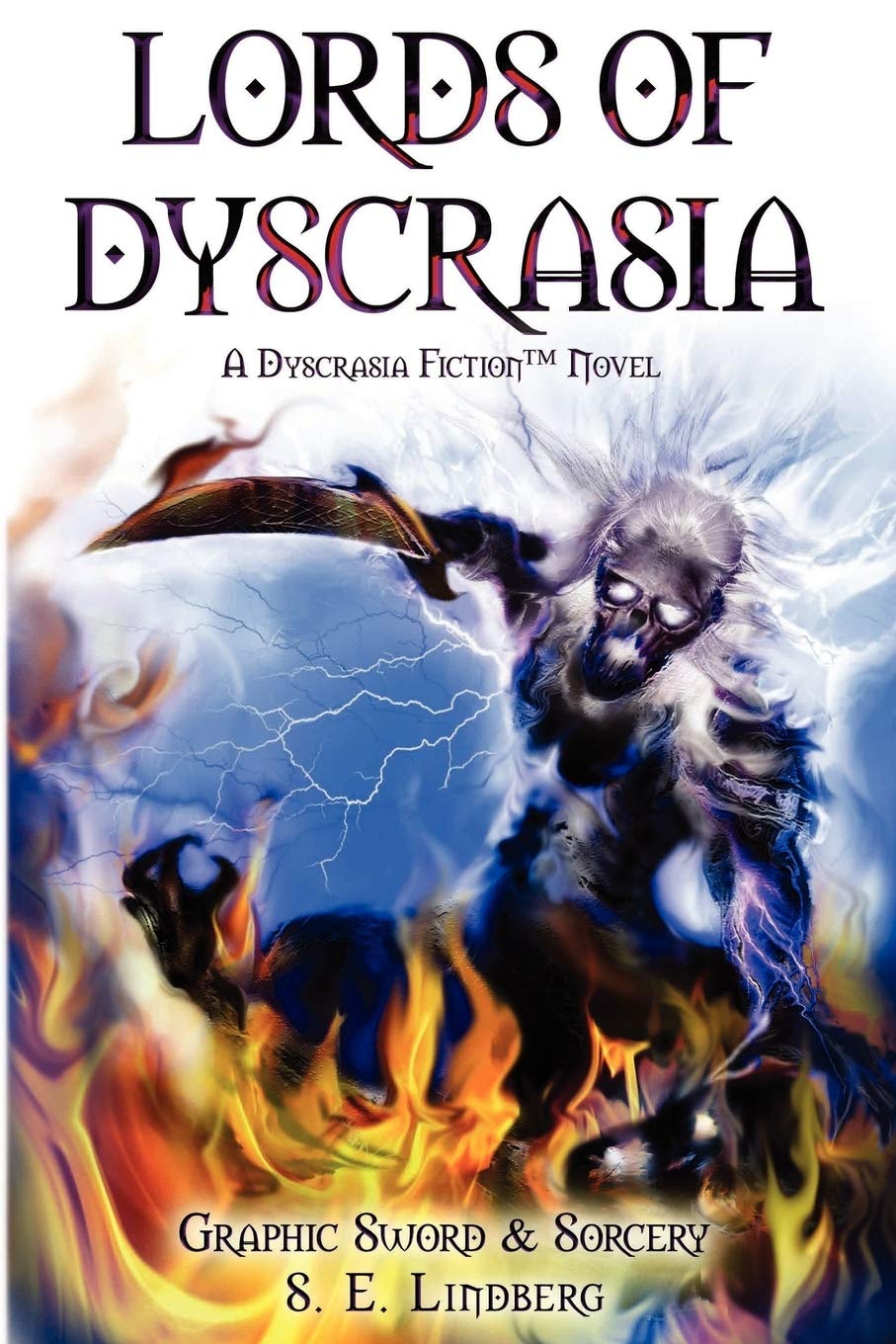
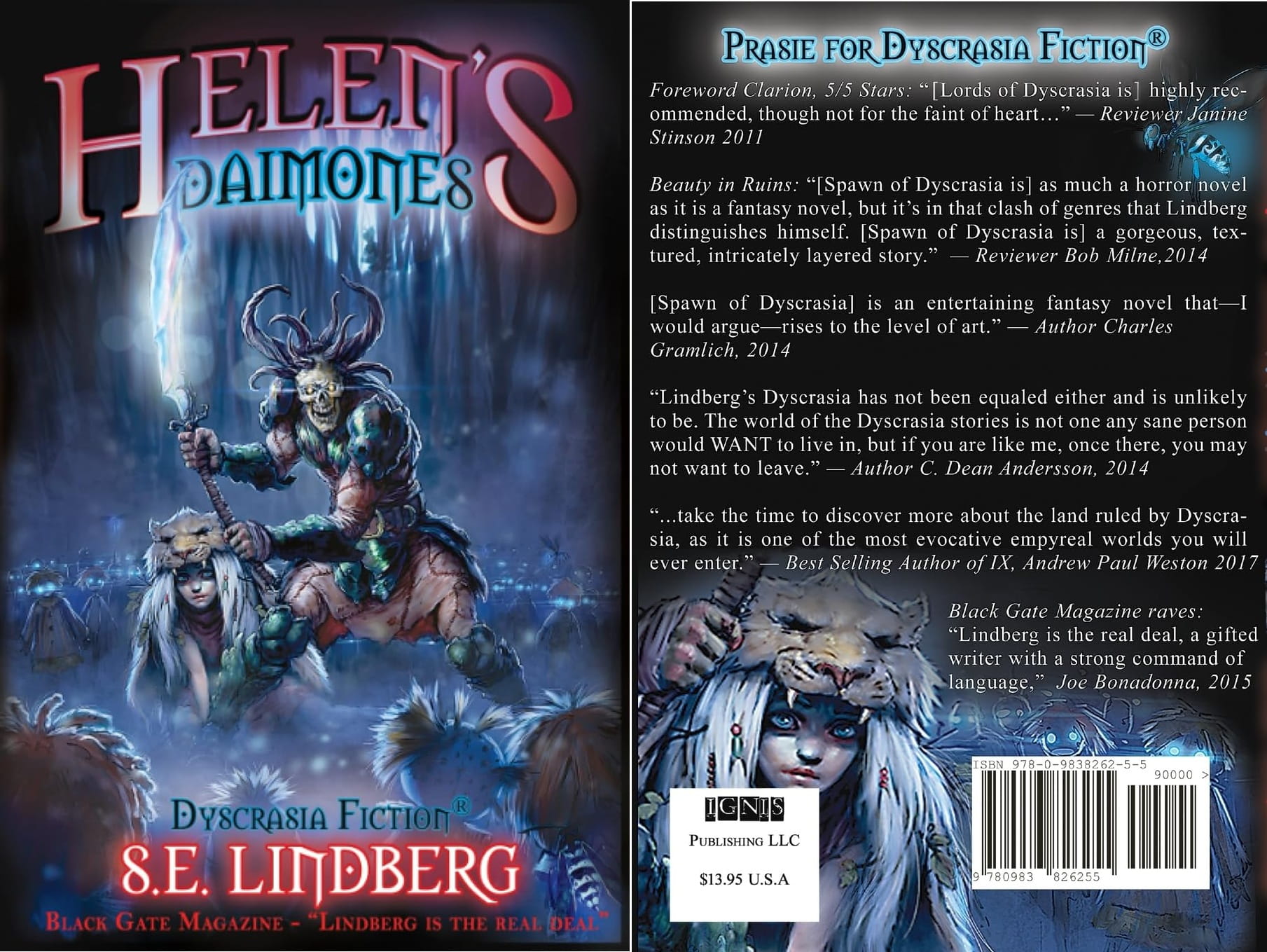
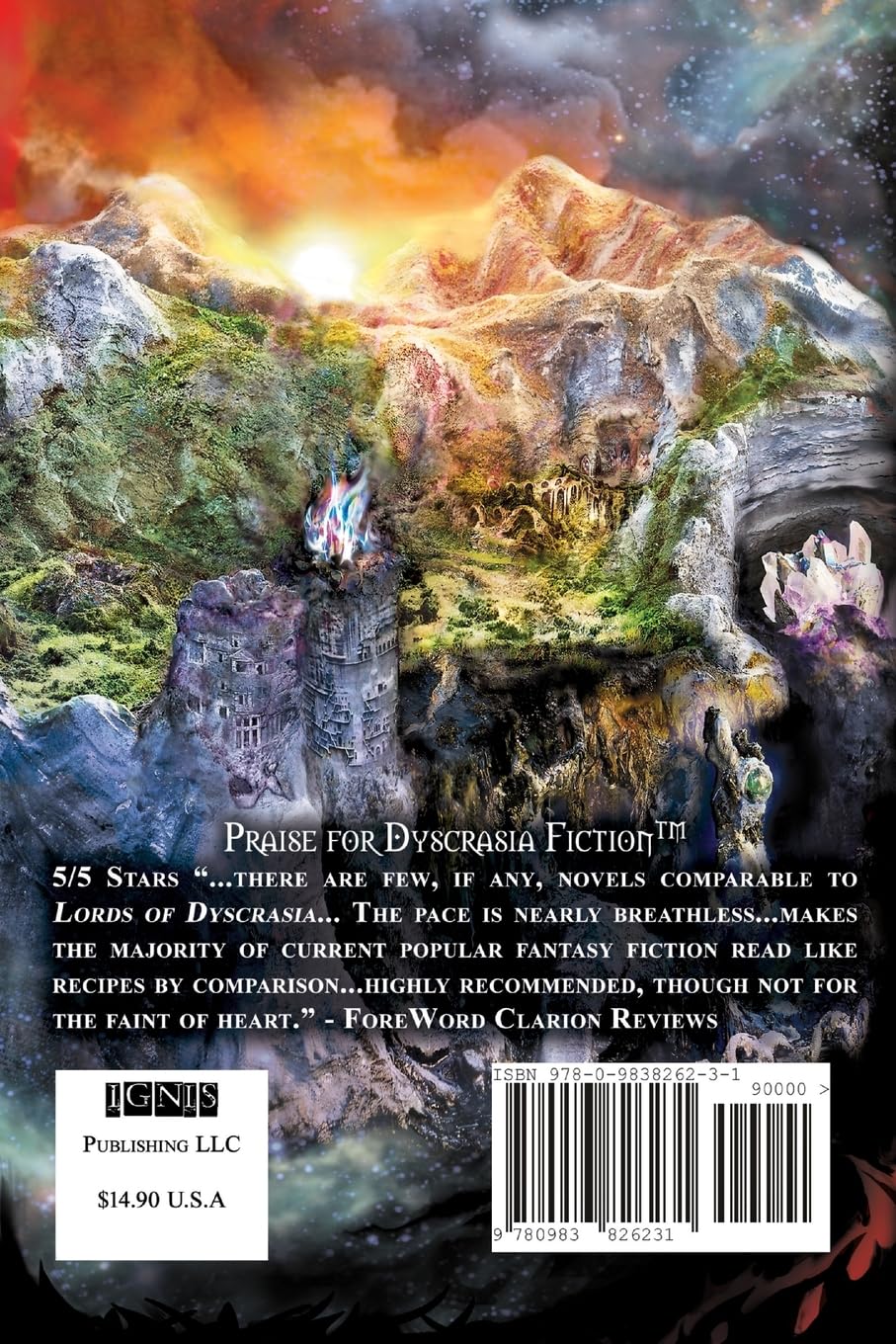
Dyscrasia Fiction, Volume 1: Lords of Dyscrasia by S. E. Lindberg
(Ignis Publishing, July 7, 2011). Cover by S. E. Lindberg
His world is inspired by the idea of medieval humors, that either are in balance (eucrasia) or imbalanced (dyscrasia), and uses this idea to create a world very much dyscrasic — so much so that the very blood of its creatures are inimical to each other. Historically, dyscrasia referred to any imbalance of the four medicinal humors professed by the ancient Greeks to sustain life (phlegm, blood, black and yellow bile). Artisans, anatomists, and chemists of the Renaissance expressed shared interest in the humors as uniting the ideas of the elements to the psychological temperments of people, so that they became the vessels of color, energy, and emotion.
Over the ensuing 15 years, Lindberg’s Dyscrasia Fiction™ has created a world where the humors are the literal and metaphorical sources of magical power, and contagions of a deadly disease. There is no Earthly archetype to Lindberg’s world, lest it be the land where dream and nightmare meet in dyscrasic inharmony.
There are also many kinds of beauty: the beauty of nature blossoming with new life after a hard winter; the beauty of a sunrise; the beauty of a baby’s first smile; or a pack of puppies tumbling and playing with boundless joy.
This, too, is not what S.E. Lindberg writes about.
There is also the beauty of the macabre. Of art made from carefully enameling the abandoned chitin of beetles; the beauty of fall dying into winter, its golds and reds slowly being subsumed by the greens, yellows and blacks of mold and the glint of early frost; of a skeleton’s smile, indeed of the vast ossuaries and bone cathedrals built by monks crying out Memento Mori!
Such as the beauty of Dyscrasia — a fallen world, yet not an abandoned one. Not entirely.
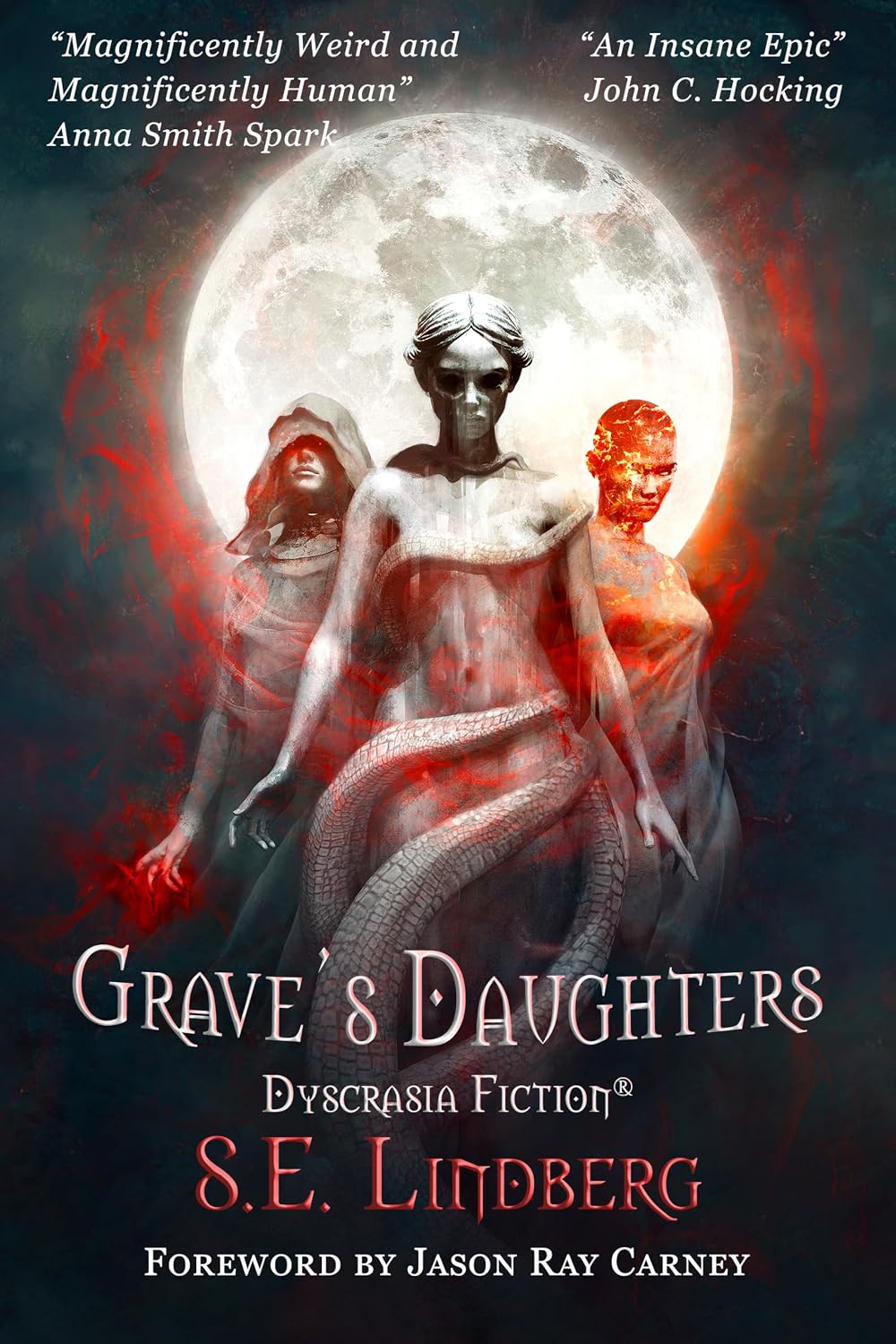
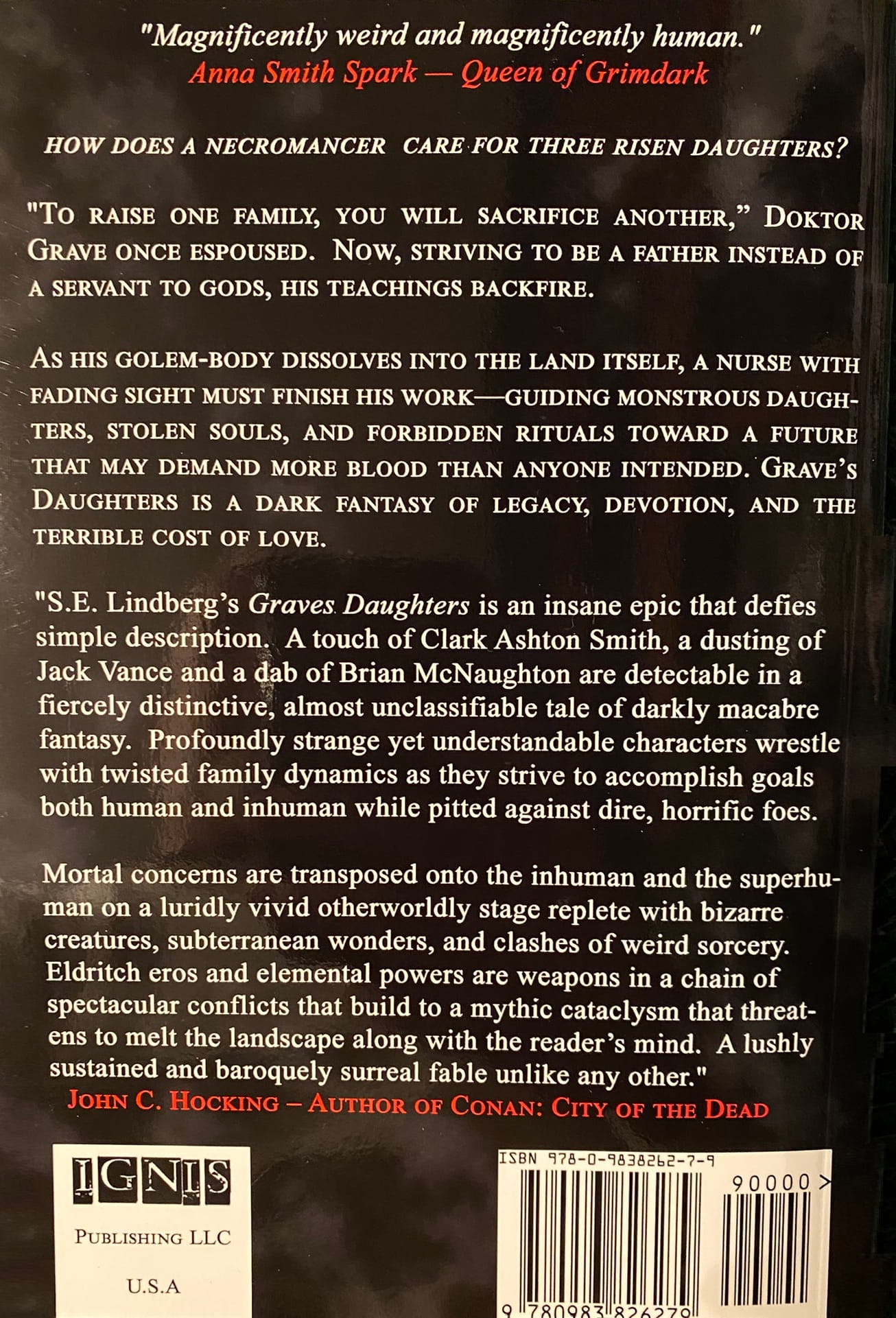
Such is the beauty — the desire to create life from stillness — that inspires the titular Dr. Grave to create three daughters from living rock. Grave is a necromancer, a former servitor of vast, insect demigods, and yet a lover of humanity. Alas, he does not entirely understand that thing he loves for, as a golem, he wears a man’s form but has never been human himself, and was created to raise and care for families of giant insects; the royal lineage of waning, half-breed colonies; and to study anatomy, necromancy and sorcery, not love.
Thus, in creating his daughters — with a hope to perhaps create a true golem race, one united to men — he only vaguely understands what such entails or how to guide such creatures to adulthood. A decided challenge as his one real, guiding tenet on family is: To raise one family, another must always be sacrificed.
There is much of ancient myth in Lindberg’s novel. I say novel, but it is a collection of linear short stories culminating in a novella unique to this compilation, yet telling a larger tale through different viewpoints, beginning with a story of creation and ending in an apocalypse and rebirth — like any good myth cycle. There is a literal Underworld, through which our hero must pass, its powers be avoided or propitiated, to achieve goals.
Doktor Grave, the creation of an elder, lost race seeking to fashion something from the ruins of dead rulers, has Odinic elements, just as his three daughters evoke images of goddesses of healing, fire and the underworld. And like goddesses, they hold great power and great passion, but far less compassion, which is where they perhaps differ most from their progenitor.
 |
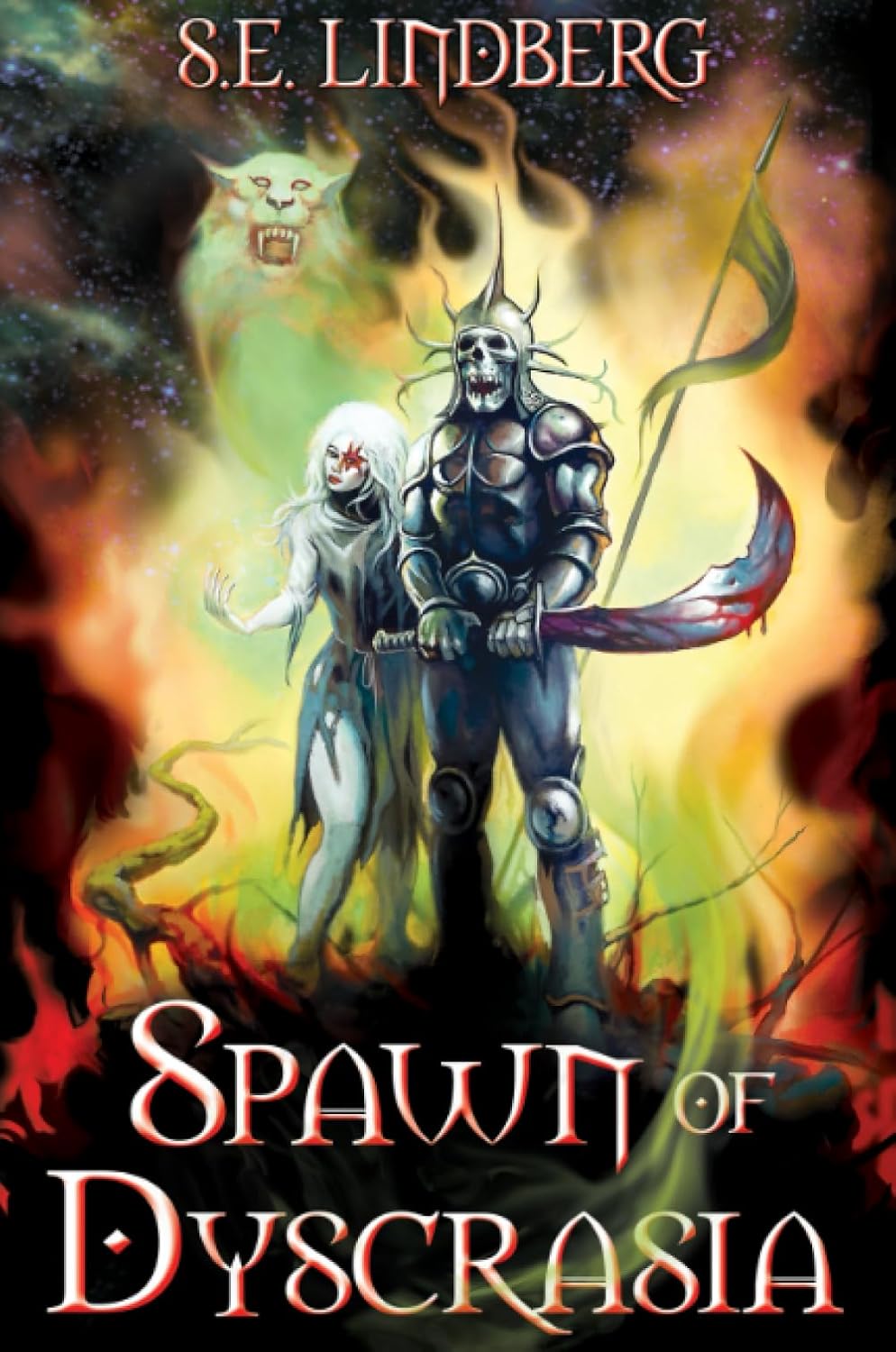 |
Dyscrasia Fiction, Volume 3: Spawn of Dyscrasia (Ignis Publishing, July 17, 2015). Cover by Ken Kelly
It is Grave’s attempt to steer his daughters towards his purpose, their rebellion, the catastrophes those rebellions cause, and how a far larger crisis brings all together into a synthesis and fulfillment, perhaps not originally what the good Doktor intended, but better for the world, that these stories concern.
For those who have sojourned with Lindberg through this strange world before, you will be rewarded as several of his main characters found in the first three books set within this world: Lord of Dyscrasia; Helen’s Diamones; and Spawn of Dyscrasia (released between 2011 – 2014) make reappearances here; or characters slip “off-stage” between stories to deal with the events of those novels and then return, etc. And the fates of characters from those novels, such as Lord Echo, are revealed herein.
For those unfamiliar with Lindberg’s work… he makes no apologies. There is a glossary of terms and a map but no true guide — you are hurled into the world on its terms, and the narrators speak to one who knows the laws of the land. I don’t offer more than that, because they need to be experienced — the prose read carefully — to really see what Lindberg is about.
 |
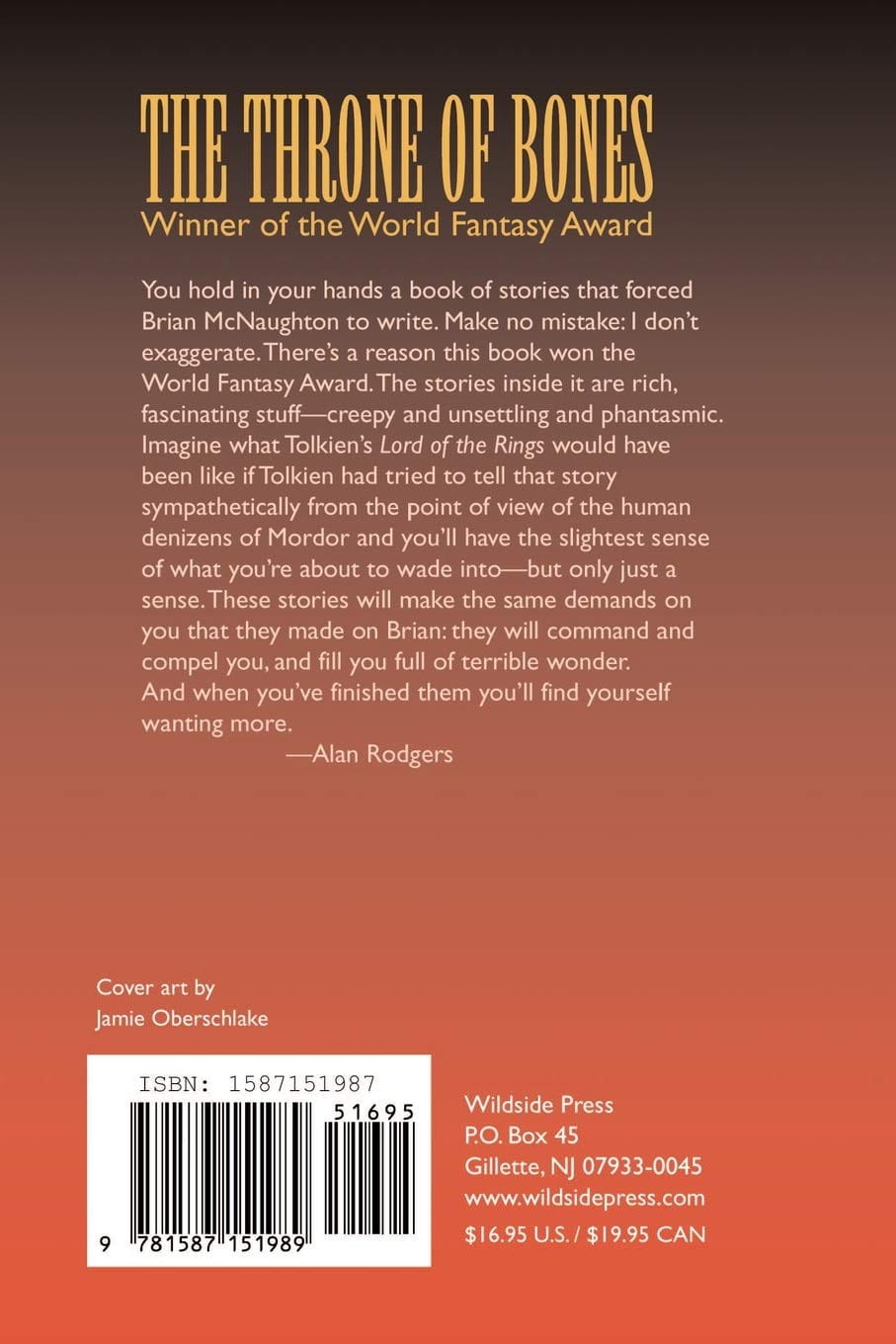 |
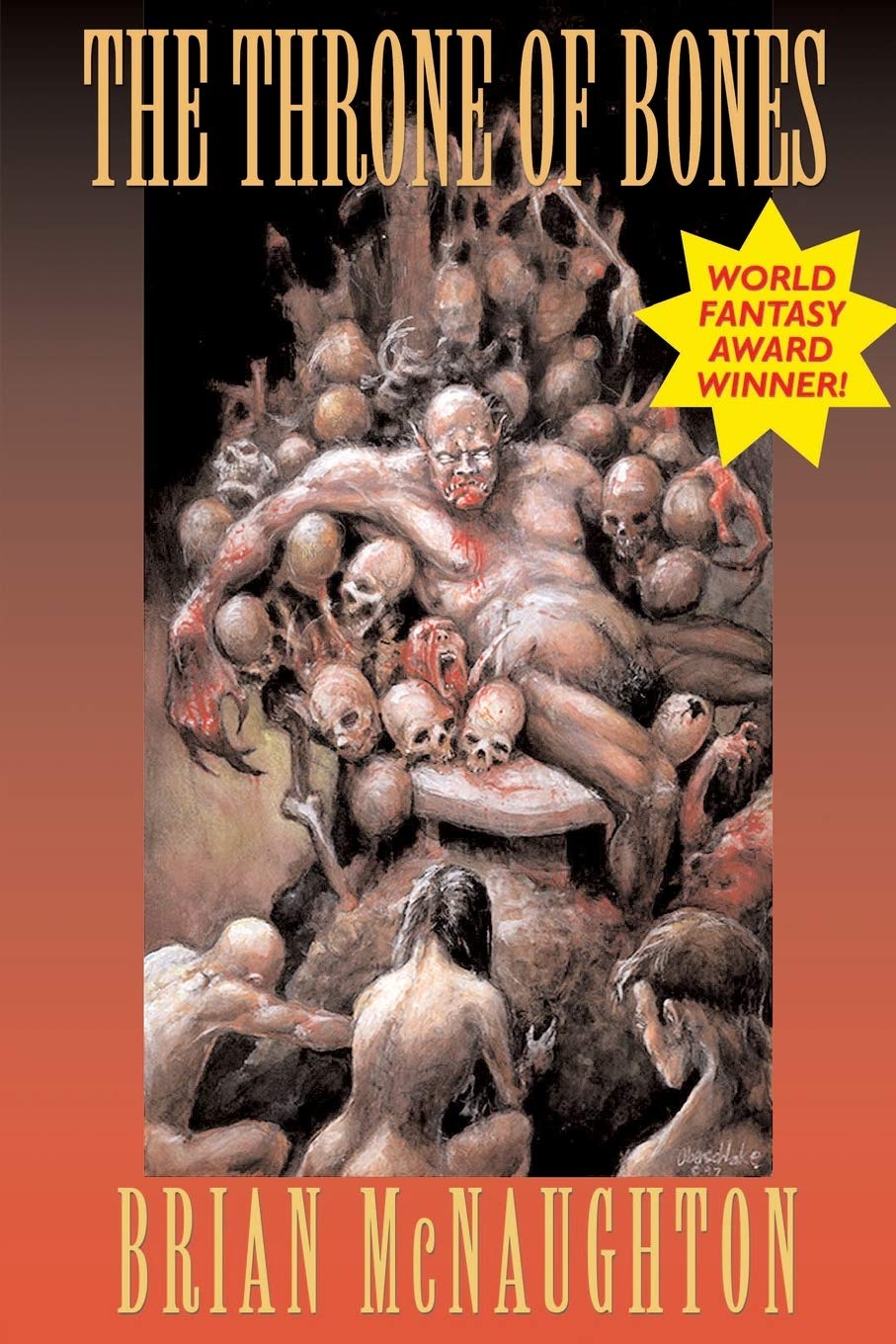
The Throne of Bones (Wildside Press paperback reprint, January 31, 2025). Cover by Jamie Oberschlake
But in its lushness, its strangeness, its “monster’s eye” view of a fallen world and fallen, macabre beauty, this work most resembles the magnificent Throne of Bones by the late Brian McNaughton, which did for ghouls of Lovecraftian bent what Anne Rice did for vampires.
This is a strange work about strange characters in an even stranger world — but it has things to say about being, identity, otherness and beauty that writhe, wyrm-like, through its stories.