Black Gate Online Fiction: An Excerpt from The Power of the Sapphire Wand, Creepy Hollow Adventure, Book 2
By Erika M Szabo and Joe Bonadonna
This is an excerpt from The Power of the Sapphire Wand by Erika M Szabo and Joe Bonadonna, presented by Black Gate magazine. It appears with the permission of Erika M Szabo and Joe Bonadonna, and may not be reproduced in whole or in part. All rights reserved. Copyright 2017 Erika M Szabo and Joe Bonadonna.
Chapter 1: Sweet Magic
Nikki Sweet and Jack Brady weren’t related by blood and weren’t really cousins. But that’s how they thought of themselves, as cousins. Their parents had gone to junior high and then high school together in the town of Diddlebury, and became best friends. Although Nikki’s parents had died under mysterious circumstances when she was a baby, Jack’s parents were always there for her. Uncle Frank and Aunt Mary, as Nikki called them, loved her as much as they loved their son, Jack, who was a year younger than Nikki.
Jack spent a lot of time at Grandma Sweet’s house when his parents were busy and, imitating Nikki, he started calling her grandmother “Grandma.”
On September 26, Nikki turned thirteen. Her grandma threw her a nice party, with Jack, his parents, and a few of Nikki’s friends from school. Among the many presents she received was another year of karate lessons at the local martial arts school, a gift from her grandmother. Nikki loved her martial arts instructor, and wanted to keep training, keep practicing. She had a natural talent for using nunchucks.
Nikki’s thirteenth birthday was also the day that changed her life.
After the birthday party was over and Nikki was alone in her bedroom, she felt comfy and cozy in her brand-new pajamas. She sat at her desk, playing with her colorful collection of river stones. Suddenly she felt the bed beside her begin to vibrate, making her stuffed animals look as if they were dancing. The posters of rock stars and movie stars hanging on her walls began to shine with a blue light. Then her hands began to grow warm, glowing with golden light as her fingers started to move on their own. She was frightened that she couldn’t control the movements of her fingers but she was fascinated by it, too. Nikki watched, feeling scared, as her fingers carefully arranged the stones in a circular pattern, and then into strange symbols within the circle.
“What’s going on?” she asked herself, her body tingling all over.
A moment later, the tingling sensation went away, and then her hands stopped glowing and no longer felt warm. Everything had returned to normal, except for the river stones sitting on her desk in a perfect circle, with the strange symbols inside it.
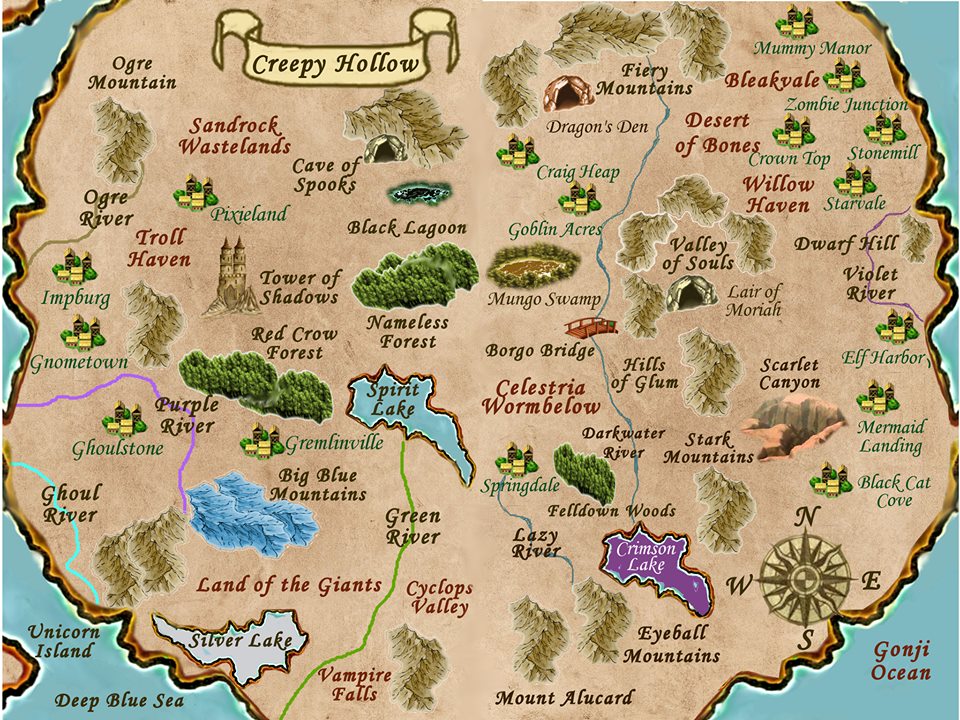
Nikki had no idea what had just happened. She thought about going downstairs to tell her grandmother, but then decided against it. Something weird had certainly taken place, something that frightened her and which she didn’t understand. She crawled into bed shaking, and pulled the cover up to her chin. Nikki thought about what happened a year ago when she and her cousin Jack had gone to Creepy Hollow with the talking wind chime whose name was Wishbone Jones, the Silver Skeleton. She recalled their battle with the evil Hobgoblin and wondered if the magic he had tried to use against her, but which she had deflected with her shield, had affected her in some way, giving her some of his magic. She wondered if Jack had experienced anything like this and made a mental note to ask him, when the time was right.
Nothing unusual happened for the next few days. Nikki studied hard, did her homework, helped Grandma around the house, and took her karate lessons. At times, she would sit on the front porch, watching the boys play baseball on Whipple Street, and thinking about what had happened on the night of her birthday party, wondering what it all meant and if it would happen again. But everything remained perfectly normal.
A few days later, Nikki volunteered to stay after school and clean the classroom’s chalkboard and erasers for her teacher. Jack had detention once again for failing to turn in his homework on time, and Nikki wanted to wait for him, so they could walk home together. She had no karate class that day, so she decided it was time to confide in Jack, to tell him what happened in her room that night, and find out if anything weird like that had happened to him.
When she was finished with her cleaning, Nikki decided to water the plants that were sitting on top of the bookshelves by the windows. That was when she noticed one of the potted plants had begun to wither and turn brown, and a few of its leaves had fallen to the floor. Setting the watering can aside, Nikki touched the dying plant and felt her body tingle, and her hands grow warm and begin to glow with the golden light again. Taken by surprise and unable to move, she had no control of her hands as they gently caressed the plant. Then slowly, the leaves of the dying plant began to turn vibrant green as the plant grew healthy and once again stood straight and tall.
Nikki’s hands dropped to her sides when the plant had fully recovered, and she stumbled backwards a few steps, totally shocked by what had just happened.
Wow—I healed a dying plant! Nikki thought. But how?
Her thoughts were interrupted by loud, shouting voices coming from outside.
“Plenty weird! Plenty weird!”
“So weird even the teachers are scared!”
Glancing out the window, Nikki saw two boys taunting a girl about Jack’s age who was dressed in black. She saw Jack throw his messenger bag on the sidewalk, lead the Goth-looking girl behind him, and raise his fists as he faced the two boys.
“You guys are just asking for trouble!” Nikki heard Jack say.
Nikki quickly grabbed her backpack and raced from the classroom to help Jack.
When Nikki ran outside, she saw the two boys facing Jack in threatening poses and staring at him with glaring eyes. The girl whimpered and took a few steps backwards.
“So what are you gonna do about it, Brady?” asked the pimple-faced bully.
“Yeah, think you’re tough enough to fight us both?” said the second bully, a chubby kid with a buzzcut hair style.
Jack took one step forward, stopped, and scowled at the two boys. There was an intense expression on his face. “You guys have no idea where I’ve been, what I’ve seen, and what I’ve done,” he told them.
Pimple-face laughed. “Is that so?”
“Yeah?” said Chubby. “What of it?”
Taking another step forward, Jack raised his fists. “You do not want to mess with me,” he said in an angry and threatening tone of voice. “But if you’re crazy enough to tangle with me, then you’re going to see how crazy I am, and you’re going to run home to your mothers, crying like a couple of babies!”
Jack’s confident tone of voice and the fierce look in his blue eyes made the bullies glance at each other with fear in their eyes as Jack took one more step forward. Feeling strong and brave, Jack took another step closer to the cowering boys and howled like a coyote. He raised his arms high above his head and leaped forward, landing right in front of the bullies.
“Boo!” he shouted.
The bullies jumped. Pimple Face shrieked and backed away.
“You big bully, you scream like a girly-girl,” Jack said, laughing.
The chubby boy giggled, and Pimple Face turned red and punched his buddy’s arm. “This guy is nuts!” he said, trying to collect some dignity. “Let’s get out of here.”
“Yeah, they ain’t worth it,” replied Chubby, trying to muffle a laugh by covering his mouth.
They turned and ran down the street.
“That was so cool, Jack!” Nikki cried when she finally reached him. “You scared the daylights out of those two.”
“Nah, it was nothing,” Jack said as he blushed and turned away to hide it.
Nikki smiled when she saw the quick glance Jack shot at the Goth girl who walked closer to him.
“You are my hero, Jack. Thank you for defending me,” she said with a smile. “They’ve been tormenting me whenever they can catch me alone, because of the way I dress.”
Jack looked at her and his face turned red again. “Aw, gee, you’re welcome,” he said and thought, I faced spooks, evil crows and shadows, a Tasmanian Devil, and the Hobgoblin himself in Creepy Hollow last year, so two ordinary bullies weren’t going to frighten me.
“I’m so proud of you, little cousin,” Nikki said as she stepped closer to Jack.
“Do we have to hug?” Jack asked playfully, taking a step back.
“Nope.” Nikki laughed and asked, “Who is your friend?”
“Oh,” Jack said. “This is my friend, Peggy Ward. She’s new here at school.”
“Everyone calls me ‘Plenty Weird,’” said Peggy. “Except for Jack.” She smiled at him and once again, he blushed.
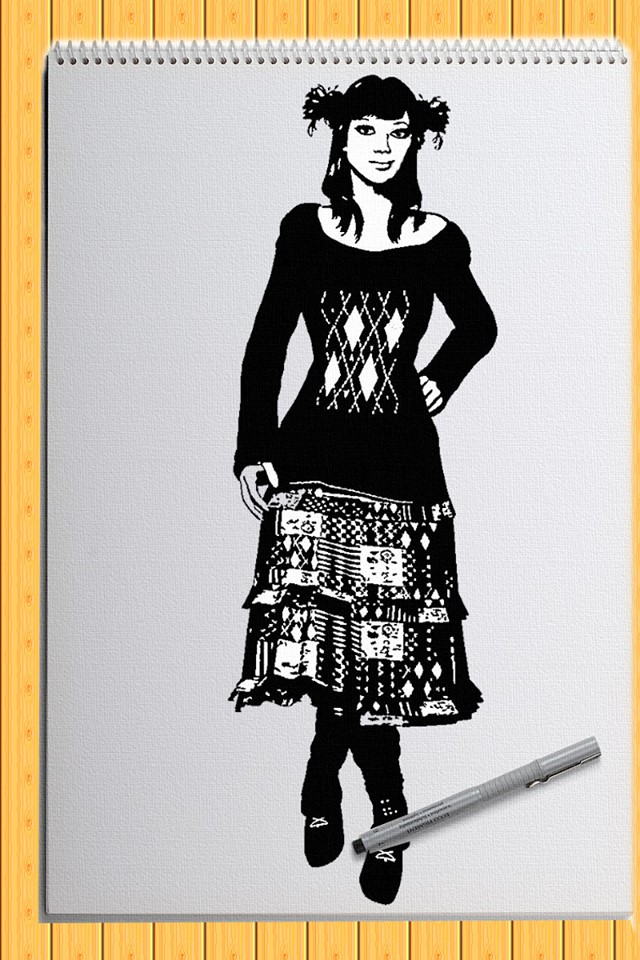
“And I won’t call you that, either,” said Nikki. She shook hands with Peggy, admiring her outfit of black tights, skirt, boots, shirt, and jacket. Her black hair was long and done up in pigtails. Peggy’s skin was pale, but healthy-looking. She looks a lot like Ghoulina, Nikki thought, and I bet that’s the main reason Jack likes her.
Ever since their return from Creepy Hollow, Jack had started wearing black jeans, T-shirts, and hiking boots, trying to look as Goth as he could. His parents had even let him grow his curly black hair down to his shoulders. Nikki, however, still liked wearing yellow T-shirts, blue jeans with the cuffs rolled up, and running shoes. The only thing different about her was that she often wore her long, auburn hair in a ponytail, and she had grown to be the same height as Jack; although older than him by a year, he had always been taller than her.
“Well, I have to get home now,” said Peggy. “Thanks again, Jack. I’ll see you in school tomorrow. It was nice meeting you, Nikki.”
“It was nice meeting you, too,” Nikki replied.
Peggy Ward smiled at Jack and Nikki, then turned and skipped down the street in the opposite direction the two bullies had gone.
Peggy
“You were very brave, Jack,” said Nikki.
“It was nothing,” he said. “I always knew that those two are cowards. It’s about time someone let those punks know they don’t really scare anybody.”
“I bet they will think twice before they try to bully anyone else,” Nikki said. She then continued, “Grandma made oatmeal cookies today. Want to come over?”
“You kidding?” Jack laughed, picking up his messenger bag filled with school books. “Let’s go!” he said.
They crossed the street at the corner and headed towards Whipple Street to Grandma Sweet’s house.
While Jack called his mother on his cell phone and told her where he was going, Nikki tried to figure out how to tell Jack what happened in her bedroom the night of her birthday, and then again today in the classroom.
Walking beside Jack, deep in her thoughts, Nikki noticed a robin lying on the curbside grass. The poor bird was struggling to get up and fly away, but couldn’t.
Jack spotted the bird, too. “Looks like he’s got a broken wing,” he said, slipping his cell phone back into his pocket.
Kneeling down, Nikki looked closely at the injured robin. Its wing was indeed broken.
“What are we going to do, Nikki?” asked Jack.
“I don’t know,” she replied.
Nikki suddenly felt the tingling sensation come over her again, and her hands began to grow warm. But this time she was in control, and as her hands began to glow with the golden light, she reached for the robin and gently picked it up. The robin didn’t struggle as Nikki cupped her hands around its trembling body. The frightened bird seemed to sense that Nikki was going to help.
“Whoa!” said Jack. “What’s happening?”
“I don’t really know,” said Nikki. “This is the third time this has happened to me, but this is the first time I’m in control of my hands.”
Jack’s blue eyes almost bulged out of their sockets. “What?”
“Hush,” said Nikki as her warm and golden-glowing hands lovingly stroked the robin and its broken wing. “I’ll tell you everything on the way to Grandma’s.”
A few moments later, the robin chirped, flapped its wings, and flew from Nikki’s hands. The small bird circled the sky three times above Nikki as if thanking her before it turned and headed towards the forest of Weeping Meadow. The tingling sensation stopped, and Nikki’s hands returned to normal.
“Wow! You healed that bird,” Jack said. “You can do magic!” Then he stopped and gave Nikki a long, thoughtful look. “It was magic, wasn’t it?”
Nikki nodded and said, “I think so. But I don’t understand how that could be. Has anything weird like that happened to you since we returned from Creepy Hollow?”
“Nope,” he said. “I just feel more confident. You know? I would love to go back there again for Halloween.”
Nikki had never said a word about Creepy Hollow to Grandma, as if her grandmother would ever believe such a wild story. Jack had never told his parents, either.
“I’d like to visit our friends there again, too,” said Nikki.
Over the past year, since their adventures in Creepy Hollow, their relationship had changed. Jack now had a great admiration for Nikki, while she came to realize that he was a lot more than just a doofus. While Nikki sensed that Jack was somewhat in awe of her, she also saw that he was a little bit jealous of her, too, and it bothered her.
“Well, I have no idea what’s going on,” she told him. “It all started the night of my birthday party.”
“Have you told Grandma about any of this?” Jack wanted to know.
“Not yet,” Nikki replied. “But I think I’m going to have to tell her, after all this.”
Jack nodded and chewed his bottom lip. “When?”
“I don’t know,” Nikki admitted. She paused thoughtfully, her forehead wrinkled in a frown, and then she snapped her fingers. “Look, Halloween is this coming Sunday, right?”
“Yep! October thirty-first, as always,” Jack said with a smart-aleck grin.
Nikki punched his shoulder playfully. “You’re coming over to spend the weekend with us, right?” she asked.
“You bet!” Jack said. “Mom and Dad are going out of town for the Halloween weekend. Now this is supposed to be a surprise, but they’re taking us all to Disneyworld during Christmas vacation.”
“Awesome!” Nikki said. “Now look, I want you with me when I tell Grandma everything that happened to us last year. I’ll tell her Friday, as soon as you come over.”
“Sounds like a plan,” said Jack. “I just hope she believes us.”
Nikki sighed. “I do too, Jack. I do too.”
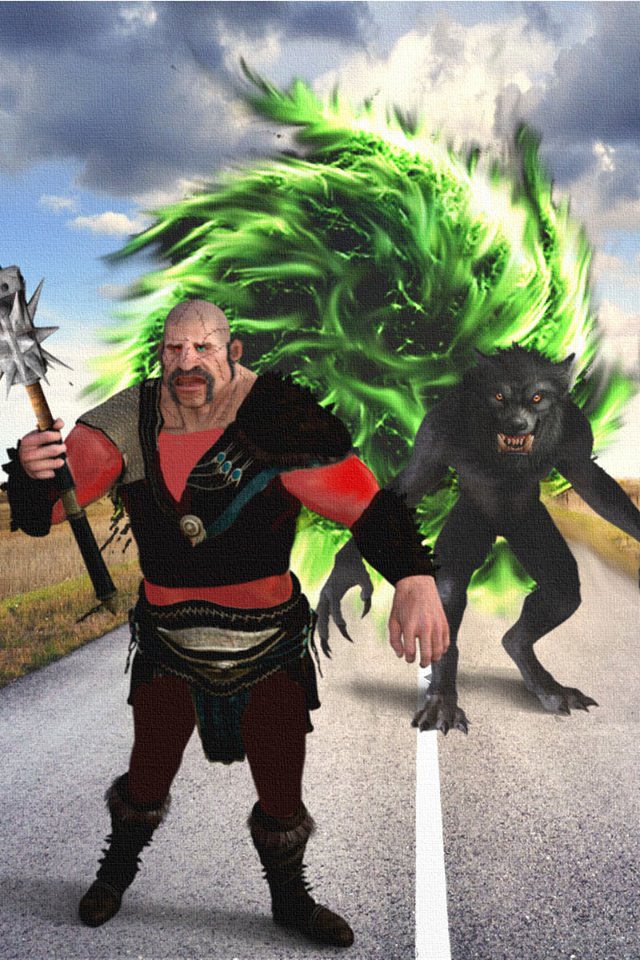
Mutanto and Howler
The Power of the Sapphire Wand is available in paperback and e-book.
Book 1 & 2 E-BOOKS: www.amazon.com/gp/product/B076612WRP/
Three Ghosts in a Black Pumpkin — Book 1 PRINT: tinyurl.com/y8gxuomb
The Power of the Sapphire Wand — Book 2 PRINT: tinyurl.com/y7a9y42e
 |
 |
Joe Bonadonna
Joe started writing songs and stories in 1970, and sold a few short stories in the early 1980s. So far, he’s published four books: the sword and sorcery collection Mad Shadows: The Weird Tales of Dorgo the Dowser, published by iUniverse; the space opera, Three Against The Stars, published by Airship27; Waters of Darkness, a sword and sorcery pirate adventure, in collaboration with David C. Smith, and published by Damnation Books; and Mad Shadows II — Dorgo the Dowser and The Order of the Serpent, published in trade paperback and digital formats in January 2017.
Joe’s Dorgo the Dowser novelette “The Moonstones of Sor Lunarum” appeared in Black Gate in December 2011, and it has proven to be one of the most popular stories we’ve ever published. Another novellas featuring Dorgo, “The Book of Echoes,” appeared in the 2013 anthology Azieran: Artifacts and Relics from Heathen Oracle, and the novella “The Order of the Serpent” is scheduled to appear in a special sword and sorcery edition of Weird Tales online magazine. Joe has also written a number of articles and book reviews for Black Gate online magazine.
Author photo by Erin Lynn Ransford.
Erika M Szabo
Erika M Szabo is the author of The Ancestors’ Secrets series, Protected By The Falcon and Chosen By The Sword. All are available in eBooks, prints, and audio books. Anhelo, the first part of the Ancestors’ Secrets series, is also available in Spanish.
Erika also writes fun, educational, bilingual books for children 4-12 about acceptance, friendship, family, and moral values. Look, I Can Talk With My Fingers is available in English and Spanish. This book is about respecting and accepting people with disability. Pico, The Pesky Parrot, is an illustrated bilingual book that delivers an important message to children, about not judging before they get to know someone. A Basketful of Kittens is a beautifully illustrated children’s book about a heartwarming adventure and how to deal with bullies. Asthma Relief introduces traditional and alternative treatments as well as Grandma’s remedies to ease asthma symptoms.
Read more at www.authorerikamszabo.com.