A Need for Creed
By E. E. Knight
Copyright 2007 by New Epoch Press. All rights reserved.
 There’s a wonderful line in Denys Arcand’s movie The Barbarian Invasions (not a genre film, despite the title), tossed off as an aside in a consistently brilliant script that’s probably worthy of a whole film in itself. A Quebecoise Catholic priest is showing a collection of old church art, mostly statues of saints, to an appraiser, lamenting that one day people just quit going to church “at a very precise moment — in 1966 in fact — the churches suddenly emptied out, in a few months.” Their cathedrals never refilled.
There’s another scene in Pegg/Stevenson/Wright Britcom Spaced. “You are so blind! You so do not understand! You weren’t there at the beginning.” Tim Bisley, the would-be artist who works in a comic book store screams at another fan. “You don’t know how good it was. How important!” Of course the joke is that he’s a grown man yelling at a eight-year old boy, and as the kid runs off crying we get Tim’s stinger: “What a prick.”
The subject was Star Wars, or more exactly, The Phantom Menace and Jar Jar Binks.
The two bits of dialogue are connected.
“Without God, all things are allowed,” Dostoevsky tells us. Or as Chesterton is rumored (if not proven) to have said: “The first effect of not believing in God is to believe in anything.” I’ll offer a corollary: we all need ideals, gods and heroes to look up to who offer us answers and examples to the Big Questions about right and wrong, life and death. Nature abhors a vacuum, even a spiritual one. Some fill it with politics, which comes ready made with its own set of gods and devils (“Why are there such destructive hurricanes?” our latter-day Democrat Job might ask. The answer is, of course, Republicans.) others with celebrity gossip — witness the (seemingly unending) parable of Jennifer, Brad, and Angelina, the unholy trinity of People and the tabloids. There are many others. The point is, we need examples of good and evil, victory and suffering to put our own lives in perspective and give us a guide to behavior, whether it comes from holy writ or Wyang shadow-puppets.
As a genre writer I spend a lot of time with fans. I was a fan long before getting published by anyone other than my mother and a refrigerator magnet. For the most part, they’re intelligent, engaged individuals who spend more time reading and viewing and thinking than speaking. Some of them put a combination of intellectual effort and reverent belief into their branch of fandom that would do a Jesuit credit.
The intelligent mind is a mind full of questions that don’t always have answers. Does life have a purpose? Is there such a think as absolute good, or is it situational and/or outcome-based? When is violence justified and what are the consequences? Does two plus two always equal four, or just when Big Brother says it does? Where can I get a nice cup of tea on this spaceship?
The writers of Spaced were clever enough to know that everyone needs answers to these questions and examples to emulate. The generation represented by Daisy and Tim fell back on the fandom of movies and video games. Whether this is a sad commentary on the state of culture, religion and education I’ll leave to the authors of Who Killed Homer or The Closing of the American Mind.
Fandom’s beloved movies and TV shows answer some of these questions, often in entertaining ways, offering a moral structure of gods and heroes in an increasingly amoral (or at least relativist) postmodern Western world. An appealing, lively cosmology is a big part of the generational nature of certain niches of fandom, and what separates a Star Trek, a Lord of the Rings, a Watership Down or a Star Wars from a Batman & Robin or a Space Mutiny. Sometimes the power comes from the questions rather than the answers, as the lasting appeal of Blade Runner can attest. Other times the deeds are so stirring we can’t help but cheer, as with the (literally, through the magic of digital processing) bronze heroes of 300.
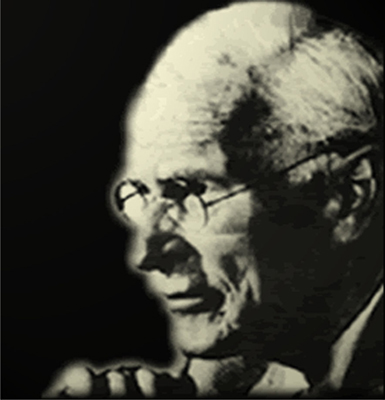 According to Jung, we can’t help it. The archetypes (in Jung’s view, deposits left by repeated experiences reinforced and passed down through the ages), myths, and legends are already there, it’s how well Han Solo plays the Trickster that determines whether we’ll connect on a deep and satisfying level.
All the most powerful ideas in history go back to archetypes. This is particularly true of religious ideas, but the central concepts of science, philosophy and ethics are no exception to this rule. In their present form they are variants of archetypal ideas, created by consciously applying and adapting these ideas to reality. For it is the function of consciousness not only to recognize and assimilate the external world through the gateway of the senses, but to translate into visible reality the world within us.
— Carl Jung, Collected Works v 8.
The theosophists have it wrong. The gods don’t need us, we need them, just like we need those fireside tales of courage and fear, valor and sacrifice. If we don’t get it in the sanctuary or schoolroom, we seek it in the cinema.
Kirk might not have exactly stolen fire from the gods, giving him their power, but he’s got a set of phaser banks and he’s willing do offer “A Taste of Armageddon” to the unrighteous. (forming judgments gets a bad rap these days, but it’s part of the human condition that separates us from livestock).
So let’s look at four of the big questions that define us, perplex us, give meaning to our world, and how they’re answered by the great movies of fandom.
Who is a Hero worthy of emulation?
Lord of the Rings is the finest multi-volume examination of heroism out there. If you accept the definition of a hero as a person who sacrifices their own wants and needs for the good of others (a broad enough definition, covering everyone from Mom to Audie Murphy). You don’t have to contrast the ultimate hero, Frodo, with Sauron, though that works. Sam Gamgee and Denethor will do. The films and books are close enough on these characters to be interchangeable.
There’s no question that, given his druthers, Sam Gamgee would happily stay in Hobbiton with his days in the garden and nights in the Green Dragon. Sam doesn’t even understand the real nature of the ring and the threat from Mordor at first, it’s all wrapped up with old tales of elves and kings and oliphants, but Mr. Frodo believes that they must go to Mordor, and his duty is to Mr. Frodo. When Frodo is threatened, mild-mannered and joking Sam always grows in stature into the fiercest, most terrible warrior of the epic. The image of Sam, hungry, thirsty, battered and heartsick, carrying Frodo up Mt. Doom to their destruction is perhaps my favorite moment in the trilogy.
Contrast Sam with Denethor. Denethor, like Aragorn, is from the line of Númenor, in every aspect by lineage the equal to the great kings of Gondor. A man of large mind and singular purpose in resisting Mordor, ranked among the wise. But when tested against despair and loss, he shrinks into a embittered old man who can only think of his pair of lost sons and the fall of his city.
Other examples abound. Leonidas in 300, told that either Sparta or her king must perish, engineers his own destruction, tempting death and King Xerxes at every turn. The choice, as he later says when speaking for is warriors, is no choice at all. Because of what he is there is only one option. Ripley destroys both herself and the creature she’s incubating in the third Alien movie, Luke chooses death over service to the Sith, Kyle Reese goes back in time to face a Terminator superior to himself in every way in order to save Sarah Connor.
What Makes Us Human?
Blade Runner, the story of a man (maybe!) hunting better-than-man androids called replicants (andys in the novel), offers an answer to that question, though not explicitly. “I think, therefore I am” isn’t good enough any more, because the androids are at least as intelligent as the brilliant minds that created them. Clues come in Voight-Kampff test, which measures physical reaction to the distress of other living creatures — empathy, in other words. Questions involve overturned turtles, butterfly collections, and dogs served as dinner predominate. A man is able to feel for the distress of another living being, an android can only observe phenomena.
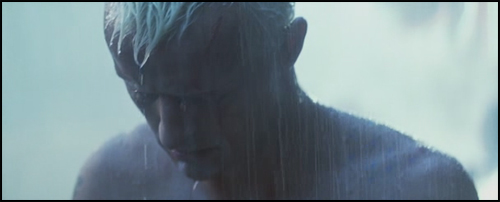
The androids are a little more explicitly evil, or at least inhuman, in the P. K. Dick novel than in the film. They torture a spider by pulling its legs off one by one, just to see how many legs you can trim off a spider before it ceases to move. But in the film it seems Roy has finally gained the gift of empathy by the end of the film, for he saves rather than destroys Decker. His own sense of mortality leads to an understanding of the man hunting him, and leads to one of the great speeches of sci-fi cinema:
“I’ve seen things you people wouldn’t believe. Attack ships on fire off the shoulder of Orion. I watched C-beams glitter in the dark near the Tannhauser gate. All those moments will be lost in time, like tears in rain. Time to die.”
Rumor has it the lines were improvised on-set by Rutger Hauer. Mythically the conflict taps into the old man/creator conflict that in genre goes back to Frankenstein, at least.
 Why Must There Be Evil?
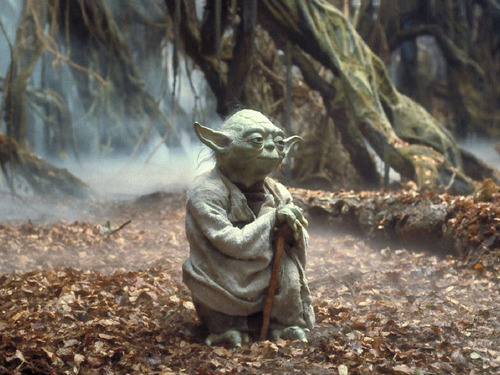
The Star Wars films have a good deal to say about good and evil, though sometimes Lucas contradicts himself. It boils down to the Force. All together now: the Force is an energy field, created by all living things. . . You know the rest. There is a light and dark side to the Force, though just how responsible the dark side is for mundane, everyday evils is never made clear.
It’s a powerful mysticism, making Anakin Skywalker into another Lucifer, once among the greatest of the angels and now fallen. The temptation of evil and the stern resolve required to keep to the good gives Star Wars its mythic heart. (Full Disclosure: I clap my hand over my ears and go neener-neener-neener whenever the word midi-chlorians comes up.)
Even though the Force, as presented by Lucas, is a rather rickety structure that’s ill-defined (is emotion a tool, as the repeated advice to “search your feelings” or “reach out with your feelings” suggest, or do powerful parts of the human emotional range such as love and fear have to be banished to utilize the Force?). This may be part of its power and appeal, you can make of it what you will.
Forbidden Planet, another classic movie, offers a different answer. Evil has nothing to do with Manichaeism, good and evil at war outside and over the human soul. Instead evil lurks in the most primitive parts of our brain, in the form of Monsters of the Id who would rape and kill. Even the most exalted intellect can’t banish the Monsters.
How do we face Life, Death, and the potential for Afterlife?
The mini-trilogy of the Star Trek movies — Wrath of Khan, The Search For Spock, and The Voyage Home — are about death and resurrection. And I’m not just talking about movie careers.
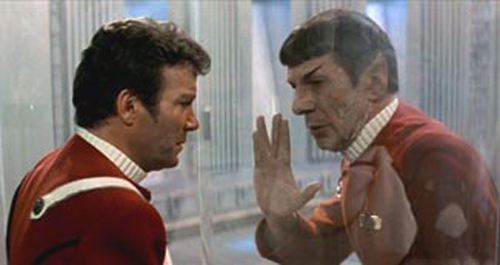
Wrath of Khan is all about the Kobayashi Maru scenario — dealing with death is yet another test of character a would-be starship captain must face: “How we deal with death is at least as important as how we deal with life, wouldn’t you say, Saavik?” Kirk, ever the Trickster, cheated so he never had to face it. Evidently, Spock never took it either, until he has to sacrifice himself to save the Enterprise, dying with one of the greatest lines of the entire series. thus you get high school students who assert “the needs of the many outweigh the needs of the few, or the one” appear in The Bible. Kirk and Spock in those last moments together, separated by a clear radiation wall that could serve as a metaphor for any number of things but I’ll go with acceptance of death, was as good as Star Trek ever got.
There are several deaths in The Search For Spock and a resurrection tacked on at the end. The Genesis planet is dying because of a flaw in the Genesis Experiment, and even the beloved NCC-1701 goes out with a bang and a meteor-shower. Kirk’s rather supernumerary son dies.
 But the plot revolves around the fact that Spock, in the last moments before he went into the radiation room, placed his katra (akin to a ka, I imagine) into McCoy. The “Genesis Wave” sort of hit the reset button on Spock’s body, and he starts all over again from babyhood, though how a photon torpedo casket casing served as a womb is best left to the imagination.
The concept that your mind can live on after your body has perished appeals. It’s part of the reason why I write. There’s a magic of words and ideas. It doesn’t matter whether I’m munching an Asian Chicken Salad at McDonald’s or dead as Plato as far as you, the readers, are concerned. You can learn my mind and form judgments based on my words. Fascinating, as our favorite Vulcan would say.
The Voyage Home further explores Resurrection. A fan favorite thanks to its frequent and on-point clash-of-worlds humor, it puts the crew back into the good graces of Starfleet and even brings back the Enterprise with the first of the variants.
There’s a cute moment where McCoy asks Spock what it was like being dead in his usual crusty, direct style. Spock cannily begs the question by asserting that since there is no common frame of reference, it’s impossible to explain.
A final note: Star Trek VI was the original crew’s rather graceful Last Curtain Call. I wouldn’t count out a second Resurrection, however. With computer technology advancing in the manner it has, there’s every possibility that a computer-generated Shatner will be indistinguishable from the real thing. Maybe we’ll get to vote on Young Elvis/Fat Elvis versions for future movies. Who knows what the future holds?
Back to Tim Bisley and his reaction to The Phantom Menace — he’s a bit like a devout Catholic being told that dozens of the faithful who once were revered as saints somehow no longer are, Vatican II being a sort of a prequel trilogy. And it may help explain why all those churches emptied out in 1966. People don’t like their moral architectures demolished for renovation.