The Outsider: The Pride of Chanur by C.J. Cherryh
 |
 |
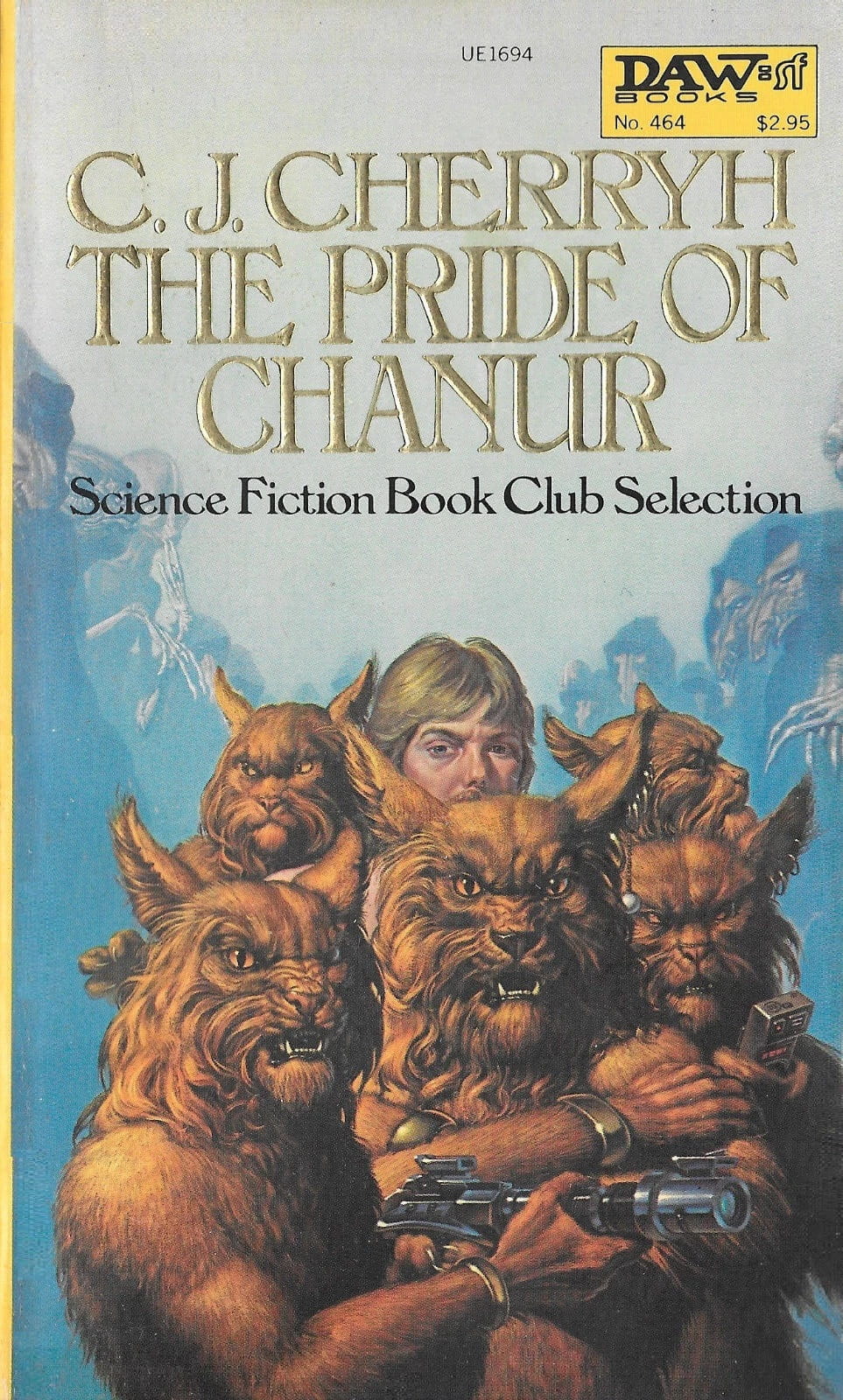
The Pride of Chanur (DAW Books, January 1982). Cover by Michael Whelan
C.J. Cherryh has just lately announced the end of her writing career: For medical reasons, she can no longer manage a writing project. Sad news! This seems like a time to look back at what I consider one of her most memorable novels: The Pride of Chanur.
One of the common themes of science fiction is alien races; and a particularly interesting version of this theme is stories about first contact with aliens. By far the majority of such stories have human viewpoint characters, and show the nonhumans as alien and hard to figure out. This has been the case from H.G. Wells’s The First Men in the Moon to memorable recent novels such as Vernor Vinge’s A Deepness in the Sky, or films such as Arrival (based on Ted Chiang’s Story of Your Life”). But some stories turn this around, giving the reader a nonhuman viewpoint character. And that’s what The Pride of Chanur does, and does ingeniously.
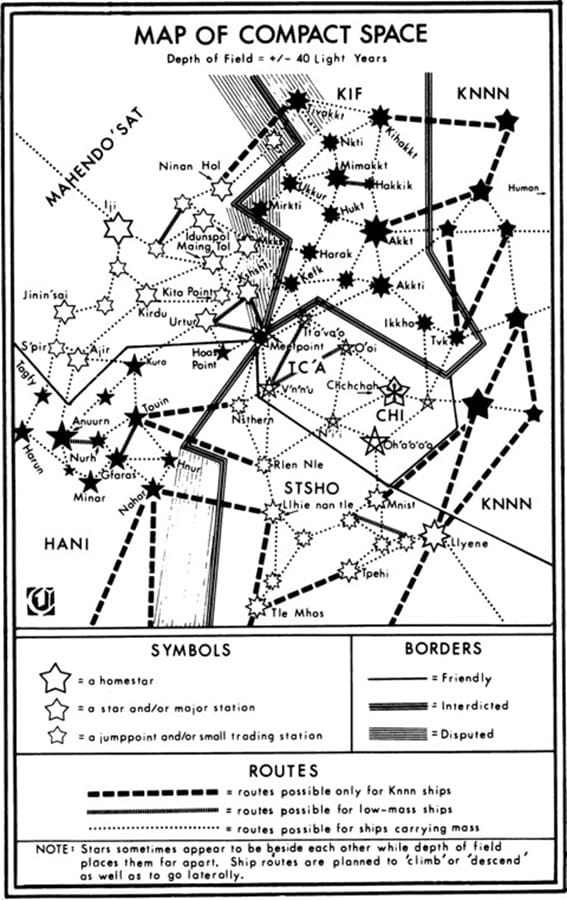
The viewpoint character in this novel is Pyanfar Chanur, a merchant starship captain from a species called hani. They’re one of several in a region of space called the Compact, along with the herbivorous and status conscious stsho, the primate-like and mercantile mahe, the racially sociopathic kif, and several methane breathing species. Hani are described in a way that suggests lions, both anatomically and socially; they have manes and beards and are covered with fur, they have retractable claws, their males are physically larger and prone to berserk rage, and they live in polygynous families where the females do most of the work. Pyanfar Chanur’s ship, for example, has an all-female crew, and this is taken for granted by hani.
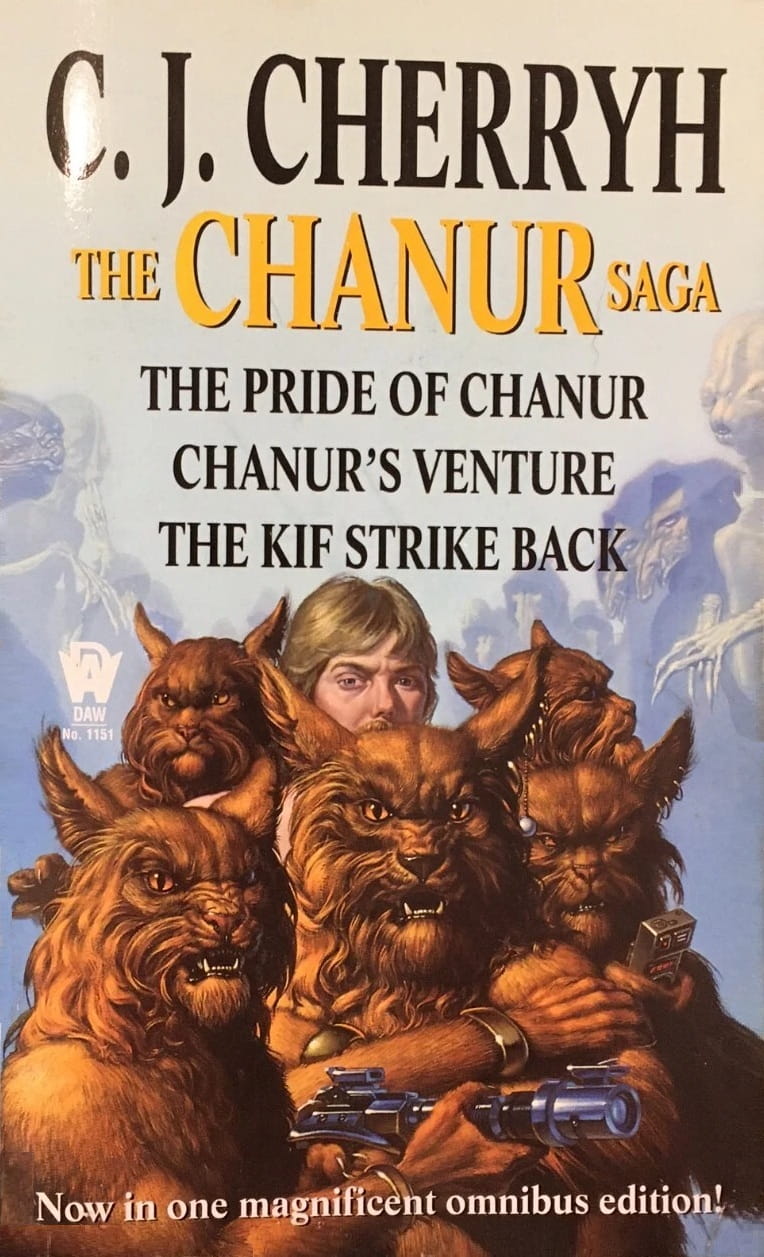
The novel’s title is brilliantly multivalent. In the first place, it fits a standard naming format, with a clan name, “Chanur,” and an object or quality that belongs to it; midway through the novel, for example, we encounter the starship Tahur’s Moon Rising. In the second place, the word “pride” evokes leonine social groups. But in the third place, this is a story about Pyanfar Chanur, one of whose most visible qualities is pride — both for good and for bad. (Though not the only one. The original cover, by Michael Whelan, depicted several hani, and while they do have leonine traits, their pointed, motile ears and the color of their fur suggest foxes — and Pyanfar has the symbolic traits of both lions and foxes.)
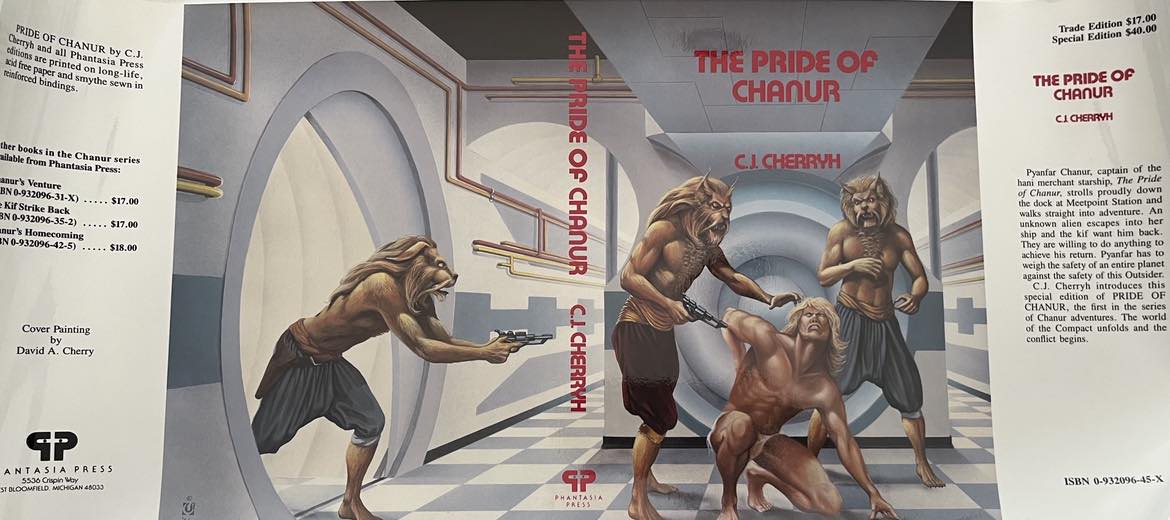
The story starts out with the appearance of an Outsider: a rational being of an unknown species, taller than hani, bizarrely hairless, and male, which is potentially disruptive on a hani ship. It takes refuge on The Pride of Chanur, and Akukkakk, the captain of a kif ship, starts asking for it back, first promising rewards, and then making threats.
And this makes Pyanfar uncooperative: She denies knowledge of the Outsider, and starts teaching it to use a cybernetic translation device, and learns its name, “Tully,” and its name for its species, “human.” And then she finds Akukkakk pursuing her, and causing collateral damage all around, as she travels to her homeworld, Anuurn. During that journey, she stops at an orbital station run by the mahendo’sat, where she obtains spacer’s papers for Tully, making him a member of her crew.
This is partly a novel about communication and its difficulties. Mahe speak a language known to hani, but with minimal grammar, like a human pidgin. Tully has only a few words of that language: At a critical point he manages to say “I go on Pyanfar ship. Friend” to a mahe Personage. The methane breathing knnn are even less comprehensible, expressing themselves in a kind of weird song. On the other hand, Akukkakk is all too fluent, and uses his fluency to manipulate and threaten. There’s a backstory of how Tully came into his possession, and why he wants Tully back; like a classical epic, this novel begins in medias res.
 |
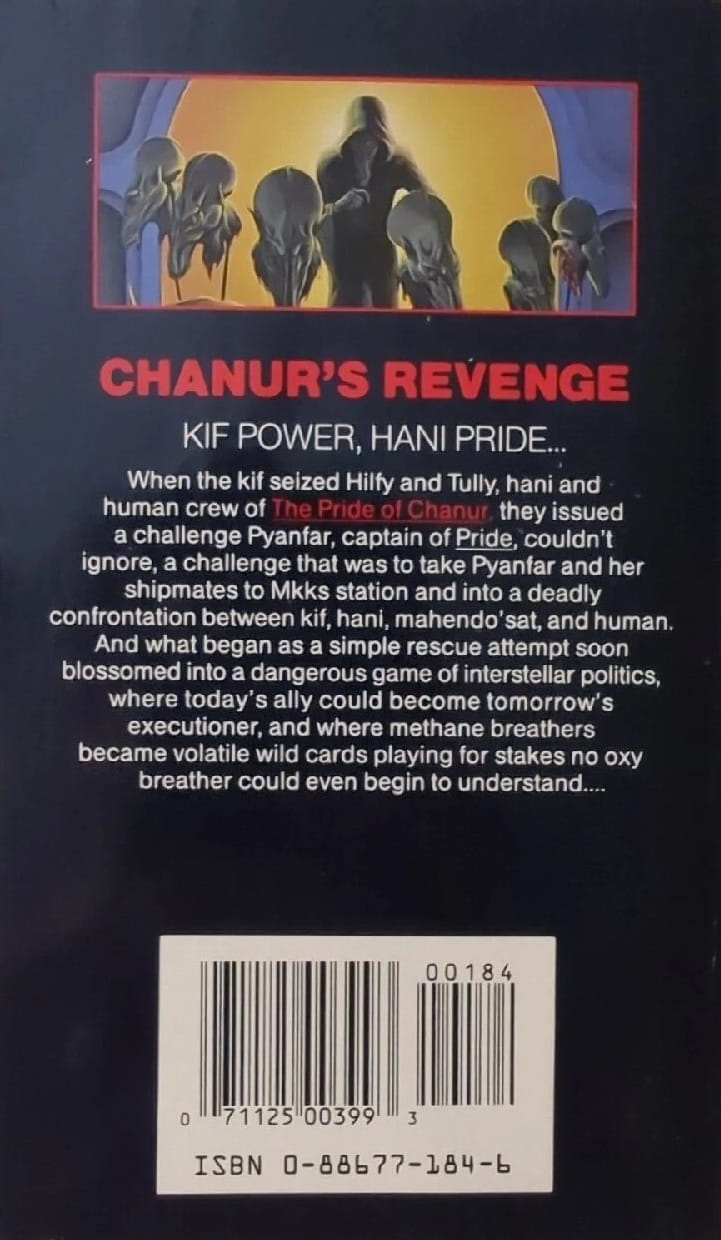 |
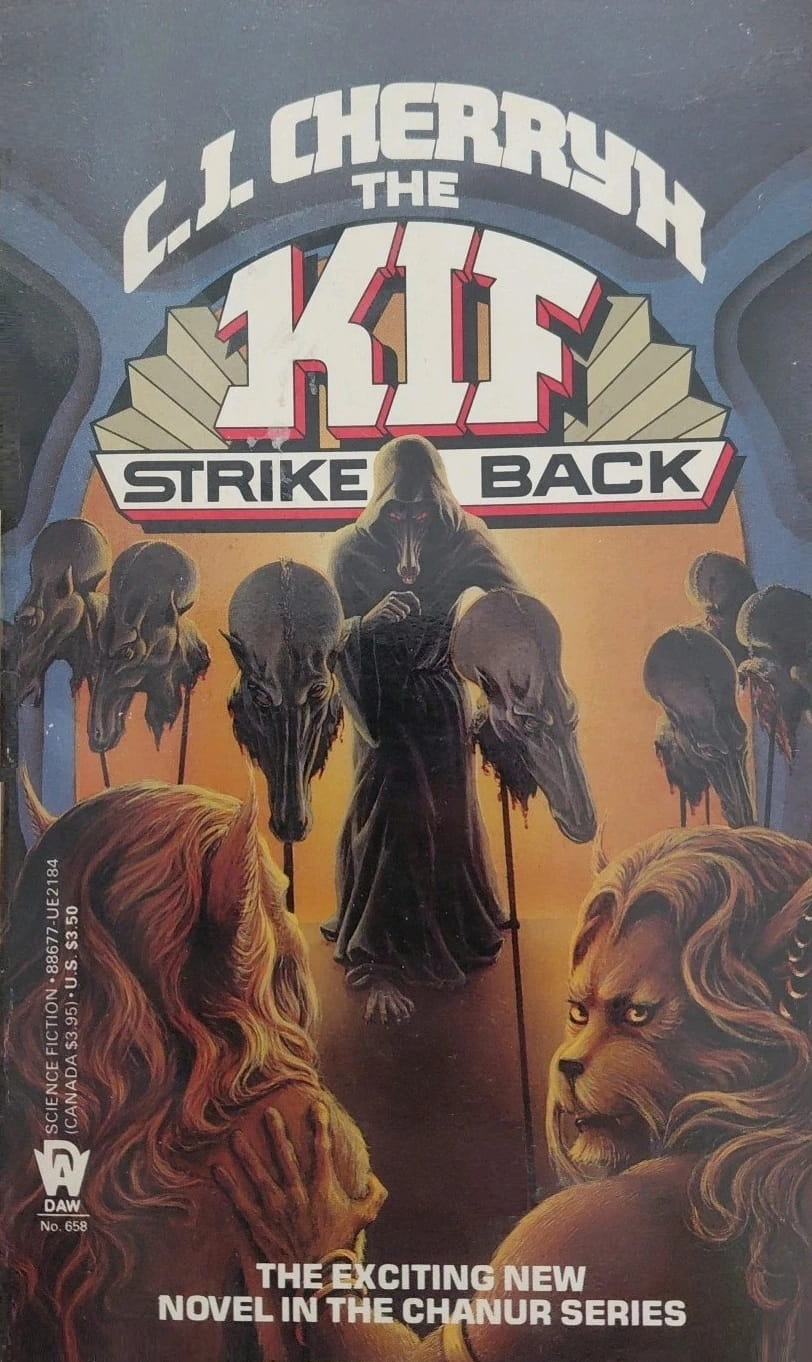
The Kif Strike Back, third in the Chanur Saga (DAW Books, January 1986). Cover by Michael Whelan
We also see the internal relationships among the crew of the Pride: Pyanfar and two pairs of sisters, who have apparently been with her for a long time. It appears that hani crew have a good deal of autonomy in social relationships: Early in Tully’s time on the Pride, the crew make up a bed for him in their quarters, and Pyanfair finds the situation uncomfortable, Tully being male, but doesn’t think she has the right to overrule it. Many passages also show that in operational matters, the crew are not just labor, but are trusted to make important decisions.
The ship also has Pyanfar’s niece Hilfy, daughter of her brother, on board for her first voyage. This is partly an apprenticeship story, as Hilfy learns not only how to perform shipboard duties, but how to act in risky situations, and above all, how to approach the world as a responsible, self-disciplined adult. This seems to be a challenge for the hani generally; one scene has Pyanfar experiencing a kind of tunnel vision, a narrowing of focus, as an effect of her anger. It’s an important moment when Pyanfar acknowledges that Hilfy has acted with merit in a difficult situation.
But it turns out that Hilfy isn’t there just as an apprentice space traveller, or as an indulgence from her father (like an English aristocrat’s continental tour in the 1800s): She’s there to keep her out of danger. In the final chapters we see how things work politically among the hani. Anuurn is divided up into a large number of autonomous domains, each under the authority of a dominant male; politically it’s an amphictyony, an obscure word for a league of polities to jointly maintain a sanctuary, without anyone being in command. And any of these males can be challenged to fight for his position of power by a younger, more aggressive male. Pyanfar’s brother Kohan faces such a challenge — from Pyanfar’s son Kara.
 |
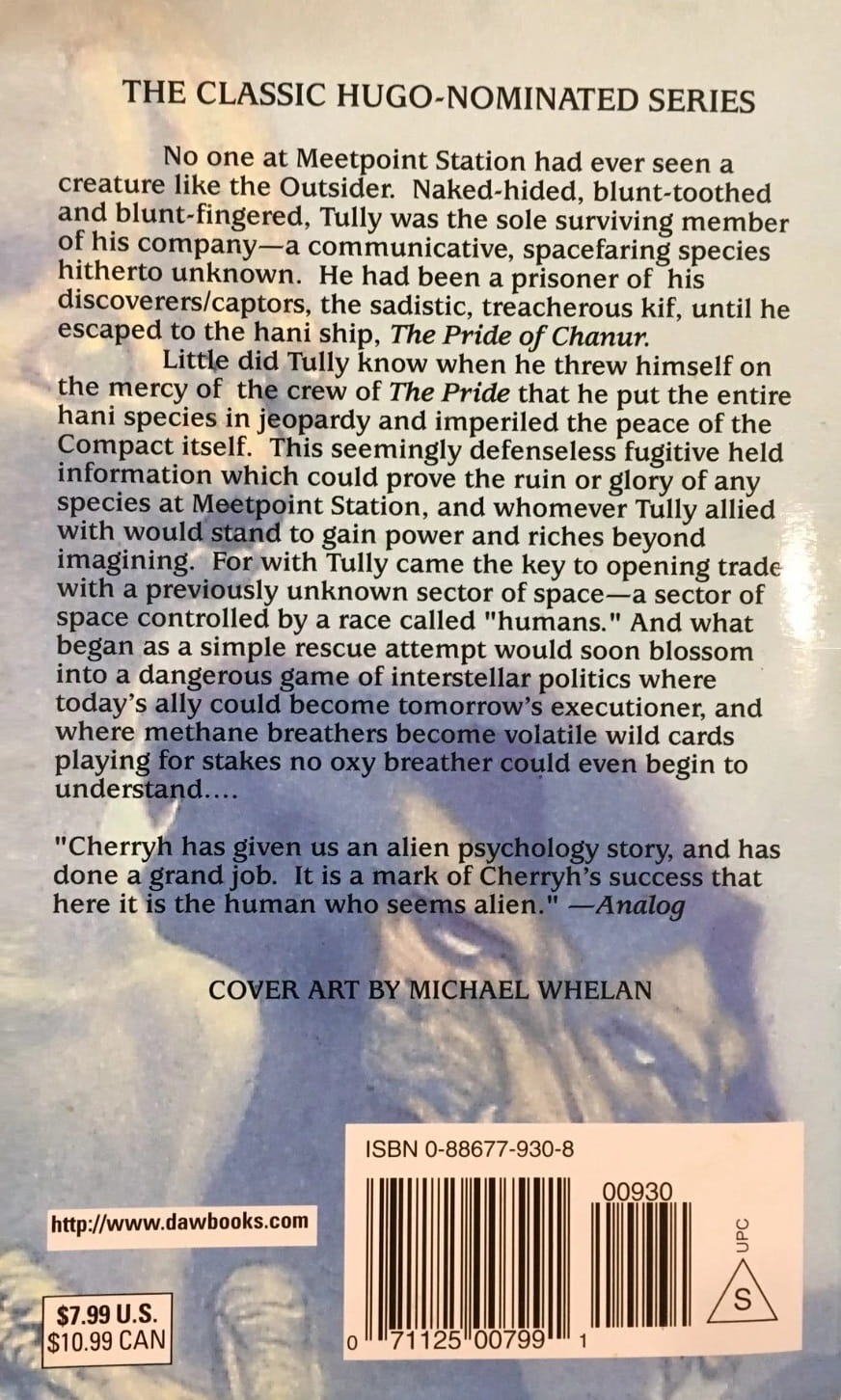 |
The Chanur Saga, containing The Pride of Chanur, Chanur’s Venture, and
The Kif Strike Back (DAW Books, May 2000). Cover by Michael Whelan
Pyanfar needs to go home to support Kohan. And in that homecoming, we see a lot about how the han works institutionally. In particular, we see why male hani aren’t eligible to be crew on spaceships: because their constant risk of having to fight, and their violent tempers, make them too likely to act irrationally. The Pride of Chanur shows the first weakening of that sexual discrimination, which becomes a major plot point in the four sequels.
Betterment of the species, hani philosophers had called it. Churrau hanim. The death of males was nothing, nothing but change happening; the han adjusted, and the young got sired by the survivors. One man was as good as another, and served his purpose well enough.
To my taste, the Chanur series contains much of Cherryh’s best writing. On one hand, it has a coherently imagined nonhuman species and society — and the sequels will present other nonhumans in similar depth. On the other, it gives us the character of Pyanfar Chanur, whose conflicts and struggles are entirely sympathetic, despite growing in that alien soil.
In the end, I read about her not only with sympathy, but with admiration.
William H. Stoddard is a professional copy editor specializing in scholarly and scientific publications. As a secondary career, he has written more than two dozen books for Steve Jackson Games, starting in 2000 with GURPS Steampunk. He lives in Lawrence, Kansas with his wife, their cat (a ginger tabby), and a hundred shelf feet of books, including large amounts of science fiction, fantasy, and graphic novels.