Browsed by
Author: William Stoddard

Let’s Found a New Species: Odd John by Olaf Stapledon

Let’s Found a New Species: Odd John by Olaf Stapledon


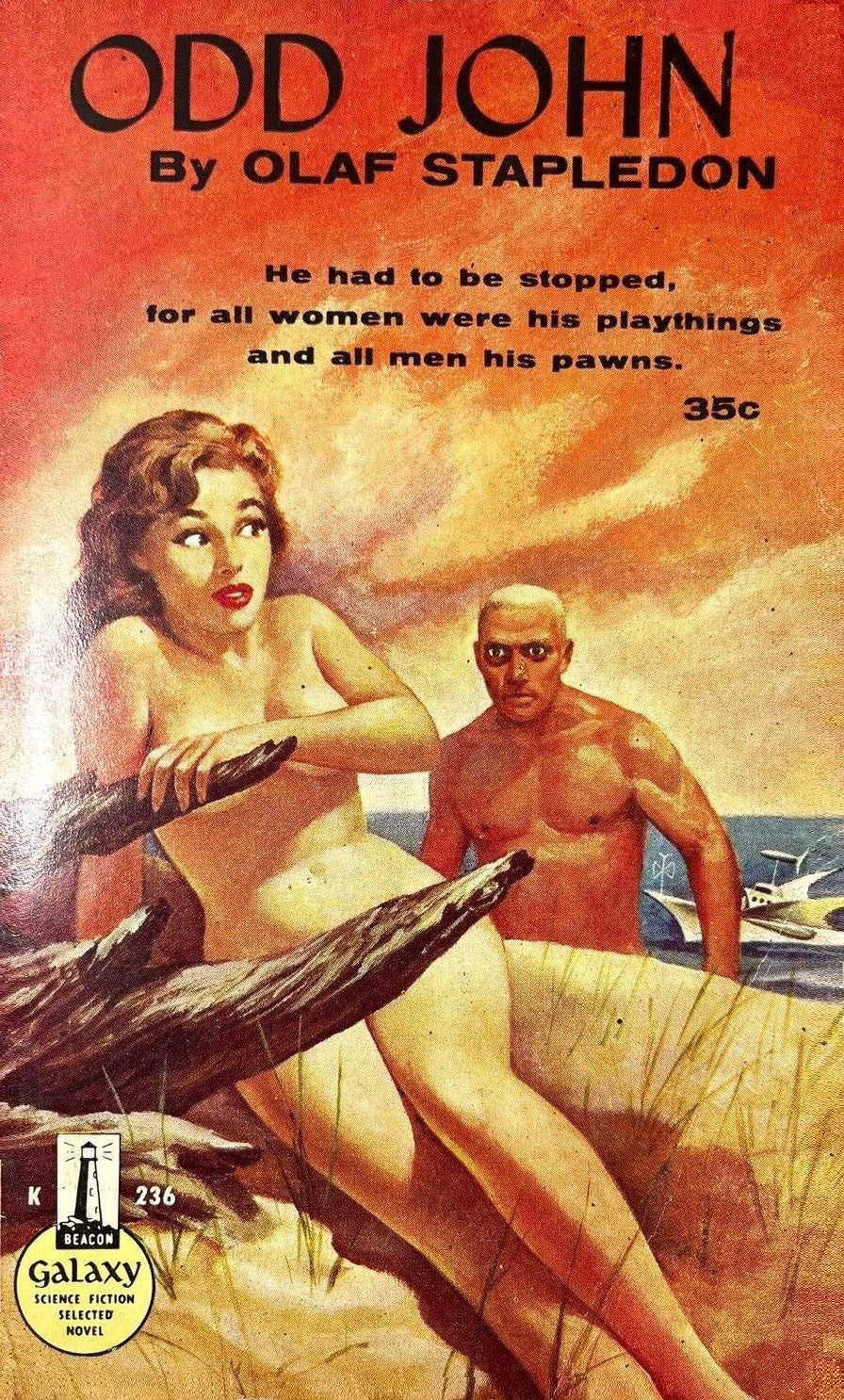
Odd John (Beacon/Galaxy Science Fiction Novel #36, 1959). Cover by Robert Stanley

In 1963, in the early issues of X-Men, Stan Lee introduced the expression Homo superior into superhero comics. But the name had a history before then: It was coined in 1935 by Olaf Stapledon, a British philosopher and science fiction writer, in Odd John, the fictional biography of a young superhuman.

The book that established Stapledon’s reputation, Last and First Men, published in 1930, was certainly science fiction but can’t be considered a novel in any normal sense; its two-billion-year history of humanity’s future is presented almost entirely as historical narrative, with only a few paragraphs of dialogue. But Odd John is definitely a novel, with a protagonist, John Wainwright, and a viewpoint character who is, by necessity, an unreliable narrator, as he himself points out on the first page of the story.

Read More Read More

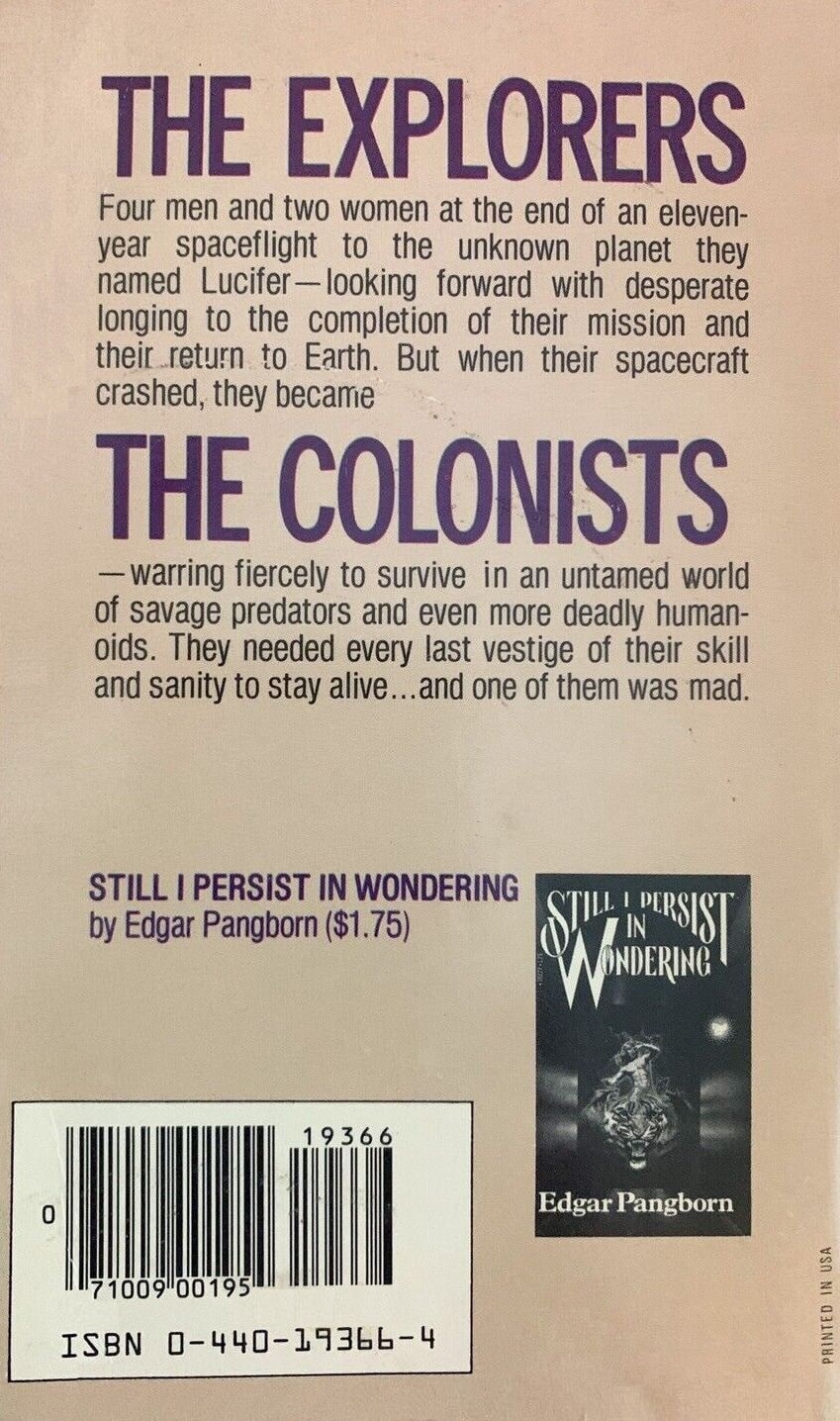
To Violate the Prime Directive: West of the Sun by Edgar Pangborn

To Violate the Prime Directive: West of the Sun by Edgar Pangborn


West of the Sun
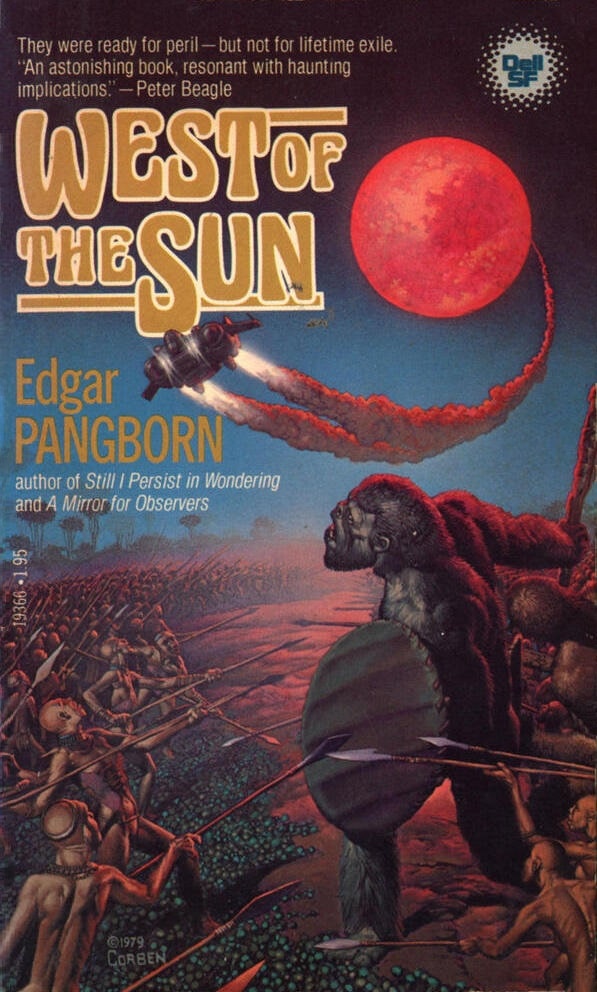
(Dell, July 1980). Cover by Richard Corben

Edgar Pangborn is remembered now as a writer for his postapocalyptic series Tales of a Darkening World, which began in 1962 with “The Golden Horn,” later turned into the first part of Davy, one of the nominees for the 1965 Hugo Award for Best Novel. But he began writing science fiction a decade earlier, with his novelette “Angel’s Egg,” and two years later, his first science fiction novel, West of the Sun, which I’ve just reread.

Even this early, Pangborn was already doing the kind of writing that came to be called humanistic science fiction. There is advanced technology in West of the Sun: It takes place on a planet of Alpha Centauri, arrived at after a decade of space travel, which implies speeds nearly half the speed of light; and the starship Argo carries various useful small devices. But all of them are lost, or stop working, during the events of the novel. The Argo is — in the literary sense — a vehicle: It exists to get the characters into the story, which is about something else entirely.

Read More Read More