Browsed by
Author: John ONeill

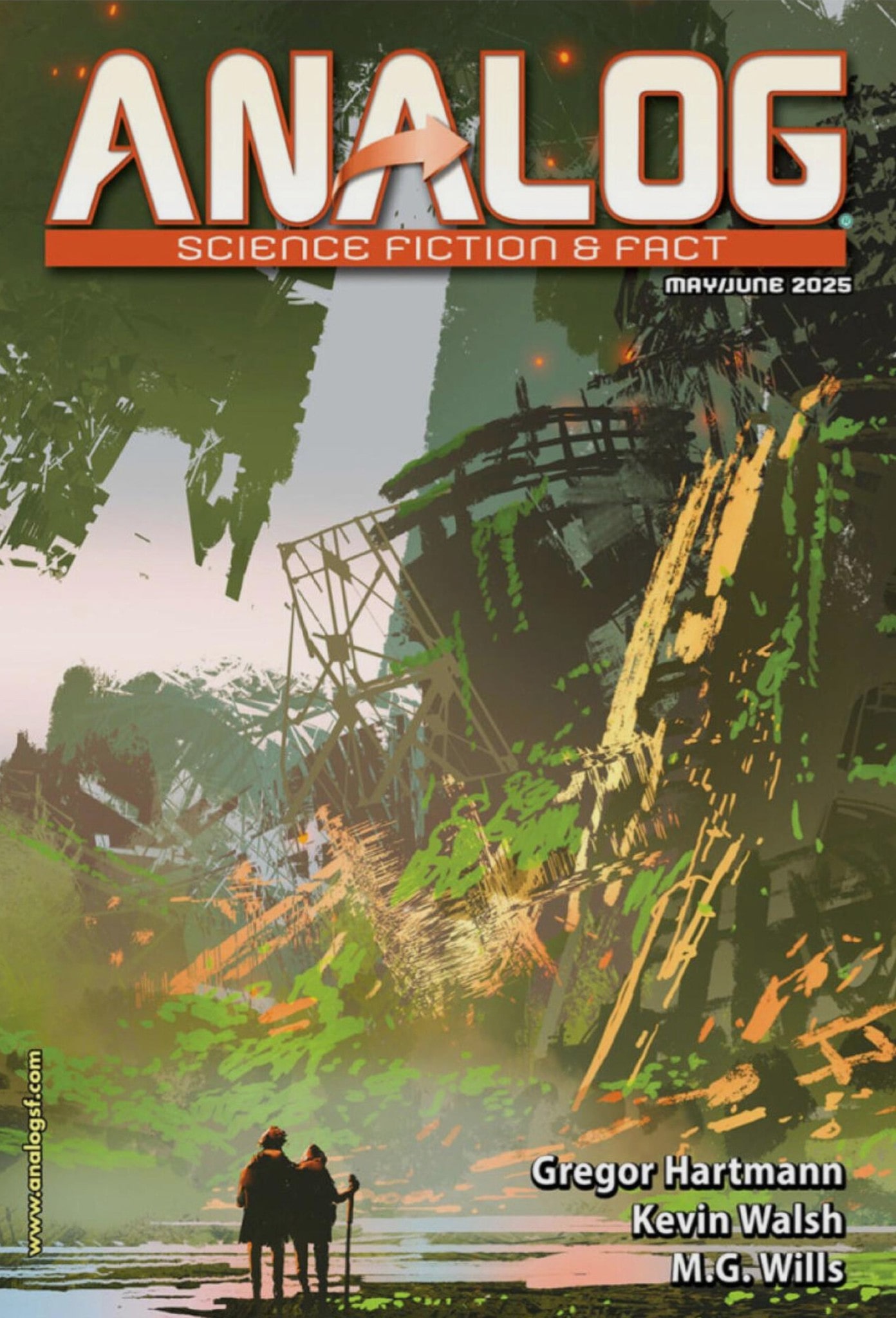
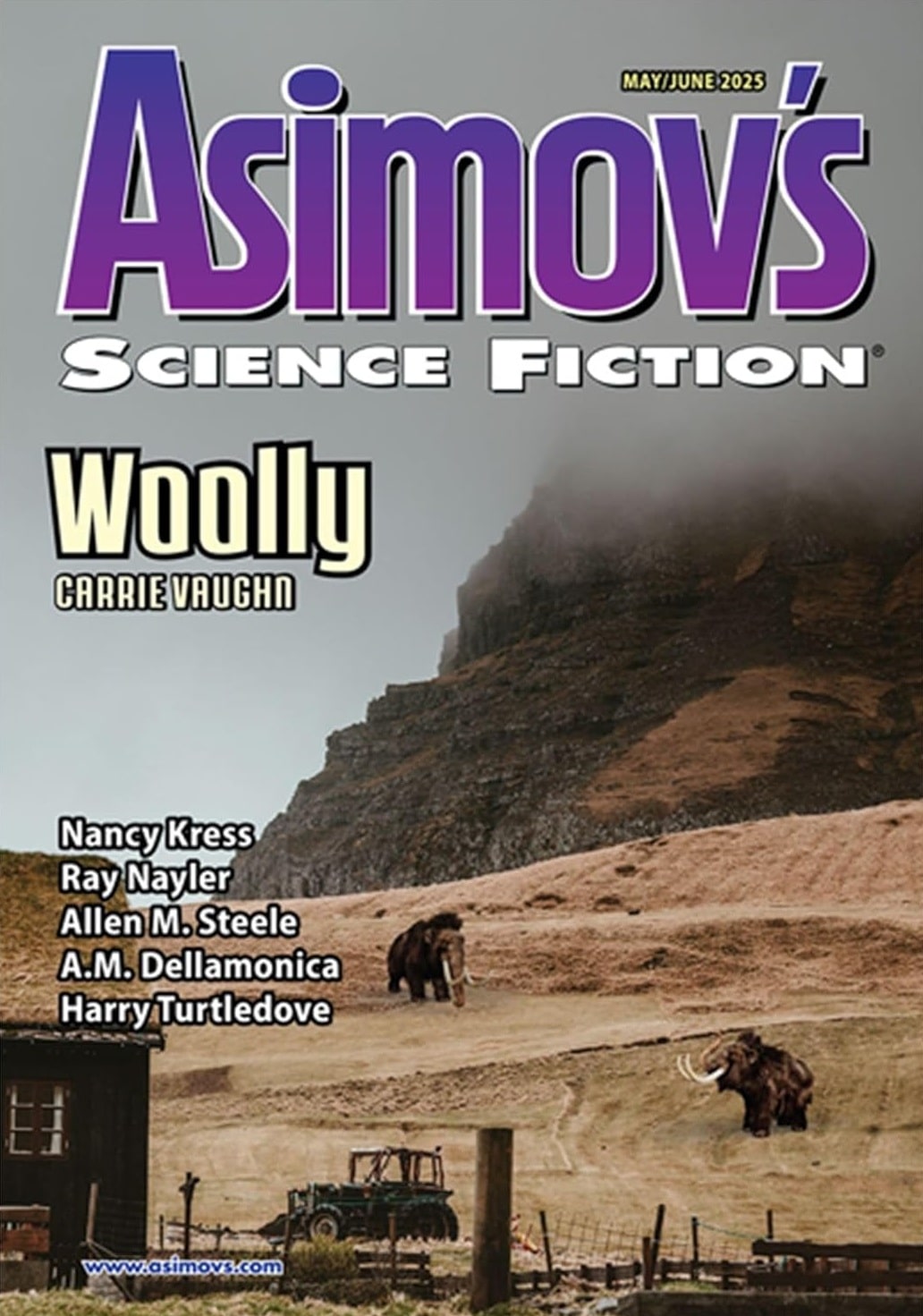
Mechanical Trees and Mini-Woolly Mammoths: May-June Print Science Fiction Magazines

Mechanical Trees and Mini-Woolly Mammoths: May-June Print Science Fiction Magazines


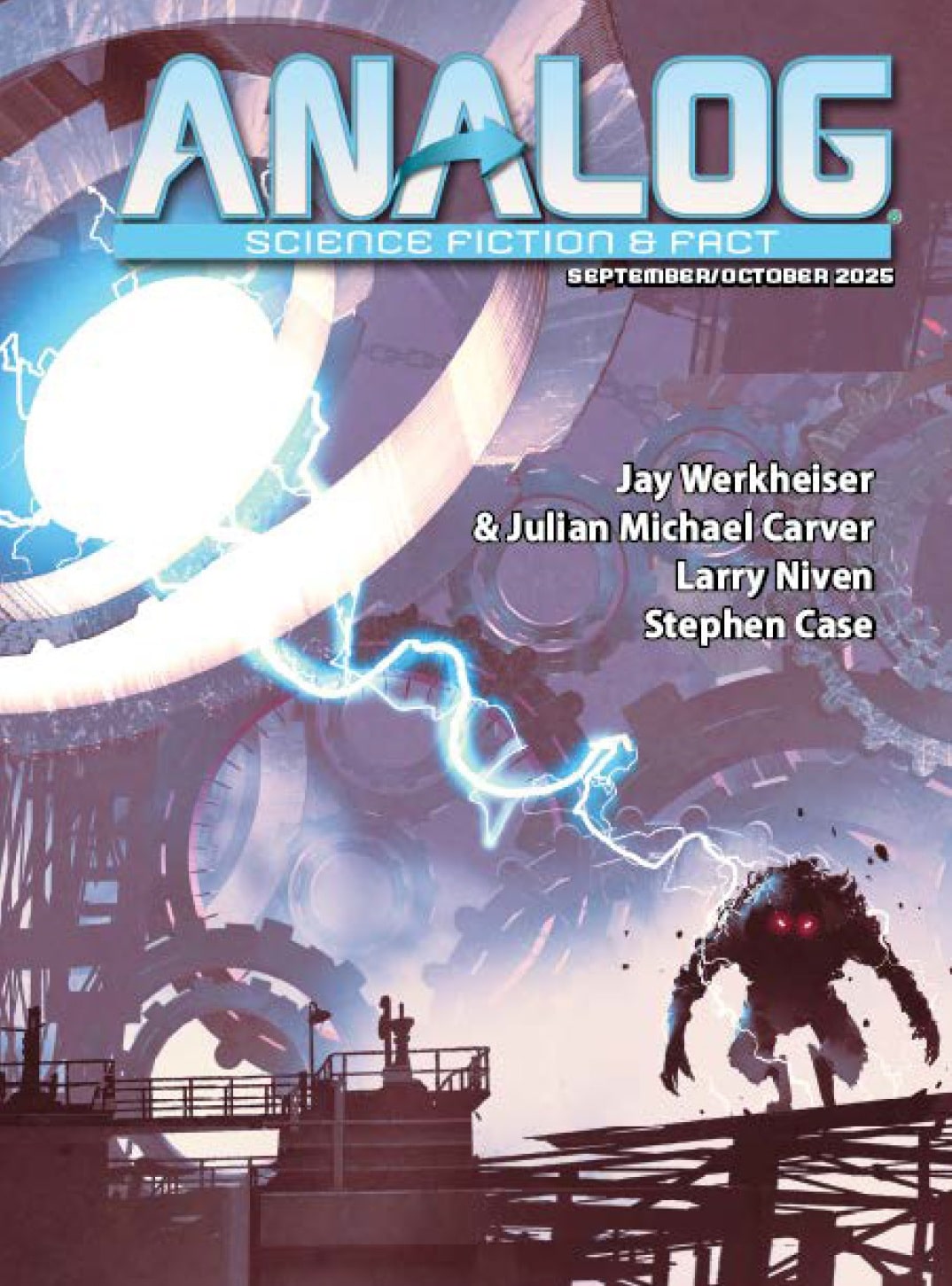
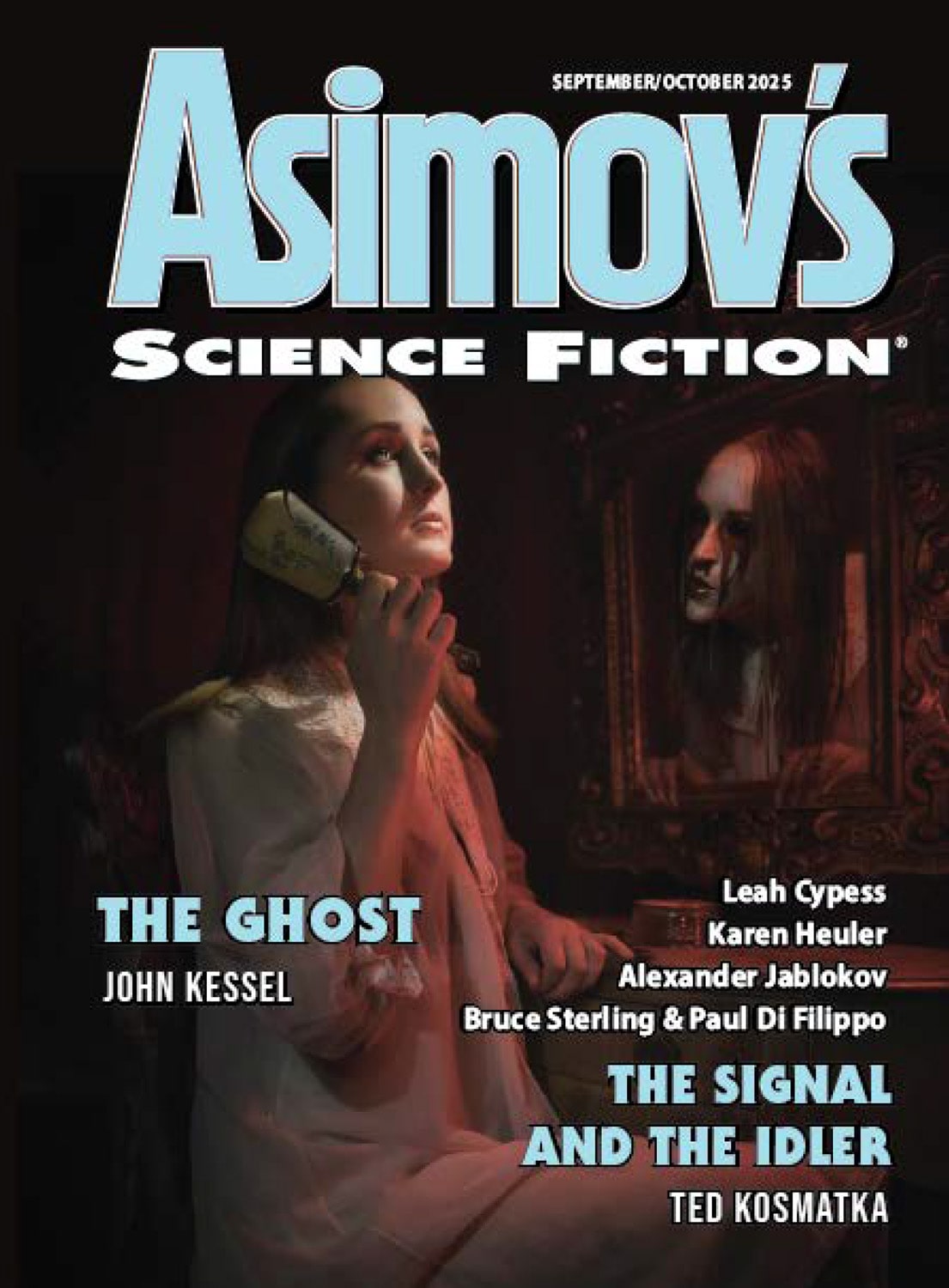
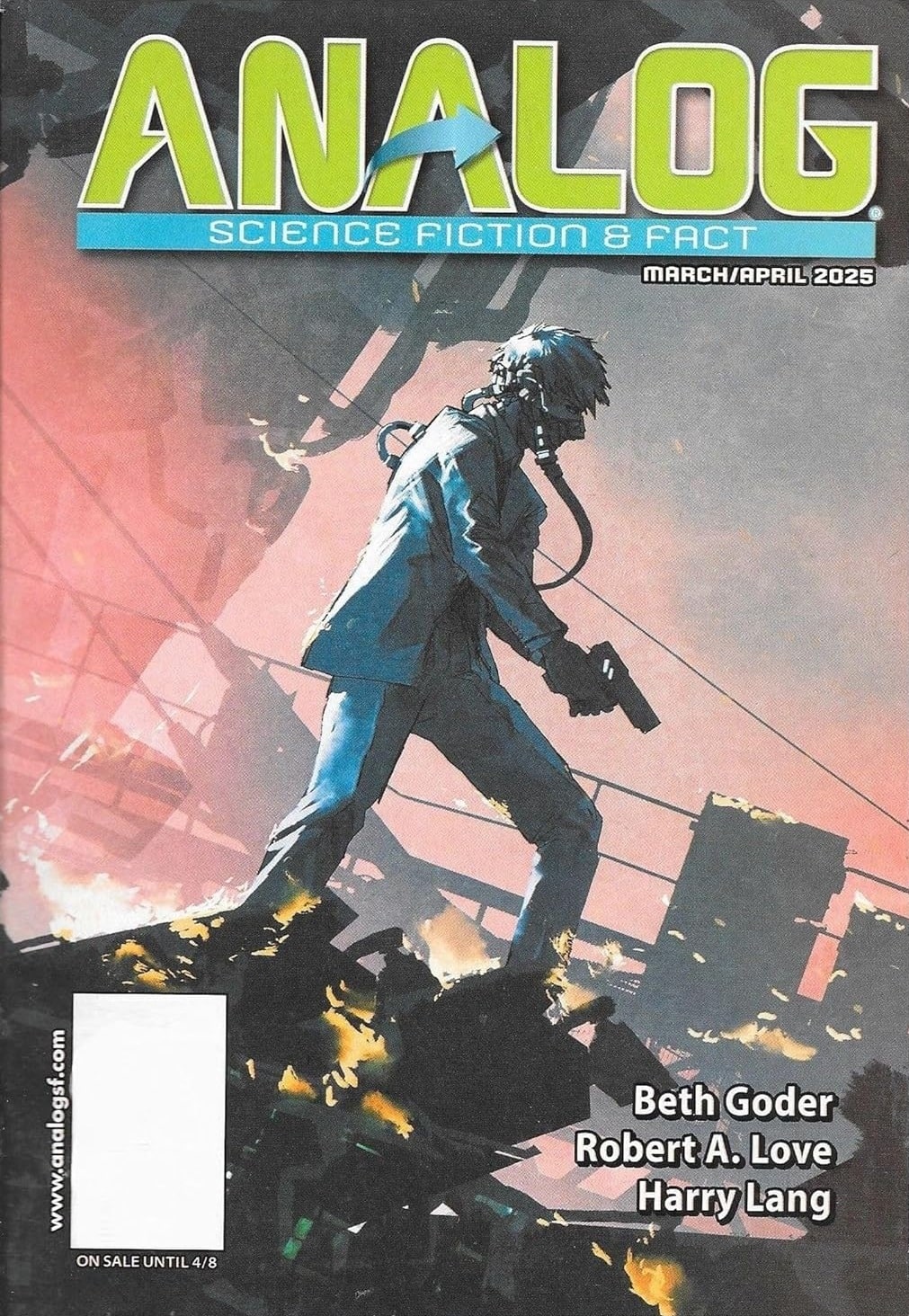
May-June 2025 issues of Analog Science Fiction & Fact and Asimov’s Science
Fiction
. Cover art by Tithi Luadthong/Shutterstock, and IG Digital Arts & Annie Spratt

Back in February I was surprised to learn that the last surviving print science fiction magazines, Analog, Asimov’s Science Fiction, and The Magazine of Fantasy & Science Fiction, had all been sold to Must Read Books, a new publisher backed by a small group of genre fiction fans. I was very sad to see Analog & Asimov’s leave the safe harbor of Penny Press, where they’ve both sheltered safely for very nearly three decades as the magazine publishing biz underwent upheaval after upheaval.

But I was nonetheless cautiously optimistic. The magazines couldn’t continue to survive as they were, with 25+ years of slowly declining circulation — and indeed F&SF, while it claims to be an ongoing concern, has not published a new issue in nearly a year.

But after four months, that optimism is rapidly fading. The first issues from Must Read, the May-June Analog and Asimov’s, technically on sale April 8 – June 8, have yet to appear on the shelves at any of my local bookstores, and there’s been no word at all at when we can expect the July-August issues, scheduled to go on sale today. And there’s no whisper of when we might expect to see a new issue of F&SF at all.

Read More Read More

Transcendent and Creepy: Rich Horton on The Forever War by Joe Haldeman

Transcendent and Creepy: Rich Horton on The Forever War by Joe Haldeman


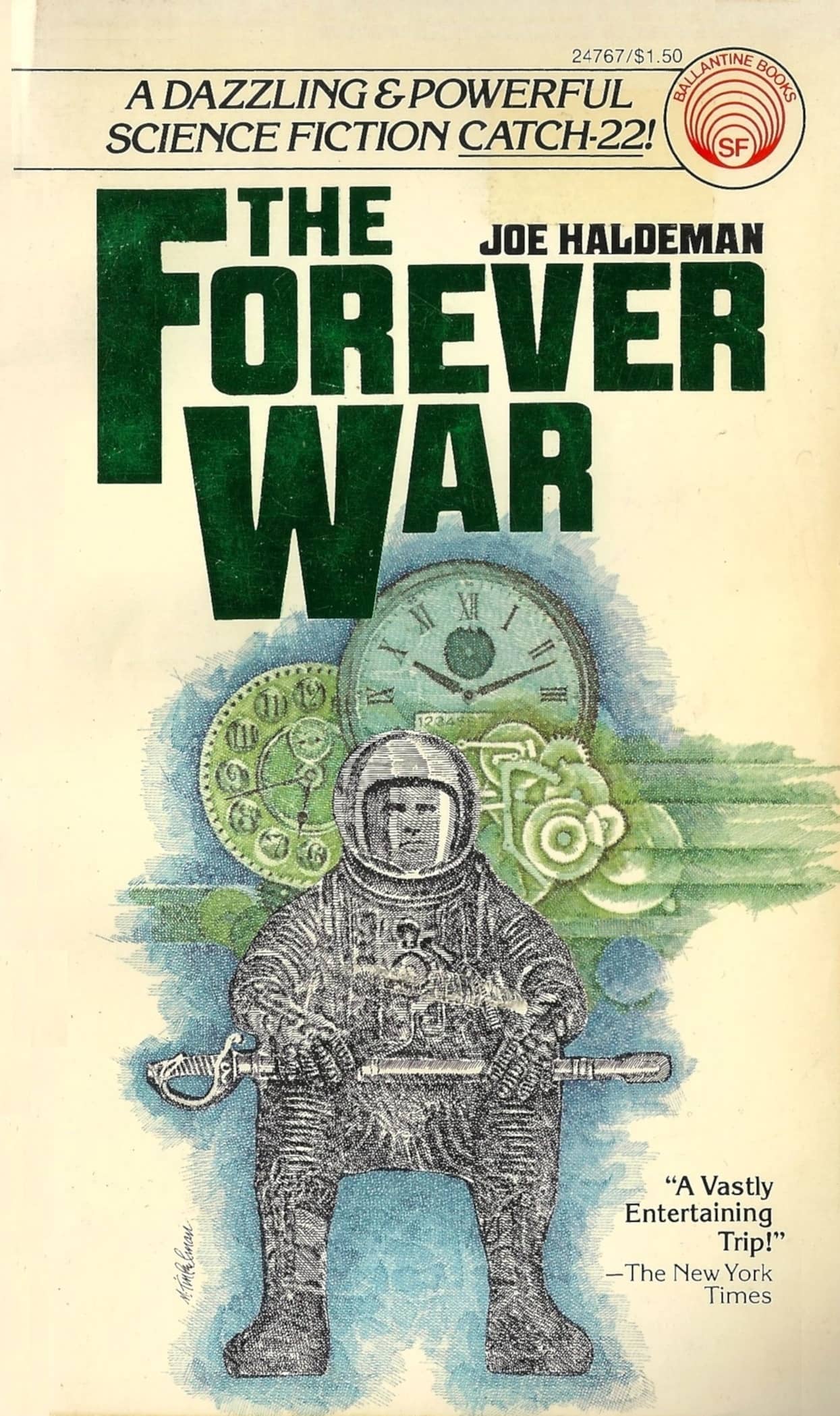
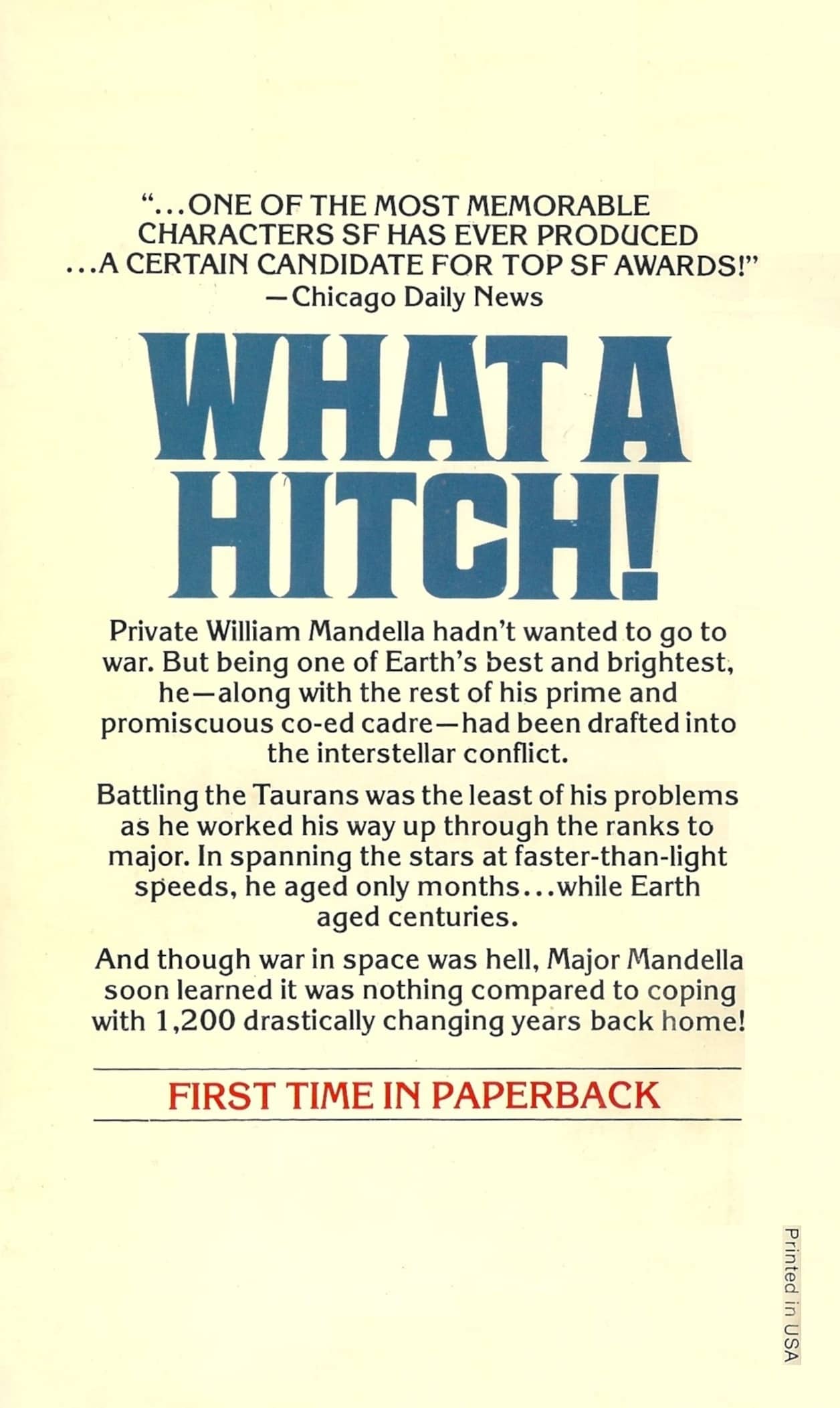
The Forever War (Ballantine Books, 1976). Cover by Murray Tinkelman

Rich Horton continues to review classic science fiction novels at his blog, Strange at Ecbatan. Last month he turned his attention to Joe Haldeman’s The Forever War, on the 50th anniversary of its release.

It’s definitely worth reading — a bitter and cynical look at war, some cool ideas including the effect of time dilation and lots of physics, a somewhat transcendent but pretty creepy conclusion. And, also, some very ’70s things, including pretty questionable — at times downright offensive — “sexual revolution” era sexual politics, and oddly 70s-ish notions of dystopia. My impression… I liked it then and I endorsed its Hugo and Nebula wins.

The Forever War is one of the most honored science fiction novels of all time. First published by St. Martin’s Press in 1975, it swept every major SF Award, including the Hugo, Nebula, and Locus awards. In 1987 it placed 18th on Locus’ list of All-Time Best SF Novels, beating out The Martian Chronicles, Starship Troopers, and Rendezvous with Rama. It’s been in print nearly continuously for the last four and a half decades. Here’s some of the most noteworthy editions.

Read More Read More

Get it While You Can: Manly Wade Wellman’s Cahena Going Out of Print

Get it While You Can: Manly Wade Wellman’s Cahena Going Out of Print


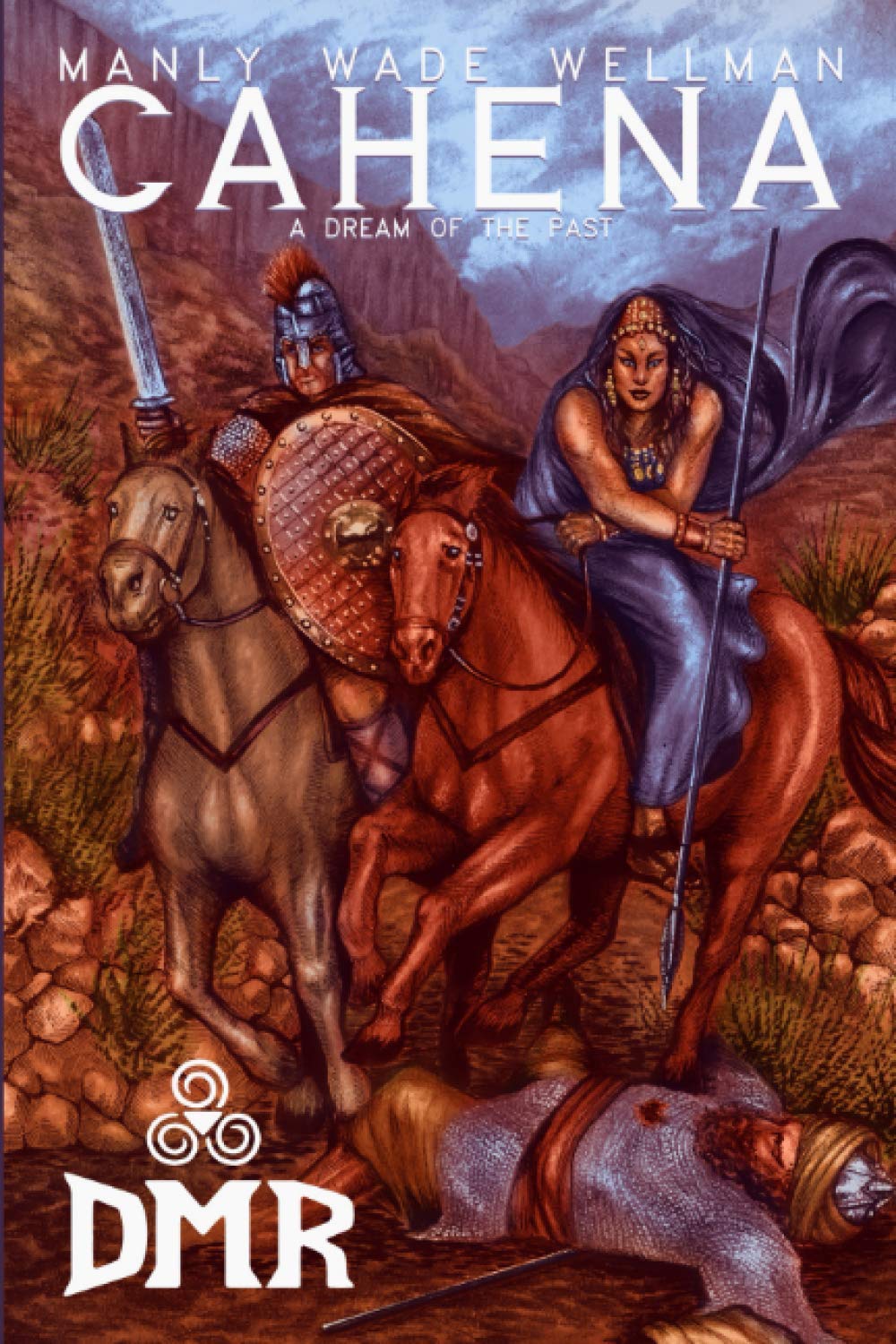
Cahena by Manly Wade Wellman (DMR Books, November 1, 2020). Cover by Lauren Gornik

I’m hearing reports that Manly Wade Wellman’s final novel Cahena, out of print for nearly 35 years until DMR released a handsome new edition in 2020 with a striking cover by Lauren Gornik, is on the verge of going out of print again.

Cahena is an overlooked gem in Wellman’s distinguished catalog. A historical novel with fantasy elements, it tells the tale of the legendary Berber queen who lived in the 7th Century in North Africa, and led her people against the Romans and later Muslim invaders. The Cahena, as she was known, was said to be both a sorceress and prophetess, and she led an army forty thousand strong in a valiant struggle to save her beleaguered people.

DMR’s rights to the book expire this month, and at the end of May it will not longer be available. Morgan Holmes says that with this final novel, “Wellman went out on top.” If you’re a Wellman fan, or a fan of quality adventure fiction, grab a copy while you can. Don’t wait another thirty-five years for the next reprint! Order directly from DMR Books here.

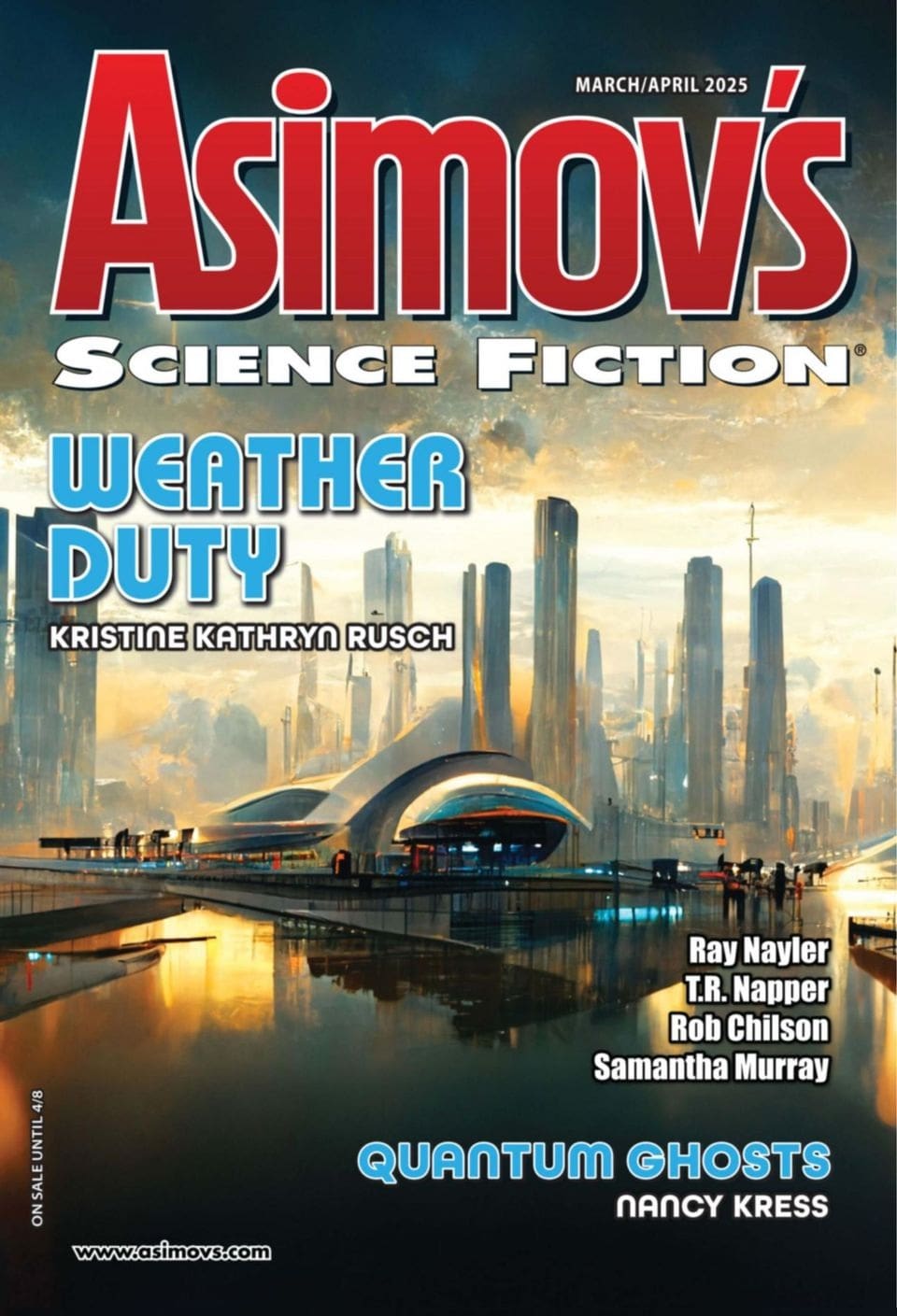
Hidden Gods, Cryptids, and Swamp Monsters: March-April Science Fiction Magazines

Hidden Gods, Cryptids, and Swamp Monsters: March-April Science Fiction Magazines


March-April 2025 issues of Analog Science Fiction & Fact
and Asimov’s Science Fiction. Cover art by Shutterstock

The big news this month is that all three print science fiction magazines, as well as the mystery magazines owned by Penny Press, have been sold to a new buyer, a consortium of fans who have have ambitions to maintain and grow all five. Here’s an excerpt from the announcement at Locus Online.

Alfred Hitchcock’s Mystery Magazine, Analog Science Fiction and Fact, Asimov’s Science Fiction, Ellery Queen Mystery Magazine, and The Magazine of Fantasy & Science Fiction have been acquired by Must Read Magazines, a division of a new publishing company, Must Read Books Publishing. All editorial staff from the magazines have been retained in the acquisitions… Must Read Magazines is financially backed by a small group of genre fiction fans. A major investor and board advisor is Michael Khandelwal, the founder of a writing nonprofit and Virginia’s Mars Con toastmaster.

Read all the details, including quotes from Asimov’s editor Sheila Williams, Analog editor Trevor Quachri, and F&SF publisher Gordon Van Gelder, at Locus Online.

Tentatively, I’m willing to believe this is Good News. It makes sense to have all five magazines under one roof, and the recent collapse of F&SF‘s publishing schedule (only one magazine shipped last year) seemed to auger its imminent demise. Though change is rarely good with magazines, and Dell Magazines/Penny Press has been a stalwart home for Asimov’s and Analog for over three decades, since 1992, keeping the magazines healthy and alive through decades of turmoil in the magazine business.

Read More Read More

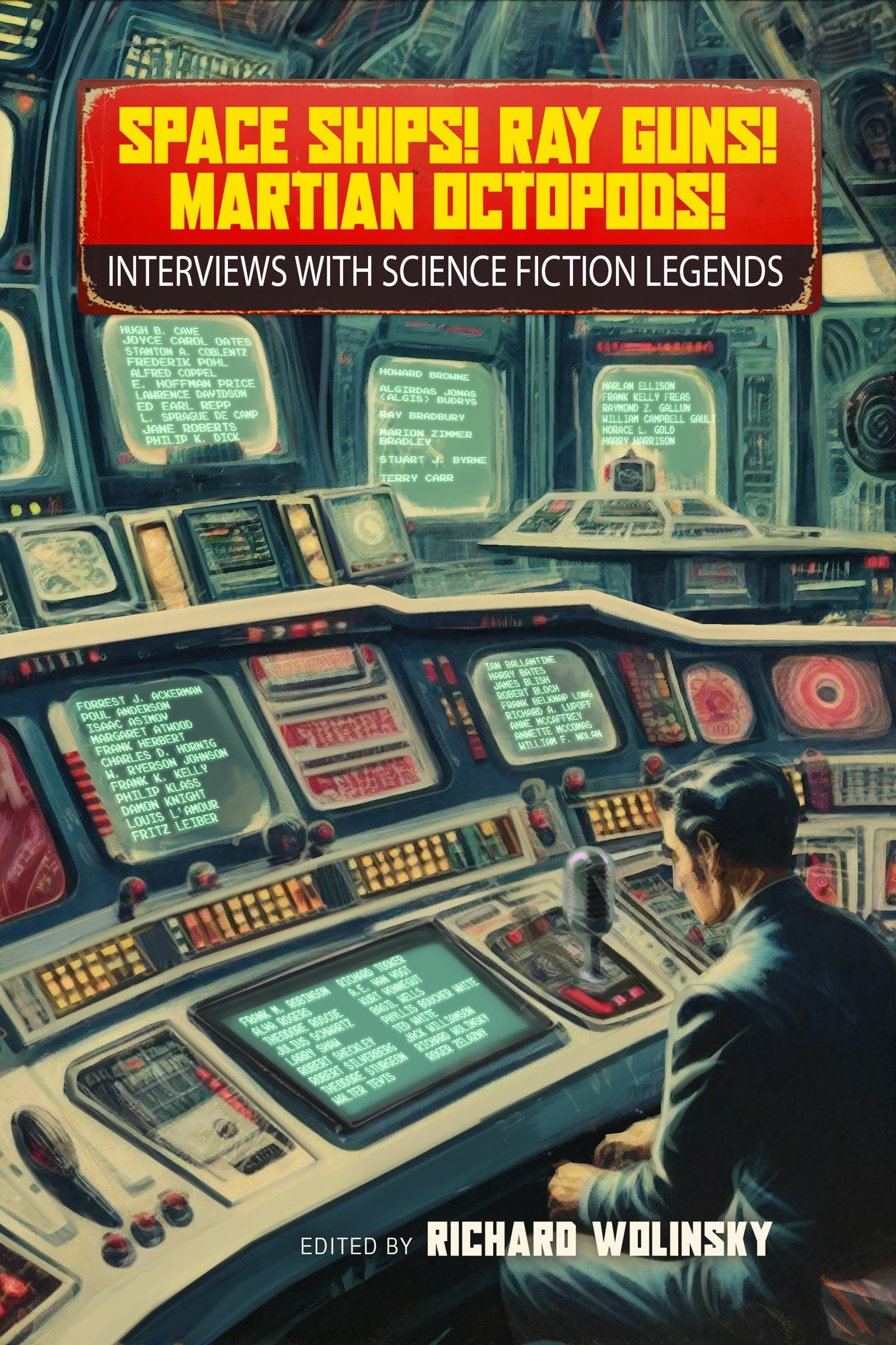
Cover Reveal: Space Ships! Ray Guns! Martian Octopods!: Interviews with Science Fiction Legends, edited by Richard Wolinsky

Cover Reveal: Space Ships! Ray Guns! Martian Octopods!: Interviews with Science Fiction Legends, edited by Richard Wolinsky

Space Ships! Ray Guns! Martian Octopods!: Interviews with Science Fiction Legends (Tachyon Publications, September 2, 2025). Cover by Yoshi Vu

At Black Gate, we’re all about science fiction legends. Specifically, science fiction legends who appeared in paperback in spinner racks in the 70s and 80s. Or pulp magazines. Or wrote adventures at the dawn of the role playing industry. You know what, forget all that. We’re not picky.

What makes a true science fiction legend? This is the sort of thing that’s hotly debated on social media, and at science fiction conventions, and in lengthy blog posts titled “Towards a New Science Fiction Canon, Because Yours is Old and Stupid.” But recently, public opinion has shifted. To be a science fiction legend, the most important criteria is that your name looks good in green font on a 50s CRT monitor, preferably in a cool underground bunker. Exactly like the cover of Space Ships! Ray Guns! Martian Octopods!: Interviews with Science Fiction Legends, the upcoming book from Richard Wolinsky and Tachyon Publications.

I’ve spent long hours staring at this cover (by the marvelously talented Yoshi Vu), and the more I do, the more I’m convinced I’m right. Just look at those names. Look at how cool they are! Roger Zelazny, Theodore Sturgeon, Robert Sheckley, Jack Williamson, Fritz Leiber, Damon Knight, Poul Anderson, Isaac Asimov, Anne McCaffrey, William F. Nolan, Terry Carr, Frederik Pohl. Right now you’re shaking your head, but you know I’m right.

Read More Read More

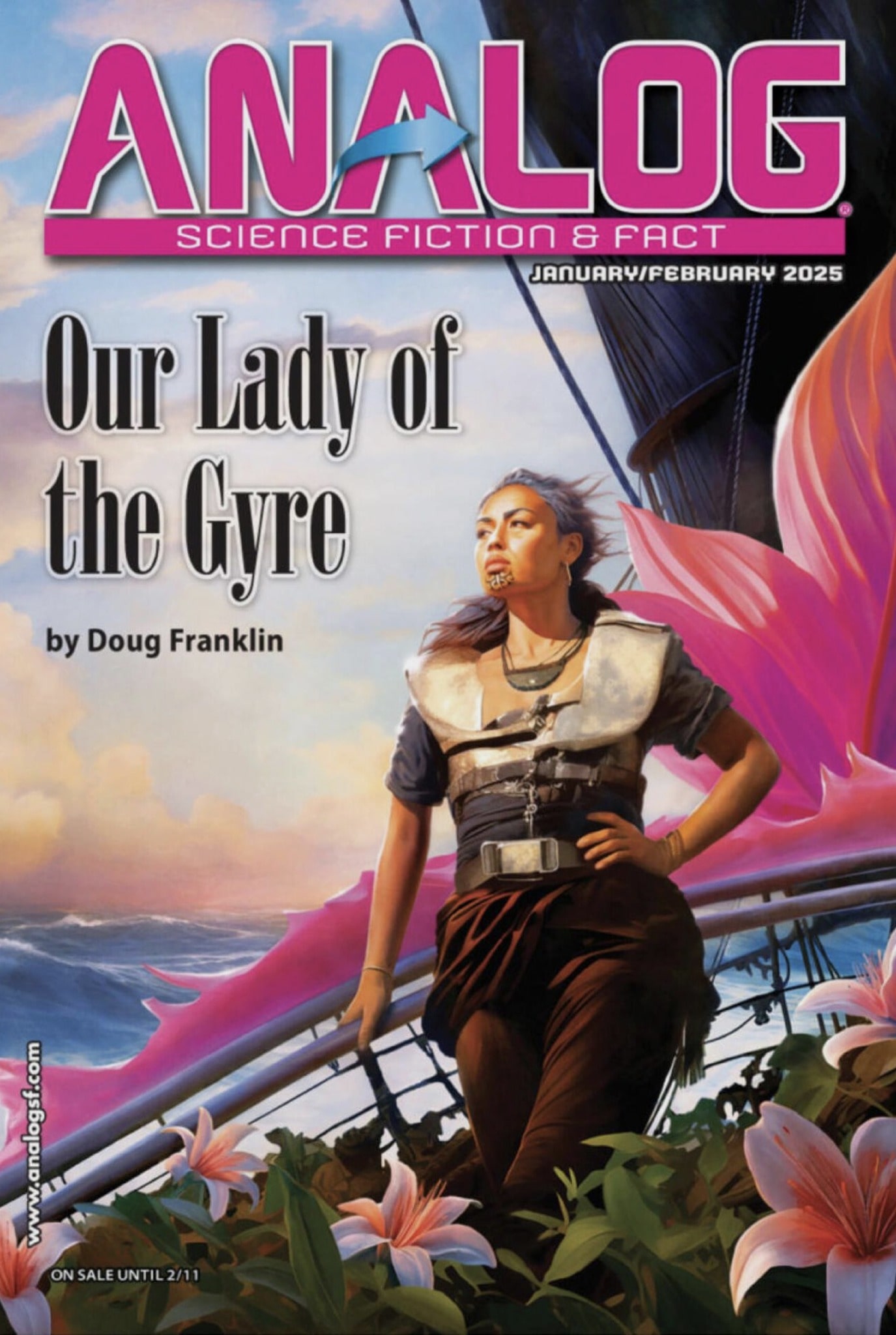
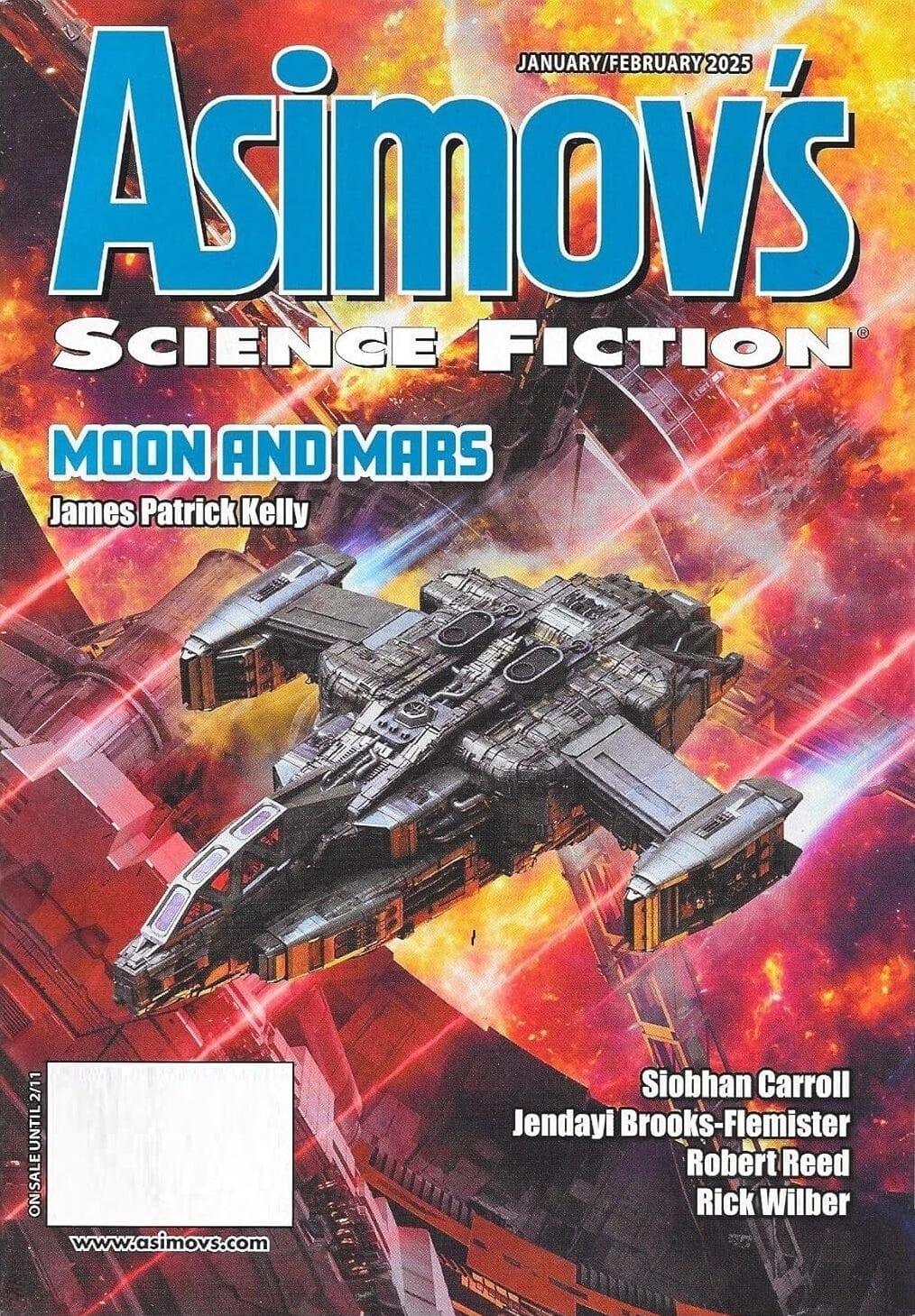
Alternate Londons, the Future of Lotteries, and Colony Ships: January-February Print Magazines

Alternate Londons, the Future of Lotteries, and Colony Ships: January-February Print Magazines


January-February 2025 issues of Analog Science Fiction & Fact and Asimov’s Science
Fiction. Cover art by Tomislav Tikulin (for “Our Lady of the Gyre”) and Shutterstock

Still no sign of the next issue of The Magazine of Fantasy & Science Fiction, which is disheartening. That leaves us with only two issues published last year (Winter 2024 and Summer 2024), and no hint when the next one might arrive. I’m hearing rumors that the magazine has been sold, but I’ve been unable to confirm that, so for now it’s just gossip.

But we’ve got issues of Asimov’s Science Fiction and Analog Science Fiction & Fact in hand, and they’re just as enticing as usual, with contributions from John Shirley, Sean McMullen, Mark W. Teidemann, Steve Rasnic Tem, Paul Di Filippo, Sakinah Hofler, James Van Pelt, James Patrick Kelly, Siobhan Carroll, Robert Reed, Faith Merino, Matthew Kressel, Rick Wilber, Jane Yolen, Kendall Evans, and many more.

The issues contain a new Great Ship tale by Robert Reed, a new Unsettled Worlds story by Siobhan Carroll (which Sam Tomaino calls a “suspenseful, exciting tale”), a new novelette “Rejuve Blues” from John Shirley (which Victoria Silverwolf labels “a suspenseful crime story and psychological study”), and the last installment in James Patrick Kelly’s trio of stories about Marishka Volochkova, “Moon and Mars,” which Sam proclaims is “probably another Nebula nominee.”

Read More Read More

Howard Andrew Jones, July 19, 1968 – January 16, 2025

Howard Andrew Jones, July 19, 1968 – January 16, 2025

John O’Neill and Howard Andrew Jones at the World Science Fiction Convention, Washington DC, December 19, 2021

Howard Andrew Jones is dead.

It’s hard to write those words. Howard has been a huge part of my personal and professional life since 2002, when I opened a submission to Black Gate magazine and found a long, rambling, and extremely enthusiastic cover letter from him, expressing his delight at finding a quality magazine devoted to heroic fantasy. The letter ended with “I want in, bad,” and was attached to a terrific tale featuring two adventurers named Dabir and Asim.

We eventually published three Dabir and Asim tales in Black Gate, and within a few years Howard’s editorial contributions had become so essential to the magazine that we named him our first Managing Editor. He ran our non-fiction department, single-handedly recruiting and managing over a dozen contributors to fill some 80 pages every issue with thoughtful essays, book reviews, gaming coverage, and much more.

Read More Read More

The Failed Giant: Five Tributes to Barry N. Malzberg

The Failed Giant: Five Tributes to Barry N. Malzberg

Barry N. Malzberg

Barry N. Malzberg died on December 19. In his Black Gate obituary, Rich Horton wrote:

Malzberg was in his unique way a true giant in our field. Barry himself, in his later years, seemed to regard his career as a failure, but it was no such thing. He may have stopped publishing novels out of a feeling the publishing world wasn’t receptive to his work, but the best of what he did publish is outstanding, and thoroughly representative of his own vision.

Tributes and reminiscences have poured in over the last week, and many amplify Rich’s comments, especially in regard to both the importance of Malzberg’s work, and his embittered attitude towards the field near the end of his career. Several writers, including Adam-Troy Castro and Gregory Feeley, have generously granted permission for me to reprint their lengthy comments here, including several fascinating anecdotes.

Read More Read More

Merry Christmas from Black Gate

Merry Christmas from Black Gate

This has been a milestone year for our little website. In 1999 my friend Wayne MacLaurin helped me register the blackgate.com domain, and we launched the site to support our ambitious fantasy magazine. This year we quietly celebrated a quarter-century of continuous operation and quality fantasy coverage, and in the process added several talented newcomers to our small staff of regular bloggers, including Neil Baker, Jeffrey Talanian, Charles Gramlich, William H. Stoddard, and Ian McDowell. We also welcomed back David Soyka, one of our founding bloggers, after a long sabbatical.

Over the past 25 years the site has evolved significantly, and when the print magazine died in 2011 it became our sole focus. Five years later George R.R. Martin presented us with an Alfie Award, and that same year we won a World Fantasy Award, a pair of singular honors I still find a little hard to believe.

Over the long years our focus has changed dramatically. In the early years it was all about growing the site and increasing traffic, and we achieved success I never dreamed of, peaking at over 2 million page views/month. But in the last fifteen years I’ve come to understand that the true rewards of a site like this aren’t in ever-increasing site metrics. They’re in the people I’ve met along the way, and the countless way my own love of the genre has deepened and expanded.

Read More Read More

Alien Cults, Interstellar Wars, and a Starship Murder Mystery: November-December Print Magazines

Alien Cults, Interstellar Wars, and a Starship Murder Mystery: November-December Print Magazines


November-December 2024 issues of Asimov’s Science Fiction and Analog
Science Fiction & Fact. Cover art by Shutterstock and John Sumrow

We’ve got issues of Asimov’s Science Fiction and Analog Science Fiction & Fact to see us through the dark months of winter, and they’re even more star-studded than usual, with contributions from Kristine Kathryn Rusch, Mary Robinette Kowal, Sean Monaghan, Dominica Phetteplace, Molly Gloss, Jack Skillingstead, Shane Tourtellotte, Sean McMullen, Alexander Jablokov, Jerry Oltion, Mary Soon Lee, and lots more.

The issues contain Rusch’s new novella “Death Benefits,” which Sam Tomaino calls “magnificent… [Rusch] at the height of her powers. It will be on my shortlist for Best Novella Hugo next year;” Peter Wood’s starship murder mystery “Murder on the Orion Express” (“ingenious… a great story”); Jack Skillingstead’s tale of a civil servant in a city beset by war tasked with recording the dead, “The Ledgers” (“Grim”); and David Cleden’s “The Touchstone of Ouroboros,” in which priests of a cult that worships an ancient alien object come face to face with the consequences of their faith, which Victoria Silverwolf praises with “Although some of the mysteries surrounding the object are explained by the end, it remains an enigma. In a sense, it is also a character, albeit one that is impossible to comprehend.”

Read More Read More