Star Wars is the Best Star War
Today, nearly fifty years after its release, Star Wars still feels fresh, exciting and entirely organic. It is a naturally progressing story. Everything in it matters, and every moment leads inexorably and inevitably to the next moment, as it should — building to a tremendous climax and satisfying denouement.
None of those things are true about its immediate sequel, The Empire Strikes Back.
For that reason above all others, I rate Star Wars by far the better film.
I am well aware that a number of fans of the franchise — possibly a majority and seemingly in greater numbers every year — feels Empire is superior, including Black Gate‘s own Neil Baker.
I believe they are wrong.
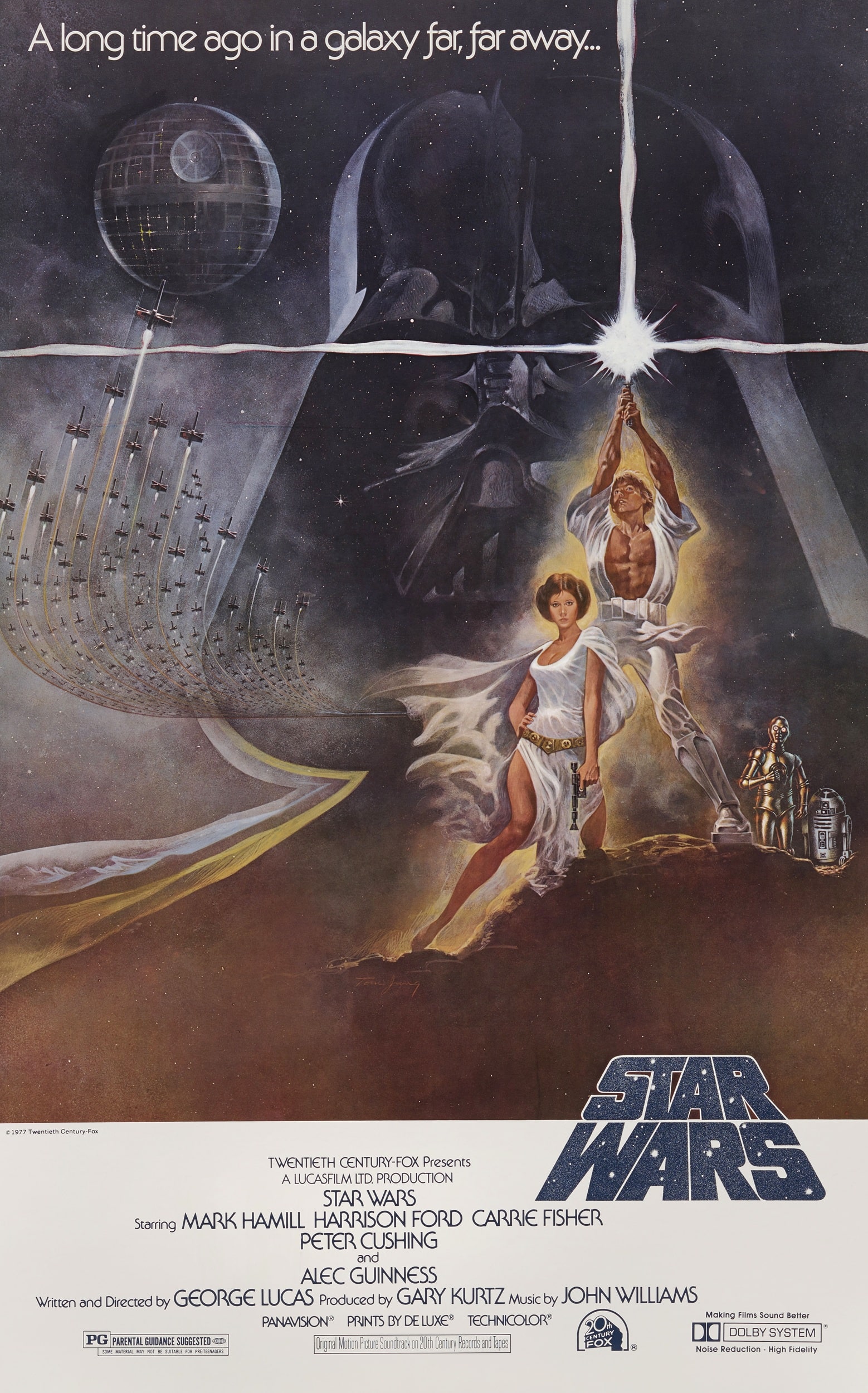
Let us start by looking at all the things Star Wars has going for it.
It opens with a bang — with perhaps the greatest opening in cinematic history — as a Star Destroyer relentlessly and seemingly endlessly emerges from the ceiling and captures the Rebel ship, along with the imaginations of everyone in the theater.
Having gotten our attention, the story then builds, one piece after another. Each of those pieces leads to the next, and all are critically important to the whole. From Luke’s farm to Mos Eisley to the Death Star to Yavin 4, there’s a direct path connecting the start to the finish.
Every moment counts; not a frame of film is wasted. Especially not in the original 1977 cut, unencumbered by a 1995-era CGI Jabba and wacky digital Jawa hijinks.
Star Wars is, simply put, the perfect movie.
As I have long maintained, it is also a movie followed by eight increasingly disappointing sequels, prequels and sequels. And that includes its immediate successor.
To prove it, let’s turn that same critical eye on The Empire Strikes Back.
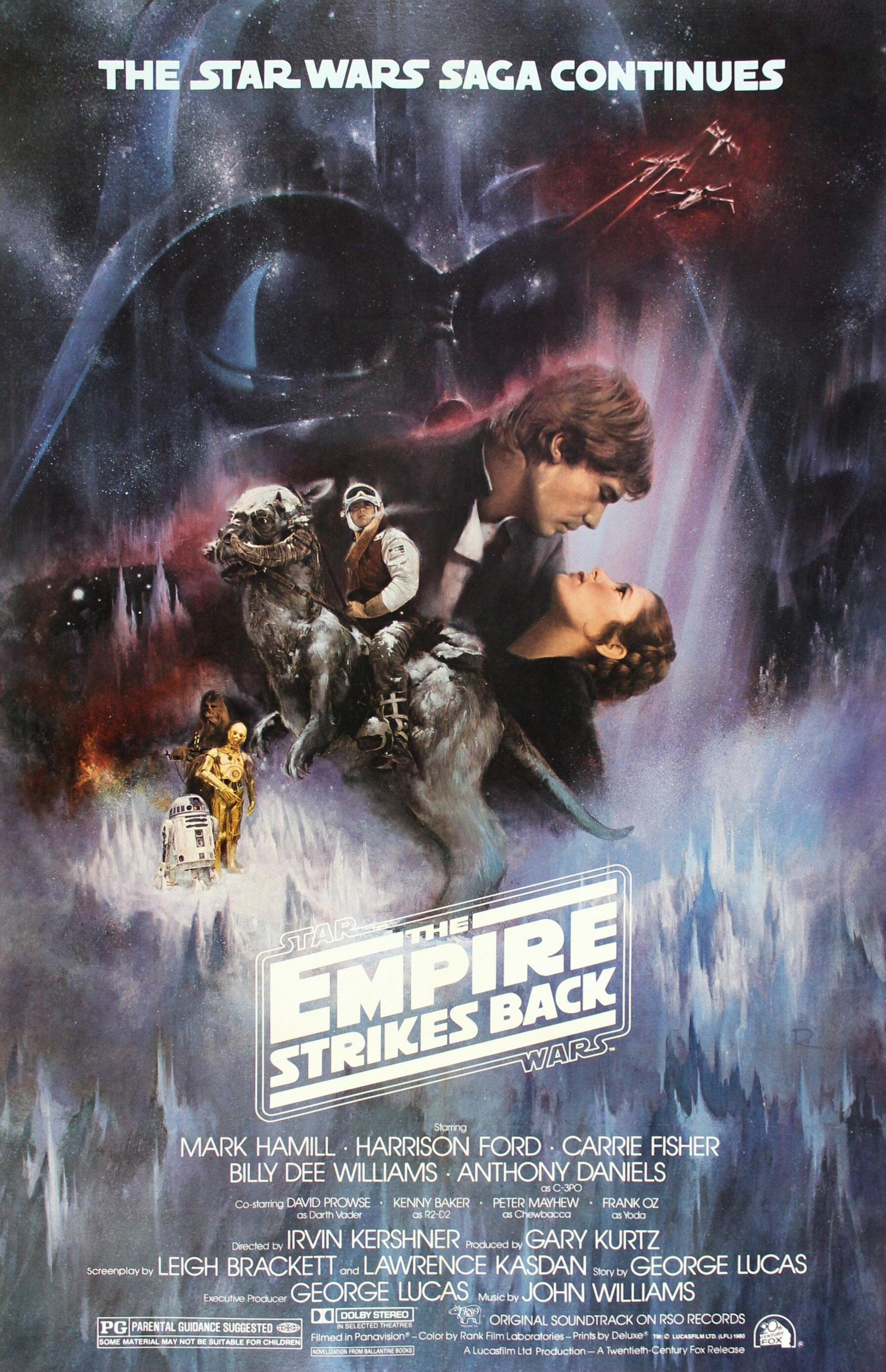
Empire is a movie with no real beginning and no real ending. It is almost entirely middle section, and much of that middle is effectively filler.
Now, one can argue that much of that filler is fun and cool. Walking tanks, snow monsters, giant space slugs — sure, they’re fun, at least at the surface level. Beyond that, though, I’d argue they have only two main purposes: to stretch out a rather thin story into a full, two-hour movie, and to check off a series of agenda items made necessary when George Lucas completely changed the overall trilogy’s story, partway in.
What agenda items might those be?
Agenda Item One was to warp the characters and story in ways Lucas didn’t have in mind when he filmed the first movie, so that they could fit the new direction in which he decided to take the franchise.
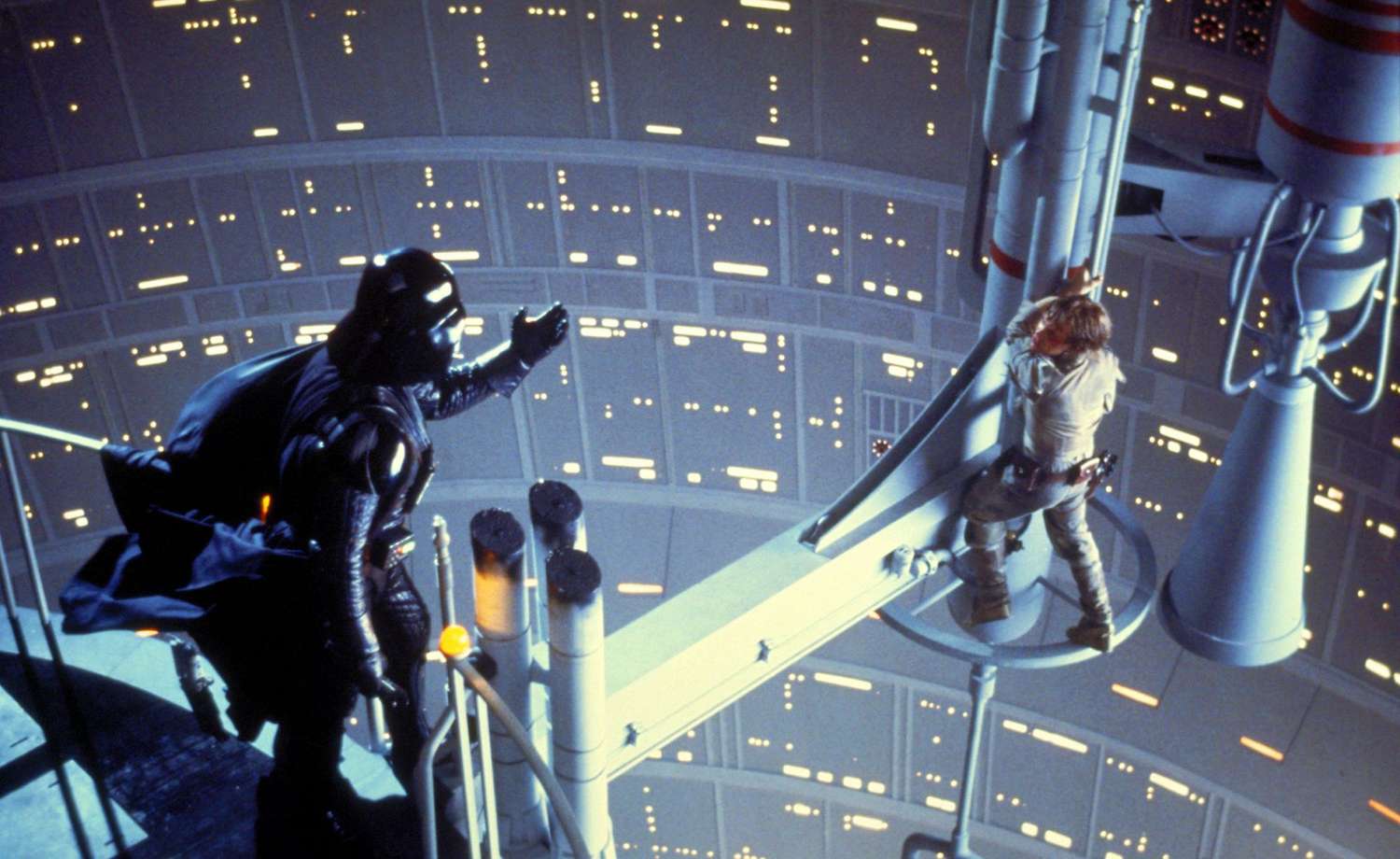
An example is the reveal that Darth Vader is Anakin Skywalker. This was never the plan. It occurred to Lucas only in the aftermath of the first movie’s success. It makes for a shocking “reveal” moment in the theater, and it has become the rock upon which Lucas built his church, going on to shape the plots of at least the next five movies. It wasn’t a terrible idea and it doesn’t completely ruin the film for me.
The problem is, it feels artificially manufactured. We know it was never the plan. It would’ve worked better if it had been set up that way from the start.
A better example is Leia: Lucas has her fall in love with Han, and in the following film it’s revealed she’s Luke’s sister.
Lucas had created a great love triangle among three likeable characters in the first movie. In Empire he abandons the idea and demolishes it before it has scarcely taken root. That done, however, we can’t have Luke be a loser, so (in the third film) he gets the consolation prize: She’s his sister, so she can’t be with him anyway!
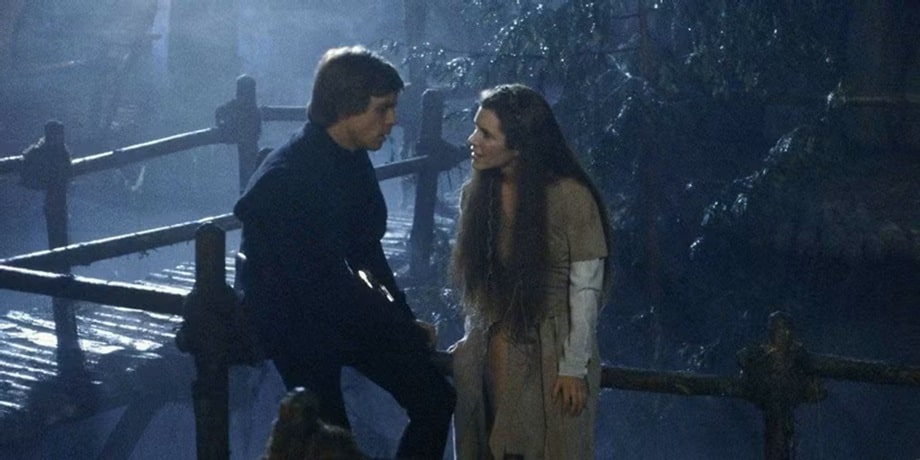
“Yes,” Lucas must have thought. “Problem solved! Now everyone will be happy!”
Ugh. No. Not everyone was happy. The action of the first movie was driven in large part by Luke “falling in love” with the hologram of Leia and dropping everything to go and try to rescue her. For some of us, the destruction of this motivation for Luke — not just rendering it moot, but actually making it slightly creepy — was cause for massive disappointment.
Agenda Item Two: Empire needed to provide an in-story explanation for what had happened to Mark Hamill’s face between 1977 and 1980. (In real life it was a car accident that disfigured him). To accomplish this, we get an interminable sequence involving Luke captured by a snow beast and Han searching for him. (And just think — this was all originally supposed to go on even longer, with a whole army of the creatures attacking the Rebel Base! Why? Because it would’ve looked cool! Sigh.)
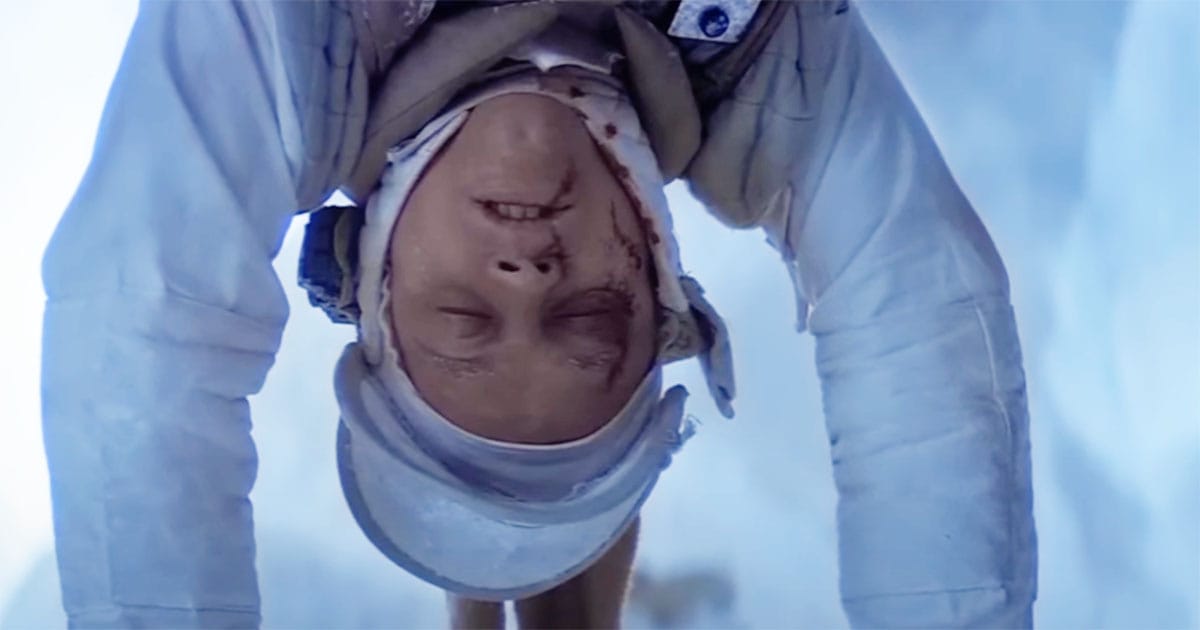
Nothing that happens on Hoth serves a purpose beyond “how Luke’s face became scarred” and “how this particular group of characters ended up together on the Falcon.” Everything involving Han, Leia, Chewie and the droids from that point until they arrive at Cloud City is only there to give them something to do while Luke and Yoda are running around the swamps of Dagobah.
Yes, there’s the Han-Leia kiss, but that could’ve just as easily happened after they parked the Falcon on a nice little planet and had a lovely picnic. It wouldn’t have been as cool to look at, but that’s the point: Lots of things in Star Wars were cool to look at, but every single one of them also contributed to the developing plot — to getting us where we had to go next.
That brings us to Agenda Item Three: Setting everything up for a third movie that will resolve the story, since The Empire Strikes Back has no ending, along with no real beginning.
This is the agenda item that really matters. The larger plot requires that Leia falls for Han, Luke meets Yoda and gets some (but, critically, not all) of the training he needs, and Vader lures Luke to the Cloud City to try to capture him, so they can fight.
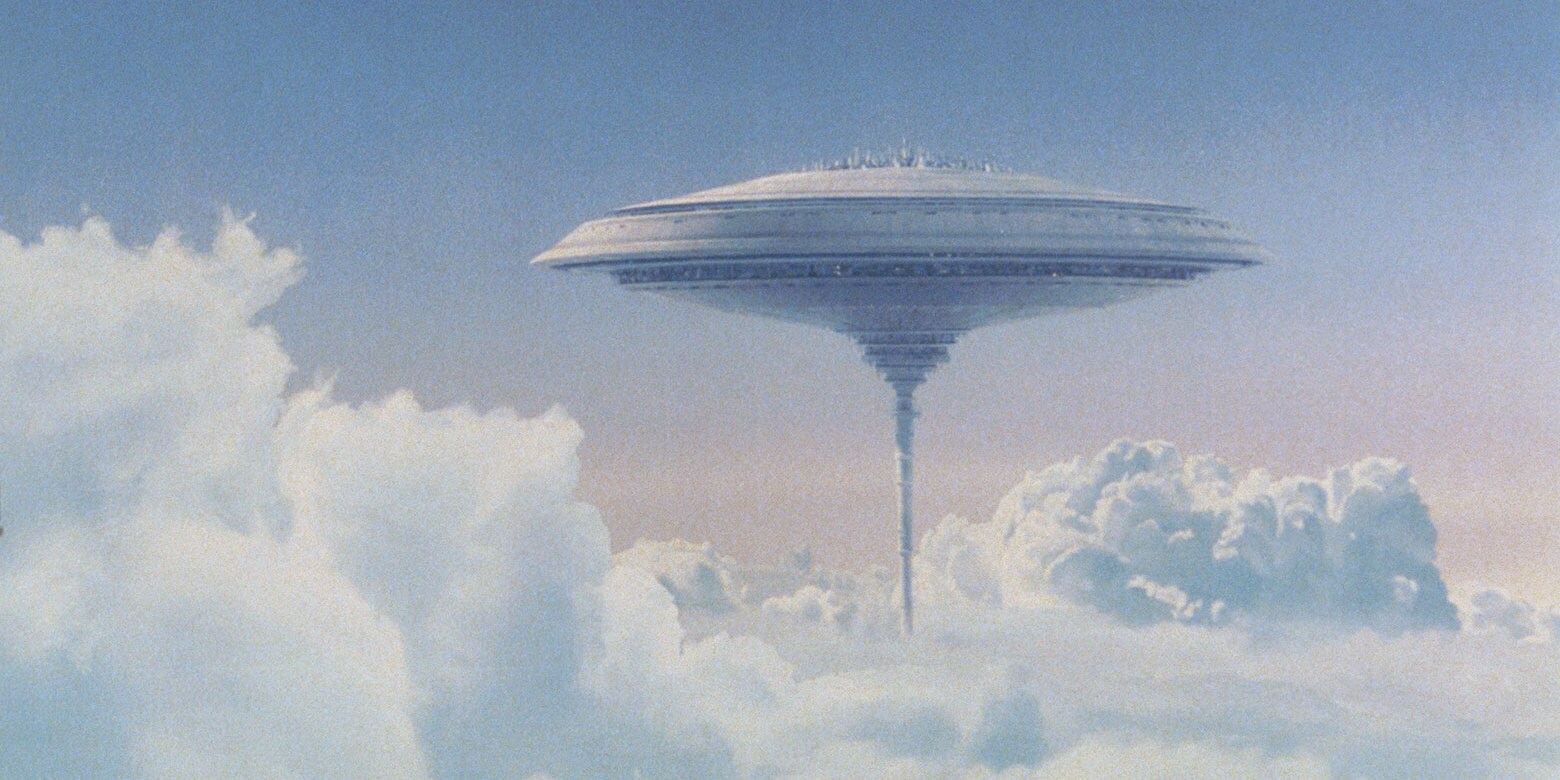
That’s it. That’s all that matters in the movie.
Each of those things could have been handled in a way that was actually relevant and organic to the story being told, and so that the prime motivation was “tell a good and internally consistent story where the events actually matter” rather than just “look superficially cool, stretch for time, and check boxes on George’s list to set up the third movie.”
Finally, there’s the direction. The fact that Irvin Kershner is a far better actors’ director than the more ham-fisted Lucas gives Empire more polish and helps create the illusion — and illusion it is — that it is the better film.
Not only do I disagree — there are days I might go so far as to even argue it’s only third-best of the original three.
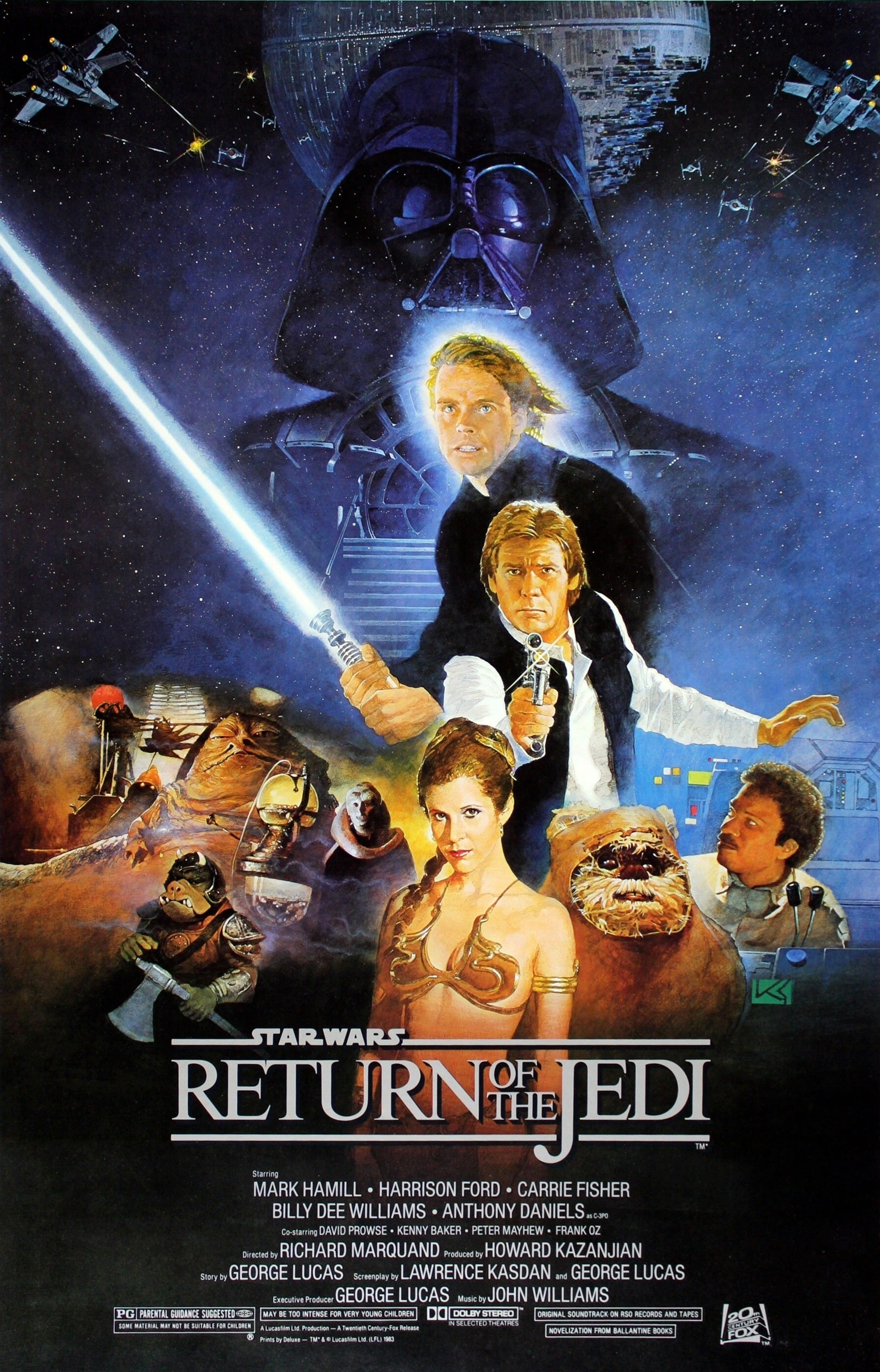
For all its well-documented missteps involving Muppets, Ewoks and a new Death Star, a very good case can be made that even Return of the Jedi is a better movie than The Empire Strikes Back. Jedi progresses through a series of plot points that all need addressing; few of them are simply for show, or to fill time. And Jedi at least has an ending — and quite a powerful one, with Luke redeeming Vader and the two of them defeating the emperor. Empire has nothing of this level of power or impact, save that one dubious “I am your father” revelation retcon, inserted at the veritable last minute.
What kills Jedi for me is its handling of Boba Fett, but that’s a controversy for another day.
In sum, I have no issue with anyone saying Empire is their favorite. We are all free to like whatever we want. That’s not my business or anyone else’s.
But don’t come at me with Empire being objectively “the best Star Wars movie.”
As I said, I feel the films mostly declined in quality after the first one. Star Wars truly was a happy accident; the catching of lightning in a bottle. As heretical as this opinion might seem to some, it does place The Empire Strikes Back second in quality, above all the others except the first one — a position I believe it rightfully deserves. It is at most the second-best movie in the Star Wars franchise.
But it is not number one.
That Falcon won’t fly, son.
Van Allen Plexico is a member of the Science Fiction and Fantasy Writers of America (SFWA), a Grand Master of Pulp Literature (2025 class) and a multiple-award-winning author of more than two dozen novels and anthologies, ranging from space opera to Kaiju to crime fiction to superheroes to military SF. Find his works on Amazon and at Plexico.net.
Well, as Sydney Smith said about the two ladies shouting at each other across the street from the windows of their apartments, “Those women will never agree; they are arguing from different premises.”
Ha! All valid points. Good job I don’t love these films for their plots, eh?
Star Wars blew me away when I first saw it. It was amazing. We lived in a SF cinema desert, when you could reasonably see all the new speculative movies. In the midst of that, along came this spectacle that threw effects at you so fast your brain could not process them and accepted it all on faith. That pitch and roll in the Death Star trench…wow. Action, adventure, effects…gimme.
By the early ’90s, my brain had caught up to the effects, and I started paying attention to other things, like the dialogue and the acting. Those things really got on my nerves. In fact, I started really not liking most aspects of the movie, and I was pretty sure Lucas was at fault for all of it.
Somewhere in the early aughts I (hopefully) watched it for the last time. I hated it. A seminal film, without a doubt, but it’s such a bad movie.
I 100% agree with this.
And wish Lucas had stuck with the original idea, instead of the “I am your father” twist, which poisoned all the rest of the films. I miss the trilogy that never was!
I will start off by saying what I always say–that it must be so odd to be George Lucas. To be both loved and hated for the same thing.
That out of the way, you make bold ascertains! I almost 100% agree with them. My only quibble would be that I was at exactly the right age and place for the original Star Wars to have maximum impact–which it did! Quite simply, it was the greatest movie-going experience of my 8-year old life. It will never be equaled and trying to equal it is a path to madness.
Oh there are moments, scenes, in other movies that reach that level, but no other movie, from start to finish, will compare to that original experience (experiences–I must have seen it like seven times).
I was also the right age for Empire Strikes Back– only a slightly jaded 12 years old so the more downbeat aspects of the movie (the first fair fight between the rebels and the empire (and only fair because the empire no longer has the Death Star) ends with the rebels very clearly losing), all the characters getting roughed up, Han captured, Luke plainly losing to Vader (well, choosing to die instead of actually losing)– big stuff! I concede, sir, that it is mostly filler, but what filler! You already know the characters and so you just get to go, go, go! So, the second greatest movie-going experience of my life.
Return of the Jedi had big snow boots to fill, and did a good job. I know people grumble about the Ewoks, but they had been working on their plans for long time–they bring down two AT-ATs fer cryin’ out loud! And when Luke jumps out of the Sarlak pit and goes to absolute town on Jabba’s minions? Suddenly all that fuss being made about the force made sense. He’s a one-man gang. Since two things can be true at the same time, I will say that I agree that Boba Fett deserved better. It was probably not the third greatest movie-going experience, but it was surely in the top ten.
Heh. I’ll always think highly of Lucas, if only because he gave Peter Jackson a half-day of his time to discuss what would and wouldn’t be possible when making LOTR.
It is interesting to consider how much we experienced between Star Wars and Empire. Looking back–and I was between 9 and 12 during those years–we got several SF movies, Battlestar Galactica, a bunch of books and comic adaptations and continuations, etc etc. So by the time Empire came along, it felt to me like a decade or more had passed. I think that’s partly why Empire didn’t feel like “the second greatest” experience to me. Star Wars came out of absolute nowhere for us. Empire was, for me at least, almost just another SF movie/show. I was certainly excited for it (ask any of my classmates in 7th grade–they wanted to murder me!) but not like I’d been for Star Wars.
The 1977 original is indeed the best and that’s because it’s the only one that’s not a Star Wars movie.
By that I mean it’s the only one that isn’t self-consciously set in the universe of another movie. Instead, it’s just telling its own story, with its own characters and its own setting rather than worrying about developing or expanding upon ideas first laid down elsewhere. It has an integrity the others lack. It can stand on its own, which is not true of any of the other movies in the series.
Well, yeah. One of the many contingencies that Lucas had to plan for was if the movie wasn’t popular enough to have sequels.
You know, Lucas made Episode IV as a kind of love letter to the pulp serials of the 30s. It occurs to me that it is the very pulp-nature of the movie that was a huge part of its appeal. BUT it also occurs to me that adults who saw it back in ’77 may have been impressed, but they may have ‘gotten it’–they knew what it was and what it was doing. But to us kids (at the time), we didn’t really know what it was, those pulp serials were like 40 years old in ’77, and having no context we wanted more!
It would be like if a generation of kids had never seen a kung-fu movie and then in ’86 John Carpenter released BIG TROUBLE IN LITTLE CHINA and everyone under 25 went absolutely out of their minds for it.
James, this is a *terrific* point, and one I had not considered before, beyond the fact that it has a beginning, middle and end and tells one single story.
As I’ve said many times, we could have never gotten another SW movie and we still would’ve had a complete story.
Just the fact that we discuss 2 movies that were released 45+ years ago and can be passionate about them says so much. Also, judging by the comments, many of us are in our 50’s (or older) and are still willing to throw down the gauntlet, so to speak. I thought that they were both terrific films. I still remember where I was sitting in the theater in 1977 to see that first scene (I was 12). Lets just enjoy them for what they were and for what they ushered in and look beyond our differences and find common ground: that The Two Towers was the best of Peter Jackson’s three….; )
“that The Two Towers was the best of Peter Jackson’s three….; )”
No lies detected.