Ghosts and Death Songs on Mars: Under the Moons of Mars: New Adventures on Barsoom, edited by John Joseph Adams
 |
 |
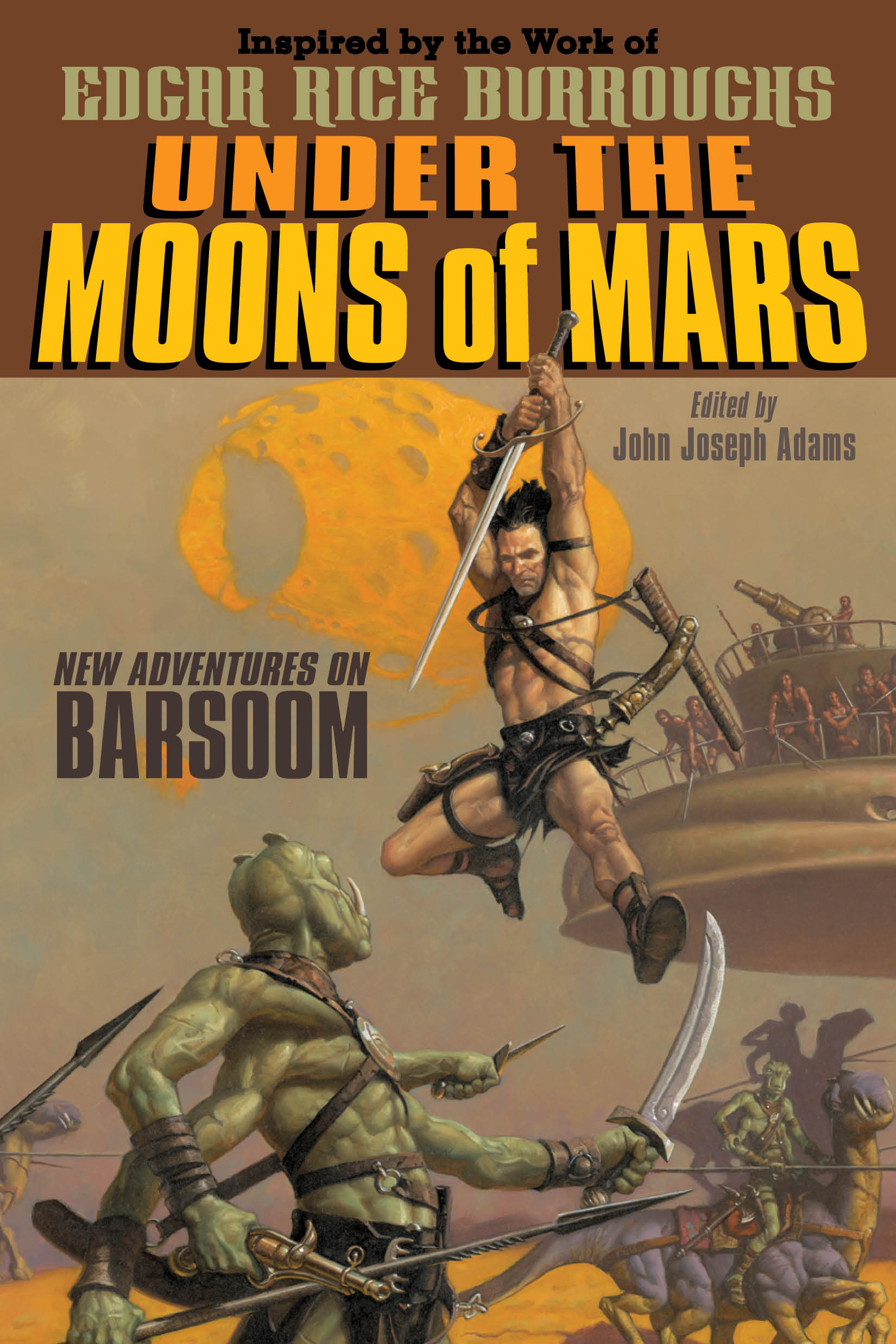
Under the Moons of Mars: New Adventures on Barsoom (Simon & Schuster, February 2012). Cover by Mark Zug
Under the Moons of Mars: New Adventures on Barsoom has “Inspired by the work of Edgar Rice Burroughs” on the cover. I hesitated about picking this one up. A note on the back said: “Not licensed or authorized, or in any way affiliated with, Edgar Rice Burroughs, Inc.” This suggested some kind of controversy surrounding the publication and it seems awfully easy these days to step on toes and get hated for it. I don’t enjoy that kind of thing. But, it had stories by Joe Lansdale, Jonathan Maberry, and S. M. Stirling in it, and I knew all three of those could write. So I pulled the trigger.
Overall, I found the anthology enjoyable, and even though it seemed generally marketed for “teen” readers, the stories were far from simple and unsophisticated. I thought there were three particularly strong stories, as well as several others I liked a lot.
The first real strong piece was “The Ghost that Haunts the Superstitious Mountains” by Chris Claremont. It features Carter, Dejah, and Tars Tarkas on “Earth.” This could easily have been expanded into a novel and I’d love to read it. The main problem was that the tale didn’t really have an ending. Clearly more needed to be told, but I still greatly enjoyed it. I know Claremont’s name from the comics, though I’ve not read any by him. I’ll have to remedy that.
The second very strong story was “The Jasoom Project” by S. M. Stirling, a complicated tale that also finished open-endedly. This one, too, could have been expanded to an exciting novel.
Finally, they picked exactly the right story to end with — “The Death Song of Dwar Guntha” by Jonathan Maberry. The best story in the book and a complete tale with a solid ending.
Some other strong stories were “Vengeance of Mars” by Robin Wasserman, “The Metal Men of Mars” by Joe Lansdale, and “Woola’s Song” by Theodora Goss, a sentimental favorite of mine since I’m very fond of Woola.
I’ll tell you about one story in the book that was so awful it set my teeth on edge and left a bad taste in my mouth. I don’t know that I’ve ever been so angry at a story before.
I’d never read anything by Peter S. Beagle before “The Ape Man of Mars.” I know he’s fairly famous and has won plenty of awards. However, after reading this particular story I’m pretty unlikely to pick up anything else by him. While the writing itself is certainly adequate, the tale did a hatchet job on John Carter and completely altered ERB’s characterizations of both Dejah Thoris and Tarzan. In the tale, Tarzan gets transported to Mars and is met by an arrogant, bullying, jealous, and vain John Carter. Dejah Thoris is presented as a long-suffering wife who is attracted to Tarzan and Tarzan returns that attraction.
This was so out of character for all three figures, especially Carter, that I had to wonder if Beagle had ever read the original stories. Two other stories in the book presented unkind viewpoints on Carter but did so from within the viewpoints of the stories’ narrators, and while both characters seemed clearly inaccurate on their judgments, (one came across very much as a villain), these were legitimate alternate viewpoints that one might expect from real characters. This was not true of the Beagle tale. These are ERB’s characters transformed into awful people.
Unfortunately, it arrives pretty early in the book. I had to put the collection away for a good while before coming back to it. If it hadn’t been for other authors in the collection who I’d read and respected previously I would likely never have returned to this book.
I’m sure some will suggest that the story was meant as satire. As I understand satire, it’s the use of humor, ridicule, and exaggeration to speak truth to power. But I don’t know what power is being targeted in this story, or what truth is being spoken. So I don’t think it falls under the umbrella of satire. The tale is closer to a parody but parodies generally wouldn’t use the actual names of characters created by another author to make fun of that author’s work. Tarzan would become Zantar or something similar. Perhaps I’m wrong, but it seems to me that if you choose to use actual characters created by another author, then you should strive to respect the author’s creations. Otherwise, make up your own. At any rate, and on a personal note, the story made me really mad. Your experience may differ.
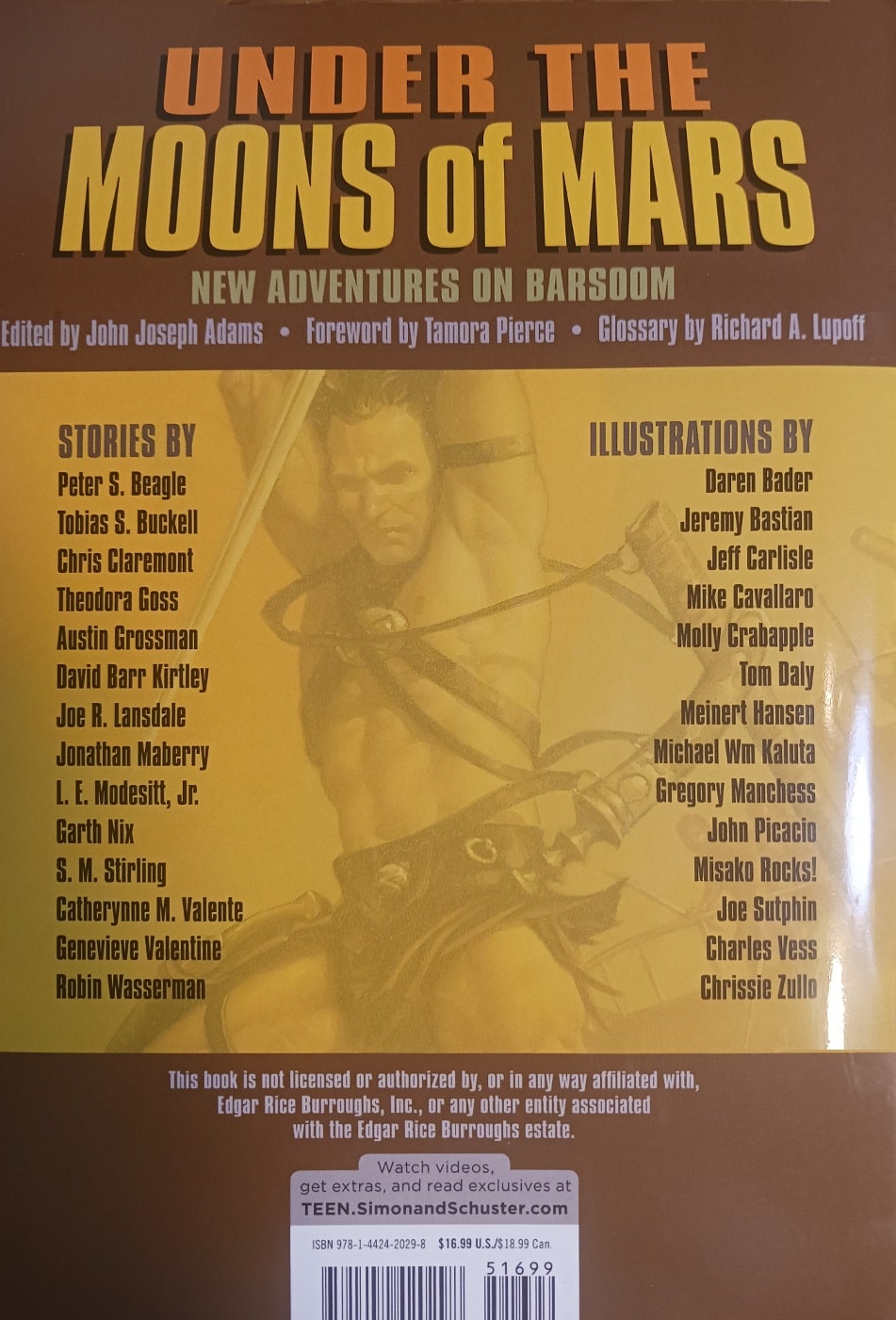
The package of the book is nice. It’s got a sweet cover. It listed “Jacket illustration copyright © 2012 by Mark Zug.” Each story also had an illustration, many by well-known artists, and the book concluded with a glossary by Richard Lupoff. (See my photo of the back cover above, which lists illustrators.)
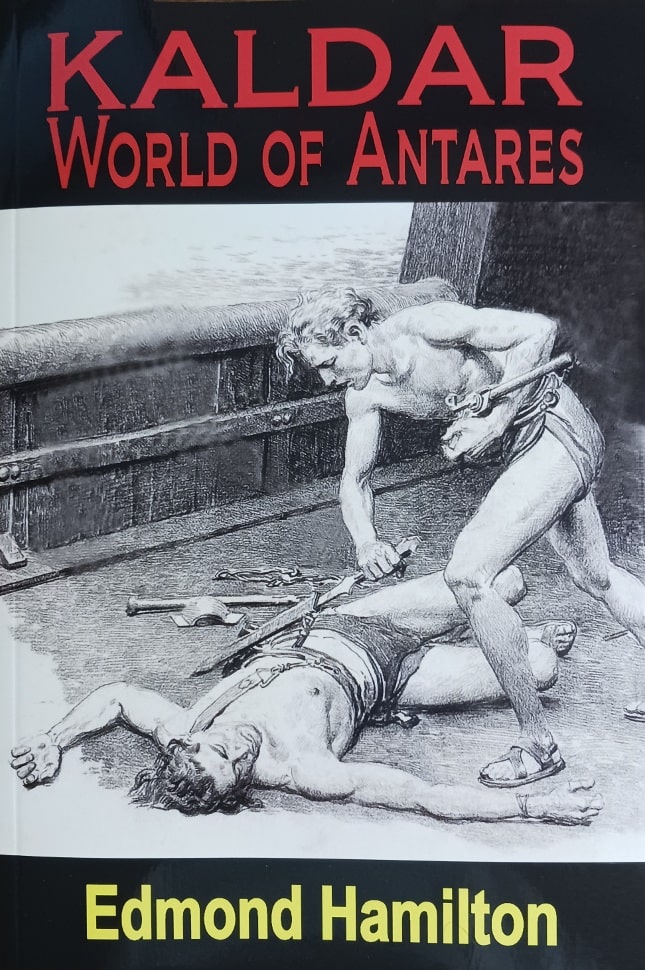
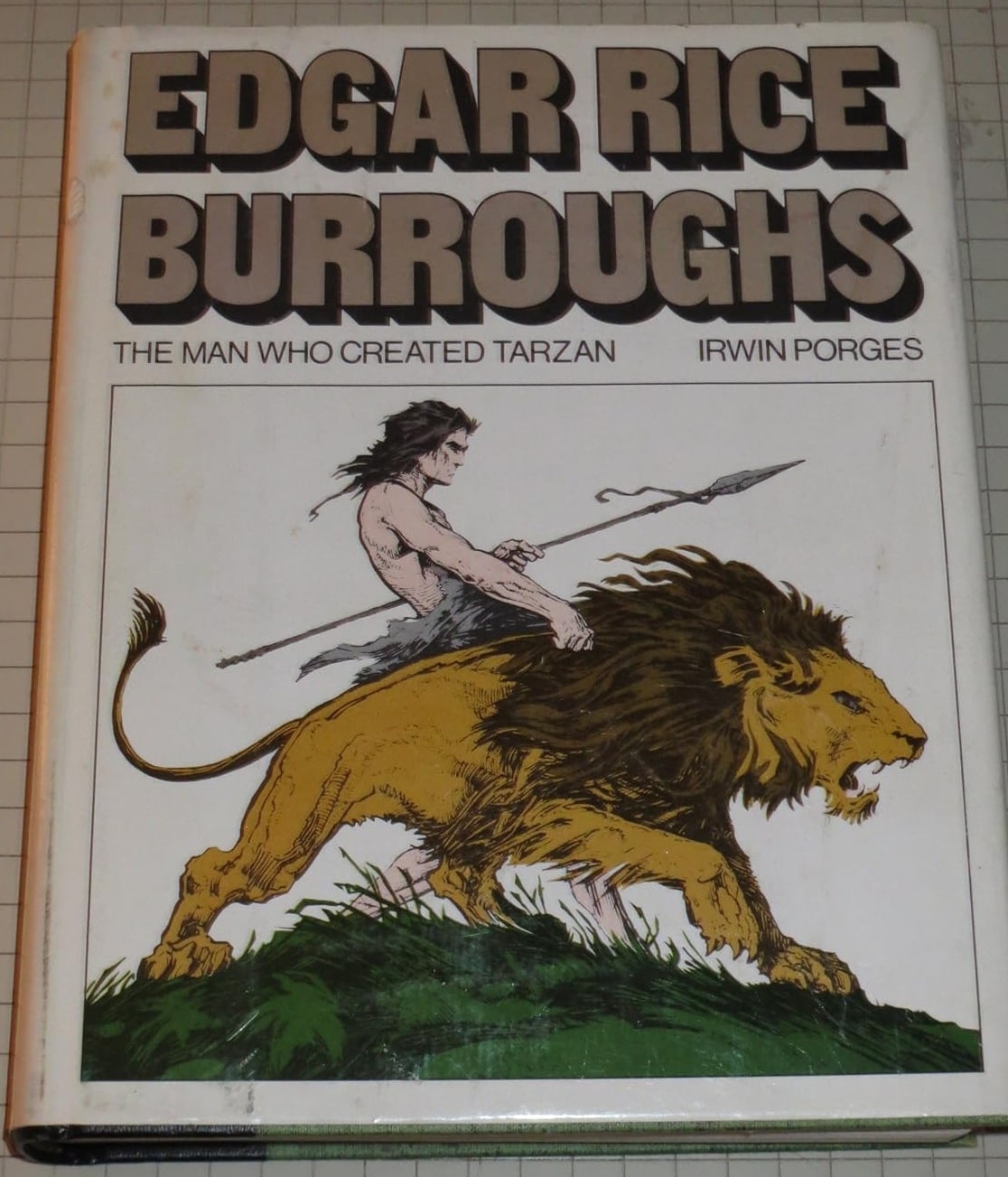
As a couple of bonus pics, I’ve already picked up two books from feedback I’ve received on my posts here. The big tome is a massive biography ERB by Irwin Porges, 1975 from Brigham Young University Press. The second is Kaldar World of Antares by Edmond Hamilton, containing his three Kaldar S&P stories, from Fiction House Press, 2017.
Charles Gramlich administers The Swords & Planet League group on Facebook, where this post first appeared. See all of his recent posts for Black Gate here.
It would be a mistake to judge Peter S. Beagle on the basis of his story in this book. Yes, it is a hatchet job, and I can’t imagine it having been accepted for any reason but the strength of his name and reputation. I can only assume his beef was ideological, or based on a visceral dislike of Burroughs’s work. The ideological factor would presumably be John Carter’s background as a Confederate soldier fighting in defense of slavery (or his state of Virginia, but it’s effectively the same thing), and Burroughs’s casual adoption of and apologia for slavery as an integral feature in Barsoomian society. The dislike might stem from aspects of Burroughs’s writing like (again) the slavery issue, the late nineteenth/early twentieth century imperialistic worldview. the easy assumption of the inate superiority and nobility of the protagonist, the reliance on pulp ethnic stereotype and, coincidence to drive plot, oh, any number of things. Not to mention the cardinal sin of succeeding in spite of (or because of) such faults! But when he isn’t grinding axes, Beagle can be a wonderful writer. If I could single out just one of his books as a must read, it would be The Last Unicorn. Utterly magical, and highly recommended! Incidentally, Beagle is not the only prominent author to ludicrously mischaracterize Carter. L. Sprague de Camp’s Harold Shea story “Sir Harold of Zodanga” (set on Barsoom) portrays an offstage Carter as a vain self-promoter of his own prowess and a myopically gung-ho booster of American capitalism, which … sounds unlikely for a scion of the plantation aristocracy of the Old South, to say the least! Even if not as infuriating as Beagle’s travesty!
I’ve heard good things about the Last Unicorn. It’s not that I will actively discard any Beagle stuff I come upon, but the fact is that I have literally over a thousand unread books in my house, including The last unicorn, and as I go to pick out books to read in the future, his attack on ERB will always be fresh in my mind, which means I’ll probably move on to something else instead. There are many, many deserving books and deserving authors I still have to sample so it’s likely they’ll rise to the top.
I echo Brian Kunde’s recommendation that you do NOT hold this particular story against Peter Beagle. He has written any number of wonderful stories that don’t mess with iconic characters. As Brian suggests, The Last Unicorn is wonderful. So too are stories like “Lila the Werewolf”, “Salt Wine”, “Come Lady Death”, and “King Pelles the Sure”.
I read that anthology back when it came out. I recall particularly liking Theodora Goss’s story.
As I mentioned to Brian, it’s not that I will actively discard or pass over Beagle’s books or works out of spite, which would not hurt him anyway. But because I have so many books and authors I want to sample, they’ve all made their way ahead of Beagle now and I’ll probably never get to his work. Some might suggest that I’d be missing out, but I’m 67. If I read more of his work then who else would I be missing out on? I just got in several books in Randall Garrett’s Gandalara series and haven’t sampled those yet. There’s more good stuff that I’m sure won’t raise my already fragile blood pressure out there.
I know that Gandalara (very little of which is by Garrett) is right up your alley, but to be honest I don’t think it’s all that good. But, hey, tastes vary! I personally think at least a brief examination of Garrett’s best work would be more rewarding.
I am 66 myself, and, yes, the list of books I want to read is longer than the time I probably have remaining! In addition, I find myself wanting to reread many of my favorites.
I’d like to reread more favorites as well but I don’t do that a lot. I’ll probably read the 1st couple of the Gandalara series so I can write about it, but if I don’t find it compelling I’ll likely stop there
Regarding favorites, I have a group of “keepers” – books that I’ve read and greatly enjoyed – but I have asked myself if I will ever read again knowing that I have many more books that I have never read. I have offered them to a friend who reads fantasy but she is not interested in “oldies”. Most were written before 1990. I dislike the thought of donating them, I want to give them to someone who will enjoy them. I will probably challenge myself to reread a 1/2 dozen this year.
I’m still have the point of keeping all the books I’ve read and fortunately my wife allows it, but the time is coming when I won’t be able to. These days i mostly read stuff published before 1990, although I do make exceptions. I have a huge collection of fantasy but if you have ones I don’t own in that collection I might be willing to pay a bit for them.
Hey Charles, I’m hoping you can see my email address (I can’t see yours). If you can, drop me an email (I’m not on social media), I’ll send you the list and be happy to send you some books as a thank you for all the great articles over the years.
I can’t see yours either but let me give you mine here, though it won’t be clickable. Its: cagramlich11 (at) gmail (dot) com
I think I have this on my Kindle or it may be the one they did for Carson of Venus . (I got kinda hooked on Carson for a while, back in the day after reading a Carson comic featured in a DC Tarzan Family Special comic.)
In just this last year, I found myself going back to ERB stories after a decades’ long hiatus.
I’ll have to check this out.
Some of these are certainly very good continuations of the ERB Barsoom stories.