Forgotten Authors: John Taine
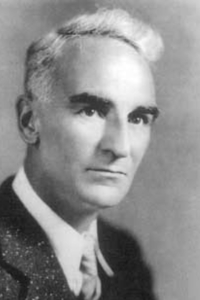
Eric Temple Bell was born in Aberdeen, Scotland on February 7, 1883, but when he was fifteen months old, his family moved to San Jose, California. After his father’s death in January 1896, the family moved back to the United Kingdom, settling in Bedford, England.
Bell was educated at Bedford Modern School, where his was inspired to study mathematics by Edward Mann Langley. He attended college at the University of London for a year before transferring to Stanford University, from which he graduated in 1904. He earned a Master of Arts degree from the University of Washington in 1908 and a Doctorate from Columbia University in 1912.
After graduating, Bell taught at the University of Washington and the California Institute of Technology, focusing on number theory and developed Bell series, which is a formal series used to study properties of arithmetical functions. He also gave his name to Bell numbers, which count the possible partitions of a set.
Beginning in the teens, Bell began to publish poetry under the pseudonym John Taine, collected in Recreations and The Singer, and in 1924, he published the novel The Purple Sapphire, a lost race story, also under the Taine pseudonym. He published eleven novels during the 1920s and 30s, many of which were later serialized in magazines. Four more novels followed in the 1940s and 1950s. At the time his original novels were published, Bell claimed the he was unaware of the genre magazines.
Bell wrote his fiction in spurts during winter break from teaching and during the summers, usually only taking three or four weeks to write each novel.
His first appearance in the science fiction magazines was the publication of “The White Lily” in the Winter 1930 issue of Amazing Stories Quarterly. The story offers both a look at international politics as well as contemplation of silicon-based life forms.
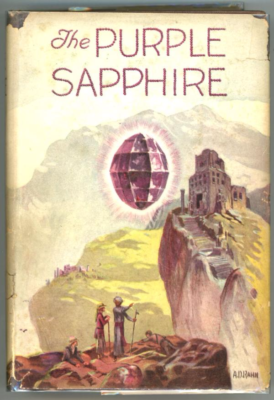 Everett F. Bleiler stated that Taine’s “intricate plotting, detailed exposition, and attempts at character realism” made his work inappropriate for the magazines at the time, but suggested he was the foremost science fiction author of the 1920s. On the other hand, In 1952, Basil Davenport wrote in the New York Times that he was “sadly lacking as a novelist, in style and especially in characterization,” was noting that Taine was responsible for bringing science fiction “out of the interplanetary cops-and-robbers stage.”
In 1931, he serialized the novel The Time Stream in Wonder Stories, although it appears the novel was written ten years earlier. The story postulated a cyclical nature in time and sends the consciousness of people from the future back to 1906 and explores the difference between free will and predeterminism. Often described as confused and hesitant, occasionally contradicting itself, many consider it to be Taine’s best novel.
In a guest editorial published in the March 1939 issue of Startling Stories, Taine explained that he viewed published science fiction stories in the popular magazines to be a way to educate people. He explained that even the wildest stories contained a core of truth that would be remembered by the reader after they had forgotten the plot or characters. In this, Taine may have been naïve or optimistic.
Science fiction remained a side pursuit for Bell, who was awarded the Bocher Memorial Prize I 1924 and was elected to the National Academy of Sciences in 1927 and the American Philosophical Society in 1937. He was elected President of the Mathematical Association of America and held the position from 1931 to 1933.
In 1934, the editor of the Pasadena Star-News asked Bell to write a review of Bell’s The Magic of Numbers as if the review were written by John Taine. Taine complied and a reader complained to the editor, not that Bell reviewed his own book, but that his book was reviewed by a mere science fiction author.
In 1910, while still working on his doctorate, Bell married a widow, Jessie Lillian Smith Brown, a teacher at Yreka High School. Their son, Taine Temple Bell, was born on September 27, 1917. Taine Bell was said to have seen a cross on a church when he was seven and asked his father why there was a plus sign on a building. He became a medical doctor to his father’s chagrin, who was disappointed his son didn’t earn a Ph.D.
After Jessie died, Bell found himself living in a hospital in Watsonville. After setting his bed on fire when he fell asleep smoking a cigar, he was told he could only smoke if someone else was in the room with him. Bell died in the hospital on December 21, 1960.
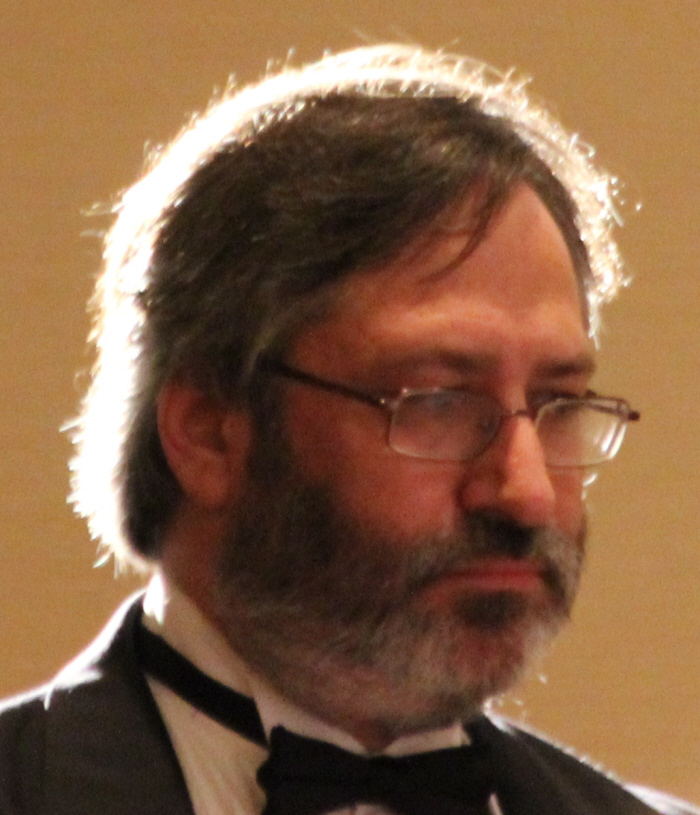 Steven H Silver is a twenty-one-time Hugo Award nominee and was the publisher of the Hugo-nominated fanzine Argentus as well as the editor and publisher of ISFiC Press for eight years. He has also edited books for DAW, NESFA Press, and ZNB. His most recent anthology is Alternate Peace and his novel After Hastings was published in 2020. Steven has chaired the first Midwest Construction, Windycon three times, and the SFWA Nebula Conference numerous times. He was programming chair for Chicon 2000 and Vice Chair of Chicon 7.
I have Dover editions of Taine on my fiction shelves, which gives me five of his novels. I certainly find The Time Stream the most interesting of them, but also the hardest to figure out, with its portrayal of strange worlds that seem not to be planets and its suggestion that humanity emerged on those worlds before coming to Earth. I expect it has some underlying conceptual structure but I’ve never been able to define it. But I find it strangly evocative.
Although I did first encounter him under the “John Taine” pen name, it was under his given name, Eric Temple Bell, that I best learned him, principally from his history of mathematics via biography, “Men(!) of Mathematics”.
And that continues to be true, as I quoted him earlier today, regarding Mathematics being both the Queen(!) of the sciences and its “efficient servant”, as part of a recruiting pitch at my school’s open house for prospective students.