Browsed by
Tag: Forgotten Authors

Forgotten Authors: S.P. Meek
Forgotten Authors: S.P. Meek

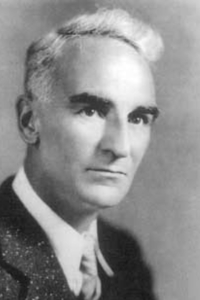
S.P. Meek

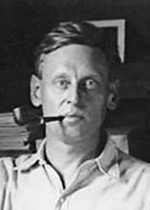
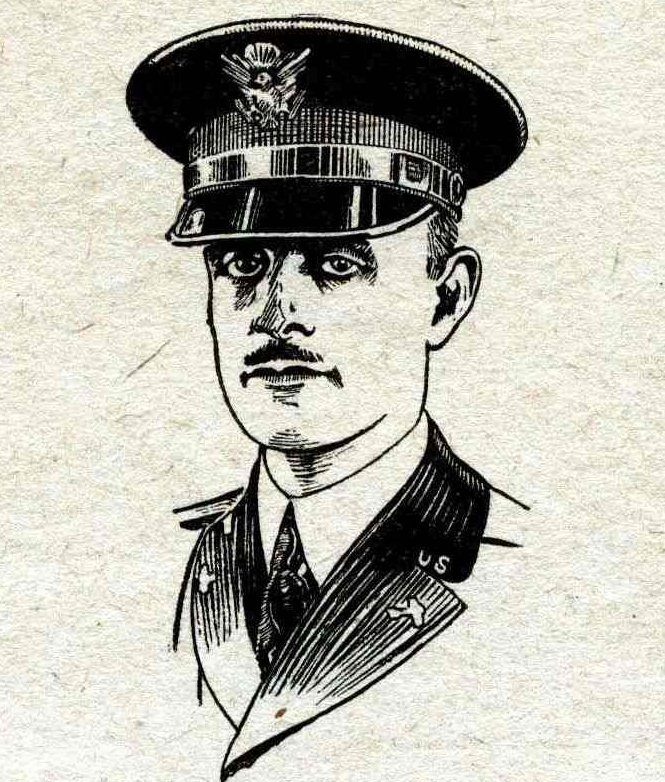
Sterner St. Paul Meek was born in Chicago, Illinois on April 8, 1894. He earned as associate of science degree from the University of Chicago in 1914 and continued his education at the University of Alabama, becoming a member of Phi Beta Kappa and earned a bachelor of science in metallurgical engineering. In 1916, he transferred to the University of Wisconsin, but joined the army in 1917. Although he attended the Massachusetts Institute of Technology between 1921 and 1923, he remained in the army for his entire career.

While attending college, he also served as a football coach at Kirkley Junior College in Texas, as a chemist for the Western Electric Company, and at Deuvitt Laboratories, all of which went by the wayside when he joined the military. Originally stationed in the Philippines, he would go on the direct small arms ammunition research from 1923 to 1926, serve as the chief publications officer for the Ordnance Department from 1941-1944. He retired from the military in 1947 due to disability. He holds patents for tracer ammunition.

Meek married Edna Burnadge Nobel in 1927 and the couple had one son.
Read More Read More

Forgotten Authors: Rosel George Brown

Forgotten Authors: Rosel George Brown

Rosel George Brown

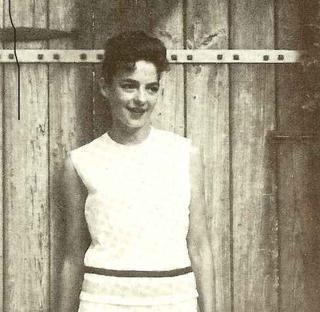
Rosel George was born in New Orleans, Louisiana on March 15, 1926. She attended Sophie Newcomb College and earned a Master of Arts degree in Greek at the University of Minnesota. In 1947, she married W. Burlie Brown, a lawyer who would go back to school in 1949 to earn a Ph.D. in history before joining the Tulane University faculty in 1951. Aside from the period when she was attending graduate school in Minnesota and Burlie was attending graduate school in North Carolina, Rosel George Brown lived in New Orleans. The Browns had two children. For about three years, Rosel worked as a welfare visitor.

Brown began publishing science fiction in 1958 when her story “From an Unseen Censor” appeared in the September issue of Galaxy Science Fiction alongside established authors Isaac Asimov, Damon Knight, Arthur C. Clarke, and Willy Ley. The following year, she published seven additional stories in If, Fantastic Universe, Star Science Fiction, F&SF, Galaxy, and Amazing, demonstrating the ability to sell to multiple editors. In 1959, she was also nominated for the Hugo Award for Best New Writer, alongside Kit Reed, Louis Charbonneau, Pauline Ashwell, and Brian W. Aldiss.

Read More Read More

Forgotten Authors: John Taine

Forgotten Authors: John Taine

John Taine/Eric Temple Bell

Eric Temple Bell was born in Aberdeen, Scotland on February 7, 1883, but when he was fifteen months old, his family moved to San Jose, California. After his father’s death in January 1896, the family moved back to the United Kingdom, settling in Bedford, England.

Bell was educated at Bedford Modern School, where his was inspired to study mathematics by Edward Mann Langley. He attended college at the University of London for a year before transferring to Stanford University, from which he graduated in 1904. He earned a Master of Arts degree from the University of Washington in 1908 and a Doctorate from Columbia University in 1912.

After graduating, Bell taught at the University of Washington and the California Institute of Technology, focusing on number theory and developed Bell series, which is a formal series used to study properties of arithmetical functions. He also gave his name to Bell numbers, which count the possible partitions of a set.

Read More Read More

Forgotten Authors: Doris Piserchia

Forgotten Authors: Doris Piserchia

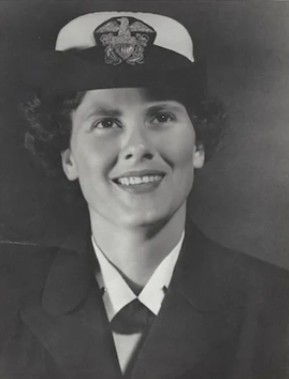
Doris Piserchia

Doris Piserchia was born Doris Summers on October 11, 1928 in Fairmont, West Virginia. She earned a Bachelor of Arts from Fairmont State College in 1950. Although her family expected her to go into teaching, Piserchia had no interested in teaching an instead, after graduation, she served in the United States Navy until 1954, achieving the rank of Lieutenant. While in the Navy, she married Joseph Piserchia, who was serving in the Army. They would have five children. In the early 1960s, Piserchia attended the University of Utah in Salt Lake City, studying educational psychology.

Piserchia’s publishing career didn’t begin until she sold “Rocket to Gehenna” to Joseph Ross at Fantastic, where it appeared in the September 1966 issue. In some ways, “Rocket to Gehenna” was a false start for Piserchia. It is not like any of her other works and she wouldn’t publish again for six years, until “Sheltering Dream” appeared in Worlds of If, which published two more of her stories that year.

The following year, 1973, saw Piserchia break into anthologies with “Half the Kingdom” appearing in Damon Knight’s Orbit 12. She would appear in five successive volumes of Orbit. Her short fiction career, however, was brief, with her final short story, “Deathrights Deferred” appearing in Science Fiction Discoveries, edited by Carol and Frederik Pohl, in 1976, although he story “The Residents of Kingston,” sold to Harlan Ellison, would eventually appear in the J. Michael Straczynski edited Last Dangerous Visions in 2024.

Read More Read More

Forgotten Authors: Robert Moore Williams

Forgotten Authors: Robert Moore Williams

Robert Moore Williams

Robert Moore Williams was born in Farmington, Missouri on June 19, 1907 and attended the Missouri School of Journalism, from which he graduated in 1931 with a Bachelor of Arts in journalism. He married Margaret Jelley in 1938 and they had one daughter. The couple divorced in 1952.

Williams published his first short story, “Zero as a Limit” in the July 1937 issue of Astounding Science Fiction, at the time still edited by F. Orlin Tremaine. Later in 1937, he published a story in Thrilling Wonder Stories, edited by Mort Weissinger, and his third story, “Flight of the Dawn Star” appeared in the March 1938 issue of Astounding, now edited by John W. Campbell, Jr. By the end of 1938, he added Amazing Stories, edited by Raymond A. Palmer to the list of magazines and editors he sold to.

In addition to science fiction, Williams published in a variety of other genres, occasionally using pseudonyms, including John S. Browning, H.H. Harmon, and Russell Storm. He also used the house name E.K. Jarvis on some stories written for the Ziff-Davis magazines, such as “Hickson’s Strange Adventure.” Although Williams was the most prolific (and possibly only) author to use the Jarvis name in the 40s, Robert Bloch used it most often in the 50s, with seven stories appearing under that byline. Other authors to use it included Paul W. Fairman, Harlan Ellison, Robert Silverberg, and Henry Slesar.

Read More Read More

Forgotten Authors: Raymond F. Jones

Forgotten Authors: Raymond F. Jones

Raymond F. Jones was born in Salt Lake City on November 15, 1915. He studied engineer and English at the University of Utah before working as a radio engineer. He later suggested that getting an English degree is one of the worst things a writer could do. He had a reasonable amount of success as an author, with his novel This Island Earth being the work he is best known for. It was adapted into a film in 1955, starring Jeff Morrow and featuring Russell Johnson, who would go on to portray the Professor on Gilligan’s Island, and Richard Deacon, who played Mel Cooley on The Dick van Dyke Show.

According to Jones, he was introduced to science fiction in 1927 when he read H.G. Wells’ War of the Worlds. He decided he never wanted to read it again because he was afraid it couldn’t live up to the “thrill of that first contact with the realm of imagined science.”

After graduating college, he served on a mission in Galveston, Texas and worked installing telephone exchange equipment for Western Electric in Texas, but after marrying Elaine Kimball on June 27, 1940, he took a job with the Weather Bureau to cut down on travel. During World War II, he used his radio engineering degree at Bendix Radio in Baltimore before settling in Arizona after the war.

Read More Read More

Forgotten Authors: H. B. Fyfe

Forgotten Authors: H. B. Fyfe

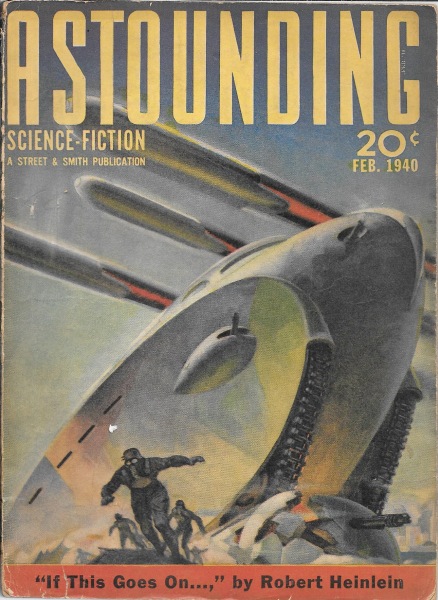
February 1940 Astounding, with Fyfe’s debut story “Locked Out.”

Horace Brown Fyfe, Jr. who published under then name H.B. Fyfe, was born on September 30, 1918 in Jersey City, New Jersey. He was educated at Stevens Academy before attending Columbia University. Fyfe served in World War II and earned a Bronze Star. Fyfe’s day job was working as a laboratory assistant and a draftsman.

Fyfe began publishing in 1940, with the short story “Locked Out,” which appeared in the February issue of Astounding. Later that year, he published the short story “Hold That Comet!” in collaboration with F.H. Hauser. This was Fyfe’s only collaboration and Hauser’s only science fiction sale. He returned to college after the war and married Adeline Doherty in 1946.

Fyfe may be best known for his stories of the Bureau of Special Trading, which featured alien bureaucrats who were generally outwitted by the humans who they were attempting to stymie. His novel D-99, was unrelated to the BTS series, but it was similar in tone, although Rich Horton commented “That whole aspect of the book is wildly sexist, in a vaguely Mad Men-ish fashion.” Given that Campbell appreciated stories that demonstrated human superiority to aliens, it isn’t surprising that Fyfe’s fiction found a home in Astounding and Analog.


Read More Read More

Forgotten Authors: George Allan England

Forgotten Authors: George Allan England

George Allan England

George Allan England was born in Fort McPherson, Nebraska on February 9, 1877. He attended Harvard University, where he earned Bachelor of Arts and Master of Arts degrees. In 1903, he published Underneath the Bough: A Book of Verses. His first published science fiction story was “The Time Reflector,” which appeared in the September 1905 issue of The Monthly Story Magazine, edited by Trumbull White.

He published numerous short stories throughout the 1910s, which his novels Darkness and Dawn, Beyond the Great Oblivion, and The Afterglow being serialized in The Cavalier, between 1912 and 1913 and published by Small, Maynard & Company in 1914. These novels, set in 2915, a thousand years after “The Great Death” killed most of the human race during the 1920s. England’s protagonist, Allan Stern and his secretary survived the Great Death in a form of suspended animation, waking up to the new world.

Read More Read More