Browsed by
Category: Blog Entry

Art of the Genre: Art of the Iconic Female #2; The Succubus
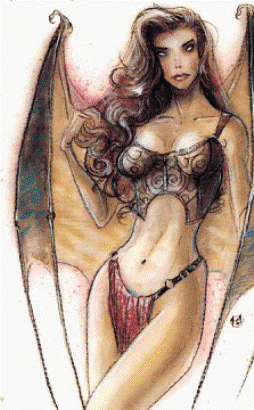
Art of the Genre: Art of the Iconic Female #2; The Succubus

Tony DiTerlizzi does the Succubus right for AD&D's Planescape!

I can’t tell you for sure the first time I saw a succubus, but I’d lay money that it was in the 1st Edition Advanced Dungeons & Dragons Monster Manual. The image there, done by David C. Sutherland III, has been the subject of much debate over the years [Supposedly it’s based on this picture of Sheila Mullen, a Playboy Playmate from May 1977], but one thing no one can argue is whether or not it’s sexually inspiring to teenage boys. For that, the answer is an obvious YES!

This sexuality is certainly the key to making the succubus an Iconic Female, and there is little doubt that countless images of feral succubus abound in any fantasy setting worth its salt. For my own fantasy gaming succubus legends, I have a couple, but I suppose my most famous comes not from the succubus herself, but from a succubus’s torrid affair with a Drow wizard that produced an Alu-demon known only as Mithelvarn’s Daughter. This character inspired a deep affection for Alu-demons which first appeared in Monster Manual II and were drawn by Harry Quinn. That tome described them as the offspring of a mating between a succubi and a human, and that these progeny are always female. Cambions, for all you playing a copy of the home trivia game, are the product of a human female mating with a demon, and they are always male.

Still, other than D&D trivia, what do we really know about the succubus other than she’s inherently hot? Well, I did a bit of digging, and what do you know, I found that there is a reason, other than sexual attraction, for me to like a good old-fashioned succubus.

You see, as far as I can tell, Succubi are really old, like the dawn of history old. When you start reading society keywords like Mesopotamian or Babylonian, you know you are getting serious about a demon’s age. In those cultures, they had references to a dream-haunting demon named Lilitu, but it isn’t until the early Jewish faith breaks onto the scene that we find Lilith, the presumed first ‘modern’ succubus, mentioned in the Babylonian Talmud. Here, Adam, product of God that we know in the Christian Bible, takes Lilith as his first wife since she was created from the same earth as he. It isn’t until he breaks with Lilith because she refuses to become subservient to him that Eve is created from Adam’s rib, and therefore a part of man instead of his equal.

Read More Read More

The Best of Modern Arabian Fantasy, Part I: Howard Andrew Jones and The Desert of Souls

The Best of Modern Arabian Fantasy, Part I: Howard Andrew Jones and The Desert of Souls

howard-picThe Middle East has produced some world famous mythology and is fertile ground to base a fantasy novel, as more and more authors are discovering. Over the next several posts I will be exploring this modern day trend and interviewing many of the authors who are mining the lore and culture of the Middle East, and specifically the Arabian Middle East for their work.
My first interviewee is Howard Andrew Jones who sets his novel, The Desert of Souls, in the 8th Century, when the Abbasid caliphate was a center of trade, culture, and learning. In the following interview, I’ve asked Howard what drew him to this particular cultural milieu and how he went about doing the research necessary to create characters and compose their adventures.

Read More Read More

New Pulp Fiction for Our New Hard Times

New Pulp Fiction for Our New Hard Times

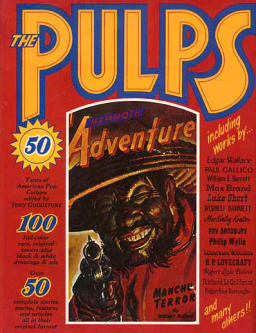
the-pulpsPulp fiction is back — in print, online, in ebooks, and on iPads. Tough guys, tough women, tough prose, action and more action, blood and thunder, heroes and villains presented unapologetically as heroes and villains.
And why not? Why not have as much blood and thunder as we can handle right now, given that the last time we saw this much imaginative raw prose in the hands of readers, we were in the hard times of the early 1930s?

Fans of the original old, tough, wild pulp stories have always been here, collecting the magazines when they found them at garage sales or at science fiction conventions. But after the heyday of these magazines in the 1930s and 1940s, popular fiction in the 1950s and 1960s changed and moved on to paperbacks and digest zines and television shows.

By then, though, pulp had lost some of its edge. In the postwar boom, it became less than it had been, in the same way that the antics of rough early vaudeville, for example, changed as the routines moved to radio and then to early television and then to sitcoms.

The early 1970s saw a boom in nostalgia for the real stuff from the 1920s and 1930s — just in time for the very serious recession then. That’s when you found remaindered copies everywhere of Tony Goodstone’s big old coffee table book The Pulps, still the best introduction to the popular fiction of hard times and war time. Tons of great stories were brought back, and Bette Midler’s Songs for the New Depression sold right alongside paperback reprints of the Shadow and Doc Savage and Max Brand.

We’re back there now. We’re in the Lesser Depression, as Paul Krugman has identified it. And just as in the hard times of the early 1970s and the very hard times of the early 1930s, pulp fiction is here to fulfill its commitment to giving us outlandish, big top entertainment.

Read More Read More

Clarkesworld #67

Clarkesworld #67

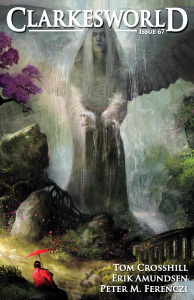
cw_67_300The April  issue of Clarkesworld is currently online. Featured fiction: “Fragmentation, or Ten Thousand Goodbyes” by Tom Crosshill, “Draftyhouse” by Erik Amundsen and “The Womb Factory” by Gary Kloster.  Non fiction by Brian Francis Slattery, Jeremy L.C. Jones and Danile Baker.  The cover art is by Steve Goad.
All of this is available online for free; there’s even an audio podcast version of the Crosshill story read by Kate Baker. However, nothing is really free. The magazine is supported by “Clarkesworld Citizens” who donate $10 or more. There’s also a Kindle edition.

We last covered Clarkesworld with issue #66.

Blogging Sax Rohmer’s The Yellow Claw – Part Two

Blogging Sax Rohmer’s The Yellow Claw – Part Two

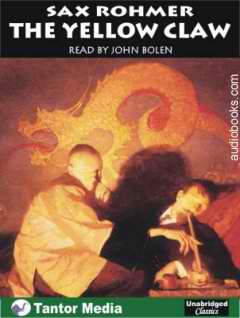
yellow-claw-jackettantor1Sax Rohmer’s The Yellow Claw was originally serialized in five installments in Lippincott’s from February through June 1915. The serial was subsequently published in book form later that same year by Methuen Press in the UK and McBride & Nast in the US. The novel chooses to divide the story into four sections. This week, we examine the second part.

Rohmer shifts gears unexpectedly by focusing Part Two of the novel on Soames, the Leroux butler who skipped out when Inspector Dunbar arrived at his employer’s home to investigate a murder. We learn Luke Soames fled because of his chequered past (he was dismissed by his previous employer for theft) that led him to falling prey to the sinister Mr. Gianapolis who arranged for Soames’ employment in the Leroux household. Soames is aware that Mr. Gianapolis works for a mysterious Mr. King who has some secret connection to Mrs. Leroux, but for awhile Soames is content to question little and perform the few curious extra duties that Gianapolis requests of him.

When Soames learns of a dead woman in his employer’s home and the arrival of Inspector Dunbar, he panics and flees fearing his criminal past will be uncovered by the detective. Coming to his senses, he contacts Gianapolis. The Greek takes him into Mr. King’s household and tells him he will find other employment for him, but warns him that if he fails them again, he will be handed over as an accessory to murder. Soames recognizes the fact that Gianapolis has complete control over him for without Gianapolis and the mysterious Mr. King who employs him, he would be a ruined man.

Read More Read More

Amazon.com Announces Pre-Orders for J.K. Rowling’s The Casual Vacancy

Amazon.com Announces Pre-Orders for J.K. Rowling’s The Casual Vacancy

rowling1Amazon.com has announced that J.K. Rowling’s next novel, The Casual Vacancy, will be available September 27.

From the description it’s not immediately clear if the book has an fantastic elements at all, and in fact it may be a straight-up literary thriller:

When Barry Fairweather dies unexpectedly in his early forties, the little town of Pagford is left in shock. Pagford is, seemingly, an English idyll, with a cobbled market square and an ancient abbey, but what lies behind the pretty façade is a town at war. Rich at war with poor, teenagers at war with their parents, wives at war with their husbands, teachers at war with their pupils…. Pagford is not what it first seems. And the empty seat left by Barry on the town’s council soon becomes the catalyst for the biggest war the town has yet seen. Who will triumph in an election fraught with passion, duplicity and unexpected revelations? Blackly comic, thought-provoking and constantly surprising, The Casual Vacancy is J.K. Rowling’s first novel for adults.

The Casual Vacancy will be published in hardcover for $35 by Little, Brown and Company on September 27, 2012. No details on page length are available, and the publisher has not yet released the cover art.

Complete details on Amazon.com here.

Goth Chick News: Vampire Novel of the Century? I’ll Be the Judge of That

Goth Chick News: Vampire Novel of the Century? I’ll Be the Judge of That

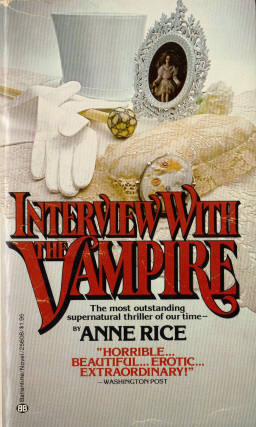
interview-with-vampireLast week, beloved editor and big cheese John O’Neill told you about the 2011 Bram Stoker Award winners which included what I consider a travesty of justice perpetuated on the vampire-genre-loving community by the Horror Writers Association (HWA).

In January the HWA, an international association of writers, publishing professionals, and supporters of horror literature, in conjunction with the Bram Stoker Family Estate and the Rosenbach Museum & Library, announced the nominees for the one-time-only, Bram Stoker Vampire Novel of the Century Award.  The Award was to mark the centenary of the death in 1912 of Abraham (Bram) Stoker, the author of Dracula.

A jury composed of writers and scholars selected, from a field of more than 35 preliminary nominees, the six vampire novels that they believe had the greatest impact on the horror genre since publication of Dracula in 1897.

Eligible works must have been first published between 1912 and 2011, and published in or translated into English.

Beyond this, the criteria for consideration seem a tad vague, but from the descriptions of the six finalists described by the HWA, here are the other points considered.

Read More Read More

Art of the Genre: House Davion and the Federated Suns

Art of the Genre: House Davion and the Federated Suns

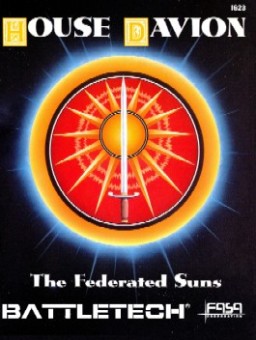
House Davion, everything you could want from a gaming history text
You hear strange things sometimes in this business, rumblings, rumors, and empty promises, but I have to say one of the best of the past year was a possible FASA reunion for what would have been the company’s 30th Anniversary at GenCon this August.

I mean, can you imagine it? Bradstreet, Deitrick, Laubenstein, Nelson [all three of them], Aulisio, Berry, Marsh, Harris, MacDougall, Holloway, Elmore, and countless others all sitting around a booth with countless Shadowrun, Earthdawn, Star Trek, and Battletech memorabilia and artwork? I mean, even Jordan Weisman would probably show up so someone could write him a check for something.

It would have been a lofty enterprise, and I can’t imagine the line waiting for signatures at that station, or the books that would be held in the hands of the throngs of fans. I run the fan page on Facebook for both Laubenstein and Deitrick, so I know they were into the idea, but unfortunately it fell flat after initial interest in the idea came forward back in September 2011.

Still, thinking about all the incredible artwork these artists put out in their tenure made me grab down one of my absolute favorite FASA supplements, House Davion and the Federated Suns, for the Battletech RPG.

I did a post last year about John Wick and his creation of the ‘Way of’ books for 1st Edition L5R and stated that there was only one other collection of gaming supplements that could match them for incredible written content. Those, of course, were FASA’s House books, and as a historian I still get giddy about reading a thousand and eleven year alternate future.

Read More Read More

The 2012 Hugo Award Nominations

The 2012 Hugo Award Nominations

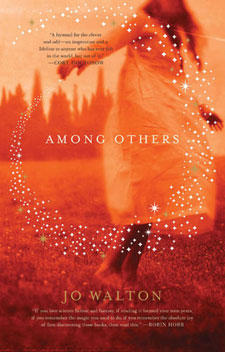
among-othersThe nominations for the 2012 Hugo Awards have been announced by Chicon 7, the 70th World Science Fiction Convention. Chicon 7 will be held over Labor Day weekend right here in Chicago. The nominations are:

Best Novel

  • Among Others by Jo Walton (Tor)
  • A Dance With Dragons by George R. R. Martin (Bantam Spectra)
  • Deadline by Mira Grant (Orbit)
  • Embassytown by China Miéville (Macmillan / Del Rey)
  • Leviathan Wakes by James S. A. Corey (Orbit)

Best Novella

  • Countdown by Mira Grant (Orbit Short Fiction)
  • “The Ice Owl” by Carolyn Ives Gilman (The Magazine of Fantasy & Science Fiction, November/December 2011)
  • “Kiss Me Twice” by Mary Robinette Kowal (Asimov’s, June 2011)
  • “The Man Who Bridged the Mist” by Kij Johnson (Asimov’s, September/October 2011)
  • “The Man Who Ended History: A Documentary” by Ken Liu (Panverse 3)
  • Silently and Very Fast by Catherynne M. Valente (Clarkesworld / WSFA)

Complete list after the jump.

Read More Read More

Zero Fantasy

Zero Fantasy

Ten thousand gallons of virtual ink have already been spent on the subject of cliché elves’n’dwarves’n’rogues’n’rangers fantasy.  But here’s a few droplets that I think are worth noting.

A photo of Yahtzee taken at his Swedish manorhouse

Ben “Yahtzee” Croshaw, for those not fully assimilated into the etherium of the web, is a popular reviewer of games and maker of funny videos.  He’s also the author of Mogworld, which I haven’t read.  Anyway, in his recent video review of the fantasy RPG Kingdoms of Amalur, he introduces a point which he expands on in the first few paragraphs of this essay.  Why does fantasy, theoretically the genre of limitless possibilities, so often fall back on the same stock elements (elves, dwarves, pseudo-Europe, fireballs, etc.)?

Now, here’s the thing: I think Yahtzee is largely arguing against a historical problem, at least when it comes to books.  Gaming may be different, with Dragon Age, Skyrim, and World of Warcraft riding high on a post-Tolkien wave of their own.  But when it comes to books, I’m honestly not seeing much of the cliché elf and dwarf pie being produced.

There are certainly shared universes, whether they be roleplaying settings like Pathfinder or Eberron, or the enormous line of Black Library titles for Warhammer and Warhammer 40K, but they don’t make any claims to originality of setting or trapping.  Many of those books tell great stories with memorable characters, but they do so with familiar elements and surroundings, and pretend to do more.  There’s something comforting about that, actually, and I rather enjoyed the only Pathfinder novel I read.

But in the wider world of fantasy, I’m just not seeing a glut of elves and dwarves or anything that’s recognizably derived from D&D.  I’m seeing Brandon Sanderson, Jim Butcher, Brent Weeks, and  Harry Conolly, James Enge and John C. Wright and Scott Lynch.  Well, okay, Enge has dragons and dwarves, but no one would mistake Morlock’s world for Forgotten Realms.

Read More Read More