Disclaimer: This article will reference some scenes from The Avengers film. While I’ve tried to avoid specific spoilers about major twists, there are some things that give away plot elements and twists from the other Marvel Comics movies, such as Thor.
If you are a writer, be sure that you get a receipt when you go to The Avengers, because you should be claiming it as a work-related research expense on your taxes this year. (This should not be considered tax advice. Please consult with your tax preparer before making financial decisions.)
There has been no shortage of digital ink spilled gushing over how great the movie is. I’ll provide a link to some of the highlights below if you want to delve into the film itself. However, I wanted to go beyond discussing The Avengers as purely a viewing experience, but to focus on a couple of elements that writers can best take away from it.
Pioneering silent film director, Louis Feuillade rose to prominence with his stylish 1913 serial, Fantomas which faithfully adapted five of Pierre Souvestre and Marcel Allain’s bestselling pulp thrillers. Feuillade next succeeded in fashioning an enthralling original story based around the Apache street gang which figured prominently in the Fantomas series. Les Vampires are led by the vampish Irma Vep, played by the exotic Musidora (France’s answer to Theda Bara). The 1915 serial was hugely successful and was a highly influential work in its day. Feuillade was tasked with the challenge of trying to follow up these two successes with a third commercial property.
Responding to the criticism that his films glorified crime and violence, Feuillade turned to author and playwright Arthur Bernede for help. Together they crafted a pulp vigilante dressed in a dark cloak with his face partially obscured by a slouch hat. Judex, Latin for “judge,” fought crime with his loyal brother, Roger and a menagerie of amazing beasts and an assortment of colorful companions by his side. These and Judex’s gadget-filled secret lair and private plane had a tremendous influence on the burgeoning pulp fiction market in England and America.
Two versions of Snow White, TV sitcoms remade for the big screen and (stop me before I hurt myself) the re-release of Titanic…
Think there’s no originality left in Hollywood?
Microsoft apparently agrees with us but is thankfully smart enough not to try and fix it themselves.
Instead they enlisted the talents of Shaun of the Dead director Edgar Wright and Marvel and Lucasfilm illustrator Tommy Lee Edwards (famous for his work on the Batman and Hellboy comics) to create a very cool entertainment concept in the form of an interactive animated story called The Random Adventures of Brandon Generator, launched April 12th.
Visitors to the site will get a seven-minute video that explains the story of our hero Brandon Generator, who is having severe writer’s block. One dark night after too much coffee, Brandon wakes from his caffeine-induced blackout to discover prose, sketches and ideas on his Dictaphone that he did not remember leaving.
And you get to provide one or all of those elements.
I don’t even remember what my last post was. Mea culpa, mea culpa; I was moving across the country, I was getting a job with some Beluga whales, I was joining a writing group, I was traveling to places I’d never been before, I was reading other people’s fledgling novels and trying to come up with some kind — any kind! — of useful crit for them, I was writing up a storm.
(Several storms. Big magical brouhahas*, with silver clouds and dark lightning and dead swans and such.)
Woe is me, these things are hard, man! But enough of this moaning and groaning. I’m back now, see? And I’ve been reading.
You know that thing that happens when suddenly you realize how busy you’ve been because you haven’t picked up a book for the sheer pleasure of reading in a while? There are many joys in reading other people’s early drafts of things that are going to turn into magnificently faboosh final drafts, but one of the downers is that when I’m doing that, I feel guilty reading anything for fun. And I’m a fast reader; I’m just a slow dang beta-reader.
However! Last week, I found myself at the Westerly Public Library, a place of golden beauty and polished staircases, browsing. Browsing, I tell you! Do you know how that felt?
Last week I began my review of Pavis – Gateway to Adventure, the new RPG supplement from Moon Design Publications for its HeroQuest roleplaying game in the fantasy world of Glorantha, with a bit of history of this greatest of RPG cities, and an overview of what this massive new book contains. This week, I’d like to look at the book’s content in far more detail, with a chapter-by-chapter breakdown of just what you get in its 416 pages.
Chapter by Chapter
To begin with, the book’s cover is a nice full colour painting depicting a priest of the cult of Pavis, the city god, atop the ziggurat-like temple of Pavis in the new city, facing east over assembled city-folk and worshippers as the sun rises. In contrast to the green and earth tones of the previous two Sartar books, the cover is predominantly pinks, purples, and greys, emphasizing the hazy, desert-like environment of the city. It gives a feel for the predominance of religion – and religious intrigue – in the city.
After credits, contents, and introduction sections, the book launches straight into “Making Your Character”. If you have Sartar: Kingdom of Heroes, you’ll know what to expect here; except that in addition to the Sartarite settlers of Pavis County, there are also HeroQuest keywords and character creation guidelines for Old Pavisites, Sun Domers, Zola Fel Riverfolk, and even Lunar Settlers.
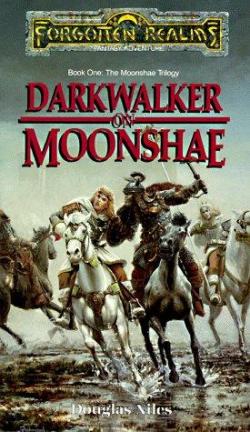
Can either Keith Parkinson or any artist from a gaming novel crack this list?
There is a line from the band ELO‘s song Ticket to the Moon, on their concept album Time, that says,
Remember the good old 1980s, when things were so uncomplicated, I wish I could go back there again, and everything could be the same…
I can’t listen to that album [and yes, I listen to ELO often, sue me] without having those words haunt me. You see, the 1980s were ‘my’ time. We all have this period, the decade from childhood to young adult that is seemingly perfect. I went from 9 to 19 in that decade, and it was pure unadulterated magic.
In that time I seemed to be playing GI Joes in my sandbox, blinked, and was attending my senior prom. I can’t tell you where the time went, just that it still resonates in my memory with a warm fuzzy feeling because it was all about me. I mean, isn’t that what your teens should be, a time all about you? There are no mortgages, monthly bills, children to ferry about, wives or husbands to cater to. Sure, there’s school, gas money, some relationship hassle, and a summer job, but realistically that’s window dressing to a period in which you can explore nearly anything you wish and are encouraged to do so.
So, that being established, it isn’t hard to imagine that I see everything that happened in the 1980s with rose-colored glasses. This can certainly be said about the literature of the era. Now given, I’ve gone back and reread a few books from my youth, and each time the shine isn’t what it was on first reading, but nonetheless, the art on those book covers still retains the luster of a bygone age.
It was in the 1980s that I first fell in love with fantasy art, and to a certain degree science fiction art, although I think that particular genre was waning as fantasy came into full bloom with the advent of Dungeons & Dragons. To me, there is nothing better than what I found on the shelves in those years, each title laying the foundation for my life in a profound and lasting way.
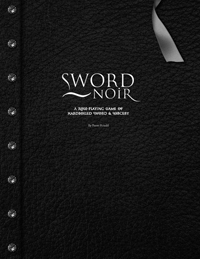
Back in 2004, a friend and I decided to become role-playing game publishers, possibly for the wrong reasons – we wanted publish our stuff rather than wanting to be publishers. Given that, we still went forward in as professional a manner as possible.
While we established Sword’s Edge Publishing as a business, I’m afraid I ran it as hobbyist. I made decisions based on my interests and enthusiasms. I should have been looking to build the brand and increase SEP’s audience. In the end, when I lost interest, SEP went to sleep.
It has only recently returned to bring forth some new games, and then quickly returned to its slumber. This last year, from April 2011 (when it released Sword Noir) to January 2012 (when it released the adventure Suffer the Witch), SEP did things a little different than it had before.
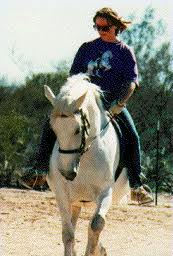
No series on the best of modern Arabian fantasy would be complete without going back to the book that many credit with starting the whole trend, Alamut by Judith Tarr.
I had the privilege of talking with Judy about the book and her process for research and writing, and her answers are insightful and fascinating. In what follows, I ask how she took her strong academic background and applied it to building the world and characters that captured the fascination of readers and writers alike.
She lists her favorite source materials and works of Middle Eastern literature that she’d recommend to readers today, and gives us a sneak peek into her exciting, upcoming projects, which also will feature the setting and culture of the Middle East.
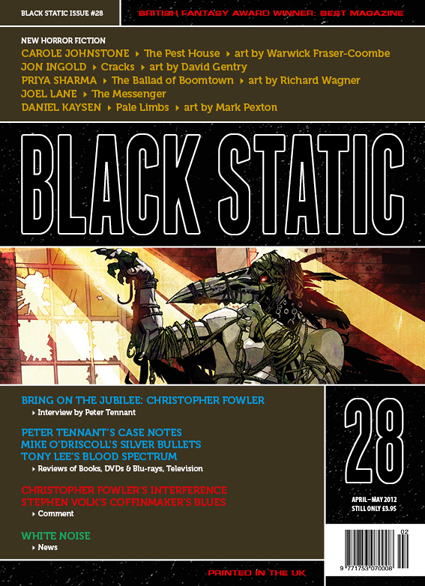
The April-May Black Staticfeatures new horror fiction from Carole Johnstone (”The Pest House”), Jon Ingold (”Cracks”), Priya Sharma (”The Ballad of Boomtown”), Joel Lane (”The Messenger”) and Daniel Kaysen (”Pale Limbs”).
Nonfiction by the usual suspects, Peter Tennant, Christopher Fowler, Tony Lee, and Mike Driscoll. The editor is Andy Cox.
Black Static alternates monthly publication with sister SF and fantasy focused Interzone.
I’m sure I’ve mentioned TSR’s Oriental Adventures on more than one occasion from my soap box of a blog. This book is the only 1E D&D book I have with water damage because the day I bought it I was so enthralled that I thought I could take a bath while reading it [bad idea].
Anyway, from that moment forward I was deathly intrigued by the Orient, be it Kara-Tur in the Forgotten Realms, the T’ung in my home brew world, the non-magic stage of feudal Japan in Bushido, or of course the realms of Rokugan in Legend of the Five Rings.
Three weeks ago, as my six-year old son broke apart a flex pole tent system and began using it as a weapon, I had the pleasure of showing him firsthand what a three piece staff looked like in the Oriental Adventures book, making it also a fine teaching tool as well as a gaming supplement.
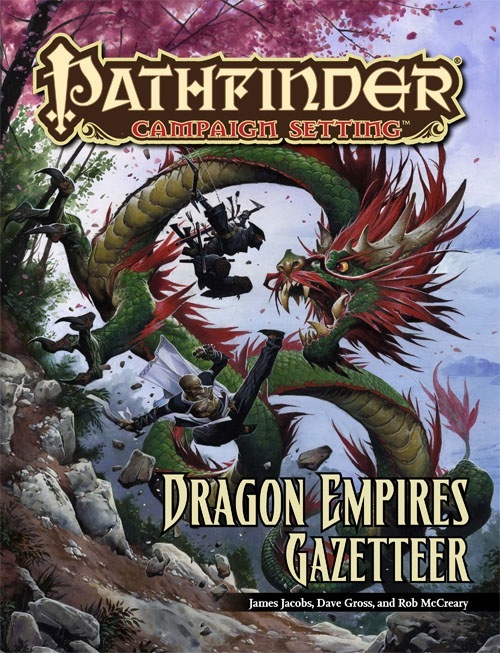
Therefore, you can well imagine my unchecked delight to find that Paizo was not only producing two source books for their Pathfinder system concerning the Orient in Golarion, but also a full Adventure Path that dealt with the region.
In this article I’m going to talk a bit about three outstanding products newly released in the past six months from Paizo concerning their Dragon Empires setting. …
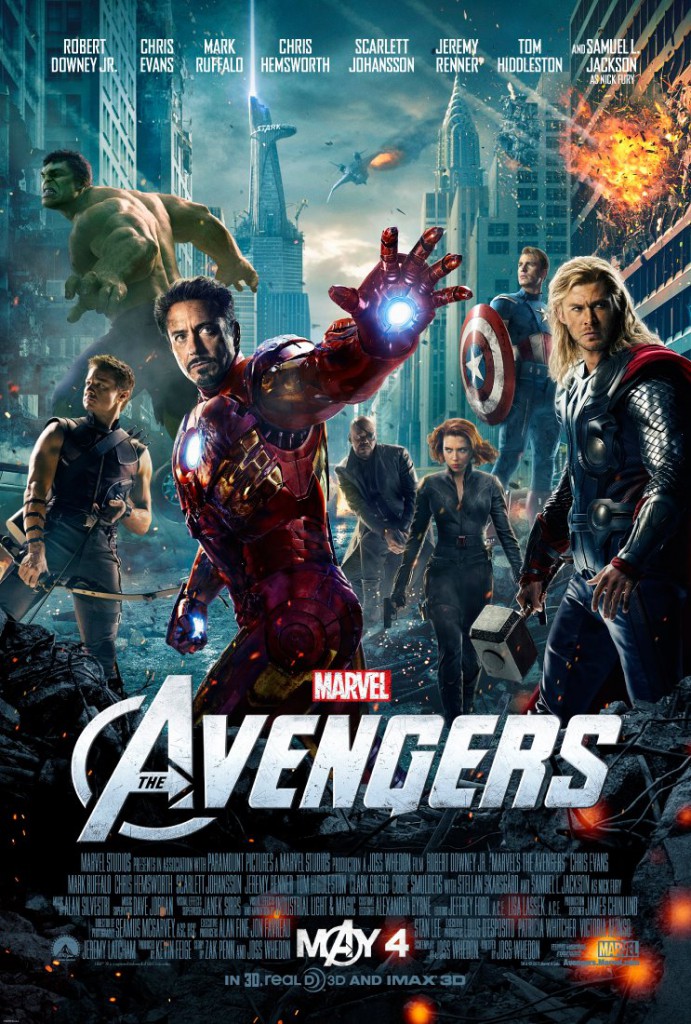 Disclaimer: This article will reference some scenes from The Avengers film. While I’ve tried to avoid specific spoilers about major twists, there are some things that give away plot elements and twists from the other Marvel Comics movies, such as Thor.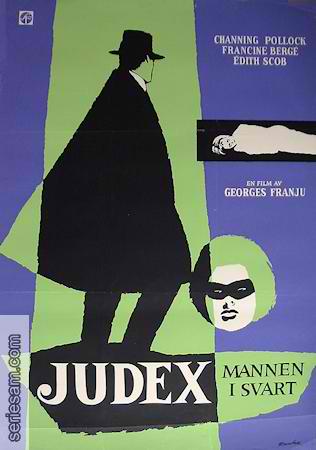

 Dear Black Gate readers,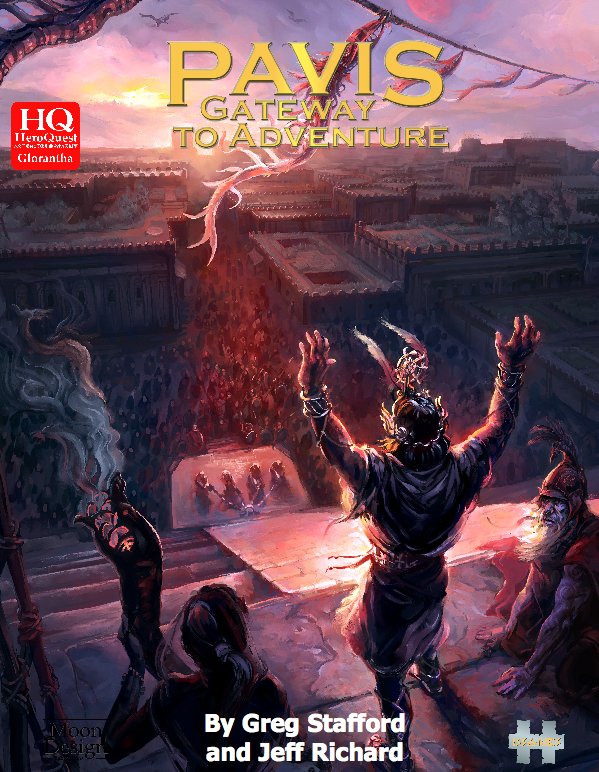
 Back in 2004, a friend and I decided to
  No series on the best of modern Arabian fantasy would be complete without going back to the book that many credit with starting the whole trend, Alamut by Judith Tarr.
 The April-May
  as a young boy.