Browsed by
Category: Blog Entry

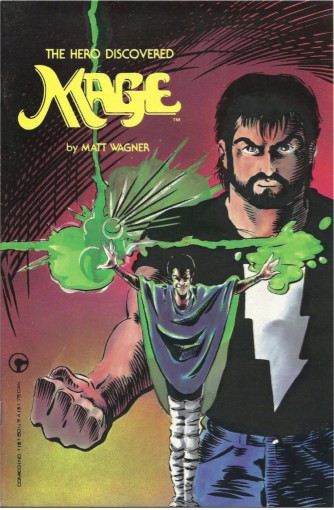
Mage: The Hero Discovered by Matt Wagner
Mage: The Hero Discovered by Matt Wagner

mage-the-hero-defined1It’s nothing new: taking old mythic tropes and adapting them to modern-age stories. The social commentary thinly-veiled as mysticism, the peek-a-boo mythology references, the obligatory explanation for why most people in our modern times don’t notice magic, the unassuming youth who will one day become a great hero … we’ve all read them.  he secret is in the execution.  How well is this ancient story re-told? How compelling are the characters? Are the truths revealed deep or trite?

Matt Wagner was only twenty-two when the first issue of Mage was published and it’s surprising that someone so young could write something both this introspective and this self-aware. His hero, Kevin Matchstick, is already a cynical, disillusioned man at the story’s beginning. He acts like a man who already has the weight of the world on his shoulders, yet has no true responsibilities. It’s telling that the mysterious wizard who approaches him with news of his great potential is named Mirth. The journey that follows over the next fifteen issues concerns Kevin’s quest to understand and fight forces of supernatural evil; but it’s just as much Mirth’s quest to make Kevin stop being a jerk. The adage that the only thing evil needs to succeed is for good men to do nothing rings through this series.

Kevin, Mirth, the supporting cast and even the incidental characters are written with a surprising depth. No one is merely a follower (on the side of good or evil), each having his or her own reasons for the decisions made. The storyline is equally divided between action scenes and “downtime” where the heroes relax and talk about how they see the world and their place in it. The baseball-bat-wielding Edsel and supernatural civil servant Sean Knight work just as hard to guide Kevin towards self-discovery as they do covering his back during fights with quintuplet casino bosses, hordes of redcaps and the occasional succubus. They also have to face down a dragon. And a staple gun.

This series has been in and out of print for years and a collected edition shouldn’t be difficult to find. But if you have the means, definitely find a comic shop that carries the original back issues. There you’ll get the letter page debates on the nature of magic and morality, Matt Wagner’s comments on the state of the comic industry and the amazing Grendel stories (originally published in the back of each issue as a series of four-page mini-stories). Volume One is subtitled The Hero Discovered. Fifteen years later, there were another fifteen issues subtitled, The Hero Defined. And, someday, we may see the final volume, “The Hero Denied”. Until that day, magic is green.
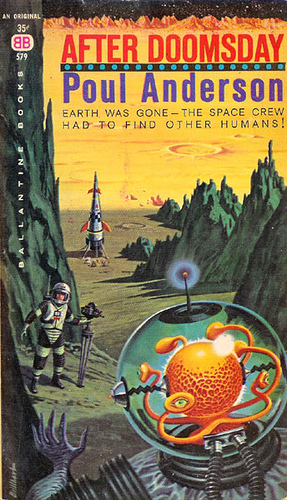
Vintage Treasures: Poul Anderson’s After Doomsday

Vintage Treasures: Poul Anderson’s After Doomsday

after-doomsdayI’m putting away all the paperbacks that arrived with my two Philip K. Dick lots, and I stumbled across the fabulous artifact at right.

After Doomsday was published by Ballantine Books in 1962, two years before I was born. It was originally serialized in Galaxy magazine (as The Day after Doomsday) between December 1961 and February 1962.

What truly makes it fabulous isn’t just the great cover art by Ralph Brillhart, with a bug-eyed alien stumbling on some guy surveying a road during his evening constitutional. No no no. It’s this wonderful description on the back cover:

CARL DONNAN was a space engineer — a man of action who did his job well and didn’t think much beyond that — but now his home planet was destroyed and he found himself with two burning ambitions:

– FIND the beings who blew up the Earth.

– SEARCH the galaxies until they located another Starship with female humans aboard.

BOTH PROJECTS were vital to the survival of the human race — and both were monumental tasks.

THIS was the time when the galaxies discovered how grim and purposeful a handful of homo sapiens could be.

A starship with “female humans” aboard. I think the first task for this guy Carl should be to look up “female humans,” find out they’re called “women,” and then put an ad on Craig’s List. The survival of the species is on your shoulders, dude. Time to put down that survey equipment and pick up a clean shirt. And maybe some mouthwash.

There’s a lengthy plot synopsis of After Doomsday here. Don’t expect it to be as entertaining as that back cover copy, though.

Vintage Treasures: TSR’s Amazing Science Fiction Anthologies

Vintage Treasures: TSR’s Amazing Science Fiction Anthologies

amazing-the-wonder-yearsD&D publisher TSR generally gets a bad rap for their brief venture into science fiction in the 1980s. Much of their D&D related fiction — especially the Weis and Hickman DragonLance novels, which launched their entire publishing line — is still remembered fondly today. But does anybody remember Martin Caidin’s Buck Rogers novel, or Martin H. Greenberg’s Starfall anthology?

Nope.

Which is a shame. At one point — riding high on the success of the DragonLance books — TSR claimed it was the largest publisher of SF and fantasy titles in the nation, and it sure looked that way whenever I walked into a bookstore. There were literally racks of the stuff: DragonLance books, Forgotten Realms books, Dark Sun novels, Birthright novels, SpellJammer novels, Greyhawk books, Ravenloft novels, Planescape novels… and on and on and on.

If you were a serious genre reader in the late 80s, you gradually trained your eyes to ignore it all as you scanned the shelves for anything new and original.

What many of us never knew — because they were hidden alongside all their gaming fiction — was that TSR published dozens of new and original SF and fantasy novels, unconnected to any of their gaming fiction, including bestselling author Sharyn McCrumb’s famous science fiction pastiche Bimbos of the Death Sun (1987), Paul B. Thompson and Tonya C. Cook’s Red Sands (1988), Ardath Mayhar and Ron Fortier’s Monkey Station (1989), Robin Wayne Bailey’s Nightwatch (1990), and many others.

They also discovered several major authors, publishing Nancy Varian Berberick’s first novel The Jewels of Elvish (1989), Nick Pollotta’s first novel Illegal Aliens (written with Phil Foglio, 1989), and first novels from L. Dean James, Chrys Cymri, K.B. Bogen, and others.

But my favorite books published by TSR during this period weren’t novels at all. They were five anthologies collecting stories from the pulp days of Amazing Stories, edited by Martin H. Greenberg.

Read More Read More

Apex #37 and Interzone #240

Apex #37 and Interzone #240

apexmag0612June’s Apex Magazine features  ”Winter Scheming” by Brit Mandelo, “In the Dark” by Ian Nichols and “Blocked by Geoff Ryman  (who is interviewed by Maggie Slater), as well as Seanan McGuire’s poem, “Wounds.” Ken Wong provides the cover art. Nonfiction by Tansy Rayner Roberts and editor Lynne M. Thomas round out the issue.
Apex is published on the first Tuesday of every month.  While each issue is available free on-line from the magazine’s website, it can also be downloaded to your e-reader from there for $2.99.  Individual issues are also available at  Amazon and Weightless.

467_large2A version for the Nook will also be available in the near future.  Twelve issue (one year) subscription can be ordered at Apex and Weightless for $19.95Kindle subscriptions are available for $1.99 a month.

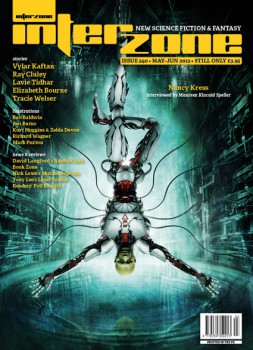
The May–June issue of Interzone has stories by Vylar Kaftan, Ray Cluley, Lavie Tidhar, Elizabeth Bourne and Tracie Welser. Cover art is ‘The Hanged Man’ by Ben Baldwin, the third of his covers commissioned for 2012.

The issue also includes all the usual suspects: “Ansible Link” by David Langford (news and obits); “Mutant Popcorn” by Nick Lowe (film reviews); “Laser Fodder” by Tony Lee (DVD/Blu-ray reviews); along with book reviews by Jim Steel and others, and an interview with Nancy Kress.

Interzone alternates monthly publication with sister dark horror focused Black Static, published by the fine folks at TTA Press.

Black Gate Goes to the Summer Movies: Prometheus

Black Gate Goes to the Summer Movies: Prometheus

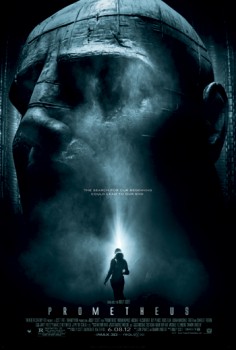
prometheus-posterIf you plan to see Prometheus this weekend, know that you are in for an endless buffet of visual astonishment, especially if you spring to see it in IMAX 3D. Ridley Scott belongs to the breed of filmmaker who can justify the use of the 3D gimmick. He poured everything at his disposal to make his new science-fiction film worth the extra dollars, euros, pound notes needed to watch it in an immersive environment. Prometheus is visual and aural splendor for the cinema.


Know also that you will meet flat characters who often do idiotic things (“Don’t pet the freaky alien snake-thingy! You call yourself a scientist?”) and more idiotic things (“Don’t take off your helmets, you morons! You call yourselves space-explorers?”) and more idiotic things (“Don’t go down into the basement alone!” Well, that doesn’t specifically happen, but many equivalent things do.); a script that turns its initial concept into a shapeless mess by the halfway point; and the general disappointment of watching what promised to be an amazing return for Ridley Scott to the Alien universe he helped create ending up as standard science-fiction thriller pulp.

Does this add up to a good film? Uh, I’m willing to say it does. And whether “good” is enough for you when it comes to Prometheus will depend on how much you anticipated its release and how much you devoured of its brilliant promotional and viral campaigns.

Prometheus presents a puzzle for me personally: It is far below what I wanted as a dramatic experience, yet the cinematic experience of it is stupendous. The tension here offers plenty to ponder, but in a meta-critical sense that has little to do with the story that Prometheus offers. What makes a good film? What makes a good story? What makes a good film story? How much do expectations alter those questions? Are they all the same questions? Yes? No? Buy a vowel?

I guess what I am trying to say is that you should go see Prometheus for yourself, no matter what the critical consensus says, simply because it engages in questions about filmmaking and will no doubt begin tons of debate.

Read More Read More

This Week’s Bargain SF & Fantasy Books at Amazon.com

This Week’s Bargain SF & Fantasy Books at Amazon.com

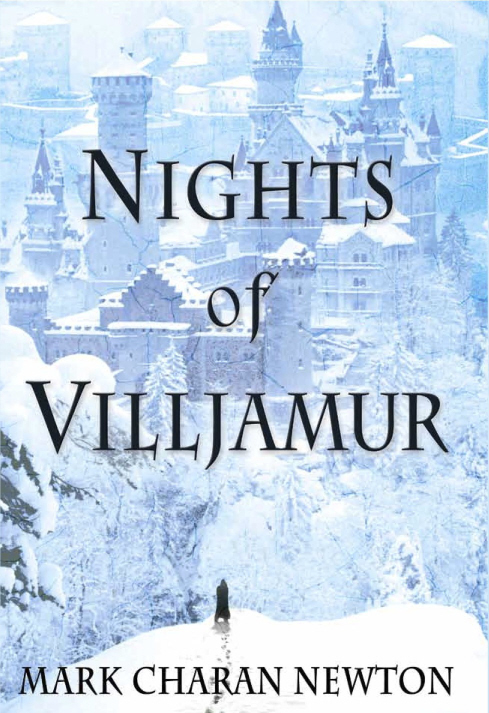
nights-of-villjamurFour packages from Amazon.com piled up on my doorstep today, which reminds me it’s time to do another bargain book round-up. Ah, I love bargain books.

Here’s the latest remaindered SF & fantasy titles I’ve found on Amazon, including two new titles by Cory Doctorow; Fergus and the Night-Demon, a great-looking illustrated fantasy from Jim Murphy & John Manders; the recently-reviewed Black Blade Blues by J. A. Pitts; plus books by Kage Baker, Kat Richardson, Fiona McIntosh, Gordon Dahlquist, Michael Marshall Smith, Christina Meldrum, Galen Beckett, and the debut of a promising new fantasy series from Mark Charan Newton, Nights of Villjamur:

Nights of Villjamur, Mark Charan Newton [$10.38, was $26]
Makers, Cory Doctorow [$10, was $24.99]
For the Win, Cory Doctorow [$7.20, was $17.99]
The Dark Volume, Gordon Dahlquist [$10.40, was $26]
Myrren’s Gift: The Quickening Book One, Fiona McIntosh [$5.98, was $14.95]
Downpour (Greywalker, Book 6), Kat Richardson [$9.98, was $24.95]
The Magicians and Mrs. Quent, Galen Beckett [$9.20, was $23]
The Servants, Michael Marshall Smith [$5.98, was $14.95]
Madapple, Christina Meldrum [$6.80, was $16.99]
The Empress of Mars, Kage Baker [$10.38, was $25.95]
Fergus and the Night-Demon, Jim Murphy & John Manders [$6.40, was $16]
Black Blade Blues, J. A. Pitts [$6.40, was $15.99]

Most books are discounted from 60% to 80%. As always, quantities on these bargain books are very limited. All are eligible for free domestic shipping on orders over $25. Most of last week’s discount titles are still available; you can see them here.

Blogging Sax Rohmer’s The Golden Scorpion, Part Three – “At the House of Ah-Fang-Fu”

Blogging Sax Rohmer’s The Golden Scorpion, Part Three – “At the House of Ah-Fang-Fu”

golden-scorpion-5golden-scorpion-3Sax Rohmer’s The Golden Scorpion was first printed in its entirety in The Illustrated London News Christmas Number in December 1918. It was published in book form in the UK the following year by Methuen and in the US in 1920 by McBride & Nast. Rohmer divided the novel into four sections. This week, we shall examine the third part of the book, “At the House of Ah-Fang-Fu” which comprises eight chapters.

The story picks up at Scotland Yard where Gaston Max, Inspector Dunbar, and Dr. Keppel Stuart have gathered in the Assistant Commissioner’s office. Max suggests that the veiled figure known as the Scorpion that Dr. Stuart glimpsed in China five years earlier is likely the same criminal known as the Scorpion currently operating out of Limehouse. The Frenchman also believes that Mademoiselle Dorian, aka Zara el-Khala, aka Miska, is likewise an essential key to unravelling the mystery.

Max suggests a connection exists between Mr. King (from Rohmer’s 1915 novel, The Yellow Claw) and the Scorpion. Specifically, the Frenchman theorizes that the two criminals belong to the same Chinese or Tibetan organization whose tentacles have seemingly enveloped the globe. Having named the secret criminal society in the third and, at the time, final Fu Manchu thriller, The Hand of Fu Manchu published the previous year; Rohmer now desired to link his two Gaston Max Limehouse mysteries to the earlier series’ continuity. This is an interesting change of direction as Rohmer had originally taken great pains to separate the more realistic Yellow Claw from the outlandish mayhem of his Fu Manchu thrillers. This reversal not only signalled the fact that he wasn’t entirely ready to be done with the character, but was seeking creative ways of continuing the series without resorting to a purely formulaic approach.

Read More Read More

Goth Chick News: 13 Questions for the Creators of Outpost 13

Goth Chick News: 13 Questions for the Creators of Outpost 13

image001As you know, we here at Goth Chick News are great fans of the indy film industry and there’s nothing we love better than getting a peak behind the clapboard.  Well, there was that one intern who refused to watch any film that didn’t have a title soundtrack by Celine Dion, but oddly enough he got sent out to pick up a YooHoo for Scott Taylor on his second day and just never came back.

Funny that.

So you can imagine the excitement when Wyatt Weed (Pirate Pictures), Billy Hartzel and Corey Logsdon (State of Mind Productions) agreed to give Black Gate an exclusive look at their short film Outpost 13 before it launches into what will surely be an exciting journey.

Clearly recognizing a bandwagon headed down the yellow brick road of success, it was obvious the only thing to do was jump on.  But not before squeezing a little insider information out the boys on how they turned their creative imaginations into movie magic.

Read More Read More

Christopher Paul Carey on Gods of Opar: Tales of Lost Khokarsa

Christopher Paul Carey on Gods of Opar: Tales of Lost Khokarsa

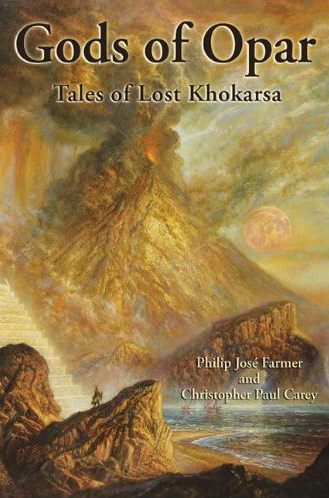
gods-of-opar2In July 2005, I was alerted to an amazing find: the partial manuscript and detailed outline to Philip José Farmer’s third Khokarsa novel had been located among the author’s files.

At the time, I was serving as editor of Farmerphile, an authorized, digest-sized magazine devoted to bringing into print rarities and previously unpublished material by Farmer, and so naturally I had been contacted by the magazine’s publisher, Michael Croteau, when the new Khokarsa material turned up.

I was a huge fan of the original two books in the cycle — Hadon of Ancient Opar (1974) and Flight to Opar (1976) — considering them to be at the highest tier of Farmer’s adventure fiction, and it was with quivering fingers that I typed a reply to Mike’s email and requested a copy of the pages. When the photocopies promptly arrived, I was astounded. Here on an epic scale was the entire arc of what Farmer had planned for the third novel of the series, minus a few finishing touches where he had speculated on alternate courses for the story’s finale.

What’s more, the novel didn’t star Hadon, the duty-bound protagonist of the first two installments, but rather Hadon’s giant cousin Kwasin in all his larger-than-life stature — the wild, unrestrained antihero of the series, who was last seen on stage in Hadon of Ancient Opar, swinging his massive ax of meteoritic iron against impossible odds to give Hadon and his companions a chance to escape the forces of the power-hungry King Minruth.

It was a story that I instantly knew needed to be told — the conclusion to a trilogy for which Farmer’s fans had been waiting almost thirty years.

Read More Read More

New Treasures: R.A. Salvatore’s War of the Spider Queen

New Treasures: R.A. Salvatore’s War of the Spider Queen

war-of-the-spider-queenAh, the lure of the fat fantasy novel. There’s really nothing quite like it.

Yes, I love short fiction and, by extension, I love short novels. But when you really fall in love with a book or series, nothing satisfies like a volume that weighs as much as a phone book.

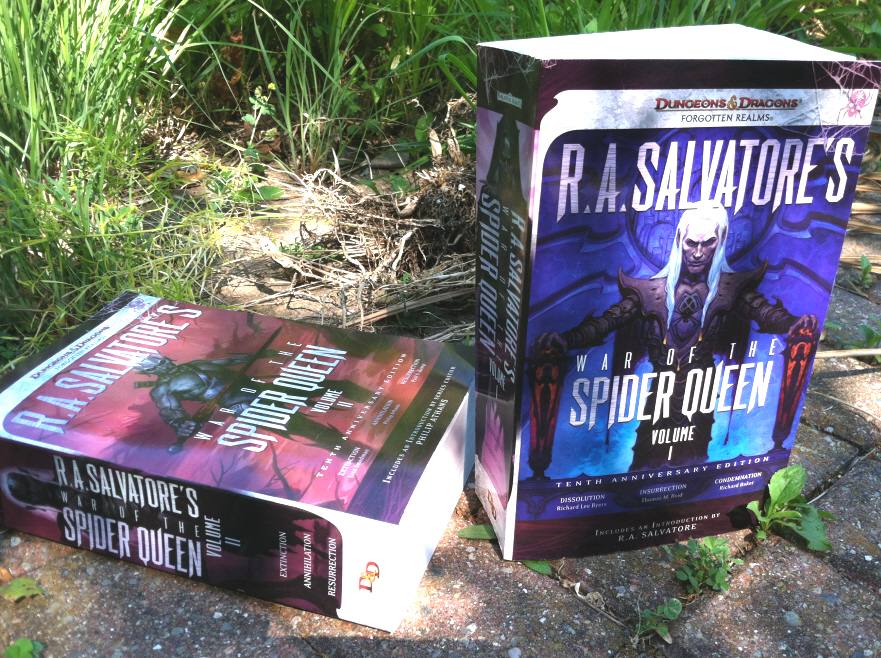
Which is why I was delighted when two fat fantasy compendiums landed on my doorstep this week: R.A. Salvatore’s War of the Spider Queen, Volume I and Volume II.

These aren’t written by R.A. Salvatore.  You can tell because his name is in the title. R.A. Salvatore created the popular character Drizzt Do’Urden and has written nearly two dozen novels featuring the drow ranger, several of them best-sellers. War of the Spider Queen returns to Drizzt Do’Urden’s homeland, the Underdark, to spin a tale of a ragged band of four dark elves on a desperate quest to find Lloth, drow goddess and the demon Queen of Spiders, and save their subterranean city of Menzoberranzan and the entire dark elf race.

The two-volume War of the Spider Queen collects all six novels: Dissolution by Richard Lee Byers, Insurrection by Thomas M. Reid, Condemnation by Richard Baker, Extinction by Lisa Smedman, Annihilation by Philip Athans, and Resurrection by Paul S. Kemp. All were published between 2002 and 2005, with R.A. Salvatore overseeing the development of the entire series.

These are handsome and satisfactorily hefty volumes. I took them out and photographed them on the bricks of my front patio, so you can get a sense of their size. (Click on the image above to get a bigger version).

Volume I contains the first three novels; it is 1,074 pages for $15.95 in trade paperback. Volume II gathers the last three; it is 1,076 pages for $15.95. Both have cover art by Brom. They are published by Wizards of the Coast and are now available.