Browsed by
Category: Blog Entry

Drinking Atlantis, No Chaser: Conan the Barbarian (2011) Blow-by-Blow & Play-by-Play
Drinking Atlantis, No Chaser: Conan the Barbarian (2011) Blow-by-Blow & Play-by-Play

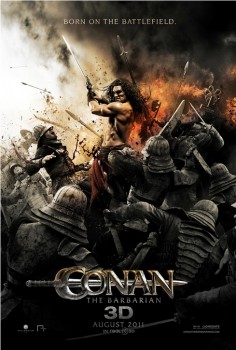
conan-poster-1I have a week-long break between summer movie reviews, the gap between Prometheus and Brave, so I have chosen to return to Ghosts of Summer Pasts. Not long past. Just last year. Ladies and gentlemen, Hyborians and Hyrkanians, the 2011 Conan the Barbarian! [Insert tepid Monty Python and the Holy Grail “yeah!” here.]

Many movie websites do play-by-play reviews, essentially a one-post blog-thru of a film, providing comments along with time stamps. I’ve wanted to try my hand at this for years, and this short summer break opened up the opportunity to exercise this review format on an awful film that sword-and-sorcery fans don’t want to talk about. But if I can find a way to wrench some entertainment from the Blu-ray of this movie (yes, I bought it — but used at a bargain price), then let it be so.

It was August of ’11 that saw the release and immediate flop of the Marcus Nispel-directed Conan the Barbarian. Critics savaged the movie, but most fans of Robert E. Howard saw the dire writing in the ancient language of Acheron on the wall long before the release. I gave up hope for the movie when I heard that Nispel was attached to it. Nothing I had seen of the man’s previous work indicated he had any notion of theme or subtlety — or even how to stitch together a comprehensible action scene. The guy came across as a refugee from an awful ’80s metal band who decided to get into directing so he could show “awesome!” stuff on screen. In other words, he was picked for the job because of a superficial resemblance to sword-and-sorcery, not because the man has any affinity for filmmaking or Robert E. Howard.

The casting of Jason Momoa met skepticism when first announced, but among all else that went awry with Conan the Barbarian, Momoa was one thing that went right. More about that on the play-by-play.

I enjoyed the movie more this second time viewing it, but that isn’t because I found any new appreciation for it. Conan ’11 works simply better on home video, where its limited scope and poor VFX feel more appropriate. Also, watching at home meant I could take breaks to go get a drink or read Shakespeare or call my sister in Munich. I could live my life around the film, and the film benefits from my ability to ignore it whenever I want to. The only downside to home video is that the 3D in the theater, terrible as it was, did hide some of visual flaws and clunky special effects.

Okay, queue up your disc or streaming or whatever, and let’s drink Atlantis….

Read More Read More

The Best of Modern Arabian Fantasy, Part V: Saladin Ahmed and Throne of the Crescent Moon

The Best of Modern Arabian Fantasy, Part V: Saladin Ahmed and Throne of the Crescent Moon

imagesSaladin Ahmed‘s been very, very busy as his career takes off after the success of Throne of the Crescent Moon, the first novel in an exciting new Arabian fantasy series that received starred reviews from Kirkus, Publishers Weekly, and Library Journal, so I was lucky that he was able to take the time for an interview.

I always try to fake up some confidence in an interview and not think of how famous or talented my subject is, so imagine my horror when I got the answers back and found I’d mistyped the title for his book in the questions. I’d planned them carefully and had his book open as I wrote them, but used an abbreviation of the title from my notes.

I can only speculate about the fingernails on a chalkboard feeling Saladin had while answering questions from some random woman who sounded like she barely knew what she was talking about, but he was gracious. At least I didn’t misspell his name.

Read on for some tantalising hints about his next two books.

Read More Read More

Thank You, Martin H. Greenberg (and Doug Ellis)

Thank You, Martin H. Greenberg (and Doug Ellis)

martin-h-greenberg-paperback-lot-small

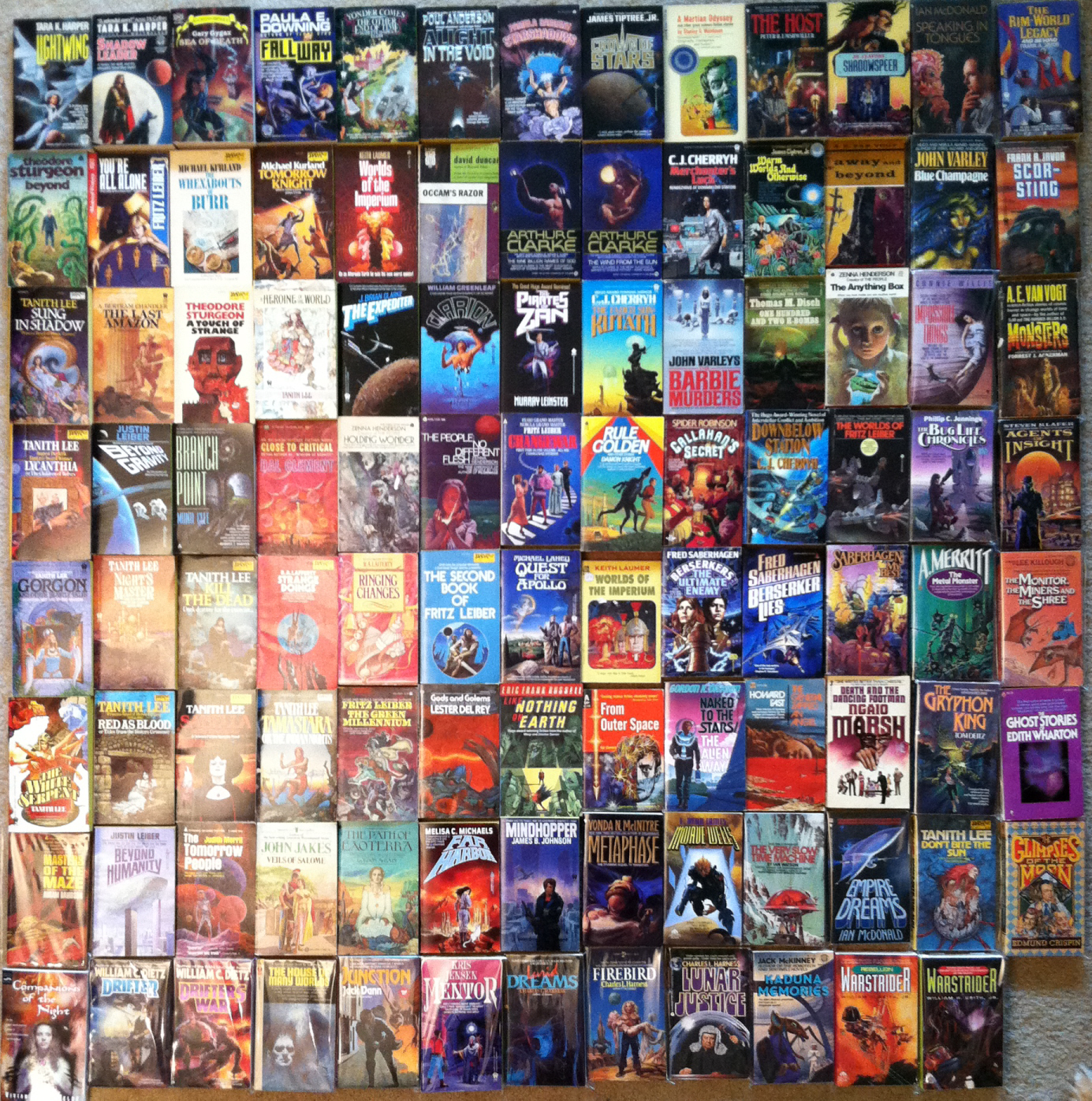
That’s a pic of one of the boxes I unloaded in my library this morning. It contained 103 paperbacks from the vast collection of the great Martin H. Greenberg, one of the most prolific and talented anthologists our field has ever seen (click for a more legible version). Greenberg died almost exactly a year ago, on June 25, 2011. He left behind some 2,500 anthologies and other books he created — including over 120 co-edited with his friend Isaac Asimov — and his company Tekno Books, a book packager which produced nearly 150 books a year. I wrote about six of them just last week in my article TSR’s Amazing Science Fiction Anthologies.

He also left behind a massive collection in his home in Green Bay, which was purchased by Chicago collectors Doug Ellis and Bob Weinberg. They’ve been gradually selling the high value stuff — autographed vintage hardcovers, things like that. Doug runs the Windy City Pulp and Paper show every year, and he brought some of it to the show.

I’m usually a pretty social guy. Put me in a room with fellow collectors and I’ll happily spend my hours chatting. But as I passed Doug’s booth, I saw countless boxes of what looked like beautiful, unread vintage paperbacks stacked in neat rows, all priced at a buck. I started to browse, then select a few books, and finally obsessively dig through every single box, much to the annoyance of the always patient Jason Waltz and my other companions.

Read More Read More

Losing My Way to Ray

Losing My Way to Ray

100Revisiting the stories of Ray Bradbury has been a lot like sitting down to revisit Twilight Zone episodes. I don’t just mean the twist ending, though there is that. I mean the other things – the misanthropic critic/hero/rebel who talks for a long while, perhaps too long, about the troubles of society, of humanity. The mirror held up to show us ourselves as we once were when all men wore hats and all women wore dresses. The sad realization that while there are cool and brilliant bits, our sense of pacing has changed, and that having experienced enough of these stories, we get the sense of how an unfamiliar one will end.
I loved Ray Bradbury’s stories as a child. I remember the thrill of picking up one of his short story collections because you’d never know what you’d get, story to story, and the titles rarely told you. Would it be a horror story, something from ancient China? A space adventure? Would the ending be dark, or light? In grade school, it was always a profound relief to find a Ray Bradbury tale in the school literature readers, for you knew you’d be transported to some interesting place.

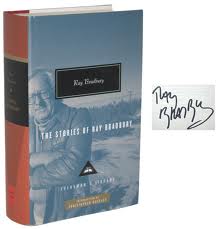
Fired by nostalgia, wanting to celebrate my first favorite author, I read The Martian Chronicles for the first time in 30 years, and then I began to work my way through The Stories of Ray Bradbury, which collects 100 tales, many of which I’d never read.

And I discovered that I couldn’t go home again. I keep setting the book aside, then coming back to try just one more, to see if I could recapture the old thrill.

It’s not Bradbury who changed – the words are still threaded together with that same poetic skill. The messages are still poignant or powerful, depending upon the tale. Yet I can’t lose myself in them anymore. I want to – God, how I want to – but I just can’t fall through the words and get lost in the wonder. I must have found him at just the right age. And now, I think, I must have gotten old. Morosely, I have set the book aside, and I am not sure I will return.


Howard Andrew Jones is the author of the historical fantasy novels The Desert of Souls, and the forthcoming The Bones of the Old Ones, as well as the related short story collection The Waters of Eternity, and the Paizo Pathfinder novel Plague of Shadows. You can keep up with him at his website, www.howardandrewjones.com, and keep up with him on Twitter or follow his occasional meanderings on Facebook.

Chicks Kick Butt

Chicks Kick Butt

ckI recently reviewed Chicks Kick Butt over at The SF Site. My reaction was a little less than enthusiastic, certainly less so than fellow Black Gater Alana Joli Abbott’s review.  Here’s probably why:

…an anthology called Chicks Kick Butt sounded like something that would appeal to me, even if I’d never read anything by the female authors collected here, nor the editors. But, half the fun of picking up a story collection is discovering the work of people you’ve never heard of, or have heard of but never read.

In this case, however, that’s part of the problem. Some of these stories will no doubt resonate with their fan base. Not being part of them, I’m left to wonder what the fascination is. In part, that’s because I don’t get the whole vampire deal. Though I understand the charismatic kink of the guy (or girl) who drinks your blood and consumes your soul, maybe the first time someone thought of putting a cell phone in the hands of the attractive undead to use their curse for good instead of evil, or at least have highly charged sex, but still have problems just like the rest of us whose throats are unblemished, it was kind of fun. But an entire genre with multiple sub-genres of this stuff, really?

Christopher Paul Carey on Philip José Farmer’s World of Khokarsa

Christopher Paul Carey on Philip José Farmer’s World of Khokarsa

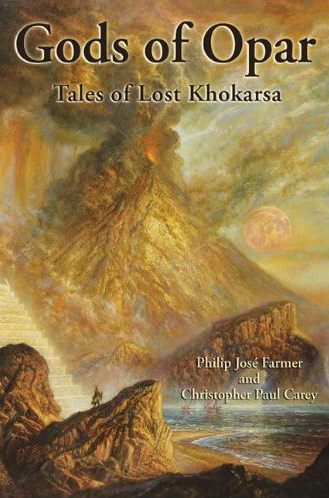
gods-of-opar2With the publication of Gods of Opar: Tales of Lost Khokarsa, I thought I’d take the opportunity to give Black Gate readers a taste of the world of Khokarsa, which serves as the setting for Philip José Farmer’s epic series of adventure and historical fantasy. It’s a world I’ve been immersed in for the past several years as I worked to complete The Song of Kwasin, the concluding book in the Khokarsa trilogy, as well as other related projects set in Farmer’s prehistoric empire.

Farmer’s achievement in the first two Khokarsa novels — written and first published in the 1970s, and now available in the Gods of Opar omnibus — is impressive. And part of the reason these thirty-some-year-old books hold up so well is the lengths to which the author went to carefully construct a believable world for his prehistoric heroes, heroines, and villains.

The rich level of cultural and descriptive detail in both Hadon of Ancient Opar and its sequel Flight to Opar make them prime examples of fantastic world building. Set twelve thousand years ago in ancient Africa against the backdrop of a civil war between the priestesses and the priests in the empire of Khokarsa, the books unveil a complex pantheon of gods and goddesses.

First and foremost is Kho, known also as the Mother Goddess, the White Goddess, and the Mother of All. She is the central deity of the Khokarsan people. Carefully balanced against Kho is her son Resu, god of the sun, rain, and war. While Resu has been declared the equal of his mother, most Khokarsans still regard Resu as secondary to Kho.

At the time Hadon of Ancient Opar begins, the priests of Resu have been locked in a delicate struggle for supremacy with the priestesses of Kho for over eight hundred years.

Read More Read More

Blogging Sax Rohmer’s The Golden Scorpion, Part Four – “The Lair of the Scorpion”

Blogging Sax Rohmer’s The Golden Scorpion, Part Four – “The Lair of the Scorpion”

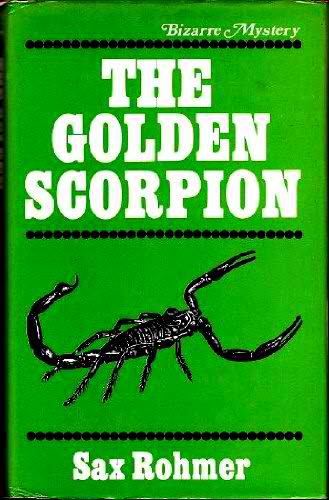
golden-scorpion-61golden-scorpion-41Sax Rohmer’s The Golden Scorpion was first printed in its entirety in The Illustrated London News Christmas Number in December 1918. It was published in book form in the UK the following year by Methuen and in the US in 1920 by McBride & Nast. Rohmer divided the novel into four sections. This week we shall examine the fourth part of the book, “The Lair of the Scorpion” which comprises the final seven chapters.

Rohmer gradually segued from following the model of his first Gaston Max mystery, The Yellow Claw (1915) in the first half of the book to more closely adhering to the blueprint provided by his Fu Manchu thrillers for the second half. Readers familiar with the Devil Doctor could not help to recognize this fact as the final part of the novel opens with Keppel Stuart recovering consciousness as a captive in Fo-Hi’s laboratory. Among the exotic Oriental furnishings are the familiar form of caged lizards and insects. Behind the advanced scientific apparatus stands the figure of the Scorpion himself. Fo-Hi at last takes center stage in the novel and there is no mistaking when he says he has tried to follow in the footsteps of the great scientist who preceded him in serving their organization’s mission in England. His speech and bearing instantly recall Dr. Fu Manchu.

Read More Read More

Goth Chick News: The Walls Have Ears; And Other Stuff Apparently…

Goth Chick News: The Walls Have Ears; And Other Stuff Apparently…

image007Those of you who are fans of Game of Thrones (the books or the HBO series) are already well aware that when civilizations build walls, it’s usually to keep something really nasty on the other side of them. In the case of “The Wall” which borders the Seven Kingdoms of GoT, the 300 miles of solid ice stands between humanity and an army of corpse-collecting, walking dead.

Which sort of makes you wonder; what are other really big walls meant to keep out?

The Great Wall of China for instance…

Oh sure, it might really have been to keep out the Mongols. But what if it was something worse?

In the spring of 2013, Legendary East, an offshoot of Legendary Pictures (late of The Dark Knight Rises), will begin shooting its first project The Great Wall in both China and New Zealand.

Read More Read More

Art Evolution Challenge 2012: Anna Steinbauer

Art Evolution Challenge 2012: Anna Steinbauer

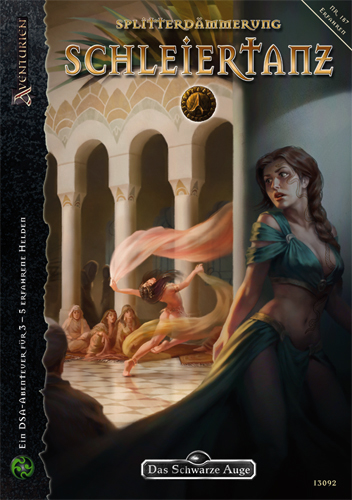
schleiertanzIn January I contacted Jon Schindehette over at the ArtOrder about possibly running a contest on the site that would help show some of the promising talent in the field of fantasy. It was my concept to devote five special spotlight posts right here on Black Gate to a collection of new artists as judged by a panel of veteran artists and art directors in the field.

Jon loved the idea, and by February we had a contest running that ended up featuring more than a hundred and twenty-five entries from all over the globe. What were they painting? Well, if this is Art Evolution, then of course they all took a stab at Lyssa, the now iconic female wizardress that has been defined by fantasy art legends since the series began in 2010.

I must say, the experience of running this challenge was a total thrill. Watching a bevy of incredible artists use WIPNation to show the progress of their vision for Lyssa on an almost daily basis allowed me a vision of what working in an old school art department at TSR must have been like.

There were science fiction Lyssas, primal Lyssas, steampunk Lyssas, you name it, and each artist brought such a fantastic flair to what he or she did. However, when it all came down to nuts and bolts, there could only be three winners for 2012, as judged by such talents as Todd Lockwood, Jeff Laubenstein, Jeff Easley, and Lauren Panepinto.

Read More Read More

Mage: The Hero Discovered by Matt Wagner

Mage: The Hero Discovered by Matt Wagner

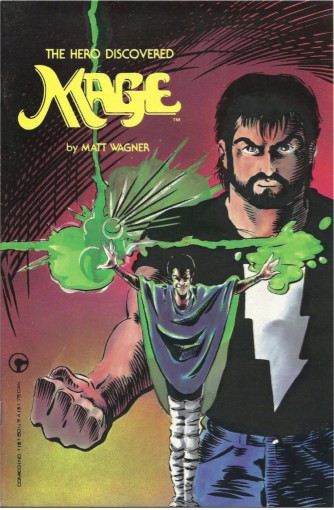
mage-the-hero-defined1It’s nothing new: taking old mythic tropes and adapting them to modern-age stories. The social commentary thinly-veiled as mysticism, the peek-a-boo mythology references, the obligatory explanation for why most people in our modern times don’t notice magic, the unassuming youth who will one day become a great hero … we’ve all read them.  he secret is in the execution.  How well is this ancient story re-told? How compelling are the characters? Are the truths revealed deep or trite?

Matt Wagner was only twenty-two when the first issue of Mage was published and it’s surprising that someone so young could write something both this introspective and this self-aware. His hero, Kevin Matchstick, is already a cynical, disillusioned man at the story’s beginning. He acts like a man who already has the weight of the world on his shoulders, yet has no true responsibilities. It’s telling that the mysterious wizard who approaches him with news of his great potential is named Mirth. The journey that follows over the next fifteen issues concerns Kevin’s quest to understand and fight forces of supernatural evil; but it’s just as much Mirth’s quest to make Kevin stop being a jerk. The adage that the only thing evil needs to succeed is for good men to do nothing rings through this series.

Kevin, Mirth, the supporting cast and even the incidental characters are written with a surprising depth. No one is merely a follower (on the side of good or evil), each having his or her own reasons for the decisions made. The storyline is equally divided between action scenes and “downtime” where the heroes relax and talk about how they see the world and their place in it. The baseball-bat-wielding Edsel and supernatural civil servant Sean Knight work just as hard to guide Kevin towards self-discovery as they do covering his back during fights with quintuplet casino bosses, hordes of redcaps and the occasional succubus. They also have to face down a dragon. And a staple gun.

This series has been in and out of print for years and a collected edition shouldn’t be difficult to find. But if you have the means, definitely find a comic shop that carries the original back issues. There you’ll get the letter page debates on the nature of magic and morality, Matt Wagner’s comments on the state of the comic industry and the amazing Grendel stories (originally published in the back of each issue as a series of four-page mini-stories). Volume One is subtitled The Hero Discovered. Fifteen years later, there were another fifteen issues subtitled, The Hero Defined. And, someday, we may see the final volume, “The Hero Denied”. Until that day, magic is green.